
Can I Put Premium Gas in My Toyota Corolla?

Yes, you can put premium gas in your Toyota Corolla, but it’s usually unnecessary. Most Corolla models are designed to run efficiently on regular 87-octane fuel, and using premium won’t boost performance or fuel economy unless your specific model recommends it.
Key Takeaways
- Most Toyota Corollas are designed for regular gas: The majority of Corolla models, especially those with naturally aspirated engines, are optimized for 87-octane fuel and don’t require premium.
- Premium gas won’t improve performance in standard models: Unless your Corolla has a turbocharged engine or specifically recommends higher octane, premium fuel won’t make your car faster or more efficient.
- Using premium gas is an unnecessary expense for most owners: Premium fuel costs more per gallon with no proven long-term benefits for engines designed for regular gas.
- Check your owner’s manual for fuel recommendations: Always refer to your specific model year and engine type to determine the correct fuel grade.
- Premium gas may help in high-performance or turbocharged Corollas: Some newer performance-oriented models, like the GR Corolla, benefit from higher-octane fuel to prevent knocking and maximize power.
- Fuel quality matters more than octane rating: Choosing a reputable gas station with clean, high-quality fuel is more important than paying extra for premium octane.
- Mixing fuel grades is safe but not beneficial: You can mix regular and premium gas without harming your engine, but it won’t provide any performance gains.
📑 Table of Contents
- Can I Put Premium Gas in My Toyota Corolla?
- Understanding Octane Ratings and What They Mean
- What Does the Owner’s Manual Say?
- Does Premium Gas Improve Performance or Fuel Economy?
- Is Premium Gas Better for Your Engine?
- Cost-Benefit Analysis: Is Premium Gas Worth It?
- Practical Tips for Corolla Owners
- Conclusion: Save Your Money and Stick to Regular
Can I Put Premium Gas in My Toyota Corolla?
If you’ve ever stood at the gas pump wondering whether to splurge on premium fuel for your Toyota Corolla, you’re not alone. It’s a common question among Corolla owners—especially those who want to get the most out of their reliable, fuel-efficient ride. After all, premium gas costs more, so it must be better, right?
Well, not necessarily. While premium gasoline has a higher octane rating and is often marketed as a performance booster, the truth is that most Toyota Corolla models don’t need it. In fact, using premium gas in a Corolla designed for regular fuel is like buying a sports car seat for a bicycle—it might sound fancy, but it doesn’t actually improve performance.
So, can you put premium gas in your Toyota Corolla? Yes, absolutely. But should you? That depends on your specific model, driving habits, and whether your car actually benefits from the extra cost. Let’s break it all down so you can make an informed decision and keep your Corolla running smoothly—without wasting money.
Understanding Octane Ratings and What They Mean
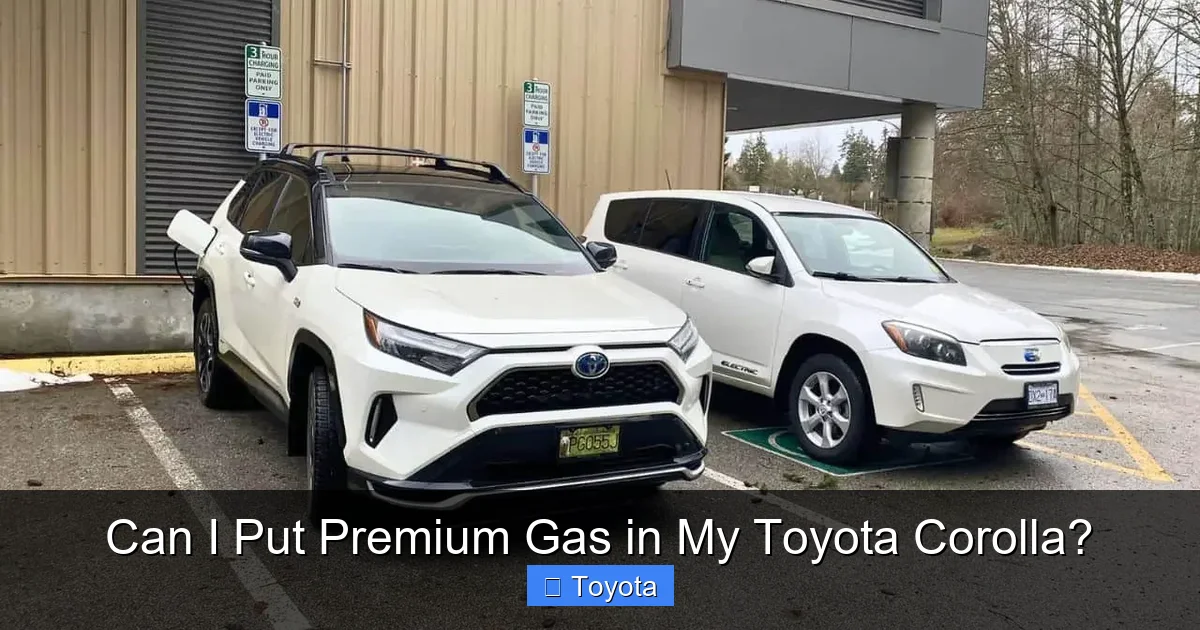
Visual guide about Can I Put Premium Gas in My Toyota Corolla?
Image source: autocarresource.com
Before we dive into whether your Corolla needs premium gas, it helps to understand what “octane” actually means. Octane rating is a measure of a fuel’s ability to resist “knocking” or “pinging” during combustion. Knocking happens when fuel ignites prematurely in the engine’s cylinders, which can damage engine components over time.
Higher octane fuels are more resistant to this premature ignition, which is why they’re used in high-performance or high-compression engines. These engines generate more heat and pressure, so they need fuel that can handle the stress without detonating early.
Regular gasoline typically has an octane rating of 87, mid-grade is around 89, and premium is 91 or higher (depending on the region). In the U.S., premium is usually 93 octane. But here’s the key point: your engine only needs the octane level it was designed for. If your Corolla’s engine is built to run on 87-octane fuel, it doesn’t benefit from the extra resistance that 93-octane provides.
Think of it like this: if your car’s engine is a small, efficient campfire, it doesn’t need a bonfire’s worth of fuel. Adding more heat-resistant logs won’t make the fire burn brighter—it’ll just cost you more at the store.
How Engine Design Affects Fuel Requirements
Toyota designs the Corolla with efficiency, reliability, and affordability in mind. Most Corolla models—especially those from the 2000s through the 2020s—use naturally aspirated four-cylinder engines with moderate compression ratios. These engines are engineered to run optimally on regular 87-octane gasoline.
In contrast, high-performance vehicles like sports cars or turbocharged engines often have higher compression ratios or forced induction (like turbochargers or superchargers). These features increase the pressure and temperature inside the combustion chamber, raising the risk of knocking. That’s why those engines require higher-octane fuel to operate safely and efficiently.
For example, the Toyota GR Corolla—a high-performance variant introduced in 2022—comes with a turbocharged 1.6-liter three-cylinder engine. This model specifically recommends 91-octane (or higher) fuel to prevent knocking and deliver maximum power. But the standard Corolla sedan or hatchback? It’s built for everyday driving, not track days, and doesn’t need premium gas.
What Does the Owner’s Manual Say?
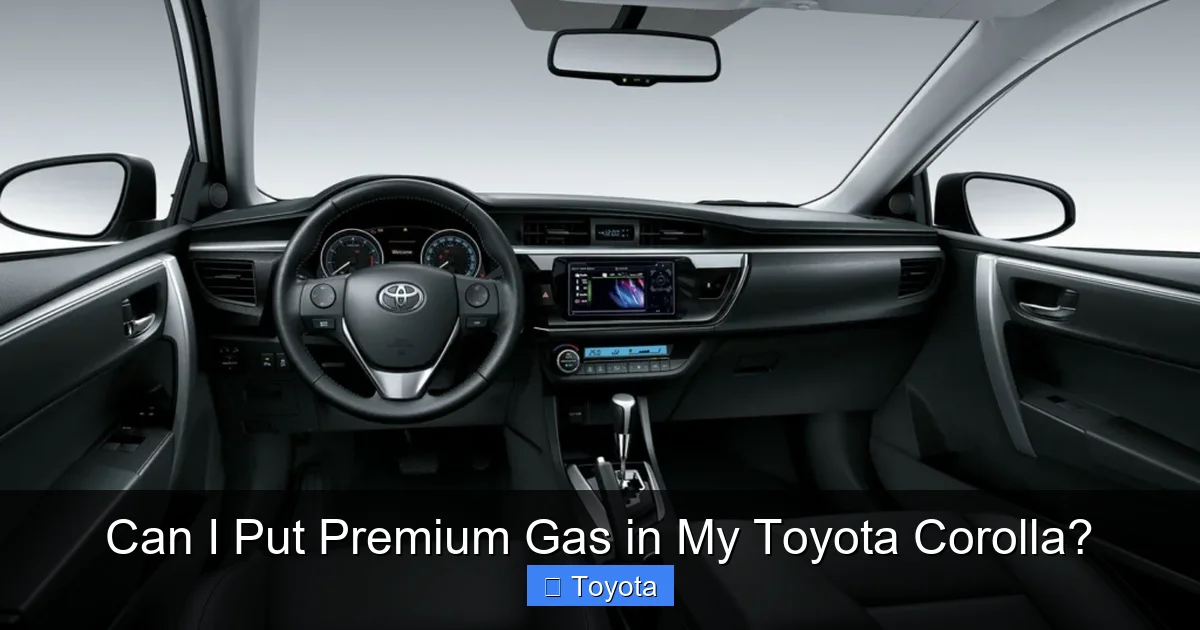
Visual guide about Can I Put Premium Gas in My Toyota Corolla?
Image source: 2025toyota.com
The best place to find the definitive answer about fuel requirements is your Toyota Corolla’s owner’s manual. Toyota provides clear guidance on the recommended fuel type for each model and engine configuration.
For the vast majority of Corolla models—including the 2023 and 2024 Corolla LE, SE, and XSE trims with the 2.0-liter four-cylinder engine—the manual states that “regular unleaded gasoline with an octane rating of 87 or higher is recommended.” That means 87-octane is the baseline, and anything higher is optional.
In fact, Toyota often includes a note saying that using fuel with a higher octane rating than recommended will not improve performance, fuel economy, or engine longevity. This is a direct message from the manufacturer: premium gas is not required, and it won’t make your car better.
Exceptions: When Premium Gas Is Recommended
While most Corollas run fine on regular gas, there are exceptions. The most notable is the Toyota GR Corolla, a performance-oriented hatchback designed for enthusiasts. The GR Corolla’s turbocharged engine produces up to 300 horsepower and operates under much higher stress than a standard Corolla.
For this model, Toyota explicitly recommends using 91-octane or higher fuel. Using lower-octane fuel in a GR Corolla can lead to engine knocking, reduced power output, and potentially long-term damage. In this case, premium gas isn’t a luxury—it’s a necessity.
Another scenario where premium might be beneficial is if you’re driving in extreme conditions, such as high altitudes or very hot climates. In these situations, some engines may experience increased knocking, and a higher-octane fuel could help. However, even then, most modern Corollas have knock sensors that adjust ignition timing to compensate, reducing the need for premium fuel.
Does Premium Gas Improve Performance or Fuel Economy?
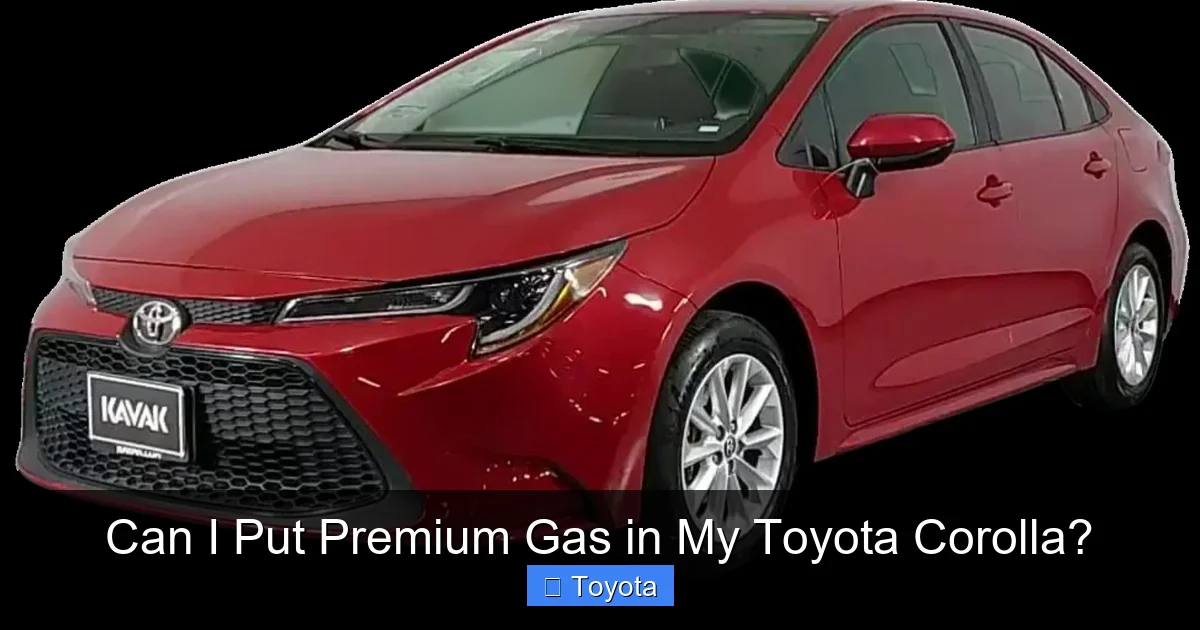
Visual guide about Can I Put Premium Gas in My Toyota Corolla?
Image source: images.kavak.services
One of the biggest myths about premium gas is that it makes your car faster or more fuel-efficient. Let’s set the record straight: if your Corolla is designed for regular gas, premium won’t give you better mileage or more horsepower.
The Science Behind Fuel Efficiency
Fuel economy is determined by a combination of factors: engine efficiency, aerodynamics, weight, driving habits, and fuel quality. Octane rating doesn’t directly affect how much energy is released when fuel burns—it only affects how stable the fuel is under pressure.
In a standard Corolla engine, 87-octane fuel burns just as completely and efficiently as 93-octane fuel. The engine’s computer (ECU) is calibrated to optimize combustion for regular gasoline. If you switch to premium, the ECU doesn’t change its tuning to take advantage of the higher octane because it wasn’t designed to.
In real-world tests, including those by the U.S. Department of Energy and independent automotive researchers, vehicles designed for regular gas showed no improvement in fuel economy when using premium fuel. The difference was statistically insignificant—often less than 1%.
Performance Gains: Fact vs. Fiction
Similarly, you won’t notice any performance boost from using premium gas in a standard Corolla. The engine doesn’t have the compression ratio or advanced tuning needed to extract more power from higher-octane fuel.
Some people claim their car “feels smoother” or “runs better” on premium gas. While this might be true in rare cases—perhaps due to cleaner additives in certain premium brands—it’s not because of the octane rating. In fact, the difference is likely psychological or due to other factors like a recent tune-up or change in driving conditions.
If you’re looking to improve your Corolla’s performance, consider regular maintenance (like clean air filters and spark plugs), proper tire inflation, and driving habits (like avoiding rapid acceleration). These have a far greater impact than switching fuel grades.
Is Premium Gas Better for Your Engine?
Another common belief is that premium gas is “cleaner” or better for your engine because it contains more detergents. While it’s true that some premium fuels include additional cleaning additives, this doesn’t mean they’re inherently better for your Corolla.
Top Tier Gasoline: What It Really Means
In the U.S., the “Top Tier” certification program ensures that gasoline meets higher standards for detergent additives, regardless of octane rating. Many major gas stations—including regular-grade fuels—are Top Tier certified. This means they contain enough detergents to keep fuel injectors, intake valves, and combustion chambers clean.
Toyota actually recommends using Top Tier gasoline to maintain engine performance and longevity. You can find a list of Top Tier retailers on the official website (toptiergas.com). So, instead of paying extra for premium gas, you can choose a Top Tier regular fuel and get the same cleaning benefits at a lower price.
Long-Term Engine Health
Using premium gas in a Corolla designed for regular fuel won’t harm your engine—but it also won’t extend its life. Modern engines are built to last hundreds of thousands of miles with proper maintenance, and fuel choice plays a minor role compared to oil changes, coolant flushes, and timely repairs.
In fact, consistently overpaying for premium gas could cost you hundreds of dollars per year with no return on investment. For example, if premium gas costs $0.50 more per gallon and you drive 15,000 miles per year with a 30 mpg average, you’d spend an extra $250 annually—money that could go toward oil changes, tires, or savings.
Cost-Benefit Analysis: Is Premium Gas Worth It?
Let’s do the math. Suppose regular gas costs $3.50 per gallon and premium costs $4.00 per gallon. If your Corolla gets 30 miles per gallon and you drive 12,000 miles per year, here’s the breakdown:
– Regular gas: 12,000 miles ÷ 30 mpg = 400 gallons × $3.50 = $1,400 per year
– Premium gas: 400 gallons × $4.00 = $1,600 per year
That’s an extra $200 per year—just for fuel that doesn’t improve performance, efficiency, or engine life.
Now, consider that the average Corolla owner keeps their car for 8–10 years. Over that time, using premium gas unnecessarily could cost $1,600 to $2,000. That’s enough to cover several major maintenance services or even a set of new tires.
When Premium Might Make Sense
There are a few scenarios where using premium gas could be justified:
1. **You drive a GR Corolla or other high-performance variant.** These models are engineered for higher-octane fuel, and using regular gas could compromise performance and longevity.
2. **You frequently drive in extreme conditions.** If you live in a high-altitude area or frequently tow heavy loads (though the Corolla isn’t designed for towing), premium gas might help prevent knocking.
3. **You’re using a fuel with superior additives.** Some premium brands offer enhanced detergents or fuel stabilizers that could benefit older engines or those with carbon buildup. However, you can often achieve the same result with a fuel system cleaner additive.
4. **You’re preparing for a long trip or storage.** Premium gas sometimes has better stability and fewer volatile compounds, which can be helpful if you’re storing your car for an extended period.
But for the average Corolla owner driving daily commutes and weekend errands, these situations are rare. The cost rarely outweighs the benefit.
Practical Tips for Corolla Owners
Now that you know the facts, here are some practical tips to help you make the best fuel choice for your Toyota Corolla:
1. Stick to the Owner’s Manual
Always refer to your specific model’s owner’s manual. Toyota provides clear fuel recommendations based on engine type and design. If it says “regular unleaded, 87 octane or higher,” that’s what you should use.
2. Choose Top Tier Gas Stations
Look for gas stations with the Top Tier certification. These fuels contain sufficient detergents to keep your engine clean, regardless of octane rating. Brands like Shell, Chevron, Costco, and Exxon often meet Top Tier standards.
3. Avoid “Fuel Myths”
Don’t fall for marketing claims that premium gas improves performance or cleans your engine better. Unless your car requires it, these benefits are minimal or nonexistent.
4. Monitor Your Car’s Performance
If you’re curious, try a tank of premium gas and see if you notice any difference. Pay attention to fuel economy, engine smoothness, and acceleration. In most cases, you won’t notice a change—and your wallet will thank you when you switch back to regular.
5. Use Fuel Additives Sparingly
If you’re concerned about carbon buildup, use a quality fuel system cleaner every 3,000–5,000 miles instead of relying on premium gas. Products like Techron or Sea Foam can help maintain injector and valve cleanliness.
6. Keep Up with Regular Maintenance
The best way to keep your Corolla running efficiently is through routine care: oil changes, air filter replacements, spark plug checks, and tire rotations. These have a much bigger impact on performance and longevity than fuel choice.
Conclusion: Save Your Money and Stick to Regular
So, can you put premium gas in your Toyota Corolla? Yes—but you probably shouldn’t. For the vast majority of Corolla models, regular 87-octane gasoline is perfectly adequate and recommended by Toyota. Using premium fuel won’t make your car faster, more efficient, or longer-lasting. In fact, it’s an unnecessary expense that could cost you hundreds of dollars over the life of your vehicle.
The only exceptions are high-performance models like the GR Corolla, which are specifically designed for higher-octane fuel. For everyone else, the smart choice is to follow the owner’s manual, choose Top Tier gas stations, and focus on regular maintenance.
Your Toyota Corolla is built to be reliable, efficient, and affordable—and that includes fuel costs. By sticking to regular gas, you’re not just saving money; you’re driving the way Toyota intended. So next time you’re at the pump, skip the premium and fill up with confidence. Your Corolla—and your bank account—will thank you.
Frequently Asked Questions
Can I mix regular and premium gas in my Toyota Corolla?
Yes, you can safely mix regular and premium gas in your Corolla. The engine’s computer will adjust to the blended octane level, and it won’t cause any damage. However, mixing fuels won’t improve performance or efficiency.
Will using premium gas clean my Corolla’s engine?
Not necessarily. While some premium fuels have extra detergents, many regular-grade Top Tier fuels offer the same cleaning benefits. Using a fuel system cleaner periodically is more effective than relying on premium gas.
What happens if I use regular gas in a GR Corolla?
Using regular gas in a GR Corolla can cause engine knocking, reduced power, and potential long-term damage. This model requires 91-octane or higher fuel to operate safely and efficiently.
Does premium gas last longer than regular gas?
No, premium gas does not last longer in your tank. Both regular and premium fuels have similar shelf lives and degrade at about the same rate when exposed to air and moisture.
Can I switch between regular and premium gas?
Yes, you can switch between fuel grades without harming your engine. Modern engines are designed to adapt to different octane levels, so occasional changes are perfectly safe.
Is it worth using premium gas in an older Corolla?
Generally, no. Older Corollas were designed for regular gas, and premium fuel won’t improve performance or longevity. Focus on maintenance and using quality Top Tier gasoline instead.
