
How Much Is an Alternator for a 2000 Toyota Camry?

The cost of an alternator for a 2000 Toyota Camry typically ranges from $150 to $400 for the part alone, with professional installation adding $100–$200 in labor. Whether you choose OEM, aftermarket, or remanufactured options, understanding your choices helps you save money and keep your Camry reliable.
If you own a 2000 Toyota Camry, you already know it’s a reliable, no-nonsense sedan built to last. But like any vehicle, it eventually needs maintenance—and one of the most common repairs as these cars age is replacing the alternator. Whether you’re hearing a whining noise under the hood, noticing your headlights flicker at idle, or your battery keeps dying, the alternator might be the culprit. So, how much is an alternator for a 2000 Toyota Camry? The short answer: it depends. But don’t worry—we’re going to break it all down so you can make an informed decision without overspending.
The alternator is a small but mighty component in your car’s electrical system. It’s responsible for generating power to recharge the battery and run electrical systems like lights, radio, air conditioning, and more while the engine is running. Without a working alternator, your battery will drain quickly, and your car may not start at all. In the 2000 Toyota Camry, the alternator is typically driven by a serpentine belt and mounted near the front of the engine. Over time, wear and tear, heat, and electrical stress can cause it to fail. When that happens, replacing it becomes a top priority.
In this guide, we’ll walk you through everything you need to know about the cost of an alternator for your 2000 Camry—from part prices and labor estimates to tips for saving money and avoiding scams. Whether you’re planning to do the job yourself or hire a professional, understanding your options will help you get the best value and keep your Camry running smoothly for years to come.
Key Takeaways
- Alternator cost varies by type: OEM alternators are the most expensive but offer factory-grade quality, while aftermarket and remanufactured options provide budget-friendly alternatives.
- Labor adds significant expense: Professional installation usually costs between $100 and $200, depending on your location and mechanic’s rates.
- DIY can save money: If you’re mechanically inclined, replacing the alternator yourself can cut labor costs dramatically—just be sure you have the right tools and knowledge.
- Signs of a failing alternator: Dimming lights, a dead battery, strange noises, or warning lights on the dashboard are common indicators it’s time for a replacement.
- Warranty matters: Remanufactured and new aftermarket alternators often come with 1–3 year warranties, offering peace of mind and protection against defects.
- Shop around for the best deal: Prices vary widely between online retailers, auto parts stores, and local mechanics—compare options before buying.
- Preventive maintenance helps: Regular battery and belt checks can extend the life of your alternator and prevent unexpected breakdowns.
📑 Table of Contents
- Understanding the Alternator in Your 2000 Toyota Camry
- How Much Does an Alternator Cost for a 2000 Toyota Camry?
- Labor Costs: What to Expect When Hiring a Mechanic
- DIY Alternator Replacement: Can You Do It Yourself?
- Where to Buy an Alternator for Your 2000 Camry
- Tips to Save Money and Avoid Scams
- Conclusion: Making the Right Choice for Your Camry
Understanding the Alternator in Your 2000 Toyota Camry
Before diving into costs, it helps to understand what the alternator does and why it’s so important. Think of the alternator as your car’s onboard power plant. While the battery starts the engine, the alternator takes over once the car is running, supplying electricity to all the systems and recharging the battery. In the 2000 Toyota Camry, the alternator is a 12-volt unit that typically produces around 80–100 amps of current—enough to power everything from your headlights to your power windows.
The alternator works by converting mechanical energy from the engine (via the serpentine belt) into electrical energy using electromagnetic induction. Inside, a rotor spins within a stator, creating an alternating current (AC), which is then converted to direct current (DC) by diodes in the rectifier. This DC power is sent to the battery and the rest of the electrical system. Over time, components like the brushes, bearings, and diodes can wear out, leading to reduced output or complete failure.
One thing to note about the 2000 Camry is that it comes in different engine configurations—the 2.2L 4-cylinder (5S-FE) and the 3.0L V6 (1MZ-FE). The alternator for each engine is slightly different in size and mounting, so it’s important to confirm your engine type before purchasing a replacement. Most aftermarket and OEM parts are labeled by engine size, so double-check your owner’s manual or look up your VIN to be sure.
Common Symptoms of a Failing Alternator
Knowing the signs of a bad alternator can save you from being stranded. Here are the most common symptoms to watch for:
- Dim or flickering headlights: If your lights seem weaker than usual, especially at idle or when using multiple electrical components, the alternator may not be producing enough power.
- Dead or weak battery: A healthy battery should hold a charge, but if it keeps dying even after a jump, the alternator might not be recharging it properly.
- Battery warning light on the dashboard: This light (often shaped like a battery or labeled “ALT” or “GEN”) is a direct indicator of charging system issues.
- Strange noises: A whining, grinding, or growling sound from the engine bay can indicate worn bearings or internal damage in the alternator.
- Electrical issues: Slow power windows, malfunctioning radio, or erratic dashboard gauges can all point to inconsistent power delivery.
- Engine stalling or difficulty starting: If the alternator fails completely, the battery will drain quickly, making it hard to keep the engine running.
If you notice any of these signs, it’s wise to test your alternator. Many auto parts stores offer free charging system checks—just drive in and they’ll use a multimeter to measure voltage output. A healthy alternator should produce between 13.5 and 14.5 volts when the engine is running. Anything below 13 volts suggests a problem.
How Much Does an Alternator Cost for a 2000 Toyota Camry?
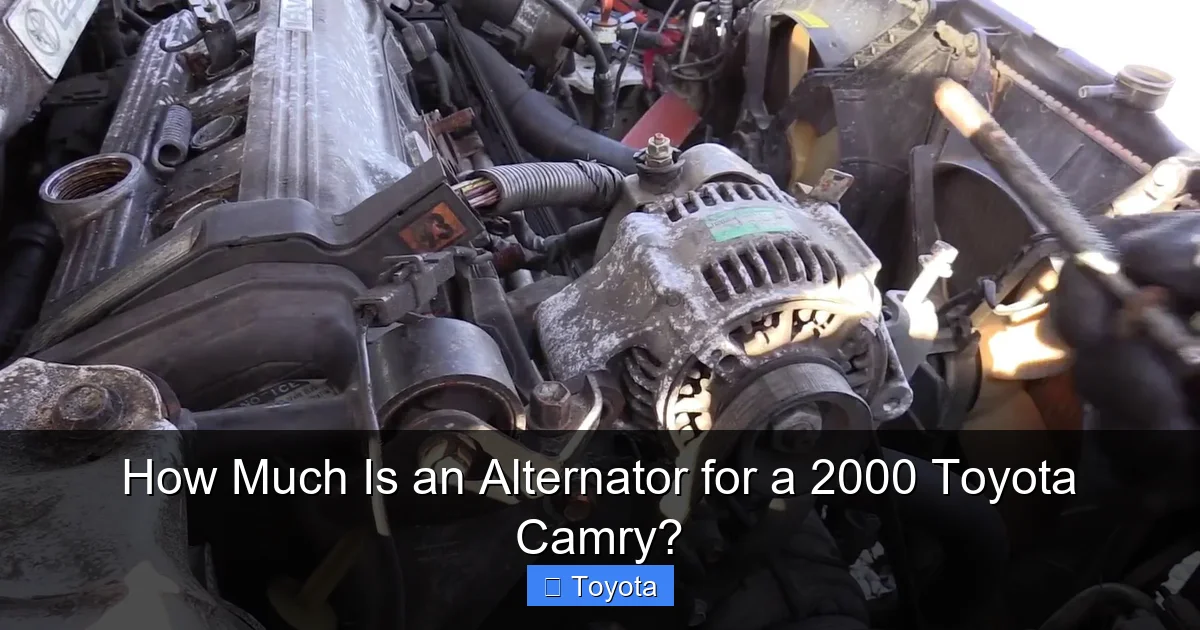
Visual guide about How Much Is an Alternator for a 2000 Toyota Camry?
Image source: i1.wp.com
Now for the big question: how much is an alternator for a 2000 Toyota Camry? The answer isn’t one-size-fits-all, but we can give you a solid range based on current market prices and common repair scenarios.
On average, the alternator itself (the part only) costs between $150 and $400. This wide range depends on several factors, including whether you choose an OEM (Original Equipment Manufacturer) part, a new aftermarket unit, or a remanufactured (reconditioned) alternator. Let’s break down each option.
OEM Alternators: The Factory Standard
OEM alternators are made by the original manufacturer (in this case, Denso, which supplies parts for Toyota) and are identical to the one that came with your car. They offer the best fit, performance, and reliability, but they come at a premium. For a 2000 Camry, an OEM alternator typically costs between $300 and $400.
While OEM parts are the gold standard, they’re not always necessary—especially for a 20-year-old car. Unless you’re planning to keep your Camry for many more years or you’re a stickler for factory specs, you might find better value elsewhere.
New Aftermarket Alternators: Budget-Friendly and Reliable
Aftermarket alternators are made by third-party companies like ACDelco, Bosch, Duralast, or PowerSelect. These parts are designed to meet or exceed OEM specifications and are often significantly cheaper. A new aftermarket alternator for a 2000 Camry usually costs between $150 and $250.
Many of these brands offer solid warranties (often 1–3 years) and are widely available at auto parts stores like AutoZone, Advance Auto Parts, or O’Reilly Auto Parts. Some even include free installation if you buy the part in-store—just ask when you pick it up.
Remanufactured Alternators: The Best of Both Worlds
Remanufactured alternators are used units that have been disassembled, cleaned, tested, and rebuilt with new internal components (like brushes, bearings, and diodes). They’re a popular choice because they’re more affordable than new parts but still reliable. For a 2000 Camry, a remanufactured alternator typically costs between $120 and $200.
These parts often come with warranties comparable to new units and are a great eco-friendly option since they reduce waste. Just make sure you buy from a reputable brand—look for certifications or customer reviews to ensure quality.
Used or Salvage Yard Alternators: A Risky Gamble
If you’re on a tight budget, you might consider a used alternator from a salvage yard or online marketplace. These can cost as little as $50 to $100, but they come with risks. There’s no way to know how much life is left in the unit, and many used alternators fail within a year.
If you go this route, try to find one with a warranty (some yards offer 30–90 days) and inspect it carefully for signs of damage or corrosion. It’s also a good idea to test it before installation.
Labor Costs: What to Expect When Hiring a Mechanic
Visual guide about How Much Is an Alternator for a 2000 Toyota Camry?
Image source: i2.wp.com
While the alternator itself is a significant expense, labor can add another $100 to $200 to your total bill. Most mechanics charge between $80 and $120 per hour, and replacing an alternator on a 2000 Camry usually takes 1.5 to 2.5 hours.
The exact time depends on the engine type and accessibility. The 4-cylinder engine is generally easier to work on, with the alternator mounted near the top of the engine. The V6, however, has a tighter engine bay, making the job more complex and time-consuming.
Factors That Affect Labor Costs
Several factors can influence how much you’ll pay for labor:
- Location: Mechanics in urban areas or high-cost regions (like California or New York) often charge more than those in rural areas.
- Shop type: Dealerships typically charge the highest labor rates, while independent shops and chain stores (like Midas or Firestone) may offer competitive pricing.
- Additional services: If your serpentine belt is worn or your battery terminals are corroded, the mechanic may recommend replacing those at the same time, adding to the cost.
- Diagnostic fees: Some shops charge a separate fee to diagnose the problem, though many waive it if you proceed with the repair.
To save money, consider getting quotes from multiple shops. Many auto parts stores also offer installation services at a flat rate—sometimes as low as $50–$75—if you buy the part from them.
DIY Alternator Replacement: Can You Do It Yourself?

Visual guide about How Much Is an Alternator for a 2000 Toyota Camry?
Image source: carid.com
If you’re handy with tools and comfortable working under the hood, replacing the alternator yourself can save you a significant amount of money. The job is considered intermediate in difficulty—doable for most DIYers with basic mechanical skills.
Tools You’ll Need
Before you start, gather these tools:
- Socket wrench set (metric)
- Serpentine belt tool or breaker bar
- Jack and jack stands (if needed for access)
- Screwdrivers (flathead and Phillips)
- Pliers
- Multimeter (to test the new alternator)
- Safety glasses and gloves
Step-by-Step Overview
Here’s a simplified breakdown of the process:
- Disconnect the battery: Always start by disconnecting the negative terminal to prevent electrical shocks or short circuits.
- Locate the alternator: It’s usually on the front of the engine, driven by the serpentine belt.
- Remove the serpentine belt: Use a belt tensioner tool to release tension and slide the belt off the alternator pulley.
- Disconnect electrical connections: Unplug the wiring harness and remove the positive battery cable from the alternator.
- Unbolt the alternator: Remove the mounting bolts and carefully take the old alternator out.
- Install the new alternator: Position the new unit, bolt it in place, reconnect the wiring, and reinstall the belt.
- Reconnect the battery and test: Start the engine and use a multimeter to confirm the alternator is charging properly.
Tips for Success
- Take photos before disconnecting anything—this helps with reassembly.
- Label wires if needed to avoid confusion.
- Use a belt routing diagram (often found under the hood) to ensure the serpentine belt is installed correctly.
- Don’t overtighten bolts—snug is enough.
- Test the new alternator before putting everything back together.
While DIY can save you $100 or more in labor, it’s not for everyone. If you’re unsure, it’s better to hire a professional to avoid damaging your car or injuring yourself.
Where to Buy an Alternator for Your 2000 Camry
You have several options when it comes to purchasing an alternator. Each has its pros and cons, so choose based on your budget, convenience, and trust in the seller.
Auto Parts Stores
Big-box retailers like AutoZone, Advance Auto Parts, O’Reilly Auto Parts, and NAPA are convenient and often offer free testing, installation, and warranties. Prices are competitive, and you can usually get the part the same day.
Online Retailers
Websites like Amazon, RockAuto, and eBay offer a wide selection and often lower prices. RockAuto, in particular, is popular with DIYers for its detailed fitment guides and budget-friendly options. Just be sure to check return policies and warranty terms.
Toyota Dealerships
If you want OEM parts and don’t mind the higher cost, a Toyota dealership is your best bet. They’ll have the exact part for your Camry and can install it for you, though labor rates are typically higher.
Salvage Yards and Used Parts
For the lowest prices, check local salvage yards or online used parts marketplaces. Just remember the risks—limited warranties and unknown history.
Tips to Save Money and Avoid Scams
Replacing an alternator doesn’t have to break the bank. Here are some smart tips to keep costs down:
- Compare prices online: Use sites like RockAuto or Google Shopping to compare prices across retailers.
- Look for promotions: Many auto parts stores offer discounts, rebates, or free installation with purchase.
- Buy remanufactured: You’ll save 30–50% compared to new parts with little compromise in quality.
- Get multiple quotes: Don’t settle for the first mechanic you call—shop around for the best labor rate.
- Avoid upsells: Some shops may try to sell you unnecessary services. Stick to what you need.
- Check warranty coverage: If your car is still under an extended warranty or service plan, the repair might be covered.
Also, be wary of extremely low prices—if it seems too good to be true, it probably is. Stick with reputable brands and sellers to avoid counterfeit or defective parts.
Conclusion: Making the Right Choice for Your Camry
So, how much is an alternator for a 2000 Toyota Camry? As we’ve seen, the total cost can range from around $250 to $600, depending on the part you choose and whether you hire a mechanic or do it yourself. While it’s not a cheap repair, it’s a necessary one to keep your Camry reliable and roadworthy.
The good news? You have options. Whether you go with a remanufactured alternator from RockAuto, a new aftermarket unit from AutoZone, or an OEM part from the dealership, there’s a solution that fits your budget and needs. And if you’re willing to get your hands dirty, DIY installation can save you a big chunk of change.
Remember, your 2000 Camry has already proven its durability—don’t let a failing alternator cut its life short. With the right part and a little know-how, you can keep it running strong for many more miles.
Frequently Asked Questions
How much is an alternator for a 2000 Toyota Camry?
The alternator itself typically costs between $150 and $400, depending on whether you choose OEM, aftermarket, or remanufactured. Labor adds another $100–$200 if you hire a professional.
Can I drive with a bad alternator?
You can drive for a short time, but not safely. A failing alternator won’t recharge your battery, so the car may stall or not restart. It’s best to replace it as soon as possible.
How long does it take to replace an alternator on a 2000 Camry?
Professional installation usually takes 1.5 to 2.5 hours. DIY may take longer if you’re unfamiliar with the process.
Is it worth replacing the alternator on a 20-year-old car?
Yes, especially if the rest of the car is in good condition. A new alternator can extend your Camry’s life and prevent costly breakdowns.
What’s the difference between remanufactured and new alternators?
Remanufactured alternators are rebuilt with new internal parts and are cheaper than new units. They’re reliable and often come with warranties.
Can I test my alternator myself?
Yes, with a multimeter. With the engine running, check the battery voltage—it should be between 13.5 and 14.5 volts. Lower readings indicate a problem.
