
How Many Catalytic Converters Are in a Toyota Corolla?

The number of catalytic converters in a Toyota Corolla depends on the model year, engine type, and drivetrain configuration. Most modern Corollas have one or two catalytic converters, with some high-performance or hybrid variants using additional units. Understanding your vehicle’s setup helps with maintenance, repairs, and emissions compliance.
Key Takeaways
- Understanding How Many Catalytic Converters Are in a Toyota Corolla?: Provides essential knowledge
📑 Table of Contents
- How Many Catalytic Converters Are in a Toyota Corolla?
- Understanding Catalytic Converters: What They Do and Why They Matter
- How Many Catalytic Converters Does a Standard Toyota Corolla Have?
- Hybrid Corollas: Do They Have More Catalytic Converters?
- When Might a Corolla Have Two Catalytic Converters?
- Where Are the Catalytic Converters Located in a Toyota Corolla?
- How to Maintain and Protect Your Corolla’s Catalytic Converter
- Conclusion: What You Need to Know About Catalytic Converters in the Toyota Corolla
How Many Catalytic Converters Are in a Toyota Corolla?
If you’re driving a Toyota Corolla—or thinking about buying one—you might be wondering: how many catalytic converters does it actually have? It’s a great question, especially if you’re concerned about emissions, maintenance costs, or even theft prevention. The short answer? Most Toyota Corollas have one catalytic converter, but some models come with two. The exact number depends on several factors, including the year of manufacture, engine type, drivetrain, and whether it’s a hybrid or conventional gasoline model.
Catalytic converters are essential components in your car’s exhaust system. They work behind the scenes to convert harmful pollutants like carbon monoxide, nitrogen oxides, and hydrocarbons into less harmful substances such as carbon dioxide and water vapor. Because of their role in reducing vehicle emissions, they’re required by law in most countries, including the United States, Canada, and members of the European Union.
But why does the number of catalytic converters vary? It all comes down to engineering design and emissions regulations. Over the years, as environmental standards have become stricter, automakers like Toyota have adapted their exhaust systems to meet these demands. This has led to more complex setups in some vehicles, including multiple catalytic converters or advanced configurations like close-coupled catalysts.
In this guide, we’ll break down everything you need to know about catalytic converters in the Toyota Corolla—how many you can expect, where they’re located, why they matter, and what to do if one fails. Whether you’re a long-time Corolla owner or shopping for a used model, this information will help you make informed decisions about your vehicle’s maintenance and performance.
Understanding Catalytic Converters: What They Do and Why They Matter
Visual guide about How Many Catalytic Converters Are in a Toyota Corolla?
Image source: justanswer.com
Before diving into the specifics of the Toyota Corolla, it helps to understand what a catalytic converter actually does. Think of it as your car’s built-in air purifier. Every time your engine burns fuel, it produces exhaust gases. Some of these gases—like carbon monoxide and nitrogen oxides—are dangerous to humans and the environment. The catalytic converter uses precious metals like platinum, palladium, and rhodium to trigger chemical reactions that transform these toxins into safer compounds.
There are two main types of catalytic converters: two-way and three-way. Two-way converters, found mostly in older vehicles, handle carbon monoxide and hydrocarbons. Three-way converters, which are standard in modern cars, also reduce nitrogen oxides. Most Toyota Corollas made after the mid-1980s use three-way catalytic converters to meet emissions standards.
The importance of catalytic converters goes beyond environmental protection. They’re also critical for your car’s performance. If a catalytic converter becomes clogged or fails, you might notice reduced fuel efficiency, poor acceleration, or a check engine light. In some cases, a completely blocked converter can cause the engine to stall or prevent the car from starting.
Moreover, catalytic converters are expensive to replace—often costing between $1,000 and $3,000 depending on the model and labor costs. This high value has made them a target for theft, especially in urban areas. Thieves can remove a catalytic converter in under a minute using basic tools, leaving owners with a costly repair bill.
Understanding how many catalytic converters your Corolla has can help you monitor their condition, plan for maintenance, and take steps to prevent theft. It also ensures you’re compliant with emissions testing, which is required in many states and countries.
How Many Catalytic Converters Does a Standard Toyota Corolla Have?
Visual guide about How Many Catalytic Converters Are in a Toyota Corolla?
Image source: 2carpros.com
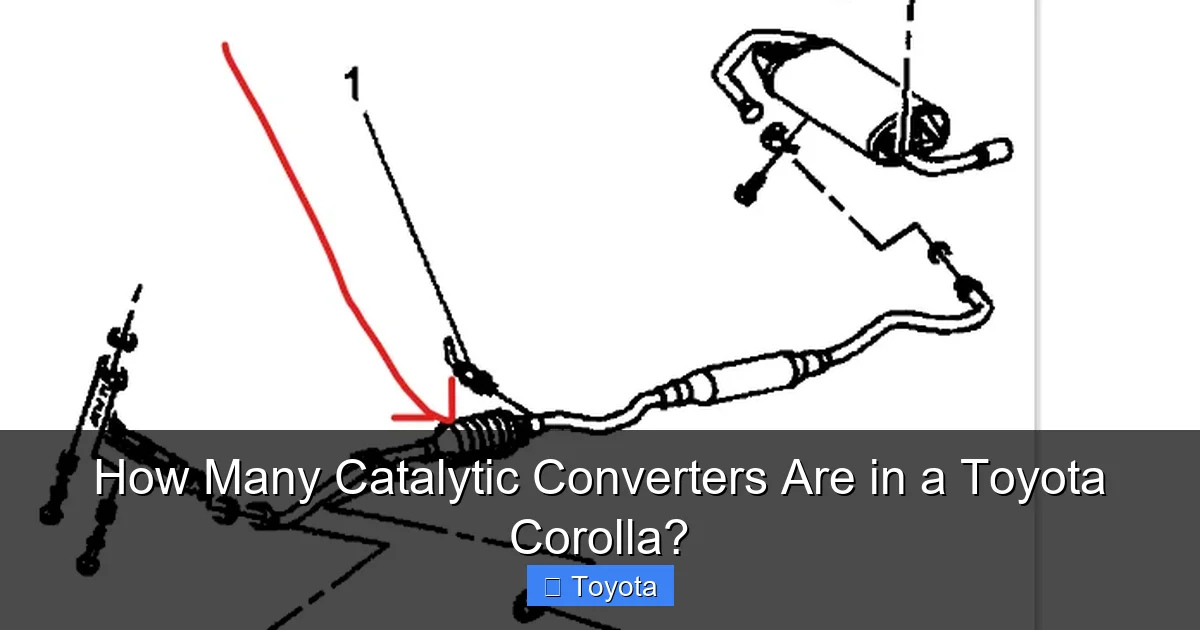
For the majority of Toyota Corolla models—especially those from the 2000s to the present—the answer is straightforward: one catalytic converter. This single unit is typically located in the exhaust manifold or just downstream of it, often referred to as a “close-coupled” converter because it’s positioned close to the engine. This placement allows it to heat up quickly, which improves its efficiency since catalytic converters work best when hot.
Most Corollas are powered by a 1.8L or 2.0L inline-four gasoline engine, which uses a single exhaust manifold and a single exhaust pipe. This setup naturally lends itself to a single catalytic converter. For example, the 2023 Toyota Corolla LE with the 2.0L Dynamic Force engine has one catalytic converter integrated into the exhaust system. The same is true for earlier models like the 2010 Corolla with the 1.8L 2ZR-FE engine.
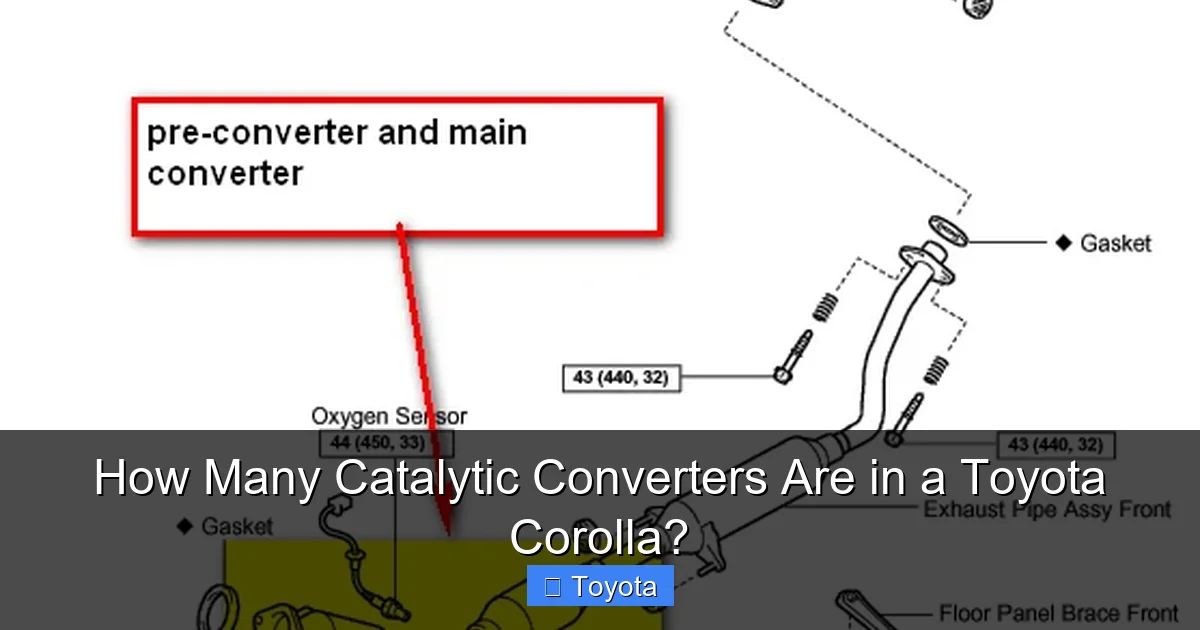
However, there are exceptions. Some Corolla models—particularly those with performance-oriented engines or all-wheel drive (AWD)—may feature a dual exhaust system or additional emissions components. In these cases, you might find a second catalytic converter, often called a “pre-cat” or “pre-catalytic converter,” located closer to the engine, with the main converter further downstream.
For instance, the Toyota Corolla AWD-e (available in select markets) uses a more complex exhaust layout to accommodate the all-wheel-drive system. While it still primarily relies on one main catalytic converter, some variants may include a secondary unit to meet stricter emissions standards.
It’s also worth noting that the physical size and design of the catalytic converter can vary. Newer Corollas often use smaller, more efficient converters with higher precious metal content to reduce emissions without sacrificing performance. These modern units are designed to last the lifetime of the vehicle under normal driving conditions, but they can still fail due to engine problems, contamination, or physical damage.
Hybrid Corollas: Do They Have More Catalytic Converters?
Visual guide about How Many Catalytic Converters Are in a Toyota Corolla?
Image source: 2carpros.com
The Toyota Corolla Hybrid introduces a different dynamic. These models combine a gasoline engine with an electric motor, resulting in lower emissions and better fuel economy. But does that mean they have more catalytic converters? Not necessarily—in fact, most Corolla Hybrids have just one catalytic converter, but it’s often more advanced than those in conventional models.
The 2023 Toyota Corolla Hybrid, for example, uses a 1.8L hybrid powertrain that produces fewer emissions from the start. Because the electric motor handles low-speed driving, the gasoline engine doesn’t need to work as hard, reducing the amount of pollutants generated. This allows Toyota to use a single, highly efficient catalytic converter that’s optimized for hybrid operation.
One key feature of hybrid catalytic converters is their ability to handle frequent engine start-stop cycles. In a conventional car, the engine runs continuously, keeping the catalytic converter hot. But in a hybrid, the engine may shut off at stoplights or during regenerative braking. To maintain efficiency, hybrid converters are designed to retain heat longer and activate quickly when the engine restarts.
Additionally, some hybrid systems use a “light-off” catalyst—a small, fast-heating converter placed very close to the engine—to reduce cold-start emissions. While this might sound like a second catalytic converter, it’s often integrated into the same housing as the main unit, so it doesn’t count as a separate component.
In short, Corolla Hybrids typically have one catalytic converter, but it’s engineered for maximum efficiency in a hybrid environment. This design helps the vehicle meet stringent emissions standards like California’s LEV III or Euro 6, while also improving fuel economy and reducing environmental impact.
When Might a Corolla Have Two Catalytic Converters?
While most Corollas have one catalytic converter, there are scenarios where a second unit may be present. Understanding these cases can help you identify your vehicle’s setup and avoid confusion during repairs or inspections.
Turbocharged or High-Performance Variants
Although the standard Corolla isn’t known for high performance, Toyota has offered turbocharged versions in certain markets. For example, the Corolla TS (Turbo Sport) sold in Europe and Asia features a 1.6L turbocharged engine. These models often use a dual catalytic converter system: a small pre-cat near the turbocharger to handle initial emissions, and a larger main converter further down the exhaust line.
The pre-cat helps reduce emissions during cold starts and under high load, when the turbo is active. This dual setup ensures that even under aggressive driving conditions, the vehicle remains compliant with emissions regulations.
All-Wheel Drive (AWD) Models
The Toyota Corolla AWD-e, available in North America from 2019 to 2022, uses a unique exhaust layout to accommodate the rear differential and driveshaft. In some configurations, this may require a secondary catalytic converter or a split exhaust system with two catalyst units. However, Toyota has generally managed to meet emissions standards with a single converter, so dual setups are rare.
Older Models with Dual Exhaust
In the 1990s and early 2000s, some Corolla models—especially sport trims like the Corolla GT or AE86—featured dual exhaust tips. While this might suggest two catalytic converters, most of these systems actually routed both exhaust streams through a single converter. True dual catalytic converters were uncommon in compact cars of that era due to cost and space constraints.
Aftermarket or Modified Vehicles
If your Corolla has been modified—such as with a performance exhaust system—it’s possible that a second catalytic converter was added or replaced. Some tuners install high-flow cats or delete the original unit entirely (which is illegal in most places). Always check local laws before making modifications.
In summary, while two catalytic converters are not standard, they can appear in specialized Corolla models. If you’re unsure, consult your owner’s manual or have a mechanic inspect the exhaust system.
Where Are the Catalytic Converters Located in a Toyota Corolla?
Knowing where your catalytic converter is located can help you spot damage, prevent theft, and understand repair costs. In most Toyota Corollas, the catalytic converter is positioned under the vehicle, near the front of the exhaust system.
Typical Location
On a standard Corolla, you’ll find the catalytic converter just behind the engine, often bolted to the exhaust manifold. It looks like a small, cylindrical or oval-shaped metal canister with inlet and outlet pipes. Because it’s close to the engine, it heats up quickly—usually within a few minutes of starting the car—which is essential for efficient operation.
Hybrid Models
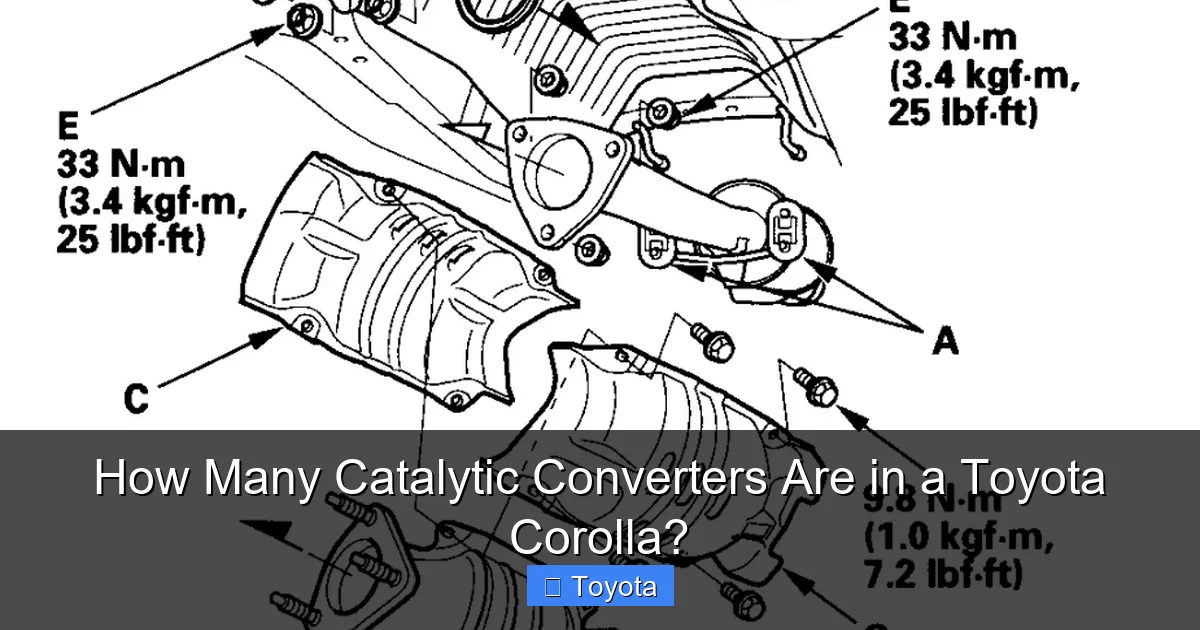
In Corolla Hybrids, the catalytic converter is similarly located under the vehicle, but it may be slightly larger or shaped differently to accommodate the hybrid system’s unique exhaust flow. Some hybrids also include heat shields or insulation to protect nearby components from high temperatures.
Accessibility and Theft Risk
One downside of this undercarriage placement is that it makes the catalytic converter vulnerable to theft. Thieves can slide under the car and cut it out in under two minutes. To reduce risk, consider parking in well-lit areas, installing a catalytic converter shield, or engraving your VIN on the unit.
Signs of Damage or Failure
If you notice a rattling noise from under the car, a sulfur smell (like rotten eggs), or reduced engine performance, your catalytic converter may be damaged. A mechanic can perform a visual inspection or use a scan tool to check for trouble codes related to the converter.
How to Maintain and Protect Your Corolla’s Catalytic Converter
Catalytic converters are built to last, but they’re not indestructible. With proper care, you can extend their life and avoid costly repairs.
Keep Your Engine Tuned
A misfiring engine or rich fuel mixture can dump unburned fuel into the exhaust, overheating and damaging the catalytic converter. Regular tune-ups, spark plug replacements, and oxygen sensor checks help prevent this.
Use Quality Fuel
Low-quality or contaminated fuel can leave deposits on the catalyst, reducing its efficiency. Stick to reputable gas stations and consider using a fuel system cleaner occasionally.
Avoid Short Trips
Frequent short drives don’t allow the catalytic converter to reach optimal temperature, leading to moisture buildup and reduced efficiency. If possible, combine errands or take longer drives occasionally.
Inspect for Damage
Check under your car periodically for signs of physical damage, such as dents or cracks. Even minor impacts from potholes or curbs can compromise the converter’s internal structure.
Prevent Theft
Install a catalytic converter protection device, park in secure areas, and consider etching your VIN onto the unit. Some insurance policies also cover catalytic converter theft—check with your provider.
Conclusion: What You Need to Know About Catalytic Converters in the Toyota Corolla
The Toyota Corolla is one of the most popular compact cars in the world, known for its reliability, fuel efficiency, and low maintenance costs. When it comes to catalytic converters, most models are designed with simplicity and efficiency in mind—typically featuring a single unit that does the job well.
While the number of catalytic converters can vary based on engine type, drivetrain, and model year, the vast majority of Corollas have one. Hybrids and performance variants may use advanced or dual setups, but these are the exception rather than the rule.
Understanding your Corolla’s catalytic converter setup helps you maintain your vehicle, comply with emissions laws, and protect against theft. Regular maintenance, quality fuel, and safe driving habits go a long way in preserving this critical component.
Whether you’re driving a 2005 Corolla with 200,000 miles or a brand-new 2024 hybrid, knowing how many catalytic converters your car has—and how to care for them—ensures a smoother, cleaner, and more reliable ride for years to come.
Frequently Asked Questions
How many catalytic converters does a 2020 Toyota Corolla have?
Most 2020 Toyota Corollas have one catalytic converter. This includes models with the 1.8L and 2.0L gasoline engines. The converter is typically located near the engine in the exhaust manifold.
Can a Toyota Corolla run without a catalytic converter?
Technically, yes, but it’s illegal in most places and can cause engine performance issues. Removing the catalytic converter also fails emissions tests and increases harmful exhaust emissions.
Why are catalytic converters stolen from Corollas?
Catalytic converters contain precious metals like platinum, palladium, and rhodium, which can be sold for scrap. Corollas are targeted because they’re common, have accessible undercarriages, and often have valuable converters.
How much does it cost to replace a catalytic converter on a Toyota Corolla?
Replacement costs range from $1,000 to $3,000, depending on the model year, engine type, and whether you use OEM or aftermarket parts. Labor and location also affect the price.
How long do catalytic converters last in a Corolla?
Under normal conditions, a catalytic converter can last 100,000 to 150,000 miles or more. However, engine problems, contamination, or physical damage can shorten its lifespan.
Do all Toyota Corollas have the same catalytic converter?
No. While most use a similar single-converter design, hybrid, turbocharged, or AWD models may have different sizes, shapes, or configurations to meet specific emissions and performance needs.
