
How to Activate a New Toyota Tpms Sensor Without a Tool

Activating a new Toyota TPMS sensor without a tool is possible using built-in vehicle systems and manual relearn procedures. This guide walks you through safe, effective methods for various Toyota models, helping you avoid expensive dealership visits while ensuring your tire pressure monitoring system works correctly.
Key Takeaways
- Many Toyota models support TPMS activation without special tools: Newer Toyotas often have onboard systems that allow manual sensor relearn using the dashboard controls.
- Proper tire pressure is essential before activation: Ensure all tires are inflated to the recommended PSI listed on the driver’s door jamb sticker.
- The relearn procedure varies by model and year: Always check your owner’s manual or Toyota’s official resources for your specific vehicle’s steps.
- Driving the vehicle may trigger automatic activation: Some Toyotas automatically detect and activate new sensors after a short drive at moderate speeds.
- Avoid over-reliance on DIY methods for complex issues: If the TPMS light remains on after multiple attempts, consult a professional to rule out sensor or system faults.
- Use a tire pressure gauge for accuracy: Relying solely on the TPMS display can lead to incorrect readings—always verify with a manual gauge.
- Keep spare sensors programmed and ready: If you frequently rotate tires or use winter/summer sets, consider having pre-programmed sensors to simplify swaps.
📑 Table of Contents
Understanding TPMS in Toyota Vehicles
Tire Pressure Monitoring Systems (TPMS) have become a standard safety feature in all Toyota vehicles manufactured since 2008, thanks to federal regulations aimed at improving road safety and fuel efficiency. The TPMS constantly monitors the air pressure in your tires and alerts you via a dashboard warning light if any tire drops below the recommended pressure. This not only helps prevent blowouts and uneven tire wear but also improves gas mileage and handling.
In Toyota vehicles, TPMS typically uses direct sensors mounted inside each wheel. These small, battery-powered devices measure the actual air pressure and temperature inside the tire and transmit that data wirelessly to the vehicle’s onboard computer. When you replace a tire or install new wheels—especially after a flat repair or seasonal tire change—the system may not recognize the new sensor. That’s when activation or “relearning” becomes necessary.
Unlike older systems that required expensive diagnostic tools, many modern Toyotas now support user-friendly relearn procedures that don’t need specialized equipment. This means you can often activate a new TPMS sensor without a tool, right from your driver’s seat. However, it’s important to understand that not all models are the same. The process depends on your Toyota’s year, trim level, and whether it uses a “stationary” or “driving” relearn method.
How TPMS Sensors Work in Toyotas
Each TPMS sensor has a unique ID code that the vehicle’s computer must recognize. When you install a new sensor—whether it’s a replacement for a damaged unit or part of a new wheel assembly—the car doesn’t automatically know it’s there. The system needs to be told, “Hey, this is my new sensor, and it belongs to the front left tire,” for example.
Toyota’s TPMS uses radio frequency (RF) signals to communicate between the sensors and the receiver module, usually located near the rear of the vehicle. The sensors activate when the wheels are spinning (typically above 15–20 mph), sending pressure data every few minutes. If the system doesn’t detect a signal from one or more sensors, the TPMS warning light will illuminate.
Some sensors are “programmable” or “cloneable,” meaning they can be configured to match your vehicle’s specifications. Others are “pre-programmed” for specific makes and models. If you’re installing aftermarket sensors, make sure they’re compatible with your Toyota. Using the wrong type can lead to activation failures or inaccurate readings.
Why Activating TPMS Matters
Ignoring a TPMS warning light isn’t just about convenience—it’s a safety issue. Underinflated tires increase rolling resistance, which reduces fuel economy and causes tires to wear unevenly. More critically, low tire pressure can lead to overheating, tread separation, and even blowouts, especially at highway speeds.
Activating your new TPMS sensor ensures that your vehicle can accurately monitor tire pressure in real time. This gives you peace of mind knowing that you’ll be alerted immediately if a tire starts losing air—whether it’s due to a slow leak, puncture, or temperature change.
Additionally, many states require a functioning TPMS for vehicle inspections. If your sensor isn’t activated, you could fail your inspection or face fines. Even if inspections aren’t required where you live, keeping your TPMS active helps maintain your vehicle’s resale value and overall reliability.
When Do You Need to Activate a New TPMS Sensor?
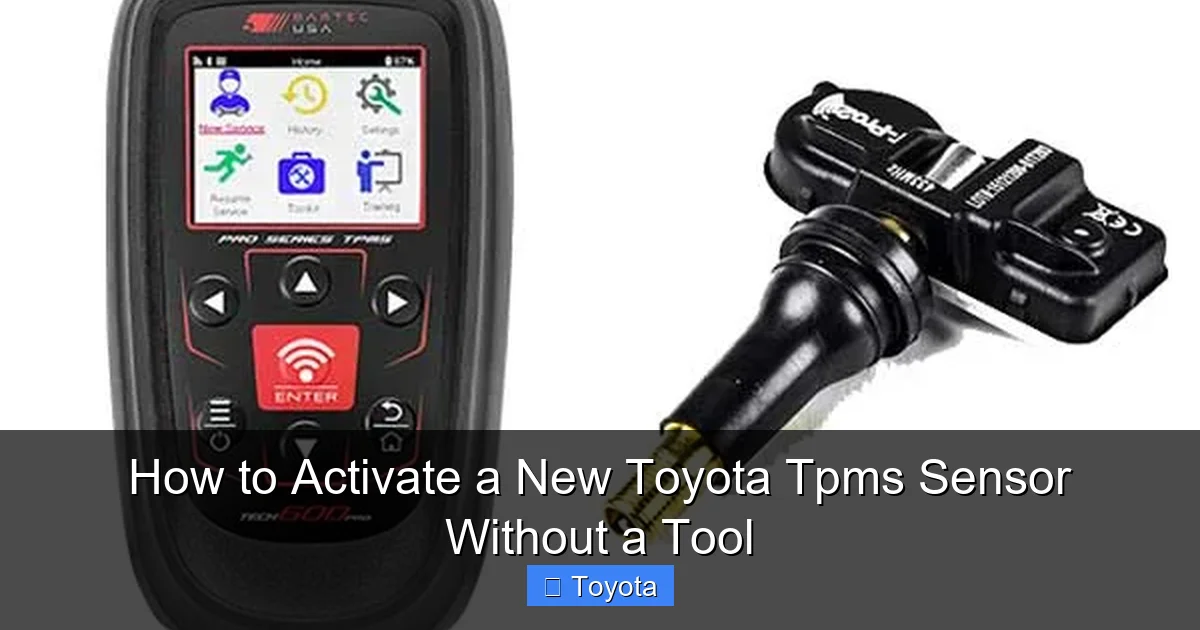
Visual guide about How to Activate a New Toyota Tpms Sensor Without a Tool
Image source: toyotatpms.com
There are several common scenarios where you’ll need to activate a new TPMS sensor in your Toyota. The most frequent is after replacing a tire or wheel. Whether you’ve had a flat repaired at a shop or installed a new set of alloy wheels, the old sensor may have been removed or damaged during the process.
Another common situation is seasonal tire changes. If you switch between summer and winter tires—especially if you use different rims—each wheel likely has its own TPMS sensor. When you swap them out, the vehicle needs to relearn which sensor belongs to which corner of the car.
You might also need activation if you’ve replaced a faulty sensor. TPMS sensors have internal batteries that typically last 5–10 years. When the battery dies, the sensor stops transmitting data, triggering the warning light. Replacing it requires activation so the new unit can communicate with the vehicle.
Occasionally, the TPMS system may lose sync due to a dead car battery, software glitch, or electrical issue. Even if no sensors were physically replaced, a relearn procedure might be necessary to reset the system.
Signs Your TPMS Needs Activation
The most obvious sign is the TPMS warning light on your dashboard—a yellow or orange icon that looks like a flat tire with an exclamation point. If this light comes on after a tire change or repair, activation is likely needed.
Other signs include inconsistent pressure readings, the light flashing briefly then staying on, or the system showing “—” or “LO” for one or more tires. In some cases, the light may turn off temporarily but return after driving a short distance.
If you’ve recently had your tires rotated and the light appears, it could mean the system doesn’t recognize the new sensor positions. Some Toyotas require a relearn after rotation, especially if the sensors were moved to different wheels.
Can You Drive with an Inactive TPMS Sensor?
Technically, yes—you can drive with an inactive TPMS sensor. Your car will still run normally, and the tires will function as usual. However, you won’t receive real-time pressure alerts, which defeats the purpose of having TPMS in the first place.
Driving with an inactive sensor also means you’re relying solely on visual checks or manual gauges to monitor tire pressure. This increases the risk of driving on underinflated tires, which can compromise safety and performance.
Moreover, if the TPMS light stays on, it may mask other issues. For example, if a tire actually loses pressure later, you might not notice because the light is already illuminated. Activating your sensor ensures the system works as intended.
Step-by-Step Guide to Activating a New Toyota TPMS Sensor Without a Tool

Visual guide about How to Activate a New Toyota Tpms Sensor Without a Tool
Image source: toyotatpms.com
The good news is that many Toyota models allow you to activate a new TPMS sensor without any special tools. This process, known as a “relearn” or “reinitialization,” uses the vehicle’s onboard menu system and a series of steps involving the ignition, brake pedal, and dashboard controls.
Below is a general guide that works for many Toyota vehicles from 2012 onward, including popular models like the Camry, Corolla, RAV4, Highlander, and Tacoma. Always consult your owner’s manual for model-specific instructions, as steps can vary slightly.
Preparation Before Activation
Before starting the relearn procedure, make sure your vehicle is ready:
– Park on a flat, level surface and turn off the engine.
– Ensure all tires are inflated to the correct pressure. Check the sticker on the driver’s door jamb for the recommended PSI. Use a reliable tire pressure gauge—don’t rely solely on the TPMS display.
– Turn the ignition to the “ON” position (but don’t start the engine). This powers up the vehicle’s electronics without engaging the starter.
– Make sure the TPMS warning light is on. If it’s already off, the system may have already recognized the sensor.
Having the correct tire pressure is crucial. If one tire is low, the system may not complete the relearn process properly. Also, avoid performing this procedure in extreme temperatures, as cold weather can temporarily affect sensor readings.
Accessing the TPMS Menu
Most modern Toyotas have a TPMS reset option in the vehicle settings menu. Here’s how to access it:
1. With the ignition on, press the “Menu” or “Setup” button on your steering wheel or dashboard.
2. Navigate to “Vehicle Settings” or “Customize Settings.”
3. Look for an option labeled “TPMS,” “Tire Pressure,” or “Tire Monitor.”
4. Select “Initialize” or “Relearn.”
On some models, you may need to press and hold the TPMS reset button (usually located under the steering column or near the fuse box) for several seconds until the light blinks.
If your Toyota doesn’t have a digital menu, you may need to use a manual relearn procedure involving the brake pedal and ignition cycling. This method is common on older models or base trims without advanced infotainment systems.
Performing the Relearn Procedure
Once you’ve accessed the TPMS menu, follow these steps:
1. Confirm that you want to initialize the system. The display may ask, “Initialize TPMS?” Select “Yes.”
2. The system will prompt you to drive the vehicle. In most cases, you’ll need to drive at speeds above 20–25 mph for 10–15 minutes. This allows the sensors to transmit their signals and the vehicle to detect them.
3. During the drive, avoid sudden braking or sharp turns. Maintain a steady speed on a straight road.
4. After driving, park the vehicle and turn off the ignition.
5. Wait about 30 seconds, then restart the car. Check if the TPMS light is off.
If the light remains on, repeat the procedure. Sometimes the system needs a second attempt to fully recognize all sensors.
Alternative: Manual Relearn Without a Menu
For Toyotas without a digital TPMS menu, you can try a manual relearn method:
1. Turn the ignition to “ON.”
2. Press and hold the TPMS reset button (if equipped) until the TPMS light blinks three times.
3. Inflate all tires to the correct pressure.
4. Drive the vehicle at 20+ mph for at least 10 minutes.
5. Turn off the ignition and restart.
This method works on many 2008–2015 models, including the Prius and 4Runner. If your vehicle doesn’t have a reset button, check the owner’s manual for alternative steps.
Tips for Success
– Perform the relearn on a clear day with good weather. Rain, snow, or extreme cold can interfere with sensor signals.
– Avoid parking near strong radio transmitters, cell towers, or large metal structures, which can disrupt RF signals.
– If you’re using aftermarket sensors, ensure they’re compatible with your Toyota’s frequency (usually 315 MHz or 433 MHz).
– Keep the vehicle battery fully charged. A weak battery can prevent the system from completing the relearn.
Troubleshooting Common Activation Issues
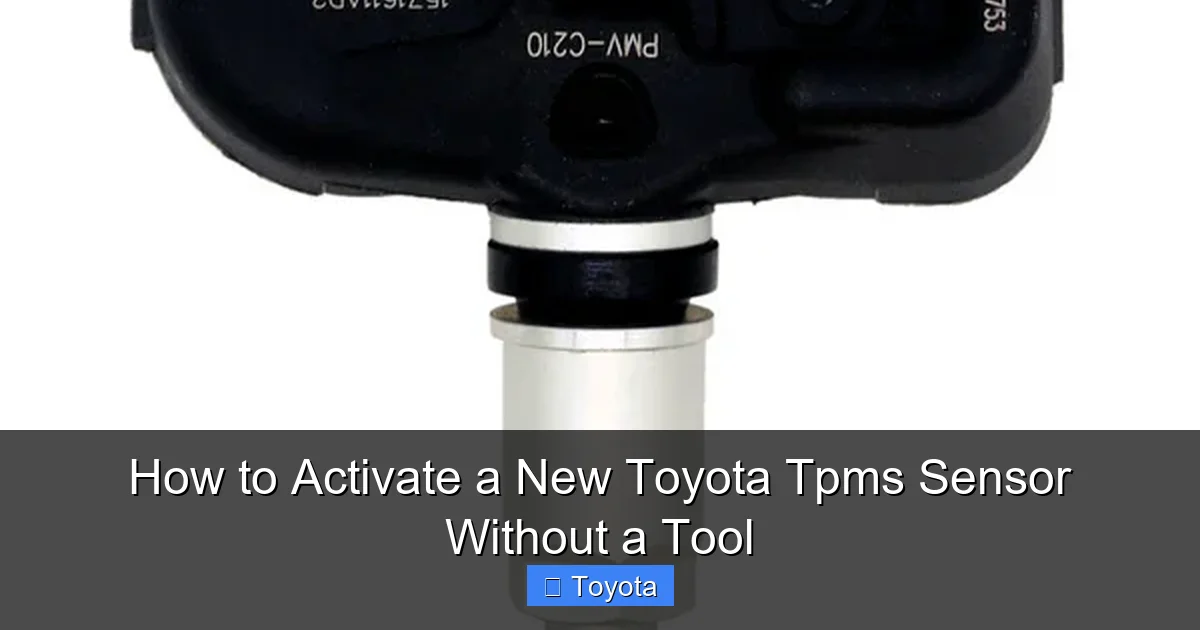
Visual guide about How to Activate a New Toyota Tpms Sensor Without a Tool
Image source: vxdas.com
Even with the correct procedure, activation doesn’t always go smoothly. Here are some common problems and how to fix them.
TPMS Light Stays On After Activation
If the light remains illuminated after following the steps, there could be several reasons:
– One or more sensors are not transmitting. This could be due to a dead battery, damage, or interference.
– The sensor wasn’t properly installed. Make sure it’s securely mounted and the valve stem is tight.
– The vehicle hasn’t driven long enough. Some systems require up to 20 minutes of driving at varying speeds.
– The sensor is incompatible. Double-check that the new sensor matches your Toyota’s specifications.
Try repeating the relearn procedure. If the light persists, use a TPMS scan tool (available at auto parts stores) to check each sensor’s status.
Sensor Not Detected at All
If the system shows “No Signal” or “—” for a tire, the sensor may be faulty or not activated. New sensors often come in a “sleep” mode and need to be awakened by driving or using a magnet (on some models).
For sensors with a wake-up feature, place a strong magnet near the valve stem for a few seconds. This triggers the sensor to start transmitting. Then proceed with the relearn.
Intermittent or Flashing TPMS Light
A flashing TPMS light usually indicates a system malfunction, not just a pressure issue. This could be due to a faulty receiver module, wiring problem, or software glitch.
In this case, a professional diagnosis may be needed. Visit a Toyota service center or trusted mechanic with TPMS diagnostic tools.
Aftermarket Sensor Compatibility Issues
Not all aftermarket sensors work with every Toyota. Some require programming with a tool, even if the vehicle supports tool-free activation. Always buy sensors labeled as “Toyota-compatible” or “OESpectrum” (a trusted brand for direct-fit sensors).
If you’re unsure, consult the sensor manufacturer’s compatibility guide or ask the seller before purchasing.
Maintaining Your TPMS System
Once your new sensor is activated, proper maintenance ensures it continues to work reliably.
Regular Tire Pressure Checks
Even with TPMS, check your tire pressure manually at least once a month. Sensors can fail, and the system may not detect slow leaks immediately. Use a quality gauge and compare readings to the door jamb sticker.
Seasonal Tire Swaps
If you change tires seasonally, keep track of which sensor is on which wheel. Label them or take photos before swapping. This makes future activations easier.
Some owners invest in a TPMS tool to clone sensor IDs, allowing them to swap wheels without relearning. While not necessary, it’s a convenient option for frequent swappers.
Battery Life and Sensor Replacement
TPMS sensor batteries typically last 7–10 years. If your vehicle is older and the TPMS light comes on frequently, the sensor may be nearing end-of-life. Replacement is the only solution—recharging isn’t possible.
When replacing, consider upgrading to a sensor with a longer battery life or one that includes temperature monitoring for added safety.
Avoiding Damage During Tire Service
When getting tires rotated or repaired, inform the technician that your vehicle has TPMS. Improper handling can damage the sensor or bend the valve stem. Always use TPMS-safe tools and procedures.
When to Seek Professional Help
While many TPMS activations can be done at home, some situations require professional assistance.
If you’ve tried the relearn procedure multiple times and the light won’t turn off, there may be a deeper issue. This could include a faulty sensor, damaged wiring, or a problem with the vehicle’s receiver module.
Similarly, if you’re installing sensors on a vehicle with advanced driver-assistance systems (ADAS), such as lane departure warning or adaptive cruise control, improper TPMS calibration could affect other systems.
In these cases, visit a Toyota dealership or certified mechanic. They have the tools and expertise to diagnose and resolve complex TPMS issues.
Conclusion
Activating a new Toyota TPMS sensor without a tool is not only possible but often straightforward, thanks to built-in relearn procedures in many modern models. By following the correct steps—ensuring proper tire pressure, accessing the vehicle menu, and driving to trigger sensor detection—you can save time and avoid unnecessary service fees.
Remember, the key to success is preparation and patience. Always double-check your tire pressure, consult your owner’s manual, and allow enough driving time for the system to complete the relearn. If problems persist, don’t hesitate to seek professional help.
With a properly activated TPMS, you’ll enjoy safer drives, better fuel economy, and the confidence that your tires are always monitored. Whether you’re swapping winter tires or replacing a faulty sensor, this DIY approach puts control back in your hands—no special tools required.
Frequently Asked Questions
Can I activate a Toyota TPMS sensor without any tools?
Yes, many Toyota models allow you to activate a new TPMS sensor without a tool using the vehicle’s onboard menu or a manual relearn procedure. This is especially true for models from 2012 onward with digital settings.
How long does it take to activate a TPMS sensor?
The activation process typically takes 10–20 minutes of driving at speeds above 20 mph. The exact time depends on the model and how quickly the sensors transmit their signals.
What if the TPMS light won’t turn off after activation?
If the light remains on, double-check tire pressure, repeat the relearn procedure, or test each sensor with a TPMS tool. Persistent issues may indicate a faulty sensor or system malfunction.
Do I need to activate TPMS after every tire rotation?
Not always. Some Toyotas automatically recognize sensor positions after rotation. However, if the TPMS light comes on, a relearn may be necessary to confirm the new layout.
Can I use aftermarket TPMS sensors in my Toyota?
Yes, but ensure they are compatible with your vehicle’s frequency and model. Some aftermarket sensors require programming tools, even if your Toyota supports tool-free activation.
How often should I check my tire pressure manually?
Check your tire pressure at least once a month using a manual gauge. Relying solely on TPMS can lead to missed slow leaks or inaccurate readings.
