
How to Turn Off Seatbelt Alarm on Toyota Highlander 2022

Turning off the seatbelt alarm on a 2022 Toyota Highlander is possible but not recommended for safety reasons. This guide walks you through the process, explains why the alarm exists, and offers safer alternatives to silencing it without compromising protection.
If you’ve ever started your 2022 Toyota Highlander only to be met with that relentless, beeping seatbelt alarm, you’re not alone. That persistent chime can feel more like an annoyance than a helpful reminder—especially if you’re just moving the car a few feet in the driveway or idling in a parking lot. While it’s understandable to want peace and quiet, it’s important to remember that this alarm isn’t just there to bug you. It’s a vital part of your vehicle’s safety system, designed to protect you and your passengers in the event of a collision.
The 2022 Toyota Highlander comes equipped with Toyota Safety Sense™ 2.0, a comprehensive suite of driver-assist technologies that includes pre-collision detection, lane departure alerts, and yes—seatbelt reminders. These systems work together to reduce the risk of accidents and minimize injury when crashes do happen. The seatbelt alarm specifically triggers when the vehicle detects motion without the driver (and sometimes front passenger) buckled up. It’s a simple but effective nudge toward safer driving habits. Still, there are legitimate situations where the constant beeping becomes impractical—like when you’re loading groceries, letting a child get settled, or performing routine maintenance. In those cases, knowing how to temporarily silence the alarm can be a real convenience.
But before we dive into the how-to, let’s talk about the why. Seatbelts save lives—over 15,000 in the U.S. alone each year, according to the National Highway Traffic Safety Administration (NHTSA). The alarm is there to reinforce that lifesaving habit. Disabling it permanently isn’t just risky; it could also void parts of your warranty or affect insurance claims in the event of an accident. That said, Toyota does allow for temporary deactivation using a built-in procedure, which we’ll cover in detail. Our goal here isn’t to encourage bypassing safety features, but to empower you with knowledge—so you can make informed decisions while keeping yourself and others protected.
Key Takeaways
- Safety First: The seatbelt alarm is a critical safety feature designed to protect drivers and passengers by encouraging proper restraint use.
- Legal Considerations: Disabling the seatbelt alarm may violate traffic laws in some regions, so check local regulations before proceeding.
- <>Temporary Deactivation Method: You can temporarily silence the chime by following a specific ignition and seatbelt sequence—no tools required.
- Professional Assistance Recommended: For permanent deactivation, consult a certified Toyota technician to avoid damaging vehicle systems.
- Alternative Solutions: Use seatbelt extenders or ensure proper belt fit to reduce discomfort instead of disabling the alarm.
- Airbag Safety Link: Unbelted occupants may reduce airbag effectiveness, increasing injury risk in a crash.
- Model-Specific Steps: The 2022 Highlander uses Toyota’s latest safety suite, so procedures differ from older models—follow exact steps.
📑 Table of Contents
- Understanding the 2022 Toyota Highlander Seatbelt Alarm System
- Why the Seatbelt Alarm Exists: Safety and Legal Context
- Step-by-Step Guide: Temporarily Disabling the Seatbelt Alarm
- Permanent Deactivation: Risks and Professional Options
- Safer Alternatives to Disabling the Alarm
- Conclusion: Balance Convenience with Responsibility
Understanding the 2022 Toyota Highlander Seatbelt Alarm System
The seatbelt alarm in the 2022 Toyota Highlander isn’t just a simple buzzer—it’s an integrated component of the vehicle’s broader occupant safety network. When you start the engine and begin to move, sensors in the seat and buckle detect whether the driver (and optionally, the front passenger) is restrained. If the system determines the seatbelt isn’t fastened while the vehicle is in motion, it triggers a visual warning on the instrument cluster—usually a flashing icon of a person with a seatbelt—and an audible chime that repeats every few seconds.
This feature is part of Toyota’s commitment to passive safety, meaning it works automatically without requiring driver input. Unlike older vehicles where you might manually silence the alarm by buckling and unbuckling quickly, the 2022 Highlander uses more sophisticated logic. The system monitors vehicle speed, seat occupancy, and buckle status in real time. It’s also linked to the airbag control module, which adjusts deployment force based on whether occupants are belted. This integration means that tampering with the seatbelt alarm could inadvertently affect other safety systems.
One common misconception is that the alarm only activates at high speeds. In reality, it typically starts as soon as the vehicle exceeds 15–20 mph, but some drivers report hearing it even at lower speeds during testing or short movements. The exact threshold can vary slightly depending on software calibration and regional regulations. Additionally, if the front passenger seat is occupied (detected by weight sensors), the system may also monitor their seatbelt status—though this feature can often be disabled through the infotainment menu.
It’s also worth noting that the 2022 Highlander offers customizable safety settings via the Multi-Information Display (MID). While you can’t fully disable the seatbelt chime through the standard menu, you can adjust related alerts like lane departure warnings or forward collision alerts. This level of control reflects Toyota’s balance between user convenience and regulatory compliance. However, the seatbelt reminder remains largely non-negotiable in factory settings—for good reason.
Why the Seatbelt Alarm Exists: Safety and Legal Context
Visual guide about How to Turn Off Seatbelt Alarm on Toyota Highlander 2022
Image source: bryansgarage.com
At its core, the seatbelt alarm exists because seatbelts work—and people don’t always use them. Despite decades of public education and enforcement, NHTSA data shows that nearly 25% of front-seat occupants still don’t buckle up regularly. The alarm serves as a gentle but persistent nudge, leveraging behavioral psychology to build consistent safety habits. Studies have shown that auditory and visual reminders significantly increase seatbelt usage rates, especially among occasional users.
From a legal standpoint, seatbelt use is mandated in nearly every U.S. state, with most enforcing primary laws—meaning officers can pull you over solely for not wearing a seatbelt. In some jurisdictions, disabling safety features like the seatbelt alarm could be interpreted as tampering with federally mandated equipment, potentially leading to fines or inspection failures. While Toyota doesn’t explicitly prohibit temporary deactivation, permanent removal or modification may violate Federal Motor Vehicle Safety Standards (FMVSS) No. 208, which governs occupant crash protection.
Moreover, insurance companies often consider seatbelt use when assessing liability and claim payouts. If an unbelted occupant is injured in a crash, insurers may reduce compensation based on comparative negligence—even if the driver wasn’t at fault. A disabled seatbelt alarm could complicate this assessment, suggesting intentional disregard for safety protocols. For families, this risk is even greater: children and teens are statistically less likely to wear seatbelts consistently, making the alarm an essential reminder.
Beyond legality and insurance, there’s the human factor. Airbags are designed to work in tandem with seatbelts. Without a belt, an airbag deploying at 200+ mph can cause serious injury or even death. The 2022 Highlander’s advanced airbag system includes dual-stage front airbags, side curtain airbags, and driver knee airbags—all calibrated assuming proper restraint use. Bypassing the seatbelt alarm undermines this engineering synergy, putting everyone in the vehicle at unnecessary risk.
Step-by-Step Guide: Temporarily Disabling the Seatbelt Alarm
Visual guide about How to Turn Off Seatbelt Alarm on Toyota Highlander 2022
Image source: bryansgarage.com
If you need to silence the seatbelt alarm temporarily—for example, while moving the car in a tight garage or during a quick loading task—Toyota provides a built-in method that doesn’t require tools, codes, or dealership visits. This procedure works on most 2022 Highlander trims (LE, XLE, Limited, Platinum) and leverages the vehicle’s ignition and seatbelt sensor logic. Remember: this only disables the chime for the current ignition cycle. Once you turn the car off and back on, the alarm will return unless you repeat the steps.
Preparation Steps
Before starting, ensure the vehicle is parked on a level surface with the parking brake engaged. Make sure no passengers are in the front seats, as their presence might interfere with the sensor sequence. Also, confirm that the driver’s door is closed—open doors can trigger other warnings that complicate the process.
Exact Procedure
Follow these steps precisely, in order, with timing being critical:
1. Sit in the driver’s seat and close the door.
2. Insert the key into the ignition (or press the Start button without pressing the brake pedal if using push-button start).
3. Turn the ignition to the “ON” position (do not start the engine). You should see dashboard lights illuminate, but the engine remains off.
4. Within 5 seconds, buckle and unbuckle the driver’s seatbelt three times. Each buckle/unbuckle action should be deliberate and complete—fully engaging and releasing the latch.
5. After the third unbuckle, immediately buckle the seatbelt again and leave it fastened.
6. Wait for about 10 seconds. You should hear a single chime or see a confirmation message on the instrument cluster indicating the seatbelt reminder has been temporarily disabled.
7. Now you can start the engine normally. The audible chime will not sound, even if you drive without buckling up.
If the sequence doesn’t work the first time, don’t panic. Turn the ignition off completely, wait 30 seconds, and try again. Timing is crucial—especially the three buckle/unbuckle motions must occur within the 5-second window after turning to “ON.” Some users find it helpful to count aloud or use a stopwatch app to stay on rhythm.
Important Notes
– This method only affects the driver’s seatbelt chime. The passenger reminder (if enabled) will still function.
– The visual warning (icon on the dashboard) may still appear, but the annoying beeping will stop.
– The disable lasts only until the next time you turn the vehicle off. There’s no permanent “off” switch.
– If your Highlander has been updated with recent software (via Toyota’s TIS system), the procedure may vary slightly. Check your owner’s manual or contact Toyota support if unsure.
Permanent Deactivation: Risks and Professional Options
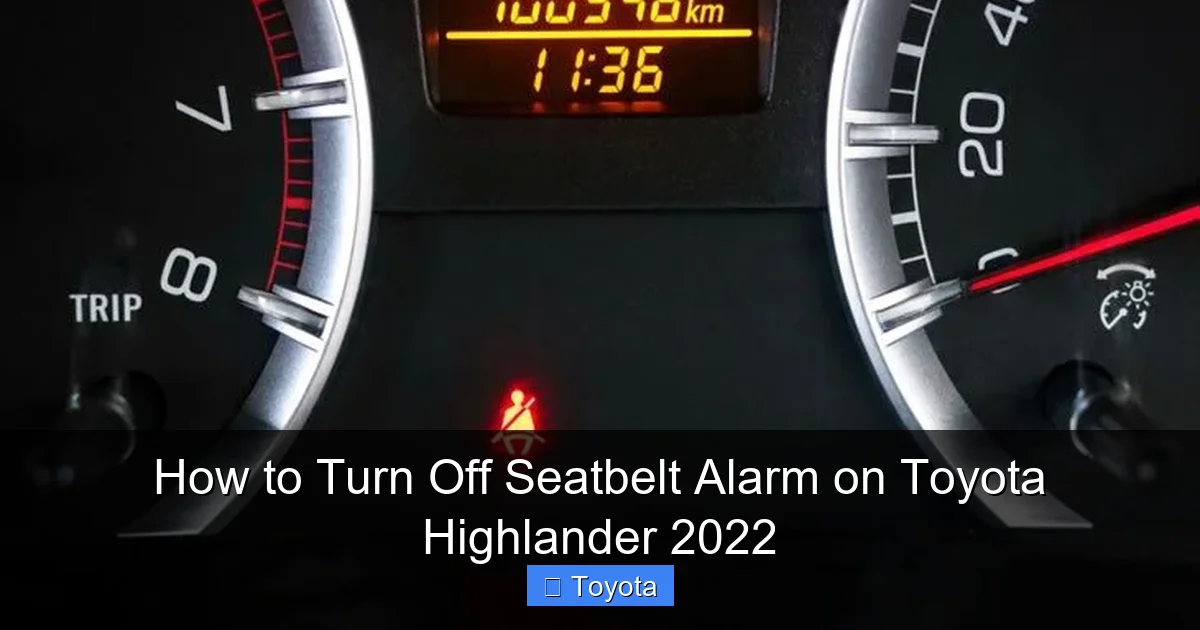
Visual guide about How to Turn Off Seatbelt Alarm on Toyota Highlander 2022
Image source: bryansgarage.com
While temporary silencing is straightforward, permanently disabling the seatbelt alarm on a 2022 Toyota Highlander is significantly more complex—and strongly discouraged. Unlike older vehicles where you could simply unplug a sensor or cut a wire, modern Toyotas use networked electronic control units (ECUs) that communicate across multiple systems. Tampering with one can trigger error codes, disable airbags, or cause the check engine light to illuminate.
That said, some third-party tools claim to allow permanent deactivation through OBD-II port programming. Devices like the “Toyota Seatbelt Chime Eliminator” or software from specialized tuners may offer this function, but using them voids your warranty and may violate emissions or safety regulations. More importantly, they often require precise coding knowledge—mistakes can brick your vehicle’s computer or leave critical safety features nonfunctional.
The safest and most reliable route for permanent changes is through a certified Toyota dealership or authorized service center. Technicians have access to Toyota’s Technical Information System (TIS), which includes factory-approved procedures for modifying safety settings—under specific conditions. For instance, if a medical condition prevents seatbelt use (e.g., severe abdominal injury), a doctor’s note may allow a technician to adjust the system legally. However, such cases are rare and require documentation.
Even then, Toyota rarely permits full deactivation. Instead, they might disable the passenger reminder or adjust sensitivity thresholds—but the driver’s chime usually remains active due to regulatory requirements. Attempting DIY modifications not only risks damaging your vehicle but could also compromise your safety and legal standing in an accident.
Safer Alternatives to Disabling the Alarm
Instead of silencing the alarm, consider solutions that address the root cause of discomfort or inconvenience. Many drivers find the seatbelt chime annoying because the belt feels tight, digs into the shoulder, or doesn’t sit properly—especially with bulky winter coats or after long drives. Fortunately, Toyota offers accessories and adjustments that improve comfort without sacrificing safety.
Seatbelt Extenders
If the belt is too short or rides too high, a seatbelt extender can provide extra length and better positioning. Toyota sells genuine extenders that meet FMVSS standards and integrate seamlessly with your Highlander’s retractor mechanism. These aren’t just for larger individuals—they’re also helpful for pregnant drivers, people with shoulder injuries, or those who wear thick clothing. Installation is tool-free: simply snap the extender into the existing buckle and thread your seatbelt through it.
Adjusting Seat and Steering Wheel Position
Often, seatbelt discomfort stems from poor ergonomics. The 2022 Highlander offers 8-way power-adjustable driver seats (on most trims) and telescoping steering wheels. Experiment with different seat heights, backrest angles, and wheel positions to find a setup where the belt crosses your shoulder naturally—not your neck or collarbone. Lowering the seat slightly can also help the belt sit lower on the shoulder.
Using the Seatbelt Height Adjuster
Don’t overlook the small lever on the B-pillar (the vertical panel between front and rear doors). Pulling it up or down moves the shoulder belt anchor point, allowing you to raise or lower the belt path. This simple adjustment can make a huge difference in comfort, especially for shorter or taller drivers.
Mindful Driving Habits
Sometimes, the issue isn’t the belt—it’s the situation. If you’re frequently driving short distances (under 5 minutes), consider whether you truly need to start the engine. For loading items or letting kids settle, try turning the ignition to “ACC” (accessory mode) instead of “ON”—this powers electronics without engaging the drivetrain or triggering motion sensors.
Conclusion: Balance Convenience with Responsibility
The seatbelt alarm in your 2022 Toyota Highlander isn’t there to annoy you—it’s there to save your life. While it’s technically possible to silence it temporarily using Toyota’s built-in procedure, doing so should be the exception, not the rule. Permanent deactivation carries serious safety, legal, and mechanical risks that far outweigh any short-term convenience.
Instead, focus on making seatbelt use comfortable and habitual. Use genuine Toyota accessories, adjust your seating position, and respect the engineering behind your vehicle’s safety systems. If the alarm becomes a persistent distraction, consult a Toyota technician to explore approved solutions—not DIY hacks. Remember: every time you buckle up, you’re not just complying with a rule. You’re making a choice that protects not only yourself, but everyone sharing the road with you.
Drive smart, stay safe, and let that chime be a reminder—not a nuisance.
Frequently Asked Questions
Can I permanently turn off the seatbelt alarm on my 2022 Toyota Highlander?
No, Toyota does not provide a factory method to permanently disable the seatbelt alarm on the 2022 Highlander. While third-party tools claim to offer this feature, they can void your warranty, damage vehicle systems, and may be illegal in some areas. Always consult a certified technician for safety-related modifications.
Will disabling the seatbelt alarm affect my airbags?
Yes, potentially. The seatbelt alarm is linked to the airbag control module, which adjusts deployment based on restraint use. Tampering with the alarm could interfere with this system, reducing airbag effectiveness and increasing injury risk in a crash.
Does the temporary disable method work on all 2022 Highlander trims?
Yes, the ignition and buckle sequence works on all 2022 Highlander trims (LE, XLE, Limited, Platinum) with standard seating. However, if your vehicle has been serviced or updated with new software, the exact steps may vary slightly—refer to your owner’s manual.
Why does the seatbelt alarm still chime even when I’m buckled?
This could indicate a faulty buckle sensor, loose connection, or debris in the latch. Try cleaning the buckle with compressed air or having it inspected at a Toyota service center. Never assume the alarm is malfunctioning without verification.
Is it illegal to drive without a seatbelt in the U.S.?
In most states, yes. Nearly all U.S. states have mandatory seatbelt laws, with many enforcing primary enforcement—meaning you can be pulled over solely for not wearing one. Fines typically range from $25 to $100 for first offenses.
Can I use a seatbelt extender on my Toyota Highlander?
Yes, Toyota offers genuine seatbelt extenders that are crash-tested and compatible with your Highlander’s system. These are ideal for improving comfort without compromising safety and are recommended over makeshift solutions like belt positioners.
