
How Many Catalytic Converters Does a Toyota Tundra Have?

The number of catalytic converters in a Toyota Tundra depends on the model year, engine type, and drivetrain configuration. Most modern Tundras feature two or four catalytic converters, with V8 and turbocharged engines often using a dual-system setup for optimal emissions control and performance.
If you own or are considering buying a Toyota Tundra, you’ve probably heard about catalytic converters—those mysterious metal boxes under your truck that play a big role in reducing harmful emissions. But how many does a Toyota Tundra actually have? The answer isn’t always straightforward. It depends on several factors, including the year your Tundra was made, the engine under the hood, and even whether it’s a 4WD or 2WD model.
Catalytic converters are essential components of your vehicle’s exhaust system. They work by converting toxic gases like carbon monoxide, nitrogen oxides, and unburned hydrocarbons into less harmful substances such as carbon dioxide, nitrogen, and water vapor. Thanks to modern engineering, today’s Tundras are cleaner and more efficient than ever. But with that efficiency comes complexity—and more catalytic converters.
In this guide, we’ll break down exactly how many catalytic converters your Toyota Tundra likely has, why the number varies, and what you need to know to keep them functioning properly. Whether you’re troubleshooting a check engine light, concerned about theft, or just curious about your truck’s emissions system, this article has you covered.
Key Takeaways
- Most Toyota Tundras have two to four catalytic converters: The exact number varies by engine, model year, and whether the truck is equipped with a V6, V8, or turbocharged engine.
- V8 engines typically use four catalytic converters: These models often feature a “dual exhaust” system with two catalytic converters per side, one close to the engine (pre-cat) and one further downstream.
- V6 and newer turbocharged engines may have two: Some configurations consolidate emissions control into fewer, more efficient catalytic converters.
- Catalytic converter theft is a growing concern: Tundras are prime targets due to their high ground clearance and valuable precious metals like platinum, palladium, and rhodium inside the converters.
- Regular maintenance helps prevent failure: Keeping up with oil changes, spark plug replacements, and engine diagnostics can extend the life of your catalytic converters.
- Replacing a catalytic converter is expensive: Costs can range from $1,000 to $3,000 or more per unit, making prevention and protection crucial.
- Emissions compliance is legally required: Tampering with or removing catalytic converters violates federal and state laws, including the Clean Air Act.
📑 Table of Contents
- Understanding Catalytic Converters in the Toyota Tundra
- How Many Catalytic Converters Does a Toyota Tundra Have? (By Model Year and Engine)
- Why Do Some Tundras Have Four Catalytic Converters?
- Catalytic Converter Theft: A Growing Problem for Tundra Owners
- Signs of a Failing Catalytic Converter
- Replacing a Catalytic Converter: Cost and Considerations
- Legal and Environmental Implications
- Conclusion
Understanding Catalytic Converters in the Toyota Tundra
Before diving into the numbers, it helps to understand what catalytic converters do and why they’re so important in a full-size truck like the Tundra. These devices are part of your vehicle’s exhaust system and are legally required in all gasoline-powered vehicles sold in the United States. They’re designed to reduce the environmental impact of combustion engines by cleaning up the exhaust gases before they exit the tailpipe.
The Toyota Tundra, known for its rugged capability and long-lasting reliability, has evolved significantly over the years. From the early 2000s models with basic V6 and V8 engines to the latest hybrid and turbocharged powertrains, the emissions systems have also become more sophisticated. As emissions standards have tightened—especially with regulations from the EPA and California’s CARB—Toyota has had to install more advanced and numerous catalytic converters to meet compliance.
Each catalytic converter contains a ceramic honeycomb structure coated with precious metals like platinum, palladium, and rhodium. These metals act as catalysts, speeding up chemical reactions that convert harmful pollutants into safer emissions. Because these materials are expensive and in high demand, catalytic converters have become prime targets for theft—especially on trucks like the Tundra, which sit higher off the ground and are easier to access.
Now, let’s get into the specifics: how many catalytic converters does your Tundra actually have?
How Many Catalytic Converters Does a Toyota Tundra Have? (By Model Year and Engine)
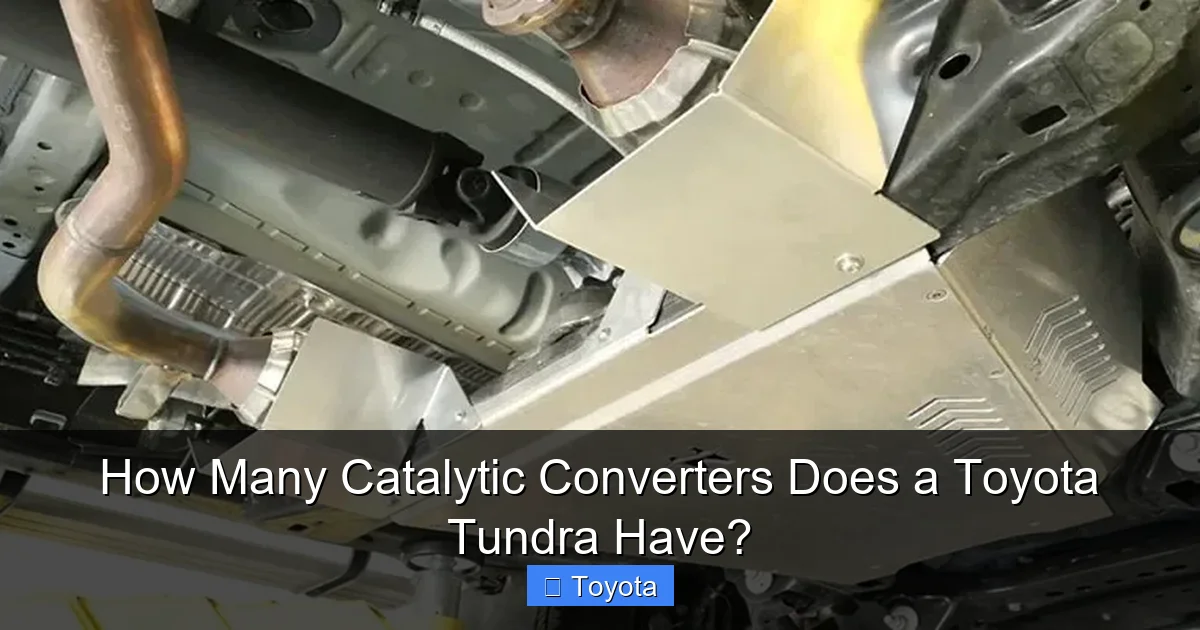
Visual guide about How Many Catalytic Converters Does a Toyota Tundra Have?
Image source: moparmax.com
The number of catalytic converters in your Toyota Tundra depends heavily on the engine and model year. Let’s break it down by generation and engine type to give you a clear picture.
Toyota Tundra First Generation (2000–2006)
The first-generation Tundra came with two engine options: a 3.4L V6 and a 4.7L V8. Both engines were designed to meet early 2000s emissions standards, which were less strict than today’s.
– V6 models (3.4L): Typically equipped with two catalytic converters—one for each bank of the engine. Since the V6 has a single exhaust manifold per side, each side gets its own catalytic converter.
– V8 models (4.7L): Also featured two catalytic converters, one per exhaust bank. These were usually located close to the engine, known as “pre-cats” or “header cats.”
At this time, Toyota didn’t use secondary or “post-cat” converters, so the total number was generally two per vehicle.
Toyota Tundra Second Generation (2007–2021)
The second-generation Tundra marked a major shift in design, performance, and emissions control. With the introduction of the 5.7L V8 engine and updated 4.6L and 4.0L options, Toyota had to meet stricter emissions regulations.
– 4.0L V6 (2007–2021): Most V6 models came with two catalytic converters—one per exhaust manifold. These were typically close-coupled (mounted near the engine) for faster light-off and better emissions control.
– 4.6L V8 (2007–2010): This engine also used two catalytic converters, one for each bank.
– 5.7L V8 (2007–2021): This is where things get interesting. The 5.7L V8, especially in 4WD models and higher trims, often featured a dual exhaust system with four catalytic converters. That means two per side: one close to the engine (pre-cat) and one further downstream (post-cat or “underfloor” cat). This setup allows for more efficient emissions reduction and better compliance with Tier 2 and LEV-II standards.
For example, a 2015 Toyota Tundra SR5 5.7L V8 4WD would likely have four catalytic converters—two on the driver’s side and two on the passenger side. This dual-cat design helps ensure that emissions are cleaned thoroughly, even under heavy load or high-speed driving.
Toyota Tundra Third Generation (2022–Present)
The current-generation Tundra, introduced in 2022, features a complete redesign with new engines and advanced emissions technology. Toyota replaced the old V8 with a twin-turbocharged 3.4L V6 (i-FORCE) and later introduced a hybrid version (i-FORCE MAX).
– 3.4L Twin-Turbo V6 (i-FORCE): This engine uses a sophisticated exhaust system with two catalytic converters—one per bank. However, due to the turbocharging and close integration with the exhaust manifold, these converters are often integrated into the turbo housing or mounted very close to the engine for rapid warm-up.
– 3.4L Hybrid V6 (i-FORCE MAX): The hybrid version also uses two catalytic converters, but with additional emissions controls like exhaust gas recirculation (EGR) and improved thermal management to reduce cold-start emissions.
Interestingly, despite having fewer cylinders than the old V8, the new turbocharged V6 still meets or exceeds emissions standards with just two catalytic converters. This is thanks to advances in catalyst chemistry, engine management, and exhaust design.
So, to summarize:
– V6 models (2000–2021): 2 catalytic converters
– V8 models (2007–2021): 2 or 4 catalytic converters (4 more common on 5.7L V8)
– New V6 Turbo (2022+): 2 catalytic converters
Why Do Some Tundras Have Four Catalytic Converters?
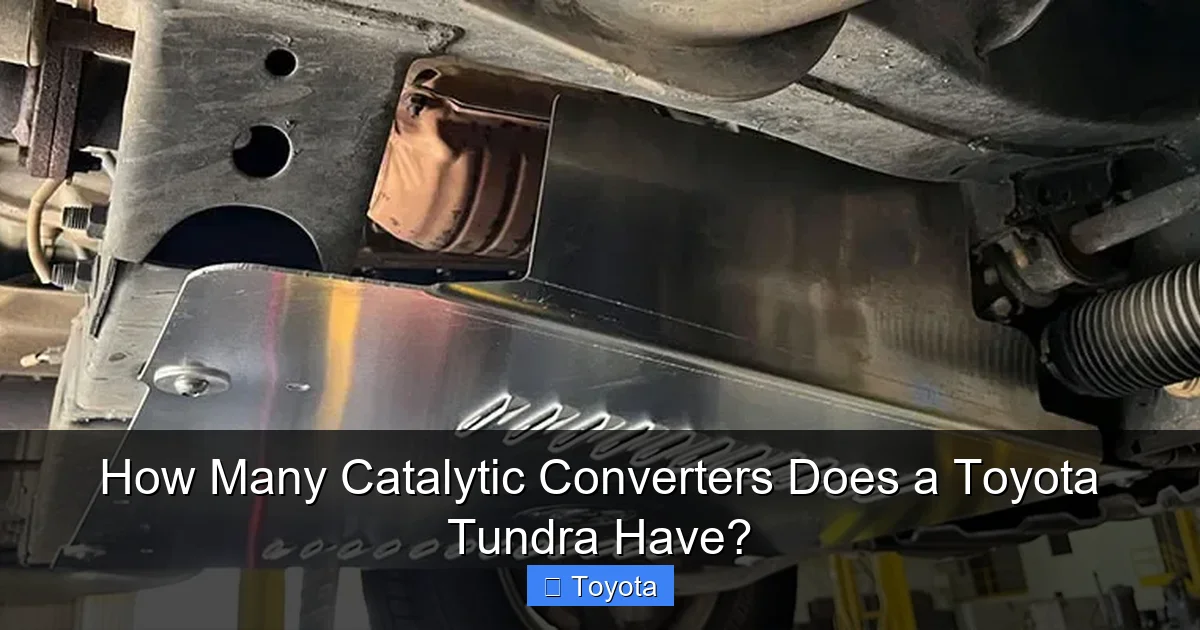
Visual guide about How Many Catalytic Converters Does a Toyota Tundra Have?
Image source: moparmax.com
You might be wondering: why would a truck need four catalytic converters? Isn’t two enough? The answer lies in emissions regulations, engine performance, and the physics of exhaust flow.
Meeting Strict Emissions Standards
As environmental regulations have become more stringent, automakers have had to find ways to reduce emissions without sacrificing power or fuel economy. The U.S. Environmental Protection Agency (EPA) and the California Air Resources Board (CARB) require vehicles to meet specific limits for pollutants like nitrogen oxides (NOx), carbon monoxide (CO), and hydrocarbons (HC).
A single catalytic converter can only do so much. By using two converters per side—often called a “dual-bed” or “dual-cat” system—manufacturers can achieve higher conversion efficiency. The first converter (pre-cat) handles the bulk of the pollution reduction when the engine is cold or under load, while the second converter (post-cat) polishes the exhaust stream, catching any remaining pollutants.
This is especially important for large-displacement engines like the 5.7L V8, which produce more exhaust gases and higher emissions under heavy acceleration or towing.
Improving Engine Performance and Efficiency
Dual catalytic converters can also improve engine performance. By reducing backpressure in the exhaust system, they allow the engine to breathe more freely. This can lead to better horsepower, torque, and fuel economy—especially in high-output applications.
Additionally, placing a catalytic converter close to the engine (close-coupled) helps it reach operating temperature faster. This is crucial because catalytic converters only work efficiently when they’re hot—typically above 600°F. The closer the cat is to the engine, the quicker it heats up, reducing cold-start emissions.
The second converter, located further downstream, continues the cleaning process once the exhaust has cooled slightly. This two-stage approach ensures that emissions are minimized across all driving conditions.
Compliance with On-Board Diagnostics (OBD-II)
Modern vehicles, including all Tundras from 1996 onward, are equipped with OBD-II systems that monitor the performance of the emissions system. Sensors before and after each catalytic converter measure oxygen levels to determine if the converter is working properly.
With four catalytic converters, the OBD-II system can monitor each one individually. If one fails or becomes clogged, the check engine light will come on, and a specific diagnostic trouble code (DTC) will be stored. This makes it easier for mechanics to pinpoint the problem and replace only the faulty unit.
Catalytic Converter Theft: A Growing Problem for Tundra Owners

Visual guide about How Many Catalytic Converters Does a Toyota Tundra Have?
Image source: garagevehicle.com
One of the biggest reasons Tundra owners are asking about catalytic converters is theft. Unfortunately, catalytic converter theft has skyrocketed in recent years, and full-size trucks like the Tundra are prime targets.
Why Are Tundras Targeted?
There are several reasons why thieves go after Tundra catalytic converters:
– High ground clearance: Tundras sit higher off the ground than most cars, making it easier for thieves to slide underneath and cut out the converter with a reciprocating saw.
– Valuable precious metals: The platinum, palladium, and rhodium inside catalytic converters can fetch hundreds of dollars per unit on the black market.
– Easy resale: Stolen converters are often sold to scrap yards or recyclers who don’t ask questions.
– Multiple converters: Trucks with four catalytic converters are especially attractive because thieves can steal more valuable material in one go.
According to the National Insurance Crime Bureau (NICB), catalytic converter thefts increased by over 300% between 2019 and 2021. Tundras, along with other full-size trucks like the Ford F-150 and Chevy Silverado, are frequently targeted.
How to Protect Your Tundra’s Catalytic Converters
While you can’t completely eliminate the risk, there are steps you can take to deter theft:
– Park in well-lit, secure areas: Avoid parking in dark alleys or unmonitored lots.
– Install a catalytic converter shield: Aftermarket shields made of aluminum or steel can make it much harder for thieves to access the converters.
– Etch your VIN on the converters: Some police departments and repair shops offer free etching services. This makes it harder to sell stolen parts and easier to identify your vehicle if recovered.
– Use a security system: Motion-sensor lights, alarms, or undercarriage sensors can alert you to tampering.
– Consider a garage: If possible, park your Tundra in a locked garage overnight.
Signs of a Failing Catalytic Converter
Even with proper care, catalytic converters can fail over time. Knowing the warning signs can help you address problems before they lead to costly repairs or emissions test failures.
Common Symptoms
– Check engine light: The most common sign. OBD-II codes like P0420 or P0430 indicate low catalytic converter efficiency.
– Reduced engine performance: A clogged converter can restrict exhaust flow, causing sluggish acceleration, poor fuel economy, or even stalling.
– Rattling noise: If the internal honeycomb structure breaks apart, you may hear a rattling sound from under the truck, especially when idling or accelerating.
– Excessive heat under the vehicle: A failing converter may overheat, causing the underside of the truck to feel unusually hot.
– Failed emissions test: If your Tundra fails a smog check, a faulty catalytic converter is often the culprit.
What Causes Catalytic Converter Failure?
– Engine misfires: Unburned fuel can overheat and melt the catalyst.
– Oil or coolant leaks: Contaminants can coat the catalyst and reduce its effectiveness.
– Age and mileage: Most converters last 100,000 to 150,000 miles, but harsh driving conditions can shorten their life.
– Poor fuel quality: Leaded or contaminated fuel can damage the catalyst.
Can You Drive with a Bad Catalytic Converter?
Technically, yes—but it’s not recommended. Driving with a failed converter can damage other parts of the exhaust system, reduce fuel efficiency, and cause the engine to run poorly. More importantly, it’s illegal in most states to operate a vehicle with a non-functional catalytic converter.
Replacing a Catalytic Converter: Cost and Considerations
If your Tundra’s catalytic converter fails, replacement is often necessary. But it’s not cheap.
How Much Does It Cost?
The cost to replace a catalytic converter on a Toyota Tundra can vary widely:
– OEM (Original Equipment Manufacturer) converter: $1,500–$3,000+ per unit. These are made by Toyota and meet exact specifications.
– Aftermarket converter: $800–$1,800 per unit. High-quality aftermarket options are available from brands like MagnaFlow, Walker, or Bosal, and are often EPA-compliant.
– Labor costs: $100–$300, depending on the shop and difficulty of access.
If your Tundra has four catalytic converters and one fails, you may only need to replace the faulty one. However, if multiple converters are damaged or clogged, the total cost can exceed $5,000.
OEM vs. Aftermarket: Which Is Better?
– OEM converters: Guaranteed to meet emissions standards and are covered by Toyota’s warranty (if installed by a dealer). However, they’re expensive.
– Aftermarket converters: More affordable and often just as effective. Look for EPA-compliant or CARB-certified units to ensure legality and performance.
Always check your local emissions laws before replacing a catalytic converter. In California and some other states, only CARB-certified converters are legal.
Can You Repair a Catalytic Converter?
In most cases, no. Once a catalytic converter is clogged or damaged, it cannot be repaired. Some people try “cleaning” it with additives or high-temperature burns, but these methods are rarely effective and can cause further damage.
The best approach is prevention: maintain your engine, fix misfires promptly, and avoid short trips that prevent the converter from reaching operating temperature.
Legal and Environmental Implications
Catalytic converters aren’t just a mechanical component—they’re a legal requirement. Tampering with or removing them violates the Clean Air Act and can result in hefty fines.
Federal and State Laws
Under the Clean Air Act, it’s illegal to:
– Remove or disable a catalytic converter.
– Install a non-compliant replacement.
– Sell or install a counterfeit or altered converter.
Penalties can include fines of up to $25,000 per violation and even jail time in extreme cases.
Environmental Impact
Catalytic converters play a vital role in reducing air pollution. A single functioning converter can eliminate hundreds of pounds of harmful emissions over its lifetime. By maintaining your Tundra’s emissions system, you’re not only protecting your investment—you’re helping protect the environment.
Conclusion
So, how many catalytic converters does a Toyota Tundra have? The answer depends on your specific model, but most Tundras have either two or four. Older V6 models typically have two, while V8 models—especially the 5.7L—often feature four for enhanced emissions control. The newer turbocharged V6 engines use two highly efficient converters thanks to advanced engineering.
Understanding your Tundra’s catalytic converter setup is important for maintenance, theft prevention, and legal compliance. These components are expensive to replace, vulnerable to theft, and essential for clean air. By staying informed and proactive, you can keep your Tundra running smoothly and legally for years to come.
Whether you’re a long-time owner or considering a Tundra purchase, knowing how your truck’s emissions system works empowers you to make smarter decisions. Keep up with regular maintenance, protect your converters from theft, and address any warning signs early. Your truck—and the planet—will thank you.
Frequently Asked Questions
How many catalytic converters does a 2020 Toyota Tundra have?
A 2020 Toyota Tundra with the 5.7L V8 engine typically has four catalytic converters—two on each side of the dual exhaust system. Models with the 4.0L V6 usually have two.
Can I drive my Tundra with a bad catalytic converter?
You can drive it short distances, but it’s not recommended. A failed converter can reduce performance, damage the engine, and cause you to fail emissions tests. It’s also illegal in most states.
Why are catalytic converters stolen from Tundras?
Tundras are targeted because they have high ground clearance, making converters easy to access, and they often have multiple converters containing valuable precious metals like platinum and palladium.
How much does it cost to replace a catalytic converter on a Toyota Tundra?
Replacement costs range from $800 to $3,000+ per converter, depending on whether you use OEM or aftermarket parts and how many need replacing.
Can I replace my catalytic converter myself?
It’s possible if you have mechanical experience and the right tools, but it’s challenging due to rust, tight spaces, and the need for proper welding or clamping. Professional installation is recommended.
Are aftermarket catalytic converters legal?
Yes, as long as they are EPA-compliant or CARB-certified (in California and other strict states). Always check local regulations before purchasing.
