
Can a Car Pull a Trailer?

Yes, many cars can pull a trailer—but only if they’re designed for it and you stay within safe limits. Understanding your vehicle’s towing capacity, trailer type, and proper equipment is essential to avoid damage or accidents. With the right preparation, even compact cars can tow small loads safely.
Key Takeaways
- Not all cars are built to tow: Most sedans and small hatchbacks have very low or zero towing capacity, while SUVs, crossovers, and trucks are better suited.
- Towing capacity varies widely: Check your owner’s manual or manufacturer specs—don’t guess. Exceeding this limit risks mechanical failure and voided warranties.
- Trailer weight matters more than size: A lightweight teardrop trailer may be easier to pull than a heavy cargo trailer, even if it looks smaller.
- Proper hitch and equipment are essential: You need the correct hitch class, wiring harness, brake controller (if required), and safety chains.
- Driving dynamics change when towing: Expect longer braking distances, reduced acceleration, and increased sway in wind or on curves.
- Legal requirements apply: Many states require trailer registration, brake lights, and sometimes a special license or endorsement.
- Practice makes perfect: Always test your setup in an empty parking lot before hitting the highway.
📑 Table of Contents
- Can a Car Pull a Trailer? The Short Answer
- Understanding Towing Capacity: The Most Important Number
- Types of Trailers and What They Require
- Essential Equipment for Safe Towing
- Driving Tips for Towing Safely
- Legal and Insurance Considerations
- When Not to Tow—Even If You Can
- Conclusion: Towing Is Possible—With the Right Prep
Can a Car Pull a Trailer? The Short Answer
So, can a car pull a trailer? The quick answer is: it depends. Not every car is designed to tow, and even those that are come with strict limits. While some vehicles—like SUVs, crossovers, and trucks—are built with towing in mind, many sedans, coupes, and compact cars simply aren’t equipped for the job.
Think of it like asking if a bicycle can carry a refrigerator. Technically, maybe—if you strap it on and go very slowly—but it’s not safe, practical, or recommended. The same logic applies to cars and trailers. Towing puts extra stress on your engine, transmission, brakes, and suspension. If your car wasn’t built to handle that load, you could end up with overheating, transmission failure, or even a dangerous loss of control.
The good news? If your car is capable of towing, and you do it correctly, it can be a safe and useful way to transport gear, boats, campers, or even another vehicle. But success starts with knowing your vehicle’s limits and preparing properly.
Understanding Towing Capacity: The Most Important Number
Before you even think about hitching up a trailer, you need to know your car’s towing capacity. This is the maximum weight your vehicle can safely pull, as determined by the manufacturer. It’s not a suggestion—it’s a hard limit based on engineering, cooling systems, frame strength, and braking power.

Visual guide about Can a Car Pull a Trailer?
Image source: m.media-amazon.com
Where to Find Your Towing Capacity
The best place to find your towing capacity is in the owner’s manual. Look for a section titled “Towing” or “Trailer Towing.” If you don’t have the manual, most manufacturers publish this info online. You can also check the driver’s side door jamb sticker—some vehicles list it there, though it’s less common.
For example, a 2023 Honda CR-V has a towing capacity of 1,500 pounds when properly equipped. That’s enough for a small utility trailer or a lightweight camper. But a Toyota Camry? Most models list 0 pounds—meaning they’re not designed to tow at all. Even if you install a hitch, the manufacturer doesn’t recommend it.
Why Exceeding Towing Capacity Is Dangerous
Pushing your car beyond its towing limit can lead to serious problems. The engine and transmission may overheat, especially on hills or in hot weather. Brakes can fade or fail because they’re not designed to stop extra weight. The suspension might sag, affecting steering and stability. And in extreme cases, the frame or hitch could fail—leading to a detached trailer and potential disaster.
Let’s say your car can tow 2,000 pounds, but you load up a 2,500-pound trailer. That extra 500 pounds might not seem like much, but it increases stress on every system. Over time, this can cause premature wear or sudden breakdowns. Plus, if something goes wrong and you’re in an accident, your insurance might deny the claim if you were overloading your vehicle.
Real-World Example: Towing with a Compact SUV
Take the Subaru Outback, a popular choice for light towing. With the right equipment, it can pull up to 2,700 pounds. That’s enough for a small pop-up camper, a motorcycle trailer, or a few kayaks. But if you try to tow a 3,500-pound travel trailer, you’re asking for trouble. The Outback’s CVT transmission isn’t built for sustained heavy loads, and you’ll likely experience overheating or damage.
The key takeaway? Always stay under your vehicle’s rated capacity—and leave a safety margin. If your car can tow 2,000 pounds, aim to keep your trailer and cargo under 1,800 pounds. That gives you room for unexpected weight (like water, gear, or fuel) and reduces stress on your vehicle.
Types of Trailers and What They Require
Not all trailers are created equal. The type of trailer you want to pull plays a big role in whether your car can handle it—and what equipment you’ll need.
Visual guide about Can a Car Pull a Trailer?
Image source: cdn2.vectorstock.com
Utility Trailers
These are the most common and versatile. Think flatbeds for hauling furniture, landscaping materials, or motorcycles. They’re usually lightweight (500–1,500 pounds empty) and easy to maneuver. Many compact cars and crossovers can tow a small utility trailer, especially if it’s under 1,000 pounds.
For example, a 2022 Mazda CX-5 can tow up to 2,000 pounds. That’s perfect for a 1,200-pound utility trailer loaded with mulch or camping gear. Just make sure the trailer has brakes if required by law (usually over 1,500–3,000 pounds, depending on your state).
Travel Trailers and Campers
These are heavier and more complex. A small teardrop camper might weigh 1,000 pounds, while a full-sized travel trailer can exceed 5,000 pounds. Most cars can’t handle anything over 2,000–3,000 pounds, so you’ll need an SUV or truck for anything substantial.
Even if your car can technically tow a lightweight camper, consider the added wind resistance. Tall trailers create drag, which reduces fuel economy and increases sway. You’ll also need a weight-distributing hitch and possibly a brake controller for safety.
Boat Trailers
Towing a boat means dealing with water, salt, and uneven loads. A small fishing boat with trailer might weigh 1,500 pounds, but add fuel, gear, and a battery, and you’re pushing 2,000+. Plus, launching and retrieving requires backing up on slippery ramps—something that demands skill and the right vehicle.
If you’re towing a boat regularly, consider a vehicle with higher ground clearance and a stronger frame, like a pickup or full-size SUV. And never forget to rinse off saltwater after use—it can corrode your hitch and wiring.
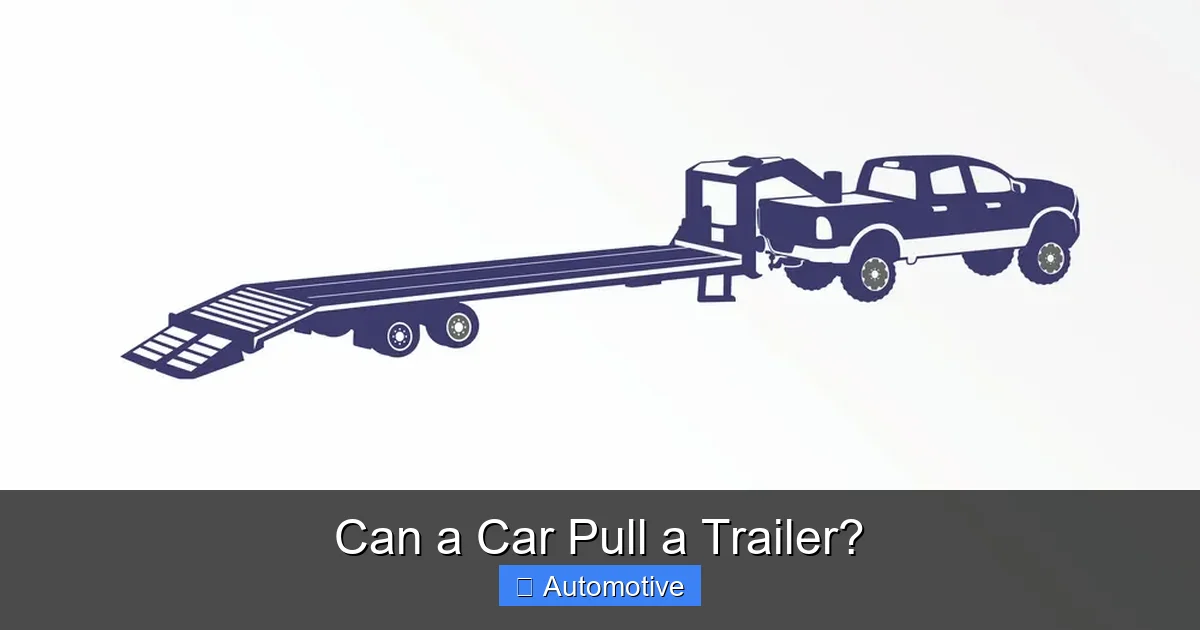
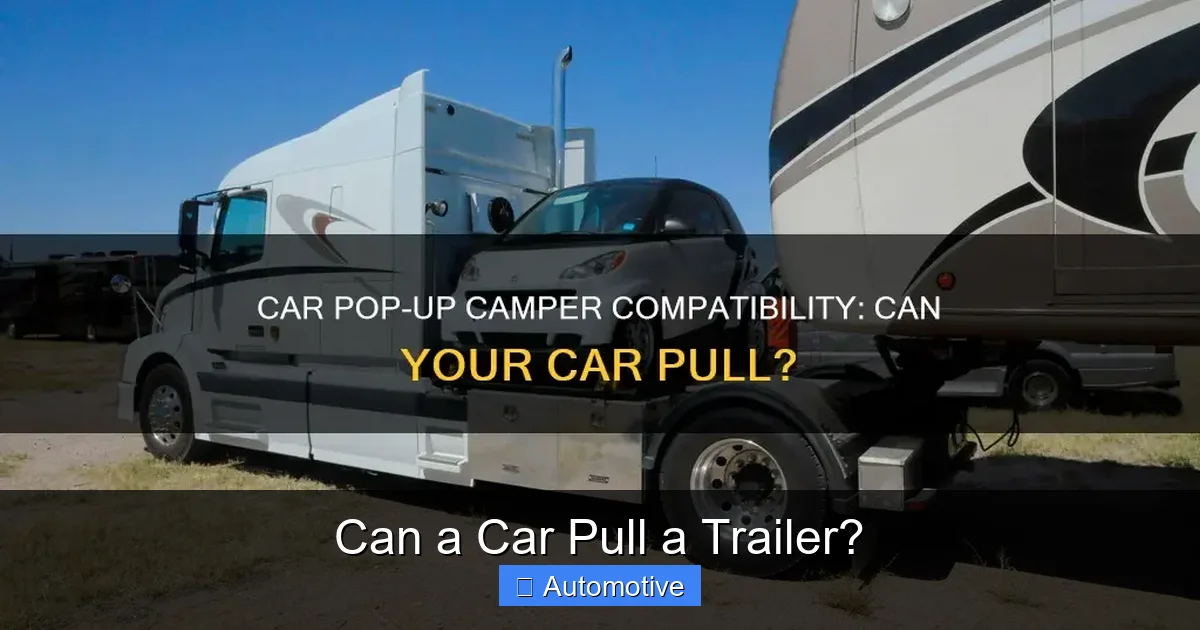
Car Trailers and Flatbeds
These are used to transport vehicles, usually behind RVs or trucks. They’re heavy—often 2,000–3,000 pounds empty—and require a powerful tow vehicle. Most cars simply can’t handle this load. Even some SUVs struggle unless they’re specifically rated for it.
If you’re thinking about towing a car, check your vehicle’s gross combined weight rating (GCWR) as well. This is the total weight of your car, passengers, cargo, and trailer. Exceeding it is illegal and unsafe.
Essential Equipment for Safe Towing
You can’t just hook up a trailer and go. Proper equipment is critical for safety, legality, and performance.
Visual guide about Can a Car Pull a Trailer?
Image source: shunauto.com
Hitch Class and Installation
Trailer hitches come in classes based on weight capacity:
- Class I: Up to 2,000 pounds (light-duty, for small trailers)
- Class II: Up to 3,500 pounds
- Class III: Up to 6,000 pounds (common for SUVs and trucks)
- Class IV: Up to 10,000+ pounds (heavy-duty)
Your car’s towing capacity determines which class you need. Never use a hitch rated lower than your trailer’s weight. And always have it installed by a professional—DIY installations can fail under stress.
Wiring Harness and Lights
Your trailer needs working brake lights, turn signals, and taillights. A wiring harness connects the trailer to your car’s electrical system. Most modern cars have plug-and-play harnesses that match the vehicle’s make and model.
Test all lights before every trip. A broken brake light on a trailer can cause rear-end collisions—and it’s a common reason for traffic stops.
Brake Controller (If Needed)
If your trailer weighs over 1,500–3,000 pounds (check your state laws), it likely needs electric brakes. These require a brake controller inside your car to activate them when you press the brake pedal.
Controllers let you adjust brake sensitivity and manually apply trailer brakes if the trailer starts to sway. They’re essential for heavier loads and improve stopping power significantly.
Safety Chains and Breakaway System
Always cross the safety chains under the trailer tongue—they should form a cradle to catch the trailer if it detaches. And if your trailer has brakes, it should have a breakaway system: a battery-powered brake activator that engages if the trailer separates from the car.
These small details can prevent a minor mishap from becoming a major accident.
Driving Tips for Towing Safely
Towing changes how your car behaves. You’ll need to adjust your driving habits to stay safe.
Start Slow and Practice
Before hitting the highway, practice in an empty parking lot. Learn how your car handles with the trailer: how it accelerates, brakes, and turns. Get comfortable with backing up—it’s tricky because the trailer moves in the opposite direction of your steering.
Use a spotter when reversing, and consider installing a backup camera or trailer mirrors for better visibility.
Allow Extra Distance
Your braking distance increases significantly when towing. Leave at least 3–4 seconds of following distance behind the vehicle in front of you. On highways, that means more space than usual.
Also, avoid sudden lane changes or sharp turns. Trailers can sway or jackknife if you maneuver too aggressively.
Watch for Sway
Trailer sway happens when wind, passing trucks, or uneven roads cause the trailer to wobble. If it starts, don’t slam on the brakes—that can make it worse. Instead, gently ease off the accelerator and use your brake controller (if equipped) to slow the trailer.
Consider a sway control device if you’re towing frequently or in windy areas.
Fuel Economy and Maintenance
Towing reduces fuel efficiency by 20–50%, depending on the load and terrain. Fill up before long trips, and monitor your engine temperature. Overheating is a common issue when towing uphill or in hot weather.
After towing, check your tires, brakes, and hitch for wear. Clean off dirt and debris to prevent corrosion.
Legal and Insurance Considerations
Towing isn’t just about mechanics—it’s also about rules and responsibility.
Registration and Licensing
Most states require trailers to be registered and have license plates. Some also require a special endorsement on your driver’s license if you’re towing over a certain weight (usually 10,000+ pounds).
Check your local DMV for specific requirements. Fines for unregistered trailers can be steep.
Insurance Coverage
Your auto insurance may cover trailer damage or liability, but not always. Call your insurer to confirm. If you’re towing a valuable camper or boat, consider adding trailer-specific coverage.
And remember: if you cause an accident while overloading your vehicle, your policy might not pay out.
Weight Distribution and Laws
Some states have strict rules about how weight is distributed on a trailer. For example, 60% of the load should be in front of the axle. Improper loading can cause sway or loss of control.
Also, be aware of height and width restrictions. Tall trailers may not fit under bridges or through tunnels.
When Not to Tow—Even If You Can
Just because your car can tow doesn’t mean it should. Avoid towing if:
- Your car is already near its passenger or cargo limit
- You’re driving in extreme heat, cold, or mountainous terrain
- The trailer is poorly maintained or overloaded
- You’re inexperienced and haven’t practiced
- Your vehicle has known mechanical issues
When in doubt, rent a truck or use a professional towing service. Safety always comes first.
Conclusion: Towing Is Possible—With the Right Prep
So, can a car pull a trailer? Absolutely—if it’s designed for it, properly equipped, and operated within safe limits. Many modern crossovers and SUVs are capable of light towing, opening up new possibilities for camping, hauling, and travel.
But towing isn’t something to take lightly. It requires research, the right gear, and a commitment to safe driving. By understanding your vehicle’s towing capacity, choosing the right trailer, and preparing thoroughly, you can enjoy the benefits of towing without the risks.
Remember: the goal isn’t just to get from point A to point B—it’s to arrive safely, with your car and trailer intact. Take the time to do it right, and you’ll be ready for your next adventure.
Frequently Asked Questions
Can any car tow a trailer?
No, not all cars are designed to tow. Most sedans and compact cars have very low or zero towing capacity. Always check your owner’s manual before attempting to tow.
How do I know if my car can tow a trailer?
Check your vehicle’s towing capacity in the owner’s manual or on the manufacturer’s website. This number tells you the maximum weight your car can safely pull.
What happens if I exceed my car’s towing capacity?
Exceeding towing capacity can cause engine overheating, transmission damage, brake failure, and loss of control. It may also void your warranty and insurance coverage.
Do I need a special license to tow a trailer?
In most states, no—unless the trailer exceeds a certain weight (usually 10,000+ pounds). Check your local DMV for specific licensing requirements.
Can I install a hitch on any car?
You can install a hitch on most cars, but that doesn’t mean the car should tow. Only use a hitch if your vehicle is rated for towing and the hitch matches the weight class.
Is it safe to tow in the rain or snow?
Towing in wet or icy conditions increases the risk of sway and loss of control. Reduce speed, increase following distance, and avoid sudden maneuvers. Consider postponing the trip if conditions are severe.
