
Car Turns Over but Won’t Start

When your car turns over but won’t start, it means the engine cranks but fails to ignite. This frustrating issue often stems from fuel, spark, or air delivery problems—but diagnosing it correctly can save you time and money. With the right troubleshooting steps, many causes are fixable at home or with minimal professional help.
You’re running late for work, you hop in the car, turn the key—and nothing happens. Well, not *nothing*. The engine cranks. You hear that familiar whirring sound as the starter motor spins the engine over. But the engine just won’t fire up. No roar, no rumble—just silence after the cranking stops. Sound familiar? If your car turns over but won’t start, you’re dealing with one of the most common and confusing automotive issues out there.
This problem is especially frustrating because it gives you a false sense of hope. The fact that the engine cranks means the battery, starter, and basic electrical system are working—at least partially. But something is blocking the final step: combustion. Your engine needs three key ingredients to start: fuel, air, and spark. If any one of these is missing or malfunctioning, your car will turn over but refuse to start. The good news? Most causes are diagnosable and often fixable without a trip to the mechanic—if you know where to look.
In this guide, we’ll walk you through the most common reasons why your car turns over but won’t start, how to troubleshoot them step by step, and when it’s time to call in a professional. Whether you’re a DIY enthusiast or just want to understand what’s going on under the hood, this article will give you the knowledge and confidence to tackle the issue head-on.
Key Takeaways
- Fuel system issues like a clogged fuel filter or failing fuel pump are common culprits when a car cranks but doesn’t start.
- Ignition problems such as bad spark plugs, ignition coils, or a faulty crankshaft sensor can prevent combustion even if the engine turns over.
- Air intake blockages or a malfunctioning mass airflow sensor can disrupt the air-fuel mixture needed for ignition.
- A dead or weak battery may still allow cranking but not provide enough power for spark or fuel injection systems to function properly.
- Timing belt or chain failure can cause internal engine damage, leading to a no-start condition despite cranking.
- Security system glitches or immobilizer faults may prevent the engine from starting even when everything else seems fine.
- Regular maintenance and early diagnosis can prevent most “cranks but won’t start” scenarios and extend your vehicle’s lifespan.
📑 Table of Contents
Understanding Why Your Car Turns Over but Won’t Start
When you turn the key (or press the start button), your car’s starter motor engages and spins the engine’s crankshaft. This is what we call “cranking” or “turning over.” If the engine cranks normally—meaning it spins at the right speed and sounds healthy—but doesn’t start, the issue lies in the combustion process. In simple terms, your engine is trying to start, but something is preventing it from igniting the fuel-air mixture.
To understand why this happens, let’s break down the three essentials of engine operation:
– **Fuel**: Delivered by the fuel pump through injectors into the combustion chamber.
– **Air**: Drawn in through the air intake system and measured by sensors.
– **Spark**: Generated by the ignition system (spark plugs, coils) to ignite the mixture.
If any of these three elements is missing, delayed, or malfunctioning, combustion won’t occur—even if the engine is spinning freely. For example, if the fuel pump isn’t delivering fuel, there’s nothing to burn. If the spark plugs are worn out, there’s no spark to ignite the mixture. And if the air filter is completely clogged, the engine can’t breathe properly.
It’s also important to note that modern cars rely heavily on electronic control systems. The engine control unit (ECU) monitors sensors and manages fuel delivery, ignition timing, and airflow. If a sensor sends incorrect data—or fails entirely—the ECU may prevent the engine from starting as a safety measure. This is why a seemingly minor issue like a faulty crankshaft position sensor can cause a no-start condition.
Understanding these basics helps you approach the problem logically. Instead of guessing or replacing parts randomly, you can focus on the most likely causes based on symptoms and test results.
Common Causes of a Car That Turns Over but Won’t Start
There are several reasons why your car might crank but fail to start. Let’s explore the most common ones, starting with the most frequent culprits.
1. Fuel System Problems
The fuel system is responsible for delivering gasoline (or diesel) from the tank to the engine. If fuel isn’t reaching the combustion chamber, your car won’t start—no matter how much it cranks.
One of the most common fuel-related issues is a **failed fuel pump**. The fuel pump sits inside the gas tank and pressurizes the fuel system. Over time, it can wear out, especially if you frequently drive on low fuel (which causes the pump to overheat). A failing fuel pump may still allow some cranking but won’t deliver enough pressure to start the engine.
Another possibility is a **clogged fuel filter**. This component traps dirt and debris before fuel reaches the engine. If it becomes blocked, fuel flow is restricted. While modern cars often have long-lasting filters, older vehicles or those with contaminated fuel may experience clogs.
You might also have a **faulty fuel pressure regulator** or **leaking fuel injectors**, both of which can disrupt the proper fuel mixture. In some cases, bad fuel (like old or contaminated gasoline) can prevent combustion.
2. Ignition System Failures
The ignition system creates the spark needed to ignite the fuel-air mixture. If there’s no spark, there’s no combustion—even if fuel and air are present.
**Worn spark plugs** are a classic cause. Spark plugs have a limited lifespan (typically 30,000 to 100,000 miles, depending on type). When they wear out, they may not produce a strong enough spark. You might notice misfires, rough idling, or difficulty starting—especially when the engine is cold.
**Faulty ignition coils** can also prevent spark. Each cylinder has its own coil (or a coil pack), and if one fails, that cylinder won’t fire. In some cases, multiple coils fail, leading to a complete no-start.
Another possibility is a **bad crankshaft position sensor**. This sensor tells the ECU when to fire the spark plugs. If it malfunctions, the ECU doesn’t know when to ignite the fuel, and the engine won’t start—even though it cranks normally.
3. Air Intake and Sensor Issues
Your engine needs the right amount of air to mix with fuel. If the air supply is blocked or miscalculated, combustion fails.
A **clogged air filter** can restrict airflow, especially in older vehicles. While a dirty filter usually causes poor performance rather than a complete no-start, a severely blocked one can starve the engine of air.
More commonly, a **faulty mass airflow (MAF) sensor** can cause the problem. The MAF sensor measures how much air is entering the engine and sends that data to the ECU. If it’s dirty or broken, the ECU may inject too much or too little fuel, leading to a no-start condition.
Similarly, a **bad oxygen (O2) sensor** or **throttle position sensor (TPS)** can disrupt the air-fuel ratio. These sensors are critical for proper engine operation, and their failure can trigger a no-start—especially if the ECU goes into “limp mode” or shuts down fuel delivery as a safety precaution.
4. Electrical and Battery Issues
It might seem odd—your car cranks, so the battery must be fine, right? Not necessarily. A weak or dying battery can still provide enough power to turn the starter motor but not enough to run the fuel injectors, ignition system, or ECU at full capacity.
This is especially true in cold weather, when batteries lose efficiency. You might hear a slow crank or notice dim headlights when trying to start the car. In some cases, corrosion on battery terminals can cause intermittent power loss, leading to a no-start even if the battery tests okay.
Additionally, a **bad alternator** can cause the battery to drain over time. If the alternator isn’t charging the battery while the engine runs, the battery may eventually die—leading to a no-start the next time you try to drive.
5. Timing Belt or Chain Failure
The timing belt (or chain) synchronizes the rotation of the crankshaft and camshaft. This ensures that the valves open and close at the right time during the combustion cycle. If the timing belt breaks or slips, the engine’s timing is thrown off—and in interference engines, this can cause the pistons to collide with the valves, resulting in serious internal damage.
A broken timing belt often results in a no-start condition, even though the engine may still crank. You might hear unusual noises (like a rattling or clunking) when cranking, or the engine may turn over but feel “off.”
This is a serious issue that usually requires professional repair. If you suspect a timing belt failure, avoid cranking the engine further to prevent additional damage.
6. Security System or Immobilizer Glitches
Modern cars are equipped with anti-theft systems called immobilizers. These systems prevent the engine from starting unless the correct key (with a programmed chip) is used. If the immobilizer system malfunctions—or if the key fob battery is dead—the car may crank but refuse to start.
You might see a flashing security light on the dashboard or hear a clicking sound from the ignition. Some vehicles will even disable the fuel pump or ignition system entirely if the immobilizer detects a problem.
This issue is more common in keyless entry systems or older keys with weak transponder chips. In some cases, simply replacing the key fob battery or reprogramming the key can resolve the problem.
Step-by-Step Troubleshooting Guide
Now that you know the common causes, let’s walk through a practical troubleshooting process. Follow these steps in order to diagnose the issue efficiently.
Step 1: Listen and Observe
Before opening the hood, pay attention to what happens when you try to start the car.
– Does the engine crank normally, or is it slow and labored?
– Do you hear any unusual sounds—like clicking, grinding, or knocking?
– Are the dashboard lights bright, or do they dim when cranking?
– Is there a smell of gasoline (indicating fuel leakage) or burning (suggesting electrical issues)?
A normal crank with no start points to fuel, spark, or sensor issues. A slow crank suggests a weak battery or starter problem.
Step 2: Check the Battery and Connections
Even if the car cranks, test the battery voltage with a multimeter. A healthy battery should read around 12.6 volts when the car is off and drop to no less than 10 volts during cranking.
Inspect the battery terminals for corrosion (white or green buildup). Clean them with a wire brush and baking soda solution if needed. Loose or corroded connections can cause intermittent power loss.
If the battery is weak, try jump-starting the car. If it starts with a jump but dies shortly after, the alternator may not be charging the battery.
Step 3: Test for Spark
To check if the ignition system is working, remove a spark plug wire (or coil) and insert a spare spark plug. Ground the plug against the engine block and have someone crank the engine while you watch for a spark.
If you see a strong blue spark, the ignition system is likely working. No spark? Check the ignition coils, spark plugs, and crankshaft position sensor.
Step 4: Check for Fuel Delivery
Listen for the fuel pump when you turn the key to the “on” position (without cranking). You should hear a brief humming sound from the rear of the car (near the fuel tank). If you don’t hear it, the fuel pump may be faulty.
You can also check fuel pressure using a fuel pressure gauge (available at auto parts stores). Compare the reading to your vehicle’s specifications. Low pressure indicates a failing pump, clogged filter, or bad regulator.
Step 5: Inspect Air Intake and Sensors
Check the air filter for dirt or blockages. Replace it if it’s dirty. Then, inspect the MAF sensor—it’s usually located between the air filter and throttle body. You can clean it with MAF sensor cleaner (never use regular spray cleaners).
Use an OBD2 scanner to check for trouble codes. Even if the check engine light isn’t on, stored codes can reveal sensor failures (like a bad MAF or crankshaft sensor).
Step 6: Check the Timing Belt
If your car has a timing belt (common in older vehicles), inspect it for cracks, fraying, or missing teeth. Some engines have a timing cover that allows visual inspection. If the belt looks damaged or you’re unsure, have a mechanic check it—continued cranking could cause severe engine damage.
Step 7: Test the Immobilizer System
If you suspect an immobilizer issue, try using a spare key. If the spare starts the car, the original key’s chip may be damaged or the battery dead (for key fobs).
You can also check for a flashing security light on the dashboard. If it stays on or flashes while cranking, the immobilizer may be blocking the start.
When to Call a Mechanic
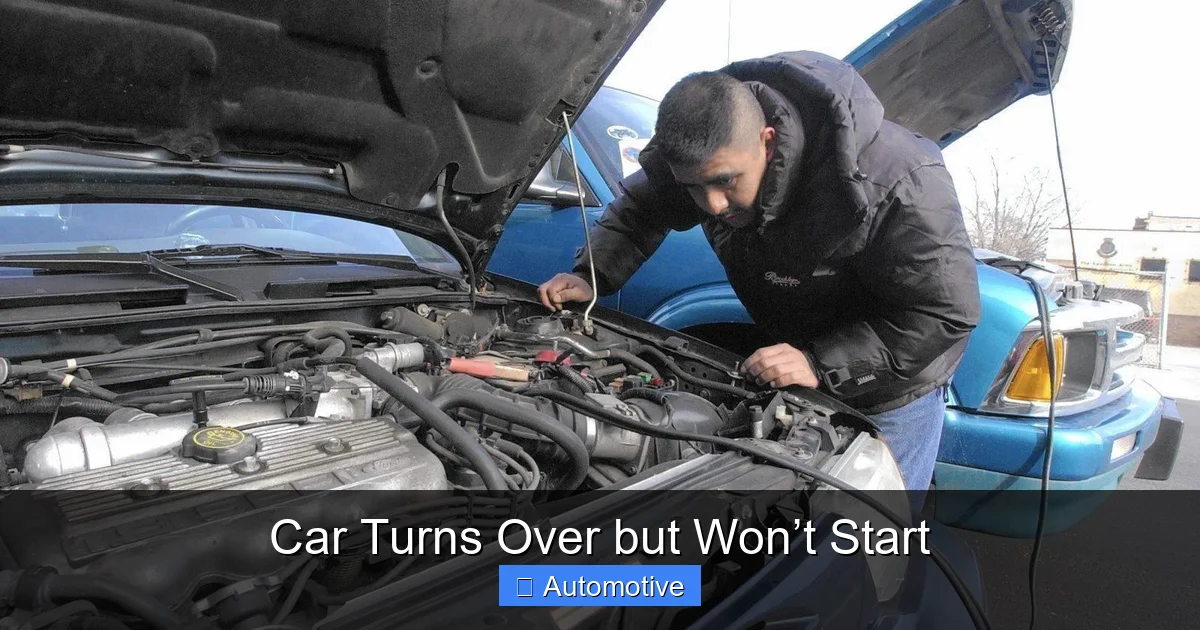
Visual guide about Car Turns Over but Won’t Start
Image source: carfromjapan.com
While many “cranks but won’t start” issues can be diagnosed at home, some problems require professional tools and expertise.
Call a mechanic if:
– You suspect internal engine damage (like a broken timing belt).
– The OBD2 scanner shows complex codes you can’t interpret.
– You’ve checked fuel, spark, and air but still can’t find the cause.
– The car has been sitting for a long time and may have fuel system corrosion.
– You’re uncomfortable working with electrical or fuel systems.
A professional mechanic has access to advanced diagnostic tools, such as oscilloscopes and pressure testers, that can pinpoint elusive issues. They can also perform repairs safely—especially when dealing with high-pressure fuel systems or engine internals.
Preventing Future No-Start Issues
The best way to avoid a “car turns over but won’t start” scenario is through regular maintenance.
– Replace spark plugs and ignition coils according to your vehicle’s schedule.
– Change the fuel filter every 30,000 to 60,000 miles.
– Keep the air filter clean and replace it when dirty.
– Use high-quality fuel and consider fuel system cleaners periodically.
– Check battery health annually, especially before winter.
– Address warning lights promptly—don’t ignore the check engine light.
Keeping up with these tasks not only prevents no-start problems but also improves fuel efficiency, performance, and engine longevity.
Conclusion
A car that turns over but won’t start is a common and often solvable problem. By understanding the three essentials of combustion—fuel, air, and spark—you can methodically diagnose the issue and take action. Whether it’s a failing fuel pump, worn spark plugs, a dirty MAF sensor, or an immobilizer glitch, most causes are within reach of a careful DIYer or a skilled mechanic.
Remember: the fact that your engine cranks is a good sign. It means the basics are working. The real challenge is figuring out what’s missing in the combustion process. With the right tools, a bit of patience, and this guide, you’ll be back on the road in no time.
Don’t let a no-start condition leave you stranded. Stay informed, stay proactive, and keep your car in top shape. After all, a little prevention goes a long way—and could save you from that frustrating moment when your car turns over but just won’t start.
Frequently Asked Questions
Why does my car crank but not start even with a new battery?
A new battery ensures power to the starter, but it doesn’t guarantee proper fuel, spark, or sensor function. The issue could be a failing fuel pump, bad spark plugs, or a faulty sensor like the crankshaft position sensor.
Can bad gas cause a car to turn over but not start?
Yes, contaminated or old gasoline can prevent combustion. Water in the fuel, ethanol separation, or degraded fuel can clog injectors or fail to ignite, leading to a no-start condition.
How do I know if my fuel pump is bad?
Listen for a humming sound from the fuel tank when you turn the key to “on.” No sound? The pump may be dead. Also, check fuel pressure with a gauge—low pressure indicates a failing pump.
Will a car start if the timing belt is broken?
No. A broken timing belt disrupts engine timing, preventing valves from opening and closing correctly. In most cases, the engine will crank but not start—and may suffer internal damage.
Can a dirty air filter prevent a car from starting?
A severely clogged air filter can restrict airflow enough to cause a no-start, especially in older engines. However, it’s more likely to cause poor performance or rough idling than a complete failure to start.
Why won’t my car start even though the security light is off?
Even with no warning light, the immobilizer system may still be blocking the start due to a faulty key chip, dead key fob battery, or internal module glitch. Try a spare key or have the system scanned.