
What Is Comprehensive Car Insurance

Comprehensive car insurance goes beyond basic liability coverage, protecting your vehicle from non-collision incidents like theft, vandalism, fire, and natural disasters. It’s a smart choice for drivers who want peace of mind and full protection for their car, even when accidents aren’t involved.
Key Takeaways
- Covers non-collision damage: Comprehensive insurance pays for damage caused by events like hail, floods, falling objects, and animal collisions.
- Includes theft and vandalism: If your car is stolen or intentionally damaged, comprehensive coverage helps cover repair or replacement costs.
- Often required for leased or financed cars: Lenders and leasing companies typically require comprehensive coverage to protect their investment.
- Doesn’t cover collisions with other vehicles: For crash-related damage, you’ll need collision coverage in addition to comprehensive.
- Affordable with higher deductibles: Choosing a higher deductible can lower your monthly premium while still providing strong protection.
- Peace of mind in unpredictable situations: Whether it’s a fallen tree or a break-in, comprehensive insurance keeps you protected from unexpected events.
- Can include additional perks: Some policies offer extras like rental car reimbursement or roadside assistance.
📑 Table of Contents
- What Is Comprehensive Car Insurance?
- What Does Comprehensive Car Insurance Cover?
- What Comprehensive Car Insurance Does NOT Cover
- Who Needs Comprehensive Car Insurance?
- How Much Does Comprehensive Car Insurance Cost?
- Comprehensive vs. Collision vs. Liability: What’s the Difference?
- How to File a Comprehensive Insurance Claim
- Is Comprehensive Car Insurance Worth It?
What Is Comprehensive Car Insurance?
If you’re like most drivers, you probably think car insurance is mainly about covering accidents—like when you rear-end someone at a stoplight or skid off the road in the rain. But what about when your car gets damaged not because of a crash, but because a tree branch fell on it during a storm? Or when someone breaks into your vehicle and steals your stereo? That’s where comprehensive car insurance comes in.
Comprehensive car insurance is a type of coverage that protects your vehicle from damage caused by events outside of collisions with other vehicles or objects. Think of it as your car’s safety net for the “what ifs” that don’t involve another car. It’s one of the most valuable additions to your auto policy, especially if you want full protection for your vehicle. Unlike liability insurance—which only covers damage you cause to others—comprehensive insurance looks out for *your* car when things go wrong.
This coverage is often grouped with collision insurance under the umbrella of “full coverage,” but it’s important to understand that comprehensive and collision are two separate types of protection. While collision pays for damage from crashes, comprehensive handles everything else. And while it’s not legally required in most states (unlike liability insurance), it’s highly recommended—especially if your car is newer, financed, or leased.
What Does Comprehensive Car Insurance Cover?
Visual guide about What Is Comprehensive Car Insurance
Image source: infographicjournal.com
One of the biggest advantages of comprehensive car insurance is its wide range of coverage. It’s designed to protect your vehicle from a variety of unexpected events that aren’t related to driving into something. Here’s a breakdown of the most common scenarios covered:
Theft and Vandalism
If your car is stolen, comprehensive insurance will typically cover the cost to replace it, up to the actual cash value of the vehicle. This includes not just the car itself, but also personal items inside—like your laptop, phone, or gym bag—depending on your policy limits. Vandalism, such as keying, broken windows, or graffiti, is also covered. For example, if someone smashes your windshield or slashes your tires while your car is parked, comprehensive insurance can help pay for repairs.
Natural Disasters and Weather Events
Mother Nature can be unpredictable, and comprehensive insurance helps protect your car from her worst moments. This includes damage from:
- Hailstorms (dents and broken glass)
- Floods (engine and interior damage)
- Hurricanes and tornadoes (falling debris, structural damage)
- Wildfires (burn damage)
- Earthquakes (falling objects, structural collapse)
Imagine your car is parked outside during a severe thunderstorm, and a large hailstone cracks your windshield. Without comprehensive coverage, you’d have to pay out of pocket. But with it, your insurer covers the repair—minus your deductible.
Falling Objects
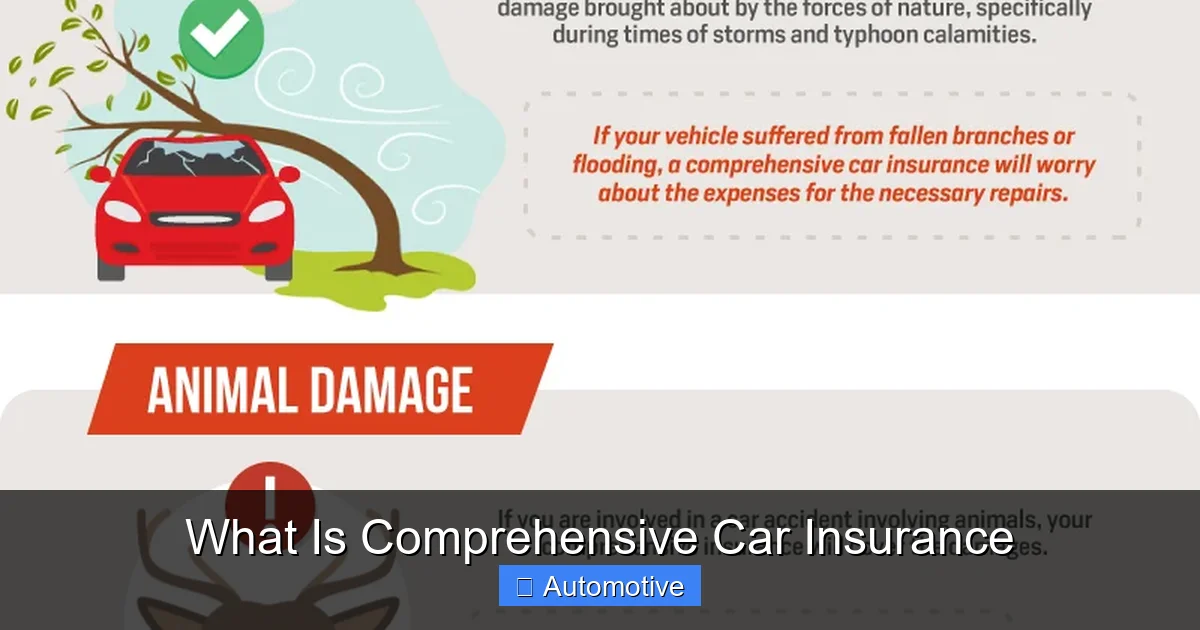
Sometimes, the sky literally falls on your car. Whether it’s a tree limb, construction debris, or even a satellite (yes, that’s happened!), comprehensive insurance covers damage from objects that fall onto your vehicle. This is especially useful if you park under trees or near construction zones.
Animal Collisions
Hitting a deer, raccoon, or other animal can cause serious damage to your car’s front end, hood, or windshield. While this might seem like a collision, it’s actually covered under comprehensive insurance—not collision. That’s because you didn’t hit another vehicle or stationary object like a pole or wall. This distinction is important when filing a claim.
Fire and Explosions
Whether it’s a house fire that spreads to your garage or a mechanical issue that causes your car to catch fire, comprehensive insurance covers fire-related damage. This also includes explosions, such as a fuel tank rupture.
Civil Disturbances
In rare cases, riots, civil unrest, or acts of terrorism can damage vehicles. Comprehensive insurance typically covers this type of loss, offering protection when public safety breaks down.
What Comprehensive Car Insurance Does NOT Cover

Visual guide about What Is Comprehensive Car Insurance
Image source: cdn.ramseysolutions.net
While comprehensive coverage is broad, it’s not all-encompassing. It’s important to know what’s excluded so you don’t face surprises when filing a claim.
Collisions with Other Vehicles or Objects
If you hit another car, a guardrail, or a mailbox, that’s considered a collision—not a comprehensive event. You’ll need collision coverage to pay for those damages. For example, if you back into a pole and dent your bumper, comprehensive won’t help. But if a pole falls on your car during a storm, that *would* be covered.
Mechanical Breakdowns
Comprehensive insurance doesn’t cover normal wear and tear or mechanical failures. If your engine seizes or your transmission fails, that’s not covered. However, some insurers offer mechanical breakdown insurance as an add-on.
Personal Injury
This policy only covers damage to your vehicle—not injuries to you or your passengers. For medical expenses, you’ll need medical payments coverage or personal injury protection (PIP), depending on your state.
Normal Wear and Tear
Things like worn-out tires, faded paint, or rust aren’t covered. Comprehensive insurance is for sudden, unexpected events—not gradual deterioration.
Rental Car Damage
If you rent a car and damage it, your comprehensive policy won’t cover that. However, some credit cards or rental companies offer their own insurance for this purpose.
Who Needs Comprehensive Car Insurance?
Visual guide about What Is Comprehensive Car Insurance
Image source: carmoney.co.uk
You might be wondering: “Do I really need this?” The answer depends on your situation. Here’s who benefits most from comprehensive coverage:
Car Owners with Newer or High-Value Vehicles
If your car is worth more than a few thousand dollars, comprehensive insurance is a smart investment. Repairing or replacing a modern vehicle can cost tens of thousands of dollars—especially if it’s damaged by fire, theft, or flooding. For example, a 2023 Honda Accord with a market value of $28,000 would be expensive to fix after a hailstorm. Comprehensive coverage helps protect that investment.
People Who Lease or Finance Their Cars
Most lenders and leasing companies require comprehensive (and collision) insurance as a condition of the loan or lease. This protects their financial interest in the vehicle. If you’re still making payments, you’ll almost certainly need this coverage.
Drivers in High-Risk Areas
If you live in an area prone to natural disasters—like Florida (hurricanes), Colorado (hail), or California (wildfires)—comprehensive insurance is essential. Similarly, if you park on the street in a city with high crime rates, theft and vandalism coverage can save you thousands.
Those Who Want Peace of Mind
Even if your car is older, comprehensive coverage offers valuable peace of mind. You never know when a storm might roll in or when your car might become a target for thieves. Knowing you’re protected can reduce stress and financial worry.
How Much Does Comprehensive Car Insurance Cost?
The cost of comprehensive car insurance varies based on several factors, but it’s generally more affordable than people think. On average, comprehensive coverage adds $150 to $300 per year to your premium, depending on your location, vehicle, and deductible.
Factors That Affect Cost
- Location: Urban areas with higher theft rates or severe weather tend to have higher premiums.
- Vehicle Type: Luxury cars, sports cars, and vehicles with high repair costs are more expensive to insure.
- Deductible: Choosing a higher deductible (e.g., $1,000 instead of $500) lowers your premium but increases your out-of-pocket cost if you file a claim.
- Claims History: Drivers with a clean record usually pay less.
- Security Features: Cars with alarms, GPS tracking, or anti-theft devices may qualify for discounts.
For example, a 35-year-old driver in Texas with a 2020 Toyota Camry might pay around $200 per year for comprehensive coverage with a $500 deductible. But the same driver in New York City could pay closer to $350 due to higher theft and vandalism risks.
Tips to Save on Comprehensive Coverage
- Bundle policies: Many insurers offer discounts if you bundle auto and home insurance.
- Increase your deductible: Raising it from $250 to $1,000 can cut your premium by 15–30%.
- Maintain a good driving record: Safe drivers often qualify for lower rates.
- Install anti-theft devices: Some insurers offer discounts for alarms or tracking systems.
- Shop around: Compare quotes from at least three insurers to find the best deal.
Comprehensive vs. Collision vs. Liability: What’s the Difference?
It’s easy to get confused between the different types of car insurance. Here’s a quick comparison to clarify:
Liability Insurance
This is the minimum required in most states. It covers damage and injuries you cause to others in an accident. It does *not* cover your own vehicle or medical expenses.
Collision Insurance
Covers damage to your car from accidents with other vehicles or objects (like a tree or guardrail). It’s often paired with comprehensive for “full coverage.”
Comprehensive Insurance
Covers non-collision damage from theft, weather, animals, and more. It protects your car when you’re not at fault—or even involved—in an incident.
Think of it this way:
– Liability = covers others
– Collision = covers your car in crashes
– Comprehensive = covers your car in everything else
For example, if you hit a deer, comprehensive pays. If you hit another car, collision pays. If you cause injury to the other driver, liability pays.
How to File a Comprehensive Insurance Claim
Filing a claim for comprehensive damage is usually straightforward, but it helps to be prepared. Here’s a step-by-step guide:
1. Document the Damage
Take clear photos of the damage from multiple angles. If it’s theft or vandalism, note any missing items or signs of forced entry.
2. File a Police Report (If Needed)
For theft, vandalism, or hit-and-run animal collisions, a police report strengthens your claim.
3. Contact Your Insurer
Call your insurance company as soon as possible. Most have 24/7 claim lines. Provide your policy number, details of the incident, and photos.
4. Get a Repair Estimate
Your insurer may send an adjuster or ask you to get estimates from approved repair shops.
5. Pay Your Deductible
Once approved, you’ll pay your deductible (e.g., $500), and the insurer covers the rest up to your policy limit.
6. Get Your Car Repaired
Use a reputable repair shop. Some insurers offer direct payment to the shop, so you don’t have to front the money.
Is Comprehensive Car Insurance Worth It?
For most drivers, the answer is yes. While it’s not legally required, the protection it offers far outweighs the cost—especially if your car is valuable or you live in a high-risk area.
Consider this: the average cost of comprehensive coverage is about $200 per year. But the cost to replace a stolen car or repair hail damage can easily exceed $5,000. That’s a small price to pay for major protection.
Even if your car is older, comprehensive insurance can still be worthwhile. For example, if your 10-year-old sedan is worth $8,000 and gets totaled in a flood, comprehensive coverage could save you from losing that value.
Ultimately, comprehensive car insurance is about more than just fixing dents or replacing windows. It’s about protecting your financial stability and giving you confidence that you’re covered no matter what life throws your way.
Frequently Asked Questions
Is comprehensive car insurance required by law?
No, comprehensive car insurance is not legally required in most states. However, if you lease or finance your vehicle, your lender will likely require it.
Does comprehensive insurance cover windshield damage?
Yes, most comprehensive policies cover windshield damage from rocks, debris, or weather. Some even offer full glass coverage with no deductible.
Will my premium go up if I file a comprehensive claim?
It depends on your insurer and the claim. Comprehensive claims (like theft or weather damage) are less likely to raise your rates than at-fault collision claims, but it’s possible.
Can I drop comprehensive insurance on an older car?
Yes, if your car’s value is low (e.g., under $3,000), you may choose to drop it. But consider the risk—unexpected damage could still cost more than the annual premium.
Does comprehensive insurance cover rental cars?
No, it only covers your own vehicle. However, some credit cards or rental companies offer separate coverage for rented cars.
What happens if my car is totaled under comprehensive coverage?
Your insurer will pay the actual cash value of your car at the time of the loss, minus your deductible. This amount is based on market value, not replacement cost.