
Can You Use Car Oil for a Lawn Mower?

Using car oil in a lawn mower is possible in some cases, but it’s not always recommended. Lawn mower engines have different operating conditions than car engines, so choosing the right oil matters. Always check your owner’s manual and consider factors like viscosity, additives, and engine type before making a decision.
Key Takeaways
- Car oil can be used in lawn mowers in emergencies, but it’s not ideal long-term. Lawn mower engines operate at higher temperatures and under different loads than car engines.
- Check your mower’s owner’s manual first. Manufacturers specify the correct oil type and viscosity for optimal performance and warranty compliance.
- Viscosity matters—most mowers need SAE 30 or 10W-30 oil. Using the wrong thickness can lead to poor lubrication or engine damage.
- Avoid oils with friction modifiers or detergents designed for cars. These additives can harm small engines and cause performance issues.
- Two-stroke and four-stroke mowers have different oil needs. Never use car oil in a two-stroke engine unless it’s specifically formulated for small engines.
- High-quality small engine oil is affordable and widely available. Investing in the right oil extends engine life and improves reliability.
- Regular oil changes are crucial for lawn mower health. Even with the right oil, neglecting maintenance can lead to costly repairs.
📑 Table of Contents
Can You Use Car Oil for a Lawn Mower?
If you’ve ever found yourself staring at a lawn mower with a low oil light and only a bottle of car engine oil on hand, you’re not alone. It’s a common dilemma—especially during peak mowing season when time is tight and supplies are low. You might wonder: Can I just pour in some car oil and get back to work? After all, oil is oil, right?
Well, not exactly. While car oil and lawn mower oil are both designed to lubricate engines, they’re formulated for very different machines with unique demands. Lawn mowers—especially push mowers and riding mowers—operate under high heat, frequent starts and stops, and dusty conditions. Car engines, on the other hand, run more consistently and are better sealed from dirt and debris. So, while using car oil in a pinch might seem like a quick fix, it could lead to long-term problems if done incorrectly.
The good news? In some cases, you *can* use car oil in a lawn mower—but only under specific conditions and with careful consideration. This article will walk you through everything you need to know: when it’s safe, what to watch out for, and why choosing the right oil matters more than you might think. Whether you’re a weekend warrior or a seasoned landscaper, understanding the differences between car and lawn mower oil will help you keep your equipment running smoothly for years to come.
Understanding Lawn Mower Engines
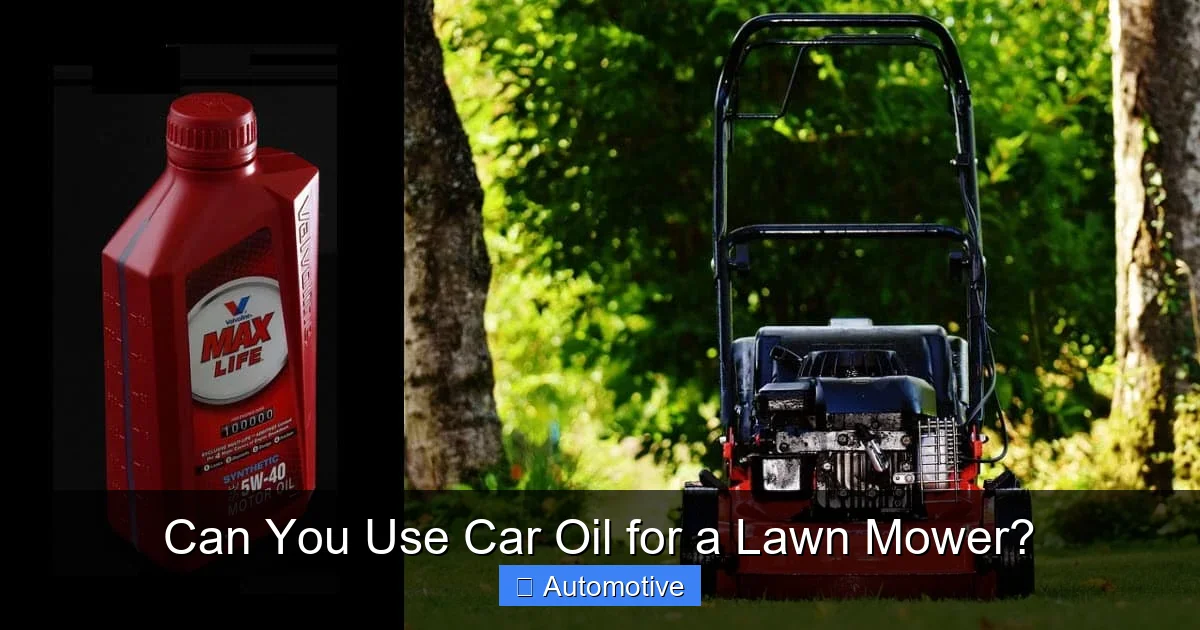
Visual guide about Can You Use Car Oil for a Lawn Mower?
Image source: lawnchick.com
Before we dive into whether car oil works in a lawn mower, it helps to understand how these small engines function. Unlike car engines, which are complex, multi-cylinder systems with advanced cooling and filtration, most lawn mower engines are simple, single-cylinder, four-stroke engines. They’re built for reliability, affordability, and ease of maintenance—not high-speed performance.
These engines typically run at higher RPMs (revolutions per minute) than car engines, especially when cutting thick grass or climbing hills. That means the internal components—like pistons, crankshafts, and valves—are under constant stress and generate a lot of heat. Because of this, proper lubrication is critical. The oil must be able to withstand high temperatures without breaking down, while also flowing quickly enough to reach all moving parts during startup.
Another key difference is the environment. Lawn mowers operate outdoors, often in dusty, grassy, or wet conditions. Dirt and debris can easily enter the engine compartment, so the oil must help trap contaminants and prevent sludge buildup. Car engines, by contrast, are housed in cleaner, more controlled environments with better air filtration systems.
Additionally, many lawn mowers don’t have oil filters. This means the oil must do more of the heavy lifting when it comes to keeping the engine clean. Over time, dirty or degraded oil can lead to carbon deposits, reduced compression, and even engine seizure. That’s why using the right oil—formulated specifically for small engines—is so important.
Types of Lawn Mower Engines
Not all lawn mowers are created equal. The type of engine your mower uses plays a big role in determining what kind of oil it needs. Here are the two main types:
Four-Stroke Engines: These are the most common in modern push mowers, riding mowers, and zero-turn mowers. They have a dedicated oil reservoir, and the oil circulates through the engine to lubricate moving parts. This is the type of engine where you’ll be adding oil through a dipstick or fill cap. Most four-stroke mowers can use car oil in a pinch, but only if it matches the recommended viscosity and doesn’t contain harmful additives.
Two-Stroke Engines: Found in older or smaller equipment like string trimmers, leaf blowers, and some handheld mowers, two-stroke engines mix oil directly with fuel. The oil burns along with the gasoline to lubricate the engine. Because the oil is combusted, it must be specially formulated to burn cleanly and provide adequate lubrication. Never use regular car oil in a two-stroke engine—it can cause spark plug fouling, excessive smoke, and engine damage. Always use a high-quality two-stroke oil designed for small engines.
Understanding your mower’s engine type is the first step in choosing the right oil. If you’re unsure, check the owner’s manual or look for labels on the engine itself.
Car Oil vs. Lawn Mower Oil: What’s the Difference?
Visual guide about Can You Use Car Oil for a Lawn Mower?
Image source: m.media-amazon.com
At first glance, car oil and lawn mower oil might seem interchangeable. After all, they’re both motor oils, right? But the truth is, they’re formulated for different purposes—and using the wrong one can have consequences.
Let’s break down the key differences:
Viscosity: This refers to how thick or thin the oil is. Lawn mowers typically use SAE 30 oil in warmer temperatures or 10W-30 for year-round use. These viscosities are chosen because they provide the right balance of flow and protection for small, high-RPM engines. Car oils, especially modern synthetic blends, often have lower viscosities (like 5W-20 or 0W-20) to improve fuel economy and cold-start performance. While a 10W-30 car oil might work in a lawn mower, thinner oils like 5W-20 may not offer enough protection under high heat and load.
Additives: Car oils contain a cocktail of additives designed to meet the demands of modern automotive engines. These include detergents to clean engine deposits, friction modifiers to reduce wear, and anti-wear agents like zinc dialkyldithiophosphate (ZDDP). While great for cars, some of these additives can be harmful to small engines. For example, high levels of phosphorus in ZDDP can damage catalytic converters in newer mowers (if equipped) and may lead to pre-ignition or spark plug fouling.
Detergent vs. Non-Detergent Oil: Older lawn mowers, especially those made before the 1980s, were designed to run on non-detergent oil. Detergent oils, common in cars, help clean sludge and deposits—but in a small engine without an oil filter, this can stir up contaminants and cause them to circulate, leading to wear. Modern mowers can usually handle detergent oil, but it’s still best to use oil labeled for small engines.
Operating Temperature: Lawn mower engines run hotter than car engines because they lack advanced cooling systems. They rely on airflow from the spinning blades and fan cooling. This means the oil must maintain its protective properties at higher temperatures. Car oils are designed to handle the consistent, moderate heat of a car engine—not the spikes seen in a mower cutting thick grass on a hot day.
Shear Stability: Small engines experience more mechanical stress due to high RPMs. The oil must resist “shearing,” or breaking down under pressure. Some car oils, especially low-viscosity synthetics, may not hold up as well in this environment.
In short, while car oil isn’t inherently dangerous for lawn mowers, it’s not optimized for them. Using the right oil—specifically formulated for small engines—ensures better performance, longer engine life, and fewer maintenance headaches.
When Is It Safe to Use Car Oil in a Lawn Mower?
Visual guide about Can You Use Car Oil for a Lawn Mower?
Image source: crabgrasslawn.com
So, can you use car oil for a lawn mower? The short answer is: sometimes—but only under the right conditions.
If you’re in a bind and your mower is low on oil, using a small amount of car oil to get through one mowing session is unlikely to cause immediate damage—especially if it’s a conventional 10W-30 or SAE 30 oil. However, this should be a last resort, not a regular practice.
Here are some scenarios where using car oil might be acceptable:
Emergency Top-Off: If you’re halfway through mowing and notice the oil level is low, adding a small amount of 10W-30 car oil to bring it back to the safe range is generally fine. Just don’t overfill, and plan to change the oil properly as soon as possible.
Older Mowers Without Catalytic Converters: If your mower is more than 15–20 years old and doesn’t have a catalytic converter or emissions system, it’s less sensitive to oil additives. In these cases, conventional car oil is less likely to cause problems.
Matching Viscosity: If the car oil you have on hand matches the recommended viscosity in your owner’s manual (e.g., SAE 30 or 10W-30), it’s more likely to perform adequately. Avoid using 5W-20, 0W-20, or full synthetic oils unless specified.
Short-Term Use: Using car oil for one or two oil changes won’t ruin your engine. But don’t make it a habit. Over time, the wrong oil can lead to sludge, reduced lubrication, and premature wear.
That said, there are clear situations where you should avoid car oil altogether:
– Your mower has a catalytic converter (common in newer models for emissions control).
– The car oil contains friction modifiers or high levels of ZDDP.
– You’re using a synthetic oil not rated for small engines.
– Your mower is a two-stroke engine (oil must be mixed with fuel).
Always consult your owner’s manual first. If it specifies “small engine oil” or “lawn mower oil,” it’s best to follow that guidance.
Real-World Example: The Weekend Fix
Imagine it’s Saturday morning, and you’re ready to mow the lawn. You check the oil and realize it’s nearly empty. The nearest hardware store is 30 minutes away, and you don’t want to wait. You have a bottle of 10W-30 conventional car oil in your garage.
In this case, adding a small amount of that car oil to get you through the job is a reasonable short-term solution. Just be sure to:
– Add only enough to reach the full mark on the dipstick.
– Avoid overfilling, which can cause foaming and poor lubrication.
– Schedule an oil change with the correct small engine oil as soon as possible.
This approach minimizes risk while keeping your mower running. But remember: it’s a temporary fix, not a long-term strategy.
Why Small Engine Oil Is the Better Choice
While car oil might work in a pinch, small engine oil is specifically designed for the unique demands of lawn mowers and other outdoor power equipment. Here’s why it’s the superior choice:
Optimized Additive Package: Small engine oils are formulated with additives that protect against high heat, rust, and corrosion—without including harmful detergents or friction modifiers. They’re designed to keep engines clean without over-cleaning, which can be an issue in oil-filter-free systems.
Better Shear Stability: These oils are built to withstand the high RPMs and mechanical stress of small engines. They maintain their viscosity under pressure, ensuring consistent lubrication.
Compatibility with Emissions Systems: Many modern mowers have catalytic converters to reduce emissions. Small engine oils are formulated to be “low-ash” or “ashless,” meaning they won’t clog or damage these components.
Improved Cold-Start Performance: While car oils focus on fuel efficiency, small engine oils prioritize reliable cold starts—something crucial for weekend mowing after the mower has sat idle all week.
Longer Engine Life: Using the right oil reduces wear, prevents sludge, and keeps internal components clean. Over time, this translates to fewer repairs, better performance, and a longer lifespan for your mower.
Cost-Effective: High-quality small engine oil is affordable—often just a few dollars more than car oil. Given the cost of a new mower or engine rebuild, it’s a small price to pay for peace of mind.
Brands like Briggs & Stratton, Honda, and Mobil offer reliable small engine oils that meet or exceed industry standards. Look for oils labeled “SAE 30,” “10W-30,” or “4-cycle engine oil” at your local hardware store, garden center, or auto parts shop.
How to Choose the Right Oil
When shopping for lawn mower oil, keep these tips in mind:
– Check the manual: Your owner’s manual will specify the recommended oil type and viscosity based on climate and usage.
– Match the season: Use SAE 30 in warmer months (above 40°F) and 10W-30 for colder starts or year-round use.
– Look for “small engine” or “lawn mower” on the label: This ensures the oil is formulated for your equipment.
– Avoid “energy-conserving” oils: These contain friction modifiers that can harm small engines.
– Stick to reputable brands: Trusted names ensure quality and consistency.
How to Change Lawn Mower Oil Properly
Using the right oil is only half the battle—changing it correctly is just as important. Regular oil changes remove contaminants, restore lubrication, and keep your engine running smoothly.
Here’s a step-by-step guide:
1. Warm Up the Engine: Run the mower for 5–10 minutes to warm the oil. Warm oil flows more easily and carries away more debris.
2. Turn Off and Cool Slightly: Shut off the engine and let it cool for a few minutes. You don’t want to burn yourself, but the oil should still be warm.
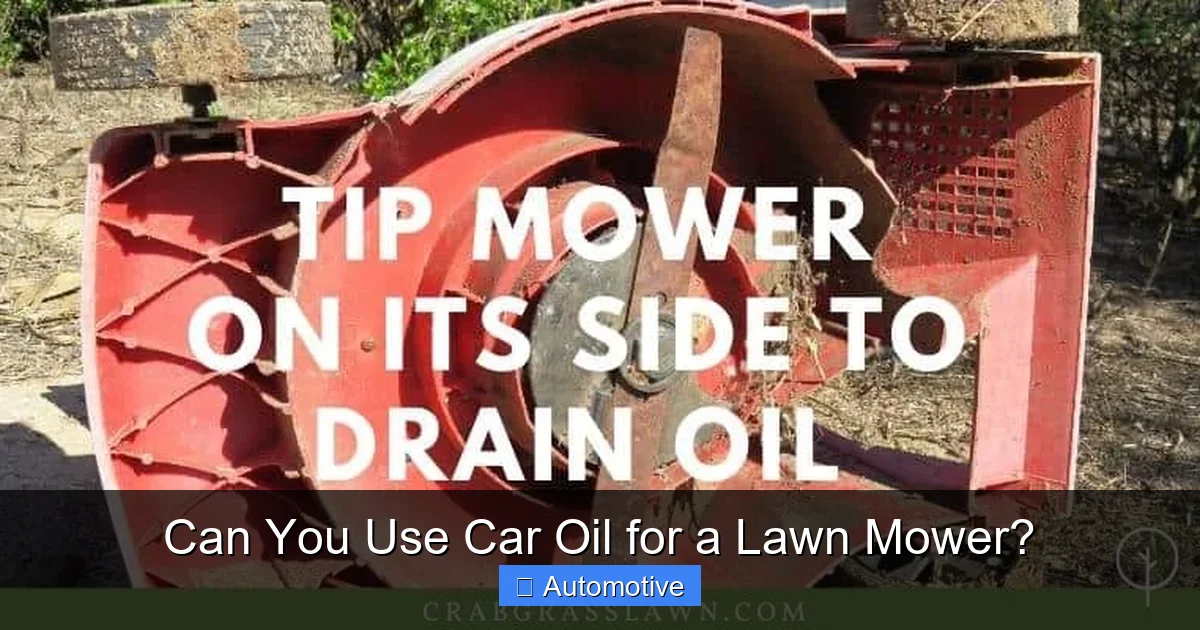
3. Position the Mower: Place the mower on a flat surface. For push mowers, tilt it carefully (air filter up) to avoid oil spilling into the carburetor.
4. Drain the Oil: Locate the oil drain plug (usually on the bottom of the engine). Place a drain pan underneath, remove the plug, and let the oil drain completely. This may take 5–10 minutes.
5. Replace the Plug: Once drained, reinstall the drain plug securely. Don’t overtighten.
6. Add New Oil: Use a funnel to pour the recommended amount of fresh oil into the fill tube. Check the dipstick to ensure you’ve reached the “full” mark.
7. Dispose of Old Oil Properly: Take used oil to a recycling center or auto parts store. Never pour it down the drain or on the ground.
Frequency: Change the oil at least once per mowing season, or every 50 hours of use. If you mow frequently or in dusty conditions, consider changing it twice a year.
Pro Tip: Keep a Maintenance Log
To stay on top of oil changes and other maintenance, keep a simple log. Note the date, hours of use, and type of oil used. This helps you track when the next change is due and ensures you’re using the right products.
Common Mistakes to Avoid
Even experienced homeowners make mistakes when it comes to lawn mower oil. Here are some common pitfalls to watch out for:
Using the Wrong Viscosity: Thick oil in cold weather can make starting difficult. Thin oil in hot weather won’t protect against wear. Always match the oil to the season and manufacturer’s recommendations.
Overfilling the Oil: Too much oil can cause foaming, reduced lubrication, and even engine damage. Always check the dipstick after adding oil.
Ignoring the Owner’s Manual: Every mower is different. The manual is your best guide for oil type, capacity, and change intervals.
Using Old or Contaminated Oil: Oil degrades over time, even when not in use. Don’t store opened oil for more than a year, and never use oil that looks dirty or smells burnt.
Mixing Oil Types: Avoid mixing synthetic and conventional oils unless specified. Mixing can alter viscosity and reduce performance.
Skipping Oil Changes: Fresh oil is essential for engine health. Don’t wait until the engine starts making noise—prevention is key.
Conclusion
So, can you use car oil for a lawn mower? The answer is nuanced. In emergencies, with the right type of oil and careful application, it can work temporarily. But for long-term reliability and engine protection, small engine oil is the clear winner.
Lawn mowers face unique challenges—high heat, dust, frequent starts, and high RPMs—that demand specialized lubrication. While car oil is designed for smooth, consistent operation in a controlled environment, small engine oil is built to handle the rough-and-tumble world of yard work.
By choosing the right oil, following your owner’s manual, and performing regular maintenance, you’ll keep your mower running like new for years to come. And when in doubt, it’s always better to invest a few extra dollars in the correct oil than to risk costly repairs down the road.
Remember: your lawn mower is more than just a tool—it’s an investment in your home and your time. Treat it well, and it will return the favor with every perfectly trimmed lawn.
Frequently Asked Questions
Can I use 10W-30 car oil in my lawn mower?
Yes, 10W-30 conventional car oil can be used in many four-stroke lawn mowers, especially in cooler temperatures. However, make sure it doesn’t contain friction modifiers or high levels of ZDDP, and always check your owner’s manual first.
Is synthetic car oil safe for lawn mowers?
Some synthetic car oils are safe, but only if they match the recommended viscosity and are labeled for small engines. Many synthetics are too thin or contain additives that can harm small engines, so proceed with caution.
What happens if I use the wrong oil in my lawn mower?
Using the wrong oil can lead to poor lubrication, increased wear, sludge buildup, and even engine failure. In two-stroke engines, it can cause spark plug fouling and excessive smoke.
How often should I change my lawn mower oil?
Change the oil at least once per mowing season, or every 50 hours of use. If you mow frequently or in dusty conditions, consider changing it twice a year.
Can I use motorcycle oil in a lawn mower?
Motorcycle oil is designed for wet clutches and high-revving engines, which differ from lawn mower engines. It’s not recommended unless specifically approved by the manufacturer.
What oil should I use in a riding mower?
Most riding mowers use SAE 30 or 10W-30 oil. Check the owner’s manual for the exact recommendation, and use oil labeled for small engines or 4-cycle engines.