
Can You Drive a Car Without a Muffler?

Yes, you can technically drive a car without a muffler, but it’s not recommended. Doing so creates excessive noise, may violate local laws, and can harm engine performance and fuel efficiency. This guide breaks down the real consequences of running a vehicle without a muffler.
Key Takeaways
- It’s legally risky: Most states and countries have noise ordinances that prohibit excessively loud vehicles, and driving without a muffler can result in fines or citations.
- Engine performance may suffer: The muffler plays a role in backpressure; removing it can disrupt exhaust flow and reduce engine efficiency.
- Fuel economy drops: Without proper backpressure, your engine may burn more fuel, leading to decreased gas mileage.
- Increased emissions: A missing muffler can lead to higher levels of harmful exhaust gases, contributing to environmental pollution.
- Safety hazards exist: Loud exhaust can distract drivers and pedestrians, and damaged exhaust systems may leak dangerous fumes like carbon monoxide into the cabin.
- Warranty and insurance concerns: Modifying your exhaust system may void your vehicle’s warranty or affect insurance claims in case of an accident.
- Resale value drops: Cars with altered or missing exhaust components often have lower resale value due to perceived poor maintenance or illegal modifications.
📑 Table of Contents
- Can You Drive a Car Without a Muffler?
- What Does a Muffler Actually Do?
- Legal Implications of Driving Without a Muffler
- Performance and Mechanical Risks
- Safety Concerns and Health Risks
- Costs and Long-Term Consequences
- When Is It Okay to Remove the Muffler?
- Conclusion: Keep the Muffler—or Replace It
Can You Drive a Car Without a Muffler?
So, you’ve heard someone say, “My car runs louder without the muffler—sounds meaner, right?” Or maybe you’re dealing with a broken exhaust system and wondering if you can just rip out the muffler and keep driving. It’s a common question, especially among car enthusiasts or those on a tight budget. The short answer? Yes, you *can* drive a car without a muffler—but just because you can doesn’t mean you should.
The muffler is more than just a noise suppressor. It’s a critical part of your vehicle’s exhaust system, designed to reduce sound, manage backpressure, and help control emissions. Removing it might seem like a quick fix or a way to give your car a more aggressive sound, but the consequences go far beyond just being loud. From legal trouble to engine damage, driving without a muffler can create a host of problems that cost more in the long run.
In this guide, we’ll dive deep into what happens when you remove your muffler, the risks involved, and why it’s almost always better to keep it—or replace it if it’s damaged. Whether you’re a weekend mechanic, a daily commuter, or just curious about car mechanics, this article will give you the full picture.
What Does a Muffler Actually Do?
Before we get into the “can you drive without it” debate, let’s first understand what the muffler actually does. Many people think of it as just a noise box—something that makes the car quieter. While that’s part of its job, it’s only one piece of the puzzle.
Noise Reduction
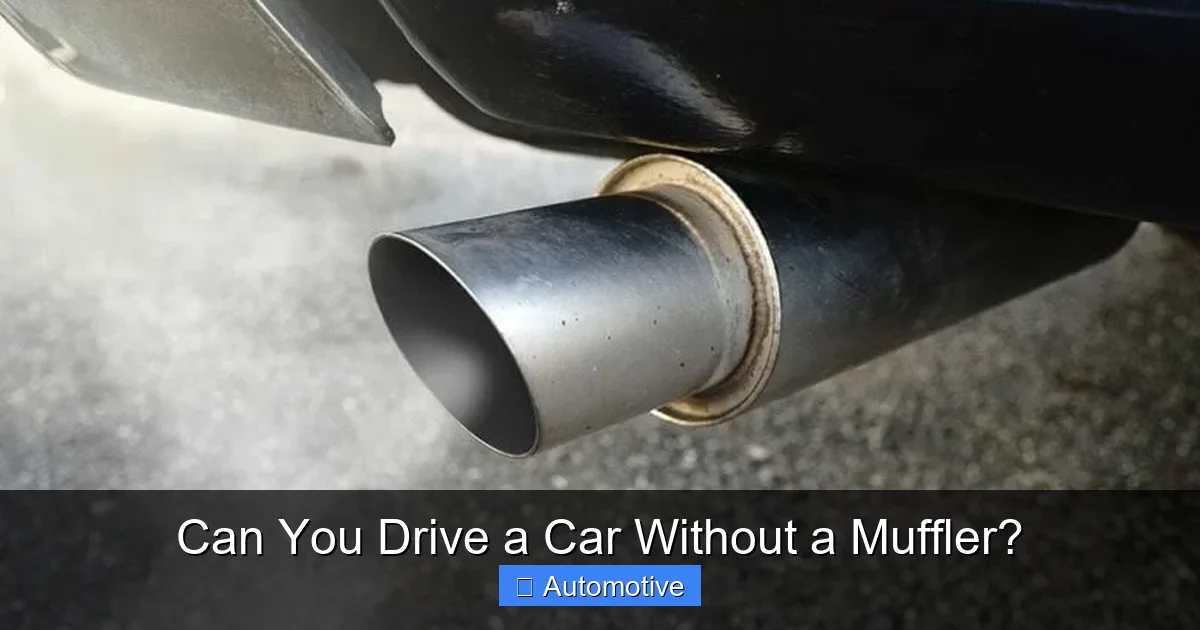
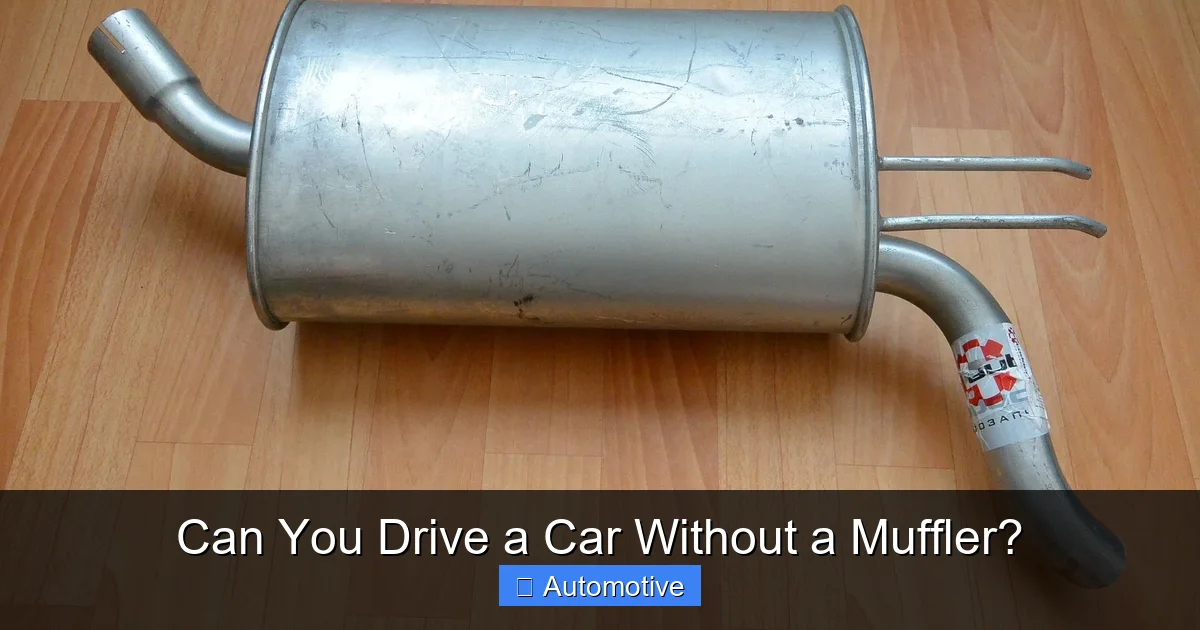
The most obvious function of a muffler is to reduce engine noise. Internal combustion engines produce loud explosions every time fuel ignites in the cylinders. Without a muffler, that sound would travel directly out of the exhaust pipe, creating a deafening roar. The muffler uses a series of chambers, baffles, and sound-absorbing materials to cancel out sound waves, making your ride much quieter and more pleasant.
Visual guide about Can You Drive a Car Without a Muffler?
Image source: housegrail.com
Managing Backpressure
Here’s where things get technical. The muffler also helps maintain proper backpressure in the exhaust system. Backpressure is the resistance that exhaust gases face as they exit the engine. Too little backpressure (like when the muffler is removed) can cause the engine to lose efficiency. Too much can restrict airflow and reduce power. The muffler is engineered to strike a balance—allowing gases to exit smoothly while maintaining enough pressure for optimal engine performance.
Emissions Control
Modern mufflers are often integrated with other emissions components, like the catalytic converter. While the muffler itself doesn’t filter pollutants, it works in tandem with these systems to ensure exhaust gases are treated before being released into the atmosphere. Removing the muffler can disrupt this process, leading to increased emissions and potential failure during emissions testing.
Protecting Other Components
A well-functioning muffler also helps protect other parts of the exhaust system. By reducing turbulence and controlling gas flow, it prevents excessive wear on pipes, oxygen sensors, and the catalytic converter. Without it, these components may degrade faster, leading to costly repairs down the line.
Legal Implications of Driving Without a Muffler
Now, let’s talk about the law. Just because your car can physically run without a muffler doesn’t mean it’s legal to drive it that way. In fact, in most places, it’s outright illegal.
Noise Ordinances
Every state in the U.S.—and most countries around the world—has noise regulations for vehicles. These laws limit how loud a car can be, typically measured in decibels (dB). For example, California prohibits vehicles from exceeding 95 dB when measured from 50 feet away. A car without a muffler can easily hit 110 dB or more—louder than a rock concert or a chainsaw. Getting pulled over for excessive noise is not only likely, but it can also result in hefty fines.
Visual guide about Can You Drive a Car Without a Muffler?
Image source: mocktheorytest.com
Vehicle Inspection Failures
In states that require annual vehicle inspections (like New York, Pennsylvania, or Texas), a missing or modified muffler will almost certainly cause your car to fail. Inspectors check for proper exhaust system function, including noise levels and emissions. If your muffler is gone or bypassed, you won’t pass—and you won’t be able to legally drive until it’s fixed.
Federal and Local Laws
The Environmental Protection Agency (EPA) also regulates vehicle emissions and noise under federal law. While enforcement is often left to states, the EPA sets standards that manufacturers must meet. Tampering with your exhaust system—including removing the muffler—can be considered a violation of the Clean Air Act, especially if it affects the catalytic converter or increases emissions.
Real-World Examples
Take the case of a driver in Florida who removed his muffler to make his truck “sound tougher.” He was pulled over within a week and fined $250 for violating local noise ordinances. In another instance, a California man was cited $500 and required to install a new muffler after failing a smog check due to excessive noise and emissions. These aren’t rare cases—they’re common outcomes for drivers who ignore the rules.
Performance and Mechanical Risks
Beyond the legal headaches, driving without a muffler can seriously impact your car’s performance and longevity. Let’s break down the mechanical downsides.
Loss of Backpressure and Engine Efficiency
As mentioned earlier, the muffler helps maintain optimal backpressure. When you remove it, exhaust gases flow too freely, which can disrupt the engine’s scavenging process. Scavenging is how the engine pulls in fresh air-fuel mixture by using the momentum of exiting exhaust gases. Without proper backpressure, this process becomes less efficient, leading to reduced power, rough idling, and hesitation during acceleration.

Visual guide about Can You Drive a Car Without a Muffler?
Image source: vehiclefreak.com
Decreased Fuel Economy
Many drivers assume a louder exhaust means more power—but that’s not always true. In fact, removing the muffler often leads to worse fuel economy. Why? Because the engine has to work harder to compensate for the loss of backpressure. Sensors in the exhaust system (like the oxygen sensor) may also send incorrect readings to the engine control unit (ECU), causing the car to run rich (too much fuel) or lean (too little fuel). Both scenarios waste gas and can damage the engine over time.
Increased Engine Wear
Running without a muffler can expose your engine to higher levels of heat and vibration. The exhaust system is designed to handle extreme temperatures, and removing components can cause heat to build up in unintended areas. This can warp exhaust manifolds, damage gaskets, or even crack engine components. Over time, this leads to expensive repairs.
Oxygen Sensor and Catalytic Converter Damage
The oxygen sensor, located in the exhaust stream, monitors the amount of oxygen in the exhaust gases to help the ECU adjust the air-fuel ratio. Without a muffler, the sensor may receive inaccurate readings due to turbulent airflow, leading to poor engine performance. Worse, if the catalytic converter is also compromised (which often happens when the muffler is removed), it can overheat and fail. Replacing a catalytic converter can cost $1,000 or more—far more than a new muffler.
Real-World Performance Drop
Let’s say you drive a 2015 Honda Civic with a 1.8L engine. With a functioning muffler, it gets about 32 mpg on the highway. After removing the muffler, you might notice the engine feels “loose” or less responsive. Your fuel economy could drop to 26 mpg. You might also hear popping or backfiring, especially when decelerating. These aren’t signs of improved performance—they’re symptoms of a struggling engine.
Safety Concerns and Health Risks
Driving without a muffler isn’t just bad for your car or wallet—it can also be dangerous for you and others on the road.
Carbon Monoxide Poisoning
One of the most serious risks is carbon monoxide (CO) exposure. CO is a colorless, odorless gas produced during combustion. In a properly functioning exhaust system, it’s safely vented away from the passenger cabin. But if the muffler is removed or the exhaust system is damaged, leaks can develop. These leaks can allow CO to enter the car’s interior, especially if the cabin isn’t well-sealed. Prolonged exposure can cause dizziness, headaches, nausea, and in severe cases, death.
Fire Hazard
A missing muffler can expose hot exhaust components to flammable materials. For example, if your car drives over dry grass or leaves, the intense heat from the open exhaust pipe could ignite a fire. This is especially risky in rural or dry climates where wildfires are a concern.
Distraction and Road Safety
Let’s be honest—driving a car that sounds like a jet engine is distracting. The constant roar can make it hard to hear emergency vehicles, horns, or even your own passengers. It can also startle other drivers, leading to road rage or accidents. Pedestrians and cyclists may also be alarmed by the sudden noise, increasing the risk of collisions.
Example: A Near-Miss Incident
Consider a driver in Arizona who removed his muffler to save money after it rusted through. One evening, while driving through a quiet neighborhood, his car backfired loudly. A child playing nearby jumped in surprise and ran into the street, narrowly avoiding a collision. The driver was shaken—not just by the noise, but by the realization that his modification could have caused serious harm.
Costs and Long-Term Consequences
You might think removing the muffler saves money—after all, you’re not buying a replacement. But in reality, it can cost you far more in the long run.
Repair and Replacement Costs
A new muffler typically costs between $100 and $500, depending on the vehicle and quality. Labor adds another $50 to $150. Compare that to the potential costs of fixing a damaged catalytic converter ($1,000+), replacing oxygen sensors ($200–$400 each), or repairing engine damage from overheating or poor fuel mixture. The math doesn’t add up in favor of removal.
Insurance and Warranty Issues
Modifying your exhaust system can void your vehicle’s warranty, especially if the modification leads to engine damage. Insurance companies may also deny claims if they determine the damage was caused by an illegal or unsafe modification. For example, if your engine fails due to excessive heat from a missing muffler, your insurer might refuse to cover the repair.
Resale Value Impact
When it’s time to sell your car, a missing or altered muffler can be a red flag for buyers. It suggests poor maintenance or reckless modifications. Even if the car runs fine, many buyers will lowball their offer or walk away entirely. A clean, stock exhaust system is a sign of a well-cared-for vehicle—something that boosts resale value.
Environmental Impact
Let’s not forget the environmental cost. Vehicles without mufflers often emit more pollutants, including nitrogen oxides (NOx) and hydrocarbons. These contribute to smog, acid rain, and respiratory problems. By keeping your muffler intact, you’re doing your part to reduce your carbon footprint.
When Is It Okay to Remove the Muffler?
So, is there *any* scenario where driving without a muffler is acceptable? The short answer is: almost never—on public roads.
Off-Road or Track Use Only
In controlled environments like racetracks, off-road trails, or private property, some drivers remove mufflers for performance tuning or sound preference. These settings are exempt from public road laws, so noise and emissions regulations don’t apply. However, even then, it’s important to monitor engine performance and ensure safety systems are intact.
Temporary Emergency Repairs
If your muffler falls off on a remote road and you need to get home, driving a short distance without it might be unavoidable. In that case, drive slowly, avoid highways, and get it repaired as soon as possible. But this should be a last resort—not a long-term solution.
Aftermarket Upgrades
Some car enthusiasts install performance mufflers or straight-pipe systems for better sound and airflow. These are legal *only* if they meet noise and emissions standards. Always check local laws before making modifications. A high-quality aftermarket muffler can improve performance without breaking the rules.
Conclusion: Keep the Muffler—or Replace It
Driving a car without a muffler might seem like a bold move—a way to stand out or save a few bucks. But the reality is far less glamorous. From legal fines and safety risks to engine damage and environmental harm, the downsides far outweigh any perceived benefits.
The muffler isn’t just a noise suppressor—it’s a vital part of your vehicle’s health and safety. It helps your engine run efficiently, protects you from harmful fumes, and keeps you on the right side of the law. If your muffler is damaged or rusted, don’t rip it out. Instead, invest in a quality replacement. It’s a small cost for peace of mind, better performance, and a longer-lasting vehicle.
So, can you drive a car without a muffler? Technically, yes. But should you? Absolutely not. Keep your car quiet, safe, and legal—your wallet, your engine, and your neighbors will thank you.
Frequently Asked Questions
Is it illegal to drive without a muffler?
Yes, in most places it is illegal. Most states and countries have noise and emissions laws that require vehicles to have a functioning muffler. Driving without one can result in fines, citations, or failed inspections.
Will removing the muffler improve my car’s performance?
Not typically. While some believe a louder exhaust means more power, removing the muffler often reduces engine efficiency, lowers fuel economy, and can cause damage to sensors and the catalytic converter.
Can I get a ticket for a loud exhaust?
Yes. Police officers can pull you over and issue a citation if your vehicle exceeds legal noise limits, even if the muffler is present but modified to be louder than allowed.
How much does it cost to replace a muffler?
The cost varies by vehicle and location, but typically ranges from $150 to $600, including parts and labor. Aftermarket options may be cheaper, while OEM parts are more expensive.
Can a missing muffler cause my car to fail emissions testing?
Yes. A missing or altered muffler can lead to increased emissions and noise, causing your vehicle to fail state or local emissions inspections.
Is it safe to drive a short distance without a muffler?
Only in emergencies. While a short trip may not cause immediate damage, it increases the risk of carbon monoxide exposure, fire, and engine strain. Get it repaired as soon as possible.
