
Should I Buy a Car with a Salvage Title

Buying a car with a salvage title can save you money, but it comes with serious risks. This guide breaks down everything you need to know—from insurance hurdles to safety concerns—so you can decide if a salvage-title vehicle is right for you.
[FEATURED_IMAGE_PLACEOLDER]
Key Takeaways
- Salvage titles indicate prior major damage: A salvage title means the car was declared a total loss by an insurance company, usually due to accident, flood, or fire damage.
- Lower purchase price is a major benefit: Salvage-title cars often cost 20–40% less than clean-title equivalents, making them attractive for budget buyers.
- Insurance and financing can be difficult: Many insurers won’t fully cover salvage vehicles, and lenders may refuse to finance them.
- Resale value is significantly reduced: Even after repairs, salvage cars typically sell for much less and attract fewer buyers.
- Hidden damage may exist: Poorly repaired structural or mechanical issues can compromise safety and performance.
- Inspection is non-negotiable: Always have a trusted mechanic inspect the vehicle before buying to assess repair quality and safety.
- Rebuilt titles are different: A rebuilt title means the car was repaired and passed state inspection—this is safer than a salvage title but still carries risks.
📑 Table of Contents
- Should I Buy a Car with a Salvage Title?
- What Is a Salvage Title?
- Pros of Buying a Car with a Salvage Title
- Cons and Risks of Buying a Salvage-Title Car
- How to Safely Buy a Salvage-Title Car
- Who Should Consider a Salvage-Title Car?
- Alternatives to Buying a Salvage Car
- Final Thoughts: Is It Worth It?
Should I Buy a Car with a Salvage Title?
So, you’re scrolling through car listings and spot a great deal—maybe a late-model SUV or a sporty sedan—at a price that seems almost too good to be true. You click on it, and there it is: “Salvage Title.” Your heart skips a beat. Is this a hidden gem or a money pit in disguise?
You’re not alone. Thousands of car shoppers face this dilemma every year. A salvage title can mean serious savings, but it also signals that the vehicle has a troubled past. Before you hand over your hard-earned cash, it’s crucial to understand what a salvage title really means, the risks involved, and whether the deal is worth it.
In this guide, we’ll walk you through everything you need to know about buying a car with a salvage title. From the reasons cars get salvaged to the challenges of insuring and reselling them, we’ll help you make an informed decision. Whether you’re a first-time buyer, a DIY mechanic, or just looking for a bargain, this article will give you the clarity you need.
What Is a Salvage Title?
Visual guide about Should I Buy a Car with a Salvage Title
Image source: images.cars.com
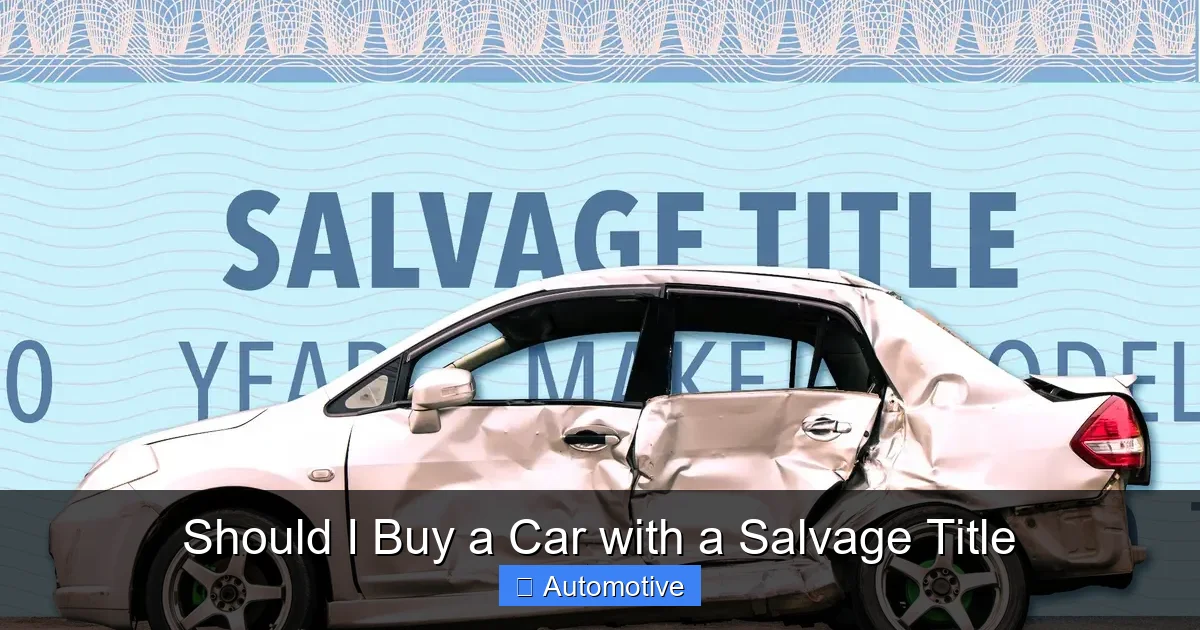
A salvage title is a designation given to a vehicle that has been severely damaged and declared a total loss by an insurance company. This usually happens when the cost to repair the car exceeds a certain percentage of its value—typically 70% to 80%, though the threshold varies by state.
Common Reasons for a Salvage Title
There are several reasons a car might end up with a salvage title. The most common include:
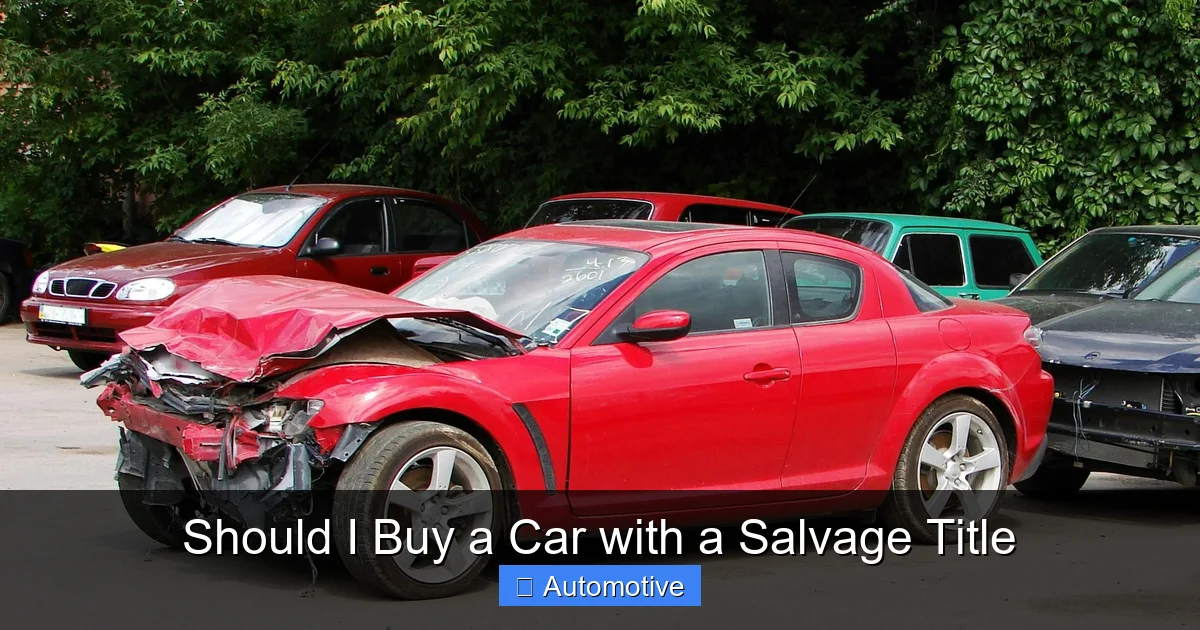
- Severe collision damage: A bad accident that crushes the frame, damages the engine, or compromises safety systems can lead to a total loss declaration.
- Flood or water damage: Even a few inches of water can ruin electrical systems, corrode metal parts, and promote mold growth. Flood-damaged cars are especially risky.
- Fire damage: Heat can warp metal, melt wiring, and destroy interior components. Even if the fire was small, hidden damage may linger.
- Theft recovery: If a stolen car is recovered after being stripped or damaged, it may be declared salvage.
- Hail or weather damage: In some cases, extensive hail damage can make repairs too costly, resulting in a salvage title.
It’s important to note that a salvage title doesn’t necessarily mean the car is unsafe or unusable. Many salvage vehicles are repaired and driven safely every day. However, the title serves as a permanent red flag to future buyers, insurers, and inspectors.
Salvage vs. Rebuilt Titles: What’s the Difference?
You might also come across “rebuilt” or “reconstructed” titles. These are different from salvage titles and indicate that the car was repaired and has passed a state inspection.
- Salvage title: The car has been declared a total loss and has not yet been repaired or inspected.
- Rebuilt title: The car was salvaged, repaired, and then passed a state-mandated inspection. It’s now legal to drive, but the title still reflects its history.
A rebuilt title is generally safer than a salvage title because it means the car has been restored to roadworthy condition. However, even rebuilt cars can have hidden issues, so due diligence is still essential.
Pros of Buying a Car with a Salvage Title
Visual guide about Should I Buy a Car with a Salvage Title
Image source: images.ctfassets.net
Despite the risks, there are real advantages to buying a salvage-title vehicle—especially if you’re on a tight budget or have mechanical skills.
Lower Purchase Price
The biggest draw of a salvage car is the price. Because of the title status, these vehicles sell for significantly less than their clean-title counterparts. You might find a $30,000 SUV listed for $15,000 or even less.
For example, a 2019 Honda CR-V with a clean title might cost $25,000. The same model with a salvage title could be available for $12,000–$15,000. That’s a savings of $10,000 or more.
This discount makes salvage cars appealing to:
- Budget-conscious buyers
- College students
- DIY mechanics who can handle repairs
- People needing a temporary or backup vehicle
Opportunity for DIY Repairs
If you’re handy with tools and enjoy working on cars, a salvage vehicle can be a rewarding project. You can buy it at a discount, fix it yourself, and potentially save thousands compared to buying new.
Many salvage cars have cosmetic damage—dents, scratches, or broken lights—that are easy and cheap to fix. Even some mechanical issues, like a blown head gasket or transmission problem, can be tackled with the right knowledge and tools.
Just remember: not all damage is visible. Structural issues, airbag deployment, or electrical faults may require professional expertise.
Availability of Rare or Discontinued Models
Sometimes, salvage-title cars include rare, vintage, or discontinued models that are hard to find on the used market. If you’re a collector or enthusiast, a salvage title might be your only chance to own a specific vehicle.
For instance, a classic muscle car or a limited-edition import might only be available with a salvage title due to its age and condition. In these cases, the title may be less of a concern than the car’s historical or sentimental value.
Cons and Risks of Buying a Salvage-Title Car
Visual guide about Should I Buy a Car with a Salvage Title
Image source: s28126.pcdn.co
While the savings are tempting, buying a salvage car comes with serious drawbacks. Ignoring these risks could lead to expensive repairs, safety hazards, or even legal trouble.
Difficulty Getting Insurance
One of the biggest challenges is insuring a salvage-title vehicle. Many insurance companies refuse to provide full coverage—especially collision and comprehensive—because of the increased risk.
Some insurers may offer liability-only coverage, which meets legal requirements but leaves you unprotected in an accident. Others might insure the car but limit payouts based on the salvage value, not the market value.
For example, if your salvage car is worth $10,000 but gets totaled in a new accident, the insurer might only pay $3,000–$5,000—the amount they originally deemed it worth when it was declared salvage.
This can leave you with a large out-of-pocket expense if you need to replace the vehicle.
Financing Challenges
Getting a loan for a salvage-title car is difficult. Most banks and credit unions won’t finance them because they’re considered high-risk assets. If you do find a lender, expect higher interest rates and stricter terms.
This means you’ll likely need to pay cash or secure private financing. For many buyers, this eliminates the option altogether—especially if the car costs more than a few thousand dollars.
Lower Resale Value
Even if you fix the car and drive it for years, you’ll struggle to sell it later. Most buyers avoid salvage titles due to the stigma and uncertainty.
When you do find a buyer, expect to sell for 30–50% less than a comparable clean-title car. In some cases, you might not recoup your initial investment—even after repairs.
For example, if you spend $8,000 on a salvage car and $2,000 on repairs, you’ve invested $10,000. But the car might only sell for $6,000–$7,000 on the used market.
Hidden Damage and Safety Concerns
This is the most serious risk. Even if a car looks good on the outside, it may have hidden damage that compromises safety.
Common hidden issues include:
- Frame damage: If the frame was bent in an accident and poorly repaired, the car may not handle correctly or protect you in a crash.
- Airbag system problems: Deployed airbags must be replaced with OEM (original equipment manufacturer) parts. Aftermarket or reused airbags may not work.
- Electrical faults: Water damage can cause shorts, malfunctioning sensors, or intermittent failures in the wiring.
- Suspension and steering issues: Misaligned or damaged components can lead to poor handling and increased accident risk.
A study by the National Insurance Crime Bureau (NICB) found that many salvage vehicles are repaired with counterfeit or substandard parts, increasing the risk of failure.
Inspection and Registration Hurdles
In most states, you can’t legally drive a salvage car until it’s repaired and passes a rigorous inspection. This process—called a “rebuilt title inspection”—can be time-consuming and costly.
The inspection typically includes:
- Verification of repairs
- VIN inspection
- Safety and emissions testing
- Proof of ownership and repair documentation
If the car fails, you’ll need to make additional repairs and retest—adding to your expenses.
How to Safely Buy a Salvage-Title Car
If you’re still interested in buying a salvage car, follow these steps to protect yourself and minimize risk.
Research the Vehicle’s History
Start by obtaining a detailed vehicle history report from services like Carfax or AutoCheck. These reports will show:
- Why the car was declared salvage
- Previous accidents or damage
- Title brands (salvage, rebuilt, etc.)
- Odometer readings
- Ownership history
Look for red flags like flood damage, multiple accidents, or title washing (when a car’s title is moved between states to hide its history).
Get a Professional Inspection
Never skip this step. Hire a trusted mechanic—preferably one experienced with salvage vehicles—to inspect the car thoroughly.
The inspection should include:
- Frame and structural integrity
- Engine and transmission condition
- Suspension and steering components
- Electrical systems
- Airbag and safety system functionality
Ask the mechanic to provide a written report. If they find major issues, walk away—even if the seller offers a lower price.
Verify Repair Quality
Ask the seller for documentation of all repairs, including:
- Receipts for parts and labor
- Photos of the damage and repairs
- Proof of OEM or certified aftermarket parts
Be wary of vague answers or missing records. Poorly documented repairs are a sign of amateur work.
Check State Requirements
Each state has different rules for salvage and rebuilt titles. Visit your state’s Department of Motor Vehicles (DMV) website to learn:
- What inspections are required
- How to apply for a rebuilt title
- Whether the car can be registered
Some states have stricter standards than others. For example, California requires a brake and lamp inspection for rebuilt vehicles, while Texas has a comprehensive salvage inspection program.
Negotiate the Price
Use the car’s history and condition to negotiate a fair price. Remember, you’re not just paying for the vehicle—you’re also taking on the risk of future problems.
A good rule of thumb: subtract the estimated cost of repairs and potential resale loss from the asking price. If the seller won’t budge, consider it a warning sign.
Consider the Long-Term Use
Ask yourself:
- Will I drive this car daily or just occasionally?
- Do I have the skills and tools to maintain it?
- Can I afford unexpected repairs?
- Do I plan to sell it in the future?
If you’re looking for a long-term, reliable vehicle, a clean-title car might be a better investment—even at a higher price.
Who Should Consider a Salvage-Title Car?
Not everyone is a good candidate for a salvage vehicle. Here’s who might benefit:
Budget Buyers with Cash
If you have the cash to pay upfront and don’t need financing, a salvage car can be a smart way to get more vehicle for your money.
DIY Mechanics and Enthusiasts
People who enjoy working on cars can turn a salvage project into a rewarding experience. Just be realistic about your skills and the time required.
Secondary or Project Vehicles
If you need a second car for errands, a farm vehicle, or a weekend project, a salvage title might be acceptable—especially if safety isn’t a top concern.
Collectors and Restorers
For classic car lovers, a salvage title on a rare model may be worth the risk, especially if the car has historical value.
Alternatives to Buying a Salvage Car
If the risks outweigh the rewards, consider these alternatives:
Certified Pre-Owned (CPO) Vehicles
CPO cars come with extended warranties, thorough inspections, and clean titles. They cost more than salvage cars but offer peace of mind.
Used Cars with Clean Titles
Look for well-maintained used cars in your price range. You might find a higher-mileage model that’s still reliable.
Lease a New Car
Leasing can give you a new vehicle with lower monthly payments and full warranty coverage—no salvage title worries.
Buy from a Reputable Dealer
Dealerships often offer certified inspections, return policies, and financing options that private sellers don’t.
Final Thoughts: Is It Worth It?
So, should you buy a car with a salvage title?
The answer depends on your situation. If you’re on a tight budget, have mechanical skills, and are willing to accept the risks, a salvage car can be a great deal. But if you need reliable transportation, plan to finance or insure the car, or want to resell it later, a clean-title vehicle is usually the safer choice.
Remember: a salvage title isn’t inherently bad—it’s a warning. With the right research, inspection, and mindset, you can make a smart decision. But skip the due diligence, and you could end up with a costly mistake.
When in doubt, consult a mechanic, check the vehicle history, and trust your instincts. A good deal shouldn’t feel like a gamble.
Frequently Asked Questions
Can I insure a car with a salvage title?
It depends on the insurer and state. Many companies offer only liability coverage, not full coverage. Some may insure rebuilt-title cars but with limited payouts based on salvage value.
Can I finance a salvage-title car?
Most traditional lenders won’t finance salvage vehicles due to high risk. You may need to pay cash or find a specialty lender with higher interest rates.
Is a rebuilt title better than a salvage title?
Yes. A rebuilt title means the car was repaired and passed a state inspection, making it safer and more insurable than a salvage title.
How much cheaper are salvage cars?
Salvage cars typically cost 20–40% less than clean-title equivalents, but prices vary based on damage, repairs, and market demand.
Can I sell a car with a salvage title?
Yes, but resale value is much lower. Most buyers avoid salvage titles, so expect fewer offers and a longer selling process.
Are salvage cars safe to drive?
They can be safe if properly repaired and inspected. However, hidden damage or poor repairs can compromise safety, so a professional inspection is essential.
