
What Is a Government Fee When Buying a Car

Government fees when buying a car are mandatory charges set by state and local authorities to cover registration, titling, and other administrative costs. These fees vary by location and vehicle type, so it’s important to research them early to avoid surprises at the dealership.
Key Takeaways
- Government fees are mandatory charges imposed by state and local agencies when purchasing a vehicle, covering registration, titling, and emissions testing.
- Fees vary significantly by state and county, so always check your local DMV or transportation department for accurate rates.
- Common government fees include title fees, registration fees, license plate fees, and sometimes emissions or safety inspection fees.
- Some fees are based on vehicle value or weight, meaning luxury or heavy vehicles may incur higher charges.
- Government fees are separate from dealer fees and taxes, so don’t confuse them with documentation or advertising fees charged by the dealership.
- You can often pay these fees online or at the DMV after purchase, but some dealers will handle them for you (for an additional service fee).
- Budgeting for government fees upfront helps prevent financial stress and ensures a smoother car-buying experience.
📑 Table of Contents
What Is a Government Fee When Buying a Car?
Buying a car is an exciting milestone—whether it’s your first vehicle or an upgrade to something newer, faster, or more fuel-efficient. But amid the thrill of test drives, financing options, and choosing the perfect color, there’s one part of the process that often catches buyers off guard: the fees. Not the dealer markups or financing charges, but the government fees.
So, what exactly is a government fee when buying a car? Simply put, it’s a mandatory charge imposed by state or local government agencies to cover the administrative costs of registering and titling your vehicle. These fees are not optional—they’re required by law before you can legally drive your new car off the lot. Unlike dealer fees, which are set by the dealership, government fees are standardized (though they vary by location) and go directly to public agencies like the Department of Motor Vehicles (DMV) or equivalent.
Understanding these fees is crucial because they can add hundreds—or even over a thousand—dollars to your total car purchase cost. And while they might seem like small line items on a contract, they can quickly add up, especially if you’re not prepared. The good news? Once you know what to look for, you can budget for them, avoid surprises, and even compare costs if you’re shopping across state lines.
Why Do Government Fees Exist?
Visual guide about What Is a Government Fee When Buying a Car
Image source: dashboard-light.com
Government fees serve a practical purpose: they fund essential public services related to vehicle ownership and road safety. Think of them as your contribution to maintaining the system that keeps roads safe, vehicles traceable, and drivers accountable.
When you pay a government fee, you’re essentially paying for the infrastructure and administrative work that supports vehicle ownership. This includes processing your title application, issuing license plates, maintaining driver and vehicle records, and enforcing traffic laws. These services cost money to operate, and rather than funding them through general taxes, most states choose to charge users directly—meaning car owners.
For example, the title fee covers the cost of creating and storing your vehicle’s official ownership document. The registration fee helps fund highway maintenance, traffic enforcement, and DMV operations. In some states, a portion of these fees also goes toward environmental programs, public transportation, or even emergency services.
It’s also worth noting that these fees help prevent fraud and ensure accountability. By requiring registration and titling, governments can track vehicle ownership, reduce theft, and enforce emissions standards. So while it might feel like just another expense, government fees play a key role in keeping the automotive ecosystem running smoothly.
Common Types of Government Fees When Buying a Car
Visual guide about What Is a Government Fee When Buying a Car
Image source: doityourself.com
Not all government fees are the same. Depending on where you live, you may encounter a mix of charges, each with its own purpose and cost structure. Here are the most common types of government fees you’ll likely encounter when buying a car.
Title Fees
The title fee is one of the first government charges you’ll pay when purchasing a vehicle. It covers the cost of issuing a new title in your name, which legally proves you own the car. This fee is typically a flat rate, ranging from $15 to $100, depending on the state. For example, in California, the title fee is $20, while in Texas, it’s $33. Some states also charge additional fees for expedited processing or duplicate titles.
Registration Fees
Registration fees are among the most significant government charges. These fees allow you to legally operate your vehicle on public roads and are usually paid annually. The cost varies widely—some states charge a flat fee (e.g., $30 in Arizona), while others base it on the vehicle’s value, age, or weight. In states like New York or Illinois, registration fees can exceed $200 for newer or luxury vehicles. Electric and hybrid cars may also face different registration structures, sometimes with higher fees to offset lost gas tax revenue.
License Plate Fees
When you register your car, you’ll also need license plates. The cost of these plates is often included in the registration fee, but some states charge separately. For instance, in Florida, standard license plates are included, but specialty or personalized plates can cost $25 to $50 extra. In some cases, you may also pay a fee to transfer plates from an old vehicle.
Emissions and Safety Inspection Fees
In certain states and counties, you’ll need to pass an emissions test or safety inspection before registering your vehicle. These tests ensure your car meets environmental and safety standards. The fees for these inspections are usually paid directly to certified testing centers, not the DMV, but they’re still considered government-mandated. For example, in Texas, an emissions test costs around $25, while in California, it’s about $40. Some states, like Michigan or Tennessee, don’t require emissions testing at all.
County or Local Fees
Beyond state-level charges, you may also face local fees imposed by your county or city. These can include transportation taxes, road maintenance fees, or even congestion charges in urban areas. For example, in Los Angeles County, there’s an additional $20 vehicle license fee, while in New York City, you might pay extra for a local registration tax. These fees are often overlooked but can add up quickly.
Use Tax or Sales Tax (When Applicable)
While technically a tax and not a fee, use tax is often grouped with government charges because it’s collected at the time of registration. If you buy a car from out of state or don’t pay sales tax at the dealership, your state may require you to pay a use tax when registering the vehicle. This tax is usually based on the purchase price and varies by state—some have no sales tax (like Oregon or New Hampshire), while others charge over 7%.
How Much Do Government Fees Cost?

Visual guide about What Is a Government Fee When Buying a Car
Image source: c8.alamy.com
The cost of government fees when buying a car can vary dramatically depending on your location, the type of vehicle, and its value. On average, most buyers can expect to pay between $200 and $800 in total government fees, though in high-cost states, this number can exceed $1,000.
Let’s break it down with real-world examples:
In **California**, a new car buyer might pay:
– Title fee: $20
– Registration fee: $60 (base) + $23 (weight fee) + $20 (CAV fee for clean air vehicles) = $103
– License plate fee: Included
– Smog check: $40
– County fee (e.g., LA County): $20
Total: Approximately $183
In **Texas**, the same buyer might pay:
– Title fee: $33
– Registration fee: $50.75 (standard passenger vehicle)
– License plate fee: $0 (included)
– Emissions test (if required): $25
Total: Around $109
In **New York**, costs are higher:
– Title fee: $50
– Registration fee: $145 (based on weight and age)
– License plate fee: $0
– Inspection fee: $10
Total: About $205
As you can see, even for similar vehicles, the total government fees can differ by over $100 just based on location. Luxury vehicles, trucks, and electric cars often face additional charges. For example, in Colorado, electric vehicles pay an annual fee of $50 to $150 to compensate for lost gas tax revenue.
It’s also important to note that some fees are one-time (like title fees), while others are recurring (like annual registration). If you’re financing your car, these fees are often rolled into your loan, so you may not pay them all upfront—but you’ll still be responsible for them over time.
How Are Government Fees Calculated?
Government fees aren’t random—they’re calculated using specific formulas set by state law. Understanding how these fees are determined can help you estimate costs before you buy and avoid sticker shock at the DMV.
Flat Fees
Some government fees are simple flat rates, meaning everyone pays the same amount regardless of the vehicle. Title fees are a common example—most states charge between $15 and $50, with little variation. These fees cover administrative costs and are designed to be predictable and easy to administer.
Value-Based Fees
Other fees are based on the vehicle’s purchase price or market value. Registration fees in states like Illinois, Massachusetts, and Pennsylvania use this model. For example, in Illinois, the registration fee is 1.5% of the vehicle’s value, capped at $1,000. So a $30,000 car would incur a $450 registration fee. This approach ensures that higher-value vehicles contribute more to road maintenance and public services.
Weight-Based Fees
Heavier vehicles cause more wear and tear on roads, so some states base fees on weight. In states like New York and Washington, registration fees increase with the vehicle’s gross weight. A compact car might pay $100, while a large SUV or truck could pay $200 or more. This system encourages lighter, more fuel-efficient vehicles and helps fund infrastructure repairs.
Age-Based Fees
Older vehicles may qualify for reduced registration fees in some states. For example, in Arizona, vehicles over 10 years old pay a flat $30 registration fee, regardless of value. This benefits buyers of used cars and helps keep older vehicles on the road without overburdening owners.
Environmental Fees
With growing concerns about climate change, some states have introduced fees based on environmental impact. Electric vehicles (EVs), for instance, don’t pay gas taxes but still use public roads. To compensate, states like Virginia, Ohio, and Wyoming charge annual EV fees ranging from $100 to $250. Hybrid vehicles may also face similar charges, though usually lower.
Local Add-Ons
Finally, don’t forget local fees. Counties and cities can add their own charges on top of state fees. These might include transportation improvement fees, public safety assessments, or even tourism taxes in certain areas. Always check with your local DMV or county clerk to get the full picture.
Where Do Your Government Fees Go?
It’s natural to wonder: where does all this money actually go? After all, you’re paying hundreds of dollars—what’s it being used for?
The short answer is that government fees fund a wide range of public services and infrastructure projects. Here’s a breakdown of how your money is typically spent:
Road Maintenance and Construction
A large portion of registration and license fees goes toward building and repairing roads, bridges, and highways. This includes pothole repairs, resurfacing, signage, and traffic signals. Without these funds, our transportation system would quickly deteriorate.
DMV and Administrative Operations
Title and registration fees help cover the cost of running the DMV. This includes staffing, technology, record-keeping, and customer service. These agencies handle millions of transactions each year, and the fees help keep them operational.
Public Safety and Law Enforcement
Some fees support traffic enforcement, driver education programs, and emergency response services. For example, a portion of registration fees in California goes to the California Highway Patrol (CHP) to fund patrols and accident response.
Environmental Programs
Emissions testing fees and clean air vehicle charges often fund environmental initiatives. This might include air quality monitoring, pollution reduction programs, or incentives for electric vehicles. In states like California, these fees are critical for meeting climate goals.
Public Transportation
In some regions, a small percentage of vehicle fees is allocated to public transit systems. This helps support buses, trains, and other alternatives to driving, reducing traffic congestion and emissions.
State and Local Budgets
Finally, some fees are deposited into general state or local funds, where they can be used for a variety of purposes—from education to healthcare. While this might seem less directly related to driving, it’s part of how states balance their budgets.
The key takeaway? Your government fees aren’t just bureaucratic red tape—they’re investments in the systems that keep you safe, mobile, and connected.
Tips for Managing Government Fees When Buying a Car
Now that you understand what government fees are and how they work, here are some practical tips to help you manage them effectively and avoid surprises.
Research Fees Before You Buy
Don’t wait until you’re at the dealership to find out how much you’ll owe. Visit your state’s DMV website or use online fee calculators to estimate costs based on your vehicle and location. This helps you budget accurately and compare total costs across different cars or states.
Ask the Dealer for a Breakdown
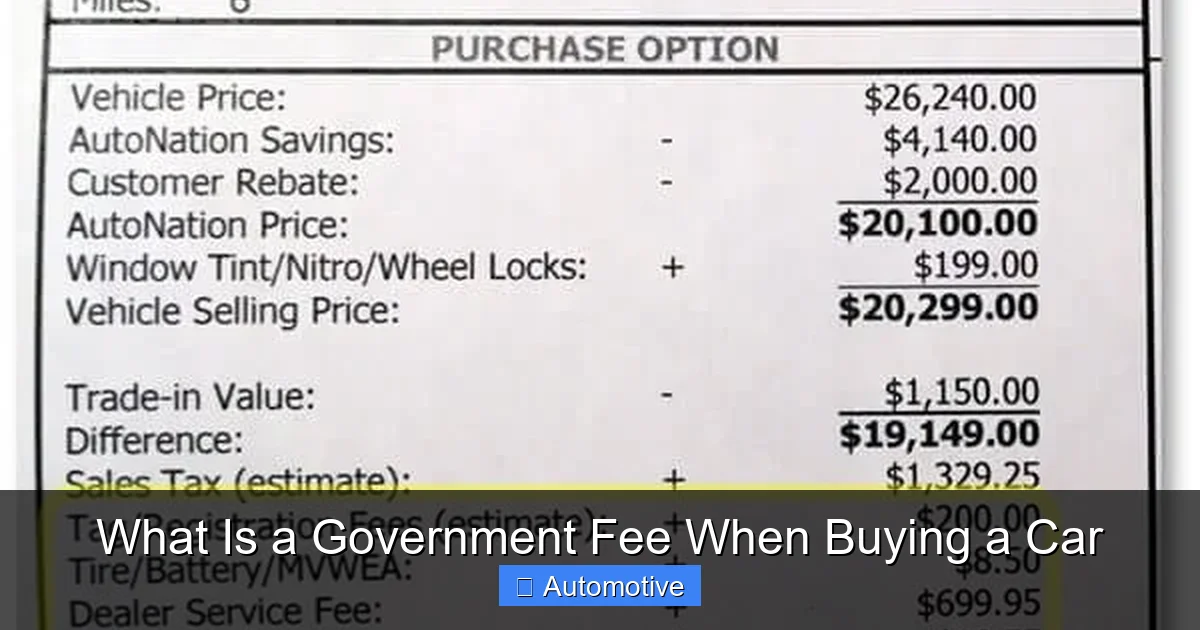
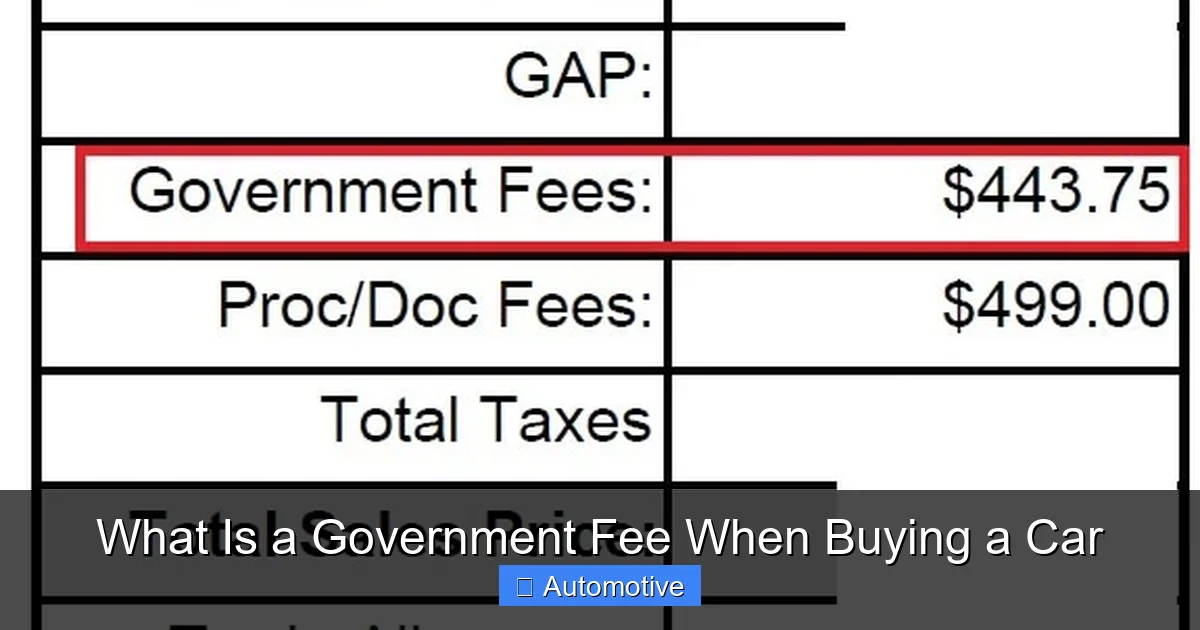
When reviewing your purchase agreement, ask the dealer to itemize all fees—especially government ones. This transparency helps you spot any inflated charges or unnecessary add-ons. Remember, dealers can’t charge you more than the actual government fee, but they may add a processing fee for handling it.
Consider the Total Cost of Ownership
Government fees are just one part of owning a car. Factor in insurance, fuel, maintenance, and annual registration renewals when comparing vehicles. A cheaper car with high registration fees might cost more in the long run than a slightly more expensive one with lower fees.
Look for Fee Waivers or Discounts
Some states offer reduced or waived fees for certain groups, such as seniors, veterans, or low-income individuals. Electric and hybrid vehicles may also qualify for discounts or exemptions. Check your state’s DMV website for eligibility requirements.
Pay Fees Online When Possible
Many states allow you to pay registration and title fees online, saving you a trip to the DMV. This is especially helpful if you’re buying a car out of state or want to handle paperwork quickly. Just make sure to keep digital copies of your receipts.
Keep Records Organized
Store all fee receipts, titles, and registration documents in a safe place—digitally and physically. You’ll need them for renewals, sales, or if you’re ever audited. A simple folder or cloud storage folder can save you time and stress later.
Conclusion
Government fees when buying a car are an unavoidable part of the process, but they don’t have to be a source of confusion or frustration. By understanding what these fees are, why they exist, and how they’re calculated, you can approach your car purchase with confidence and clarity.
These fees fund essential services—from road maintenance to public safety—and ensure that the system works fairly for all drivers. While they vary by state and vehicle type, a little research goes a long way in helping you budget and avoid surprises.
Remember, government fees are separate from dealer charges and taxes, so always ask for a detailed breakdown. Use online tools, check for discounts, and keep your records organized. With the right preparation, you can focus on what really matters: enjoying your new car.
Whether you’re buying your first car or upgrading to something newer, knowing what to expect from government fees puts you in control. So the next time you hear “there’s a fee for that,” you’ll know exactly what it means—and why it’s worth paying.
Frequently Asked Questions
Are government fees the same in every state?
No, government fees vary significantly by state, county, and even city. Each jurisdiction sets its own rates and rules, so always check your local DMV for accurate information.
Can I avoid paying government fees when buying a car?
No, government fees are mandatory and required by law to legally register and title your vehicle. There are no legal ways to avoid them, though some discounts or waivers may apply in certain cases.
Do I have to pay government fees if I buy a car online?
Yes, even if you buy a car online or out of state, you’ll still need to pay government fees when registering the vehicle in your home state. The process may be handled by the dealer or you may need to visit the DMV.
Are government fees tax-deductible?
Generally, no. Government fees for vehicle registration and titling are not tax-deductible for personal use. However, if you use the vehicle for business, you may be able to deduct a portion of the fees as a business expense.
Can the dealer charge more than the actual government fee?
Dealers cannot charge more than the actual government fee, but they may add a processing or service fee for handling the paperwork. Always ask for a detailed breakdown to understand what you’re paying for.
What happens if I don’t pay my government fees?
If you fail to pay required government fees, you won’t be able to legally register your vehicle, and you could face fines, penalties, or even have your registration suspended. It’s important to complete the process promptly after purchase.