
Car Won’t Start Right After Turning It Off

If your car won’t start immediately after turning it off, you’re likely dealing with a heat-related issue like vapor lock or a failing component under the hood. This frustrating problem often stems from fuel system glitches, electrical faults, or overheating—but the good news is many causes are fixable with basic troubleshooting.
You’re running errands on a sunny afternoon. You pull into a gas station, fill up, shut off the engine, and step out to grab a coffee. Five minutes later, you return, hop in, turn the key—and nothing. The engine cranks but won’t fire. You wait a few minutes, try again, and suddenly it starts like nothing happened. Sound familiar? If your car won’t start right after turning it off, you’re not alone. This common yet puzzling issue affects drivers across all vehicle types and climates. It’s especially frustrating because the car starts fine when cold—but fails when it’s warm.
This phenomenon is often called a “hot no-start” or “heat soak” problem. Unlike a dead battery or a completely failed starter, the issue appears only under specific conditions: after the engine has been running and then shut off briefly. The engine is still warm, sometimes even hot to the touch, and yet it refuses to restart. While it might seem like a minor inconvenience at first, ignoring it can lead to bigger problems down the road—or worse, strand you in an unsafe location. Understanding why this happens is the first step toward fixing it.
In this guide, we’ll walk you through the most common reasons your car won’t start right after turning it off, how to diagnose them, and what you can do to prevent it from happening again. Whether you’re a DIY enthusiast or prefer to leave repairs to the pros, this article will give you the knowledge you need to tackle the problem with confidence.
Key Takeaways
- Heat soak is a leading cause: When the engine is hot, components expand and fuel can vaporize, preventing proper combustion during a quick restart.
- Fuel delivery issues matter: A weak fuel pump, clogged filter, or faulty pressure regulator can starve the engine of fuel when it’s hot.
- The battery and alternator play a role: Even if the car starts cold, a marginal charging system may fail under heat stress.
- Ignition system components degrade with heat: Coils, spark plugs, and wires can lose efficiency when hot, causing misfires or no-starts.
- Crankshaft position sensors are heat-sensitive: These critical sensors can malfunction when overheated, tricking the ECU into thinking the engine isn’t turning.
- Check for vacuum leaks and ECU errors: Small leaks or stored trouble codes can worsen hot-start problems.
- Regular maintenance prevents most issues: Replacing worn parts and using quality fuel reduces the chances of a hot no-start.
📑 Table of Contents
What Is a Hot No-Start Problem?
A hot no-start occurs when your vehicle runs perfectly fine, you turn it off, and then it fails to restart immediately—even though it starts normally when cold. This issue is most noticeable in warm weather or after extended driving, when the engine bay reaches high temperatures. The engine may crank normally, but it won’t fire up. Sometimes, waiting 10–15 minutes allows it to start again, only for the cycle to repeat the next time you stop briefly.
This problem is different from a cold-start issue, where the engine struggles to turn over when it’s been sitting overnight. Cold-start problems are often linked to battery health, oil viscosity, or fuel delivery in low temperatures. In contrast, hot no-starts are almost always related to heat-induced changes in the engine’s mechanical or electrical systems.
One of the key clues is timing. If your car starts fine after sitting for an hour but won’t start after a 5-minute stop, heat is almost certainly the culprit. The engine hasn’t cooled down enough for certain components to function properly. This is where the concept of “heat soak” comes into play.
Understanding Heat Soak
Heat soak happens when the engine is turned off, but residual heat continues to build up in the engine bay. Without the cooling effect of airflow from driving or the radiator fan running, components like the fuel lines, injectors, and sensors can become excessively hot. Over time, this trapped heat can cause fluids to vaporize, electronics to malfunction, or parts to expand beyond their normal tolerances.
For example, gasoline in the fuel lines can turn into vapor when exposed to high temperatures. This vapor doesn’t burn the same way liquid fuel does, so the engine can’t ignite properly—even if the spark plugs and ignition system are working. This condition is known as vapor lock, and it was more common in older carbureted engines. However, modern fuel-injected vehicles can still experience similar issues, especially if the fuel system isn’t designed to handle extreme heat.
Heat soak can also affect electrical components. Sensors and wiring harnesses located near the engine may overheat, causing intermittent signals or complete failure. The engine control unit (ECU) relies on accurate data from these sensors to manage fuel delivery and ignition timing. If a sensor gives a false reading due to heat, the ECU may prevent the engine from starting as a safety measure.
Common Symptoms of a Hot No-Start
Recognizing the signs of a hot no-start can help you diagnose the problem faster. Here are the most common symptoms:
- Engine cranks but won’t start: The starter motor turns the engine over, but there’s no combustion. This is the hallmark of a hot no-start.
- Delayed restart after cooling: The car starts normally after sitting for 10–30 minutes, suggesting heat is the trigger.
- Rough idle or stalling when hot: The engine may start but run poorly or die shortly after, especially at idle.
- Check Engine Light (CEL): In some cases, the ECU detects a fault and illuminates the warning light, often with codes related to fuel pressure or sensor input.
- Strong fuel smell: Vaporized fuel can escape from the engine bay, creating a noticeable gasoline odor.
If you notice any of these signs, it’s time to investigate further. The good news is that most hot no-start issues are repairable—and many can be prevented with routine maintenance.
Top Causes of a Car That Won’t Start Right After Turning It Off
Now that you understand what a hot no-start is, let’s dive into the most common causes. While the symptoms may look the same, the underlying problems can vary widely. Here are the top culprits behind this frustrating issue.
1. Fuel System Problems
The fuel system is one of the most frequent offenders in hot no-start scenarios. When the engine is hot, fuel can vaporize in the lines or injectors, disrupting the precise mixture needed for combustion. Several components within the fuel system can contribute to this:
- Fuel Pump: The electric fuel pump is usually located inside the gas tank. When it runs, it generates heat. If the pump is weak or failing, it may overheat during operation and temporarily stop working after the engine is shut off. This is especially common in older vehicles or those with high mileage.
- Fuel Pressure Regulator: This component maintains consistent fuel pressure in the system. If it fails, it can allow too much or too little fuel to reach the injectors. A faulty regulator may leak fuel into the vacuum line, causing a rich mixture that’s hard to ignite when hot.
- Fuel Filter: A clogged fuel filter restricts fuel flow. While this usually causes poor performance across the board, it can become more pronounced when the engine is hot and fuel demand increases.
- Vapor Lock: Although less common in modern cars, vapor lock can still occur if fuel lines run too close to hot engine parts. The fuel turns to vapor before reaching the injectors, creating air pockets that prevent proper fuel delivery.
Real-World Example: A 2012 Honda Civic owner reported that her car wouldn’t start after stopping for coffee. A mechanic tested the fuel pressure and found it dropped rapidly after shutdown. Replacing the fuel pump resolved the issue.
2. Ignition System Failures
The ignition system is responsible for creating the spark that ignites the fuel-air mixture. When components overheat, they can lose efficiency or fail entirely.
- Ignition Coils: These convert low-voltage battery power into the high voltage needed for spark plugs. Coils are sensitive to heat and can crack or short internally when hot. A failing coil may work when cold but fail when the engine is warm.
- Spark Plugs and Wires: Worn spark plugs or damaged wires can cause weak or inconsistent sparks. Heat exacerbates this problem, leading to misfires or no-start conditions.
- Crankshaft Position Sensor: This sensor tells the ECU when the engine is turning. If it overheats, it may send incorrect signals or stop working altogether. Many modern cars won’t start if this sensor fails, even if the engine is cranking.
Tip: If your car cranks but doesn’t start when hot, try spraying a small amount of starting fluid into the air intake. If the engine fires briefly, the issue is likely fuel-related. If it doesn’t, the problem is probably ignition or sensor-related.
3. Electrical and Charging System Issues
Even if your battery seems fine, subtle electrical problems can cause hot no-starts.
- Battery Health: A weak battery may have enough power to start a cold engine but not enough to overcome the increased resistance when hot. Heat also accelerates battery degradation.
- Alternator Output: The alternator charges the battery while the engine runs. If it’s not producing enough voltage, the battery may not recharge fully, leading to starting problems after short stops.
- Ground Connections: Corroded or loose ground wires can cause erratic electrical behavior. Heat can worsen these connections, leading to intermittent failures.
Diagnostic Tip: Use a multimeter to check battery voltage. It should read around 12.6 volts when off and 13.7–14.7 volts when the engine is running. A drop below 12 volts when cranking indicates a weak battery.
4. Engine Management and Sensor Failures
Modern engines rely on a network of sensors to operate efficiently. When these sensors fail or send incorrect data, the ECU may prevent the engine from starting.
- Coolant Temperature Sensor (CTS): This sensor tells the ECU how hot the engine is. If it malfunctions, it may report a cold engine when it’s actually hot, causing the ECU to enrich the fuel mixture excessively. This can flood the engine and prevent starting.
- Mass Airflow Sensor (MAF): A dirty or faulty MAF sensor can miscalculate airflow, leading to incorrect fuel delivery. Heat can worsen contamination on the sensor element.
- Throttle Position Sensor (TPS): If the TPS gives erratic readings, the ECU may not know when to inject fuel during startup.
Pro Tip: Use an OBD2 scanner to check for trouble codes. Even if the Check Engine Light isn’t on, stored codes can reveal sensor issues.
5. Mechanical and Environmental Factors
Sometimes, the problem isn’t electronic or fuel-related—it’s mechanical.
- Starter Motor Heat Soak: The starter can overheat if it’s old or weak. After running, it may not have enough power to turn the engine over when hot.
- Timing Belt/Chain Issues: While rare, a slipping timing belt can cause the engine to lose synchronization, especially under heat stress.
- Extreme Ambient Heat: In very hot climates, the entire engine bay can reach temperatures that affect multiple systems. Parking in the shade or using a windshield sun reflector can help.
How to Diagnose a Hot No-Start Problem
Diagnosing a hot no-start requires a systematic approach. Since the problem only occurs under specific conditions, you’ll need to replicate those conditions to test effectively.
Step 1: Observe the Symptoms
Start by noting exactly what happens:
– Does the engine crank normally?
– Does it make any attempt to start (e.g., sputter)?
– How long do you have to wait before it starts?
– Is there a Check Engine Light?
This information will help you narrow down the cause.
Step 2: Check for Fuel Delivery
Listen for the fuel pump when you turn the key to the “ON” position (without starting). You should hear a brief hum from the rear of the car. If you don’t, the pump may be failing.
Use a fuel pressure gauge to test pressure at the fuel rail. Compare the reading to your vehicle’s specifications. A rapid drop in pressure after shutdown suggests a leaking injector or faulty pressure regulator.
Step 3: Test the Ignition System
Remove a spark plug and check its condition. Look for fouling, cracks, or excessive wear. Test the spark by grounding the plug against the engine block while cranking (use caution). A strong blue spark indicates good ignition; a weak or yellow spark suggests a problem.
Check ignition coils with a multimeter or swap them with a known-good one to see if the issue follows.
Step 4: Scan for Trouble Codes
Plug in an OBD2 scanner and check for stored codes. Even if the light isn’t on, pending codes can point to sensor or system faults. Common codes related to hot no-starts include:
– P0335 (Crankshaft Position Sensor)
– P0171/P0174 (Fuel system too lean)
– P0115 (Coolant Temperature Sensor)
Step 5: Inspect Electrical Connections
Check the battery terminals, ground straps, and main fuses. Clean any corrosion and ensure connections are tight. A loose ground can cause all sorts of intermittent issues.
How to Fix and Prevent Hot No-Start Issues
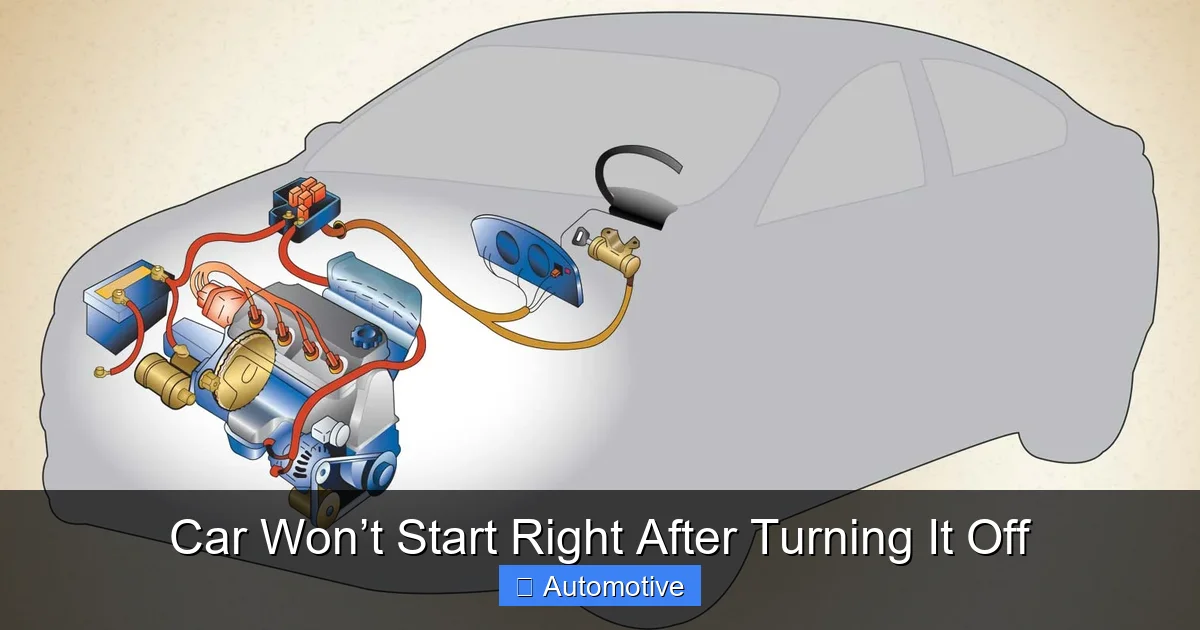
Visual guide about Car Won’t Start Right After Turning It Off
Image source: lesschwab.com
Once you’ve identified the cause, it’s time to fix it. Many hot no-start problems can be resolved with relatively simple repairs.
Fuel System Repairs
- Replace the fuel pump: If the pump is weak or overheating, replacement is often the best solution. Consider upgrading to a high-quality aftermarket unit.
- Install a heat shield: If fuel lines run near hot exhaust components, add a heat shield or reroute the lines to reduce heat exposure.
- Replace the fuel filter: A new filter ensures unrestricted fuel flow. Do this every 30,000–60,000 miles.
Ignition System Maintenance
- Replace spark plugs and wires: Use OEM-recommended plugs and replace them every 30,000–100,000 miles, depending on type.
- Upgrade ignition coils: If you frequently drive in hot conditions, consider high-performance coils designed to handle heat better.
Electrical System Upgrades
- Test and replace the battery: If the battery is more than 3–5 years old, consider replacing it—especially if you live in a hot climate.
- Check alternator output: Have a mechanic test the alternator under load to ensure it’s charging properly.
Preventive Measures
- Park in the shade: Reduce engine bay heat by parking under cover or using a sunshade.
- Use synthetic oil: Synthetic oils handle heat better and can reduce engine stress.
- Keep up with maintenance: Regular tune-ups, fluid changes, and inspections catch problems early.
When to Call a Professional
While many hot no-start issues can be diagnosed and fixed at home, some problems require professional tools and expertise. If you’ve tried basic troubleshooting and the issue persists, it’s time to visit a trusted mechanic. They can perform advanced diagnostics, such as:
– Fuel pressure decay testing
– Oscilloscope analysis of sensor signals
– Thermal imaging to detect overheating components
Don’t ignore a recurring hot no-start. What starts as a minor inconvenience can escalate into a major repair if left unchecked.
Conclusion
A car that won’t start right after turning it off is more than just an annoyance—it’s a sign that something in your vehicle’s system isn’t handling heat properly. Whether it’s a failing fuel pump, a heat-soaked ignition coil, or a faulty sensor, the root cause is often tied to the engine’s response to high temperatures. By understanding the common culprits and knowing how to diagnose them, you can take control of the situation and get back on the road with confidence.
The key is to act early. Don’t wait for the problem to worsen or leave you stranded. Start with simple checks like fuel pressure and spark, then move on to sensor diagnostics and electrical testing. And remember, regular maintenance is your best defense against heat-related failures. Keep your fuel system clean, your ignition components fresh, and your electrical connections tight.
With the right knowledge and a proactive approach, you can turn a frustrating hot no-start into a solved problem. Your car will thank you—and so will your peace of mind.
Frequently Asked Questions
Why won’t my car start after I turn it off and try again right away?
This is usually due to heat soak, where components like the fuel pump or ignition coils overheat and temporarily fail. The engine cranks but won’t fire because fuel or spark is disrupted by the heat.
Can a bad battery cause a hot no-start?
Yes, a weak battery may have just enough power to start a cold engine but not enough to overcome increased resistance when hot. Always test battery voltage and charging system output.
How do I know if it’s a fuel or ignition problem?
Try spraying starting fluid into the air intake. If the engine fires briefly, it’s likely a fuel issue. If it doesn’t, the problem is probably ignition or sensor-related.
Is vapor lock still a problem in modern cars?
Vapor lock is rare in modern fuel-injected vehicles, but heat can still cause fuel to vaporize in lines or injectors, especially if the fuel system is poorly designed or damaged.
Should I replace my fuel pump if my car won’t start when hot?
Not necessarily—test fuel pressure first. A rapid drop after shutdown suggests a failing pump, but it could also be a bad pressure regulator or leaking injector.
Can parking in the sun cause my car not to start?
Yes, extreme heat increases engine bay temperatures, worsening heat soak. Parking in the shade or using a sunshade can help reduce the risk of hot no-starts.
