
Why Did My Car Insurance Go Up 100 Percent?

If your car insurance premium just doubled, you’re not alone—and it’s not always your fault. Rate hikes of 100 percent can stem from factors like accidents, credit changes, location shifts, or even inflation. Understanding the causes helps you take control and find better deals.
Key Takeaways
- Accidents and violations increase risk: A single at-fault accident or speeding ticket can trigger major rate jumps, especially with high-risk insurers.
- Credit score impacts premiums: In most states, lower credit scores are linked to higher perceived risk, leading to steeper insurance costs.
- Location changes matter: Moving to an area with more traffic, theft, or severe weather can double your premium overnight.
- Vehicle type and usage affect rates: Driving a high-performance car or logging more miles increases exposure and cost.
- Insurance inflation is real: Rising repair costs, medical expenses, and supply chain issues are pushing premiums up across the board.
- Policy lapses hurt your record: Letting coverage expire—even briefly—can label you a high-risk driver and spike your rates.
- Shopping around saves money: Comparing quotes annually can reveal better rates, especially after a major life change.
📑 Table of Contents
Why Did My Car Insurance Go Up 100 Percent?
Imagine this: You get your car insurance renewal notice, open it, and your jaw drops. Your monthly premium has jumped from $150 to $300—a full 100 percent increase. You haven’t had an accident. You haven’t gotten a ticket. You’ve been a loyal customer for years. So why the sudden spike?
You’re not alone. Thousands of drivers across the U.S. are experiencing similar shocks at renewal time. While a 100 percent increase sounds extreme, it’s often the result of a combination of factors—some within your control, others not. The good news? Understanding why this happens is the first step toward fighting back and lowering your rates.
Car insurance isn’t just about covering your car—it’s about assessing risk. Insurers use complex algorithms to predict how likely you are to file a claim. When that risk score changes, even slightly, your premium can shift dramatically. And in today’s world, where inflation, supply chain delays, and rising medical costs are the norm, even safe drivers are feeling the pinch.
In this guide, we’ll break down the most common reasons your car insurance might have doubled—and what you can do about it. Whether it’s a recent life change, a shift in your driving habits, or broader economic trends, we’ll help you make sense of the numbers and take action.
Common Reasons for a 100 Percent Rate Increase
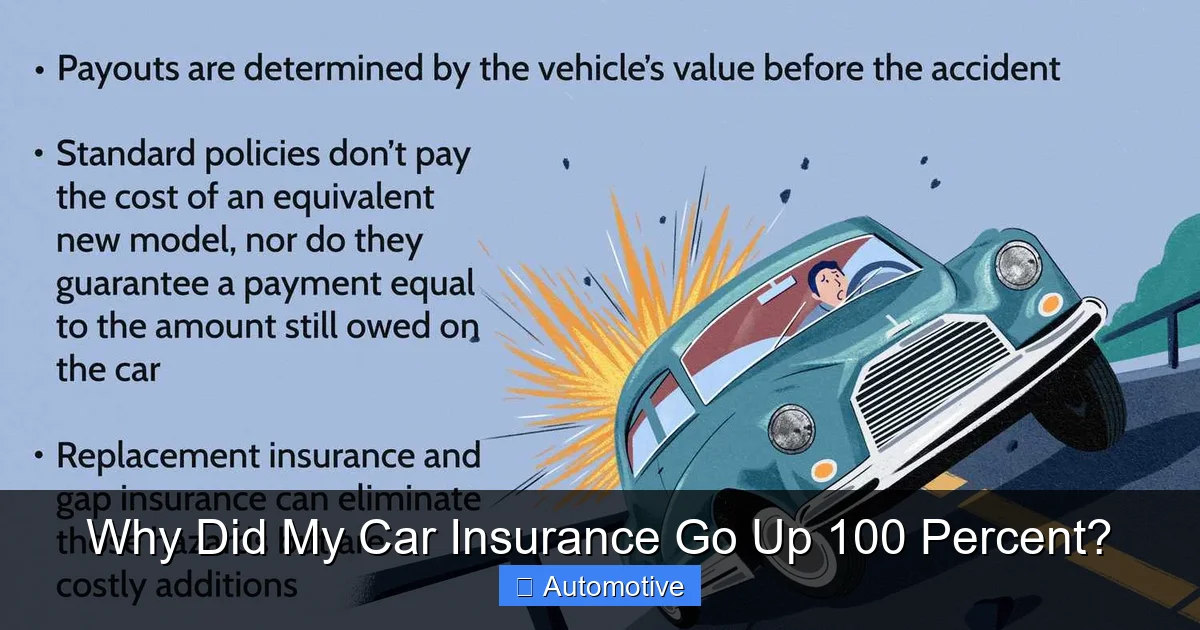
Visual guide about Why Did My Car Insurance Go Up 100 Percent?
Image source: carglassadvisor.com
There’s no single reason your car insurance premium might double, but several key factors frequently contribute. Let’s explore the most common culprits behind such a steep hike.
At-Fault Accidents and Traffic Violations
One of the biggest triggers for a rate increase is an at-fault accident. Even a minor fender bender where you’re found responsible can signal to insurers that you’re a higher-risk driver. According to industry data, a single at-fault accident can increase your premium by 30% to 50%—and that’s before other factors are considered.
But it’s not just accidents. Traffic violations like speeding tickets, running red lights, or driving under the influence (DUI) can have an even bigger impact. A DUI, for example, can double or even triple your rates, depending on your state and insurer. These violations stay on your driving record for years—sometimes up to a decade—meaning the financial penalty lingers long after the incident.
For example, Sarah from Ohio got a speeding ticket going 15 mph over the limit. Her insurer classified it as a “major violation” and raised her premium by 60%. When combined with a recent claim for a small collision, her total increase hit 100%. “I thought it was a one-time mistake,” she said. “But the insurance company sees it as a pattern.”
Changes in Your Credit Score
In most states (except California, Hawaii, and Massachusetts), insurers use your credit-based insurance score to help determine your premium. The logic? Studies show a correlation between lower credit scores and higher claim frequency. While it may seem unfair, this practice is legal and widespread.
If your credit score dropped significantly—say, due to missed payments, maxed-out credit cards, or a recent bankruptcy—your insurer may see you as a higher risk. A drop of 50 points or more can lead to a 20% to 40% rate increase. Combine that with other factors, and you’re looking at a potential doubling of your premium.
For instance, Mark from Texas saw his credit score fall after a medical emergency led to unpaid bills. When he renewed his policy, his insurer flagged the credit change and raised his rate by 45%. “I didn’t even think about how my credit affects my car insurance,” he admitted. “Now I check my score every month.”
Moving to a New Location
Where you live plays a huge role in your insurance costs. Urban areas with heavy traffic, high crime rates, and frequent accidents tend to have much higher premiums than rural or suburban areas. If you’ve recently moved—especially from a small town to a big city—your insurer may have adjusted your rate based on your new ZIP code.
For example, moving from Des Moines, Iowa, to Chicago, Illinois, could increase your premium by 50% or more. Chicago has higher rates of vehicle theft, vandalism, and traffic congestion, all of which raise the likelihood of claims. Insurers use geographic data to assess risk, and even a few miles can make a difference.
Additionally, some neighborhoods are flagged as high-risk due to historical claim data. If your new address falls into one of these zones, your premium could jump dramatically—even if you’ve never had an accident.
Vehicle Type and Usage Changes
The car you drive directly affects your insurance cost. High-performance vehicles, luxury cars, and models with high theft rates typically come with higher premiums. If you recently upgraded from a sedan to a sports car or an SUV, your insurer may have recalculated your risk.
For example, switching from a Toyota Camry to a BMW M3 could increase your premium by 60% or more. Sports cars are more expensive to repair, more likely to be stolen, and often driven more aggressively—all red flags for insurers.
Similarly, if you’ve started using your car for business purposes—like ridesharing or food delivery—your personal policy may no longer cover you. Many insurers require a commercial policy for such use, which can cost significantly more. Even if you only drive for Uber Eats on weekends, failing to notify your insurer could result in a rate hike or policy cancellation.
Policy Lapses or Coverage Gaps
Letting your car insurance lapse—even for a few days—can have serious consequences. Insurers view drivers with coverage gaps as higher risk because they may be more likely to drive uninsured or engage in risky behavior.
If you missed a payment, switched insurers without overlapping coverage, or simply forgot to renew, your new policy could come with a steep penalty. Some insurers automatically classify you as “high-risk” after a lapse, which can double your premium.
For example, Lisa from Florida forgot to renew her policy while on vacation. When she returned, she applied for new coverage and was shocked to see her rate had doubled. “I only had a gap of 10 days,” she said. “But the insurer said it was a red flag.”
Inflation and Rising Repair Costs
Even if nothing in your life has changed, broader economic trends can still cause your premium to skyrocket. Over the past few years, the cost of car repairs, medical care, and auto parts has risen sharply due to inflation, supply chain disruptions, and increased labor costs.
According to the Bureau of Labor Statistics, the price of auto repairs has increased by over 20% since 2020. New cars are more complex, with advanced sensors and electronics that are expensive to fix. A simple bumper replacement that cost $1,000 a few years ago might now run $2,500 or more.
Insurers pass these costs on to consumers. When claims become more expensive, premiums rise across the board—even for safe drivers. This is often referred to as “insurance inflation,” and it’s a major reason why rates have climbed so quickly in recent years.
How Insurers Calculate Your Premium
Visual guide about Why Did My Car Insurance Go Up 100 Percent?
Image source: i.insider.com
To understand why your premium doubled, it helps to know how insurers calculate rates. It’s not just about your driving record—it’s a complex formula that considers dozens of variables.
Risk Assessment Models
Insurance companies use sophisticated algorithms to assess risk. These models analyze data from your driving history, credit score, vehicle type, location, age, gender (in some states), and even your occupation. The goal is to predict how likely you are to file a claim—and how much it might cost.
For example, a 25-year-old male driving a sports car in a high-crime urban area will pay more than a 45-year-old female driving a minivan in a rural town—even if they have identical driving records. That’s because the algorithm sees the younger driver as statistically more likely to be involved in an accident.
Claims History and Frequency
Your personal claims history is one of the most influential factors. Even if you weren’t at fault, filing a claim can increase your premium. Insurers assume that drivers who file claims are more likely to do so again.
For instance, if you filed a claim for hail damage or a hit-and-run, your insurer may raise your rate—even though you weren’t responsible. Some companies offer “accident forgiveness” programs that prevent your first at-fault accident from affecting your rate, but these are not universal.
Discounts and Surcharges
Insurers apply both discounts and surcharges to your base rate. Common discounts include safe driver, multi-car, good student, and low-mileage discounts. Surcharges, on the other hand, are penalties for things like accidents, violations, or poor credit.
If you lost a discount—say, because your teen driver graduated and no longer qualifies for a good student discount—your rate could go up. Similarly, if a new surcharge was applied due to a recent incident, the combined effect could be dramatic.
What You Can Do to Lower Your Premium
Visual guide about Why Did My Car Insurance Go Up 100 Percent?
Image source: paperless-insurance.com
A 100 percent increase is alarming, but it’s not the end of the road. There are several steps you can take to reduce your premium and regain control of your insurance costs.
Shop Around and Compare Quotes
One of the most effective ways to lower your rate is to shop around. Insurance companies compete for your business, and rates can vary widely between providers. What one insurer considers high-risk, another might see as manageable.
Use online comparison tools or work with an independent agent to get quotes from at least three different insurers. Be sure to compare apples to apples—same coverage limits, deductibles, and discounts. You might find a policy that’s 30% to 50% cheaper than your current one.
For example, James from Arizona was paying $280 a month with his longtime insurer. After comparing quotes, he switched to a new company and now pays $160—a 43% savings. “I can’t believe I waited so long,” he said.
Improve Your Credit Score
Since credit scores impact your premium in most states, improving your credit can lead to lower rates. Pay your bills on time, reduce credit card balances, and avoid opening new accounts unnecessarily.
Check your credit report regularly for errors—mistakes happen, and even a small inaccuracy can hurt your score. You’re entitled to a free report from each of the three major bureaus (Equifax, Experian, TransUnion) once a year at AnnualCreditReport.com.
Take a Defensive Driving Course
Many insurers offer discounts for completing a state-approved defensive driving course. These courses teach safe driving techniques and can help you avoid accidents. Even if you don’t get a discount, the knowledge can make you a safer driver—and reduce your risk of future claims.
Some states also allow you to remove points from your driving record by taking a course, which can prevent rate increases.
Adjust Your Coverage and Deductible
If your car is older or has depreciated significantly, consider dropping collision or comprehensive coverage. These cover repairs to your own vehicle, but if the car isn’t worth much, the cost of coverage may exceed its value.
You can also raise your deductible—the amount you pay out of pocket before insurance kicks in. A higher deductible lowers your premium, but make sure you can afford to pay it if you need to file a claim.
Bundling and Loyalty Discounts
Many insurers offer discounts for bundling multiple policies—like auto and home insurance—with the same company. You might also qualify for a loyalty discount if you’ve been with the insurer for several years.
However, don’t assume loyalty pays off. Some companies increase rates over time, even for long-term customers. Always compare your renewal offer with quotes from other providers.
When to Consider Switching Insurers
If your premium has doubled and you’ve tried everything to lower it, it may be time to switch insurers. Here are signs it’s time to make a change:
– Your current insurer won’t explain the rate increase.
– You’ve received significantly lower quotes elsewhere.
– Customer service has declined.
– You’re being treated as high-risk despite a clean record.
Switching is easier than you think. Most insurers allow you to start a new policy immediately, and you can often cancel your old one without penalty as long as you provide notice.
Just be sure to avoid a coverage gap. Schedule your new policy to start the day your old one ends.
The Bigger Picture: Why Rates Are Rising Everywhere
While personal factors play a role, it’s important to recognize that car insurance rates are rising across the board. In 2023, the average U.S. driver saw a 14% increase in premiums, according to the Insurance Information Institute. Some states saw even higher jumps.
This trend is driven by several macroeconomic factors:
– **Rising repair costs:** Modern cars are packed with technology, making repairs more expensive.
– **Increased medical costs:** Bodily injury claims are costing more due to higher healthcare prices.
– **More severe weather:** Climate change has led to more frequent and intense storms, increasing claims for flood and hail damage.
– **Supply chain issues:** Delays in parts and labor have extended repair times and driven up costs.
These factors affect all drivers, not just high-risk ones. Even if you’ve done nothing wrong, you may still see your premium rise due to forces beyond your control.
Conclusion
A 100 percent increase in your car insurance premium is shocking—but it’s often the result of a combination of personal and economic factors. Whether it’s an accident, a credit score drop, a move, or rising repair costs, understanding the cause is the first step toward lowering your rate.
The good news? You have options. Shopping around, improving your credit, taking a defensive driving course, and adjusting your coverage can all help reduce your premium. And if your current insurer won’t work with you, switching to a new provider could save you hundreds of dollars a year.
Don’t let a rate hike catch you off guard. Review your policy annually, stay informed about changes in your life and the insurance market, and take action when needed. With the right strategy, you can keep your car insurance affordable—even in today’s challenging environment.
Frequently Asked Questions
Why did my car insurance go up 100 percent after an accident?
If you were at fault in an accident, insurers view you as a higher risk, which can significantly increase your premium. Combined with other factors like violations or credit changes, the total increase can reach 100 percent.
Can my credit score really double my car insurance rate?
Yes, in most states, a poor credit score can lead to much higher premiums. Insurers use credit-based insurance scores to predict risk, and a significant drop can trigger a major rate hike.
Will moving to a new city really increase my premium that much?
Absolutely. Urban areas with high traffic, crime, and accident rates typically have much higher premiums. Even a short move can result in a 50% or greater increase.
How long does an accident stay on my record and affect my rates?
Most accidents stay on your driving record for 3 to 7 years, depending on your state. The impact on your premium usually decreases over time, especially if you maintain a clean record.
Can I lower my premium if I drive less?
Yes. Many insurers offer low-mileage discounts. If you’ve reduced your driving—say, by working from home—let your insurer know. You could qualify for a discount.
Is it worth switching insurers after a rate increase?
Often, yes. Comparing quotes from multiple insurers can reveal significant savings. Just make sure to avoid a coverage gap when switching.
