
Can You Travel by Car with Medical Marijuana?

Traveling by car with medical marijuana is possible, but it’s not as simple as packing your meds and hitting the road. Laws vary widely by state, and even with a valid medical card, you could face legal trouble if you’re not careful. Understanding federal vs. state laws, proper storage, and destination rules is essential for a safe and legal trip.
Key Takeaways
- Medical marijuana is still illegal under federal law: Even with a state-issued medical card, transporting cannabis across state lines violates federal regulations, which can lead to serious consequences.
- State laws differ significantly: Some states allow medical patients to transport marijuana in vehicles, while others have strict limits on quantity, packaging, and location within the car.
- Proper storage is critical: Most states require medical marijuana to be stored in a sealed, child-resistant container and kept in the trunk or a locked compartment away from the driver and passengers.
- Driving under the influence is illegal: Just like alcohol, operating a vehicle while impaired by marijuana can result in DUI charges, regardless of medical authorization.
- Interstate travel carries high risk: Crossing state lines with medical marijuana—even between two legal states—is a federal offense and can lead to arrest, fines, or confiscation.
- Know your destination’s rules: Research the medical marijuana laws of every state you’ll pass through or stop in, as some states don’t recognize out-of-state medical cards.
- Consider alternatives for long trips: For multi-state travel, it may be safer to pause use, use legal alternatives like CBD, or consult your doctor about temporary medication adjustments.
📑 Table of Contents
Can You Travel by Car with Medical Marijuana?
So, you’ve got your medical marijuana card, you’re managing your condition effectively, and now you’re planning a road trip. Maybe it’s a weekend getaway to the mountains, a visit to family across state lines, or a cross-country adventure. But before you toss your stash in the glove compartment and hit the highway, there’s one big question you need to answer: Can you travel by car with medical marijuana?
The short answer? It’s complicated.
While medical marijuana is legal in over 35 states (and counting), the rules around transporting it—especially in a vehicle—are far from uniform. What’s allowed in California might land you in legal hot water in Arizona. And even if you’re staying within your home state, local ordinances, law enforcement practices, and storage requirements can vary widely. Add in the fact that marijuana remains illegal under federal law, and you’ve got a legal gray area that demands careful navigation.
This guide will walk you through everything you need to know about traveling by car with medical marijuana. We’ll cover the legal landscape, state-by-state nuances, safety tips, and practical advice to help you stay compliant and avoid unnecessary risks. Whether you’re driving across town or across the country, being informed is your best defense.
Understanding the Legal Landscape
Visual guide about Can You Travel by Car with Medical Marijuana?
Image source: inhalemd.com
Before you even think about packing your medicine, it’s crucial to understand the legal framework governing medical marijuana—especially when it comes to transportation.
Federal Law vs. State Law
Here’s the big one: marijuana is still classified as a Schedule I controlled substance under federal law, meaning it’s considered to have no accepted medical use and a high potential for abuse. This classification hasn’t changed, even as more states legalize medical (and recreational) use.
What does this mean for travelers? Even if you have a valid medical marijuana card from your home state, transporting cannabis across state lines is a federal crime. The U.S. Drug Enforcement Administration (DEA) and federal prosecutors have the authority to enforce this law, and while they typically focus on large-scale trafficking, individuals have been arrested for crossing state lines with medical marijuana.
In contrast, many states have passed laws that allow qualified patients to possess and use medical marijuana. Some even permit transportation within the state, as long as certain conditions are met. But here’s the catch: state laws do not override federal law. So while you might be protected under your state’s regulations, you’re still technically breaking federal law if you transport marijuana.
State-Specific Transportation Rules
Each state sets its own rules for how medical marijuana can be transported in a vehicle. These rules often include:
– Quantity limits: Most states cap the amount of marijuana a patient can possess at one time—typically ranging from 1 to 2.5 ounces of flower, or its equivalent in edibles or concentrates.
– Packaging requirements: Many states require marijuana to be in its original, sealed packaging from a licensed dispensary. This helps prove it was legally obtained.
– Location in the vehicle: In most states, medical marijuana must be stored in the trunk or in a locked container that’s not accessible to the driver or passengers while the car is moving. Some states even specify that it must be in a sealed, child-resistant container.
For example, in California, medical patients can transport up to 8 ounces of dried cannabis, but it must be in a sealed container and stored in the trunk or in a locked glove compartment. In contrast, New York allows patients to carry up to 3 ounces, but the marijuana must be in its original packaging and not in the passenger area of the vehicle.
Law Enforcement and Traffic Stops
One of the biggest concerns for medical marijuana patients is what happens during a routine traffic stop. If you’re pulled over, and an officer sees or smells marijuana, they may investigate further—even if you have a medical card.
In states where medical marijuana is legal, officers are generally trained to verify a patient’s status. However, not all officers are familiar with the nuances of medical cannabis laws, and some may still treat possession as a violation until proven otherwise.
To protect yourself:
– Keep your medical marijuana card and any documentation (like a doctor’s recommendation) easily accessible—perhaps in the glove compartment or center console.
– Ensure your marijuana is stored properly (sealed, in the trunk, etc.) to show compliance with state laws.
– Remain calm and polite during the stop. You have the right to remain silent, but being cooperative can help de-escalate the situation.
Staying Legal Within Your Home State
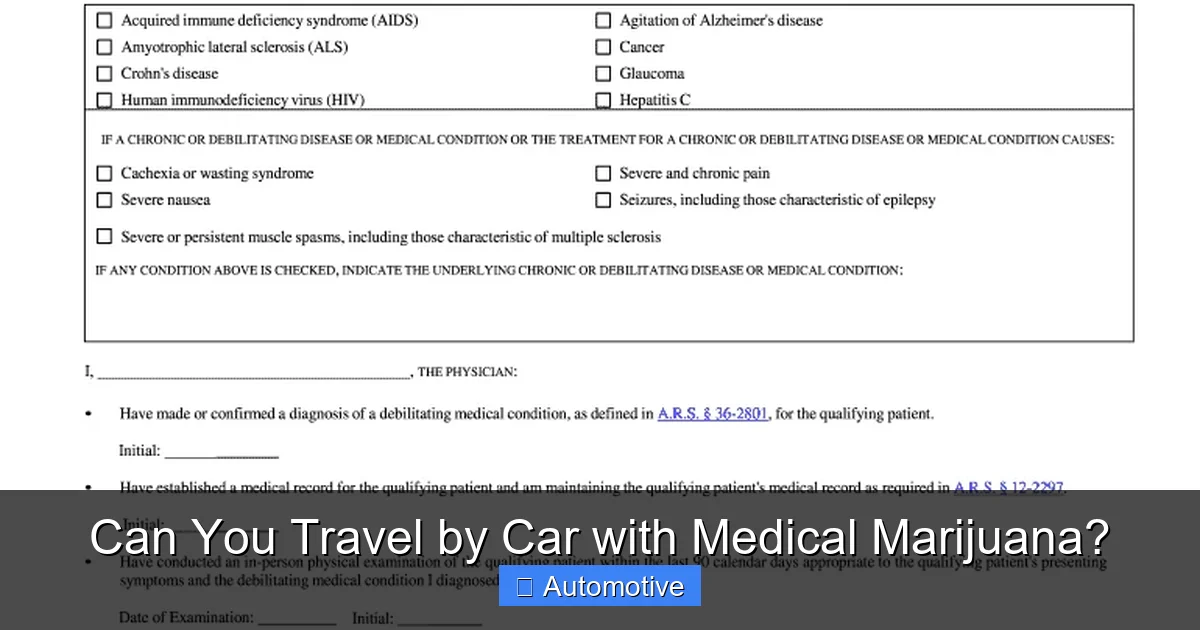
Visual guide about Can You Travel by Car with Medical Marijuana?
Image source: pdffiller.com
Even if you’re not crossing state lines, traveling within your home state with medical marijuana requires attention to detail. Here’s how to stay on the right side of the law.
Know Your State’s Possession Limits
Every state sets a maximum amount of marijuana that a medical patient can legally possess. Exceeding this limit—even by a small amount—can result in fines, confiscation, or criminal charges.
For example:
– Florida: 2.5 ounces of flower or 200 milligrams of THC in edibles.
– Oregon: 24 ounces of usable marijuana.
– Texas: Only low-THC cannabis (less than 1% THC by weight) is allowed, and only for specific conditions.
Always check your state’s current laws, as they can change. The best source is your state’s Department of Health or a licensed medical marijuana program website.
Proper Storage in the Vehicle
Improper storage is one of the most common reasons medical patients run into trouble during traffic stops. Even if you’re within your possession limit, having marijuana in an open baggie on the passenger seat can look like intent to distribute—or worse, endangerment if children are present.
To stay compliant:
– Use original packaging: Keep your marijuana in the sealed container it came in from the dispensary. This proves it was legally purchased.
– Store in the trunk: If possible, place the container in the trunk. This is the safest and most widely accepted location.
– Use a locked container: If your car doesn’t have a trunk (like an SUV or hatchback), use a lockable storage box that can be secured in the cargo area.
– Avoid the passenger area: Never keep marijuana in the glove compartment, center console, or within reach of passengers unless it’s in a locked container.
Some states, like Washington, explicitly require that marijuana be stored in a “closed container” and not in the “passenger area” of the vehicle. Violating this can result in a civil infraction, even if you’re a registered patient.
Driving Under the Influence
This cannot be stressed enough: driving while impaired by marijuana is illegal—even with a medical card. Unlike alcohol, there’s no universally accepted breathalyzer or blood test threshold for THC impairment, but law enforcement can still charge you with a DUI if they believe your ability to drive is compromised.
Signs of impairment include:
– Slowed reaction time
– Poor coordination
– Difficulty maintaining lane position
– Altered judgment
If you’ve used medical marijuana, wait until you’re fully sober before driving. The effects can last several hours, especially with edibles. When in doubt, use a rideshare, public transit, or ask a sober friend for a lift.
Traveling Across State Lines: What You Need to Know
Visual guide about Can You Travel by Car with Medical Marijuana?
Image source: travel-easier.com
Now, let’s tackle the elephant in the room: Can you drive across state lines with medical marijuana?
The short answer is: No, not legally.
Even if both your home state and your destination state have legalized medical marijuana, transporting cannabis across state lines violates federal law. The U.S. Constitution’s Commerce Clause gives the federal government authority over interstate commerce, and that includes the transportation of controlled substances.
Federal Enforcement Risks
While federal agencies like the DEA rarely target individual medical patients, the risk still exists. In recent years, there have been cases where patients were stopped at state borders (especially near federal lands or checkpoints) and faced federal charges for transporting marijuana.
For example, in 2018, a medical marijuana patient traveling from California to Colorado was stopped at a federal checkpoint in Nevada. Despite having a valid medical card and being within California’s possession limits, the individual was arrested and charged with possession with intent to distribute—because the amount exceeded Nevada’s limits and crossed state lines.
State Recognition of Out-of-State Medical Cards
Another major hurdle is that most states do not recognize medical marijuana cards from other states. Even if you’re a legal patient in California, you cannot legally purchase or possess medical marijuana in, say, Idaho or Kansas—unless you’re a resident and registered in that state’s program.
A few states do offer reciprocity, meaning they allow out-of-state patients to use their medical marijuana under certain conditions. For example:
– Nevada: Allows visitors with a valid medical card from another state to purchase and possess marijuana.
– Michigan: Recognizes out-of-state medical cards for possession, but not for purchasing from dispensaries.
– Oklahoma: Offers a temporary visitor’s license for out-of-state patients.
However, these programs often require registration in advance, proof of residency, and adherence to strict limits. Always check the specific rules of your destination state before traveling.
Practical Alternatives for Interstate Travel
Given the legal risks, many medical marijuana patients opt for safer alternatives when traveling across state lines:
– Pause use temporarily: If your trip is short, consider taking a break from marijuana use. This eliminates legal risks entirely.
– Use legal CBD products: CBD derived from hemp (with less than 0.3% THC) is legal under federal law and widely available. While it may not provide the same therapeutic effects as medical marijuana, it can help with anxiety, pain, or sleep for some users.
– Consult your doctor: Talk to your physician about adjusting your medication regimen for travel. They may suggest alternative treatments or temporary substitutes.
– Plan dispensary stops: If your destination state allows out-of-state patients, research dispensaries in advance and bring only what you need for the trip—no extra “just in case” stash.
Safety Tips for Traveling with Medical Marijuana
Even when staying within legal boundaries, safety should always be a top priority. Here are some practical tips to ensure a smooth and secure journey.
Pack Smart
– Bring only what you need: Don’t overpack. Stick to your state’s possession limit and only bring enough for the duration of your trip.
– Use discreet containers: Avoid flashy or suspicious-looking bags. A plain, lockable container is less likely to draw attention.
– Keep documentation handy: Store your medical card, doctor’s recommendation, and any dispensary receipts in a secure but accessible place.
Plan Your Route
– Research state laws along your route: Even if you’re not stopping, passing through a state with strict marijuana laws could pose risks if you’re pulled over.
– Avoid federal lands: National parks, forests, and military bases are under federal jurisdiction. Possession of marijuana—even with a medical card—is illegal there.
– Use GPS with legal alerts: Some navigation apps allow you to set alerts for state borders or high-risk areas.
Be Prepared for Emergencies
– Know your rights: If you’re stopped, you have the right to remain silent and the right to an attorney. Politely decline searches unless the officer has a warrant.
– Have a backup plan: If your marijuana is confiscated or you’re unable to use it at your destination, know what alternatives are available (CBD, prescription meds, etc.).
Real-Life Scenarios and Examples
Let’s look at a few real-world examples to illustrate the complexities of traveling with medical marijuana.
Scenario 1: Weekend Trip Within California
Maria, a medical marijuana patient in Los Angeles, plans a weekend trip to San Francisco. She packs 6 ounces of flower in its original dispensary packaging and stores it in a locked box in her trunk. She also brings her medical card and a copy of her doctor’s recommendation.
During the drive, she’s pulled over for a broken taillight. The officer smells marijuana and asks to search the vehicle. Maria calmly explains she’s a medical patient, shows her card, and points out the properly stored container. The officer verifies her status and lets her go with a warning about the taillight.
Outcome: Maria stays legal by following storage rules and having documentation ready.
Scenario 2: Cross-State Road Trip from Colorado to Utah
James, a Colorado resident with a medical card, drives to Utah to visit family. He brings 2 ounces of marijuana, believing it’s legal since both states have medical programs. However, Utah does not recognize out-of-state cards, and James is stopped at a state patrol checkpoint.
The officer finds the marijuana and arrests James for possession of a controlled substance. Even though James had a valid card, Utah law does not protect him.
Outcome: James faces legal charges because he crossed state lines and entered a state that doesn’t recognize his medical status.
Scenario 3: Traveling Through Multiple States
Linda, a medical patient in Oregon, plans a road trip through Idaho, Wyoming, and Montana. She knows Idaho has strict anti-marijuana laws, so she leaves her medicine at home and uses CBD oil instead. In Montana, she applies for a temporary visitor’s license and purchases a small amount from a dispensary.
Outcome: Linda avoids legal trouble by researching laws in advance and adjusting her plans accordingly.
Conclusion
So, can you travel by car with medical marijuana? The answer depends on where you’re going, how much you’re carrying, how you’re storing it, and whether you’re crossing state lines.
While it’s possible to travel safely and legally within your home state—especially if you follow storage guidelines and stay within possession limits—interstate travel remains a legal minefield. Federal law, lack of reciprocity, and varying state regulations make it risky to transport medical marijuana across state borders.
The best approach is to plan ahead, know the laws, and prioritize safety. When in doubt, leave the marijuana at home and explore legal alternatives. Your health and freedom are worth the extra caution.
Remember: just because something is legal doesn’t mean it’s risk-free. Stay informed, stay compliant, and enjoy your journey—responsibly.
Frequently Asked Questions
Can I drive with medical marijuana in my car if I have a valid medical card?
Yes, in most states where medical marijuana is legal, you can transport it in your vehicle as long as you follow specific rules like storing it in a sealed container in the trunk and staying within possession limits. However, always check your state’s current laws to ensure compliance.
Is it legal to cross state lines with medical marijuana?
No, transporting medical marijuana across state lines is illegal under federal law, even if both states have legalized medical use. Doing so can result in federal charges, arrest, or confiscation of your medication.
What should I do if I’m pulled over with medical marijuana in my car?
Stay calm, be polite, and provide your medical card and any documentation if asked. Ensure your marijuana is stored properly (sealed, in the trunk) to show compliance with state laws. You have the right to remain silent if questioned further.
Can I use medical marijuana while driving?
No, driving under the influence of marijuana is illegal—even with a medical card. Impairment can lead to DUI charges, fines, or license suspension. Always wait until you’re sober before operating a vehicle.
Do all states recognize out-of-state medical marijuana cards?
No, most states do not recognize medical cards from other states. Only a few states offer limited reciprocity, and even then, rules vary. Always research your destination’s laws before traveling.
What are safer alternatives to traveling with medical marijuana?
Consider pausing use temporarily, using legal CBD products, consulting your doctor about alternatives, or applying for a temporary medical license in your destination state if available. These options reduce legal risks while managing your health.
