
What Is a Vcm Motor on Hyundai?

A VCM (Variable Cylinder Management) motor on Hyundai vehicles is an advanced engine technology designed to improve fuel efficiency by deactivating unused cylinders during light-load driving. This system helps reduce fuel consumption and emissions without sacrificing power when you need it most.
Key Takeaways
- What VCM Does: The VCM motor temporarily shuts down engine cylinders when full power isn’t needed, improving fuel economy.
- Hyundai Models Using VCM: Found in popular models like the Santa Fe, Sonata, and Palisade, especially in V6 engines.
- How It Works: Sensors monitor driving conditions and engine load to decide when to deactivate cylinders (usually 3 out of 6).
- Fuel Efficiency Gains: Drivers can see up to 10–15% better gas mileage in city and highway driving.
- Common Issues: Oil sludge, low oil levels, and clogged oil passages can cause VCM malfunctions and engine damage.
- Maintenance Tips: Regular oil changes with the correct oil type and frequent oil level checks are essential for VCM health.
- Signs of Trouble: Rough idling, engine vibration, warning lights, or reduced fuel economy may indicate VCM problems.
Key Takeaways
- Understanding What Is a VCM Motor on Hyundai?: Provides essential knowledge
📑 Table of Contents
- Introduction to the VCM Motor on Hyundai Vehicles
- How the VCM Motor Works in Hyundai Engines
- Hyundai Models That Use the VCM Motor
- Benefits of the VCM Motor for Hyundai Owners
- Common Problems and Maintenance Tips for the VCM Motor
- Signs of VCM Motor Problems and What to Do
- Conclusion: Is the VCM Motor Worth It?
Introduction to the VCM Motor on Hyundai Vehicles
If you’ve ever driven a Hyundai with a V6 engine—especially models like the Santa Fe, Sonata, or Palisade—you might have noticed something interesting: your car seems to sip fuel more efficiently than expected, even with a powerful engine under the hood. That’s no accident. Hyundai has equipped many of its mid-size and full-size vehicles with a clever piece of engineering called the Variable Cylinder Management (VCM) system, often referred to as the VCM motor.
The VCM motor isn’t actually a separate motor in the traditional sense. Instead, it’s a sophisticated engine management system that controls when certain cylinders in your engine are active or deactivated. Think of it like your car having two modes: a full-power mode for acceleration and climbing hills, and an eco-mode that turns off half the engine when you’re cruising on the highway or driving gently in the city. This smart switching helps your Hyundai use less fuel without you having to change how you drive.
Hyundai introduced VCM to meet growing demands for better fuel efficiency and lower emissions, especially in larger vehicles that traditionally consume more gas. By selectively shutting down cylinders when they’re not needed, the VCM system reduces internal engine friction and fuel consumption. The result? A smoother, more efficient ride that still delivers power when you need it. But like any advanced technology, the VCM system requires proper care and attention to keep working reliably.
How the VCM Motor Works in Hyundai Engines
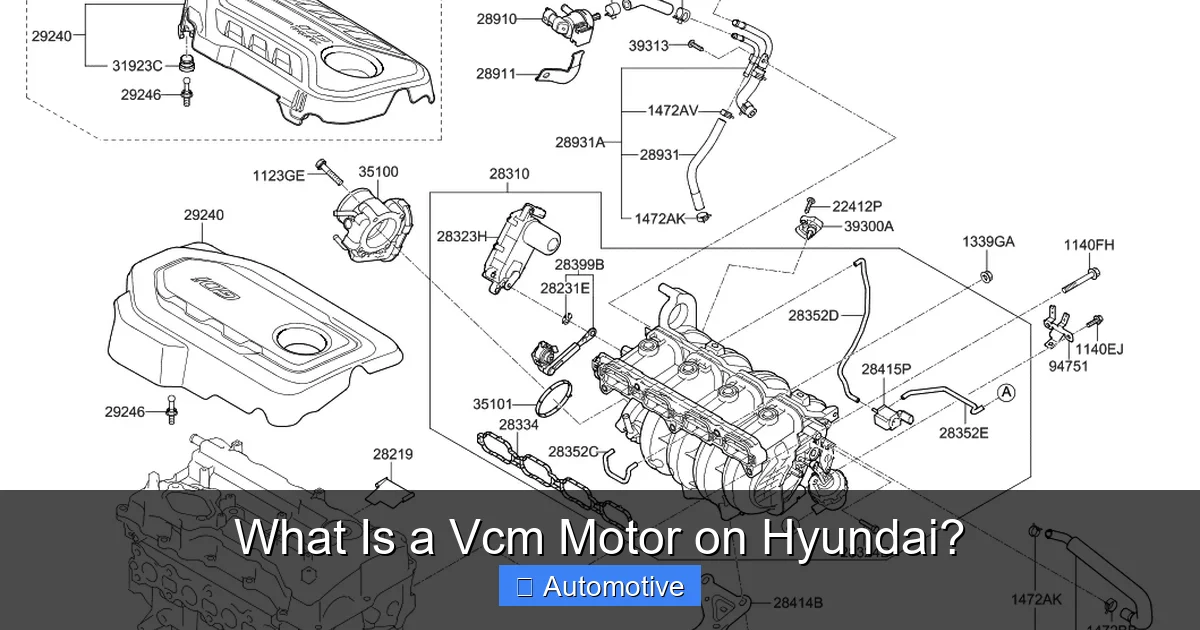
Visual guide about What Is a Vcm Motor on Hyundai?
Image source: hyundaipartsdeal.com
To understand the VCM motor, it helps to first grasp how a typical six-cylinder (V6) engine operates. In a standard V6, all six cylinders fire in a sequence to produce power. But when you’re just cruising at a steady speed—say, 55 mph on the highway—your engine doesn’t actually need all that power. That’s where the VCM system steps in.
The VCM motor uses a combination of sensors, hydraulic lifters, and electronic controls to deactivate three of the six cylinders under light-load conditions. When the engine control unit (ECU) detects that the vehicle is under minimal stress—like maintaining speed on flat terrain—it signals the VCM system to shut down one bank of cylinders. This typically means cylinders 1, 2, and 3 (or 4, 5, and 6, depending on the engine design) stop firing.
The Role of Hydraulic Lifters and Oil Pressure
The actual “motor” part of the VCM system refers to the hydraulic lifters inside the engine. These lifters are responsible for opening and closing the engine’s valves. In a VCM-equipped engine, some of these lifters are designed to collapse or lock when oil pressure is redirected. When the ECU decides to deactivate cylinders, it sends a signal to solenoids that redirect engine oil flow. This oil pressure change causes the lifters in the inactive cylinders to collapse, effectively preventing the valves from opening and closing.
This means the deactivated cylinders don’t consume fuel, don’t create friction, and don’t waste energy. The remaining three cylinders continue to operate normally, providing enough power to keep the car moving smoothly. When you press the accelerator or encounter a hill, the system instantly reactivates all six cylinders, restoring full engine power.
Sensors and Real-Time Decision Making
The VCM system doesn’t operate on a timer or fixed schedule. Instead, it relies on real-time data from multiple sensors throughout the vehicle. These include:
– Throttle position sensor
– Engine load sensor
– Vehicle speed sensor
– Manifold absolute pressure (MAP) sensor
– Crankshaft and camshaft position sensors
All this information is fed into the engine control unit (ECU), which constantly evaluates whether the engine is under light or heavy load. If the ECU determines that less than full power is needed, it activates the VCM mode. The transition is seamless—most drivers don’t even notice when cylinders are being deactivated or reactivated.
Benefits of Cylinder Deactivation
The primary benefit of the VCM motor is improved fuel efficiency. By shutting down half the engine during low-demand situations, Hyundai vehicles can achieve significant fuel savings. In real-world driving, this often translates to 1–2 extra miles per gallon (mpg), which adds up over time, especially for commuters or frequent highway drivers.
Additionally, reducing the number of active cylinders lowers internal engine friction and heat generation. This can contribute to longer engine life and reduced wear on internal components. The system also helps reduce emissions, making VCM-equipped Hyundais more environmentally friendly than traditional V6 engines without cylinder deactivation.
Hyundai Models That Use the VCM Motor
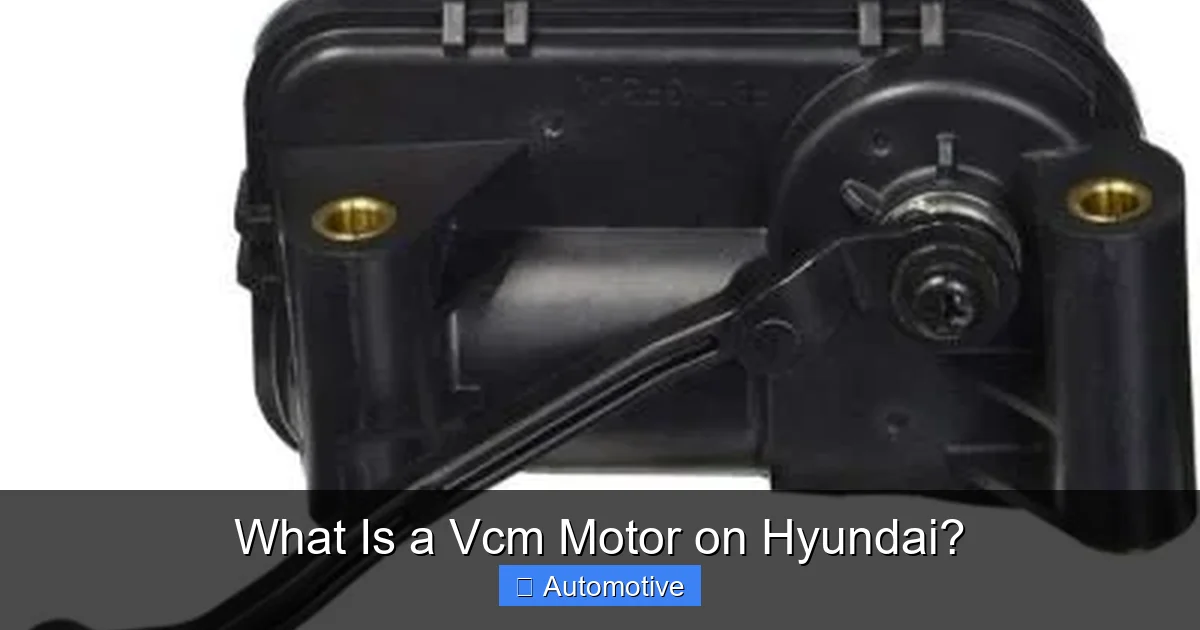
Visual guide about What Is a Vcm Motor on Hyundai?
Image source: hyundaipartsdeal.com
Not every Hyundai vehicle comes with a VCM motor. This technology is primarily found in models equipped with V6 engines, especially those designed for families, long-distance travel, or towing. Over the years, several popular Hyundai models have featured the VCM system as a standard or optional feature.
Hyundai Santa Fe
The Hyundai Santa Fe has been one of the most common vehicles to use the VCM motor. Starting around the 2007 model year, Hyundai began equipping the Santa Fe with a 3.3L or 3.5L V6 engine that included Variable Cylinder Management. The system was designed to help this midsize SUV achieve better fuel economy without sacrificing performance.
Drivers of the Santa Fe often appreciate the smooth power delivery and quiet operation, especially on long drives. However, some owners have reported VCM-related issues, particularly in earlier model years, which we’ll discuss in more detail later.
Hyundai Sonata
The Hyundai Sonata, particularly the 2006–2014 models with the 3.3L V6 engine, also featured the VCM system. While the Sonata is a sedan rather than an SUV, the V6 version was marketed as a performance-oriented option with strong acceleration and responsive handling.
The VCM motor helped the V6 Sonata achieve fuel economy ratings closer to four-cylinder models, making it an attractive choice for buyers who wanted both power and efficiency. However, like the Santa Fe, some Sonata V6 owners have experienced VCM malfunctions, especially if maintenance was neglected.
Hyundai Palisade and Other Recent Models
In more recent years, Hyundai has continued to use VCM technology in larger vehicles like the Palisade, a three-row SUV introduced in 2020. The Palisade comes standard with a 3.8L V6 engine that includes Variable Cylinder Management. This allows the large SUV to achieve EPA-estimated fuel economy ratings of up to 19 mpg city and 26 mpg highway—impressive for a vehicle of its size.
Hyundai has also refined the VCM system over time, addressing some of the earlier reliability concerns. Newer models feature improved oil delivery systems, better engine coatings, and more robust lifter designs to prevent common VCM issues.
Other Models and Trim Levels
While the Santa Fe, Sonata, and Palisade are the most well-known examples, other Hyundai vehicles with V6 engines may also include VCM. This includes certain versions of the Hyundai Veracruz (a discontinued SUV) and the Hyundai Genesis sedan (in earlier model years). However, as Hyundai shifts toward turbocharged four-cylinder engines and hybrid powertrains, the use of VCM in new models is becoming less common.
Benefits of the VCM Motor for Hyundai Owners
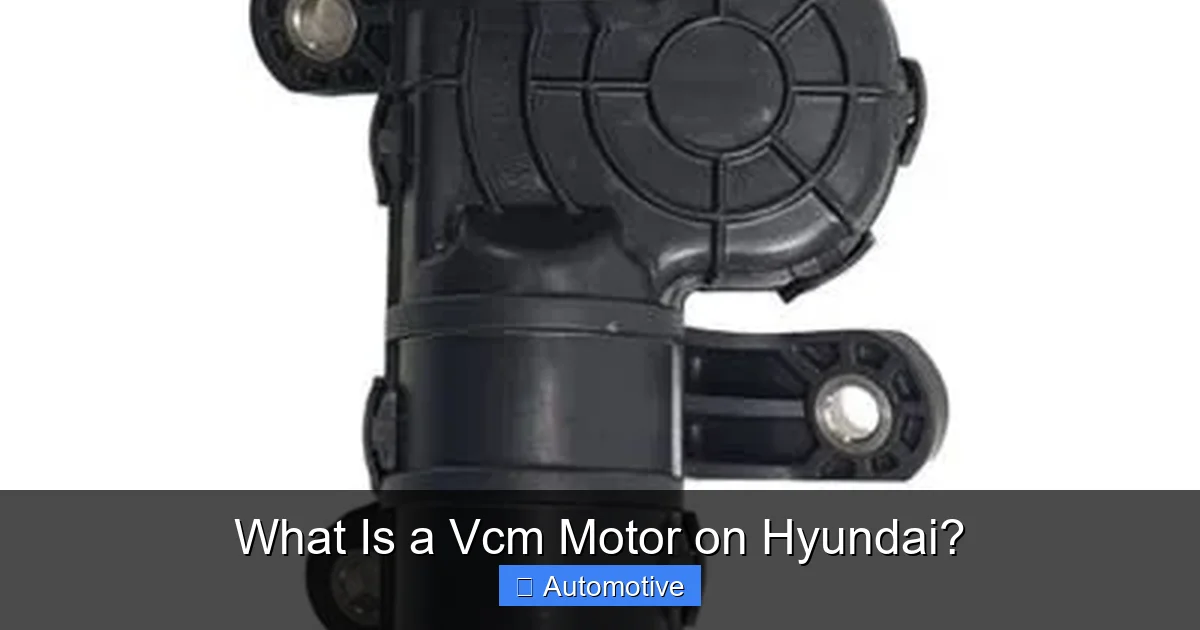
Visual guide about What Is a Vcm Motor on Hyundai?
Image source: hyundaipartsdeal.com
The VCM motor offers several tangible benefits for Hyundai drivers, especially those who prioritize fuel efficiency, comfort, and long-term reliability. While the technology isn’t perfect, its advantages make it a valuable feature in many Hyundai vehicles.
Improved Fuel Economy
The most obvious benefit of the VCM motor is better gas mileage. By deactivating three cylinders during light-load driving, the engine uses less fuel. In real-world testing, drivers of VCM-equipped Hyundais often report 10–15% better fuel economy compared to similar vehicles without cylinder deactivation.
For example, a Hyundai Santa Fe with a V6 engine might achieve 20 mpg in mixed driving without VCM. With VCM active, that number can climb to 22–23 mpg. Over the course of a year, that could mean saving $100–$200 on fuel, depending on driving habits and gas prices.
Reduced Emissions
Fewer active cylinders mean less fuel is burned, which directly reduces carbon dioxide (CO₂) and other harmful emissions. This helps Hyundai meet stricter environmental regulations and appeals to eco-conscious buyers. Vehicles with VCM often qualify for lower emissions ratings, which can be beneficial in states with strict smog checks or emissions testing.
Smoother and Quieter Operation
Contrary to what you might expect, deactivating cylinders doesn’t make the engine rougher. In fact, Hyundai has engineered the VCM system to operate so smoothly that most drivers don’t notice when it’s active. The transition between six-cylinder and three-cylinder mode is nearly imperceptible, thanks to precise engine balancing and advanced control algorithms.
Additionally, because fewer cylinders are firing, there’s less engine vibration and noise during light-load driving. This contributes to a quieter cabin, especially on long highway trips.
Extended Engine Life
By reducing the workload on the engine during low-demand situations, the VCM system can help extend the life of internal components. Less friction, lower operating temperatures, and reduced wear on pistons, rings, and bearings all contribute to a longer-lasting engine.
Of course, this benefit only applies if the VCM system is functioning properly and the engine is well-maintained. Neglecting oil changes or using the wrong type of oil can negate these advantages and lead to serious problems.
Enhanced Driving Experience
The VCM motor allows Hyundai to offer powerful V6 engines in vehicles that still deliver respectable fuel economy. This means drivers don’t have to choose between performance and efficiency. Whether you’re merging onto a highway, towing a trailer, or simply enjoying a smooth ride, the VCM system ensures your engine is always ready to deliver the power you need—without wasting fuel when you don’t.
Common Problems and Maintenance Tips for the VCM Motor
While the VCM motor offers many benefits, it’s not without its challenges. Over the years, some Hyundai owners have reported issues related to the VCM system, particularly in earlier model years. Understanding these potential problems and how to prevent them is key to keeping your Hyundai running smoothly.
Oil Sludge and Poor Lubrication
One of the most common causes of VCM failure is oil sludge buildup. The VCM system relies on clean, properly pressurized engine oil to operate the hydraulic lifters. If the oil becomes dirty, thick, or contaminated, it can clog the oil passages that feed the VCM solenoids and lifters.
This can prevent the lifters from collapsing or reactivating properly, leading to rough idling, engine vibration, or even permanent damage to the lifters and camshafts. In severe cases, oil sludge can cause the VCM system to become stuck in one mode, either always active or always deactivated.
Low Oil Levels and Incorrect Oil Type
Running your Hyundai with low oil levels is a surefire way to damage the VCM system. The hydraulic lifters need a steady supply of oil to function. If the oil level drops too low, the lifters may not receive enough pressure to operate correctly.
Additionally, using the wrong type of oil can cause problems. Hyundai recommends using synthetic or semi-synthetic oil with the correct viscosity (usually 5W-20 or 5W-30, depending on the model and climate). Using conventional oil or the wrong viscosity can lead to poor lubrication and increased sludge formation.
Clogged Oil Passages and Solenoid Failures
Over time, tiny particles and debris can accumulate in the oil passages that feed the VCM solenoids. This can restrict oil flow and prevent the system from engaging or disengaging properly. In some cases, the solenoids themselves may fail due to electrical issues or wear.
When this happens, the engine may run rough, especially at idle, or the VCM system may stop working altogether. A diagnostic scan tool can often detect solenoid faults and help pinpoint the issue.
Engine Vibration and Misfires
When the VCM system malfunctions, it can cause noticeable engine vibration, especially when transitioning between cylinder modes. Some drivers describe a “shaking” or “jerking” sensation when the engine switches from three to six cylinders or vice versa.
In severe cases, a faulty VCM system can lead to engine misfires, reduced power, and even trigger the check engine light. If left unaddressed, these issues can damage other engine components and lead to costly repairs.
Maintenance Tips to Protect Your VCM Motor
The good news is that most VCM problems can be prevented with proper maintenance. Here are some practical tips to keep your VCM system in top condition:
– Follow the recommended oil change schedule: Hyundai typically recommends oil changes every 5,000 to 7,500 miles, depending on driving conditions. Stick to this schedule, especially if you do a lot of city driving or short trips.
– Use the correct oil: Always use synthetic or semi-synthetic oil with the viscosity specified in your owner’s manual. Avoid cheap conventional oils that can break down quickly.
– Check your oil level regularly: Make it a habit to check your oil level at least once a month. Top it off if needed, and investigate any signs of oil consumption or leaks.
– Use a high-quality oil filter: A good filter helps trap contaminants and prevents sludge buildup. Consider using OEM (original equipment manufacturer) filters for the best results.
– Consider an oil additive (with caution): Some owners use oil additives designed to clean sludge and improve lubrication. While these can help in some cases, consult your mechanic before using them, as not all additives are compatible with VCM systems.
– Get regular inspections: During routine service, ask your mechanic to inspect the VCM system, including the solenoids, lifters, and oil passages.
Signs of VCM Motor Problems and What to Do
Even with proper maintenance, VCM issues can still occur. Knowing the warning signs can help you catch problems early and avoid expensive repairs.
Rough Idling or Engine Vibration
One of the most common symptoms of a VCM problem is rough idling. If your engine feels shaky or uneven when stopped at a red light, it could be a sign that the VCM system isn’t engaging or disengaging properly. This is especially noticeable when the system tries to switch between three and six cylinders.
Check Engine Light or VCM Warning
Modern Hyundai vehicles may display a check engine light or a specific VCM warning on the dashboard. If this happens, it’s important to have the vehicle scanned for trouble codes. Common codes related to VCM include P0300 (random misfire), P0011 (camshaft position timing over-advanced), and P0021 (similar to P0011 but for the other bank).
Reduced Fuel Economy
If you notice your Hyundai is suddenly getting worse gas mileage, the VCM system might not be working. When cylinders can’t be deactivated, the engine runs at full capacity all the time, burning more fuel than necessary.
Engine Noise or Ticking Sounds
A malfunctioning VCM system can cause unusual engine noises, such as ticking, clicking, or knocking sounds. These noises often come from the hydraulic lifters, which may be sticking or not receiving enough oil pressure.
What to Do If You Suspect a VCM Problem
If you experience any of these symptoms, don’t ignore them. Start by checking your oil level and condition. If the oil is low, dirty, or smells burnt, change it immediately. If the problem persists, take your vehicle to a qualified mechanic or Hyundai dealership for diagnosis.
In many cases, a simple oil change and filter replacement can resolve minor VCM issues. For more serious problems, such as failed solenoids or damaged lifters, professional repair may be necessary.
Conclusion: Is the VCM Motor Worth It?
The VCM motor on Hyundai vehicles is a smart piece of engineering that delivers real-world benefits in fuel efficiency, emissions, and driving comfort. By intelligently managing engine cylinders, Hyundai has been able to offer powerful V6 engines in vehicles that still deliver impressive gas mileage.
While the technology isn’t perfect—especially in older models—proper maintenance can go a long way in preventing common issues. Regular oil changes, using the right oil, and staying alert to warning signs can help you enjoy the full advantages of the VCM system for years to come.
For Hyundai owners, the VCM motor represents a balance between performance and efficiency. It’s a testament to how modern engineering can make everyday driving more economical and enjoyable. As long as you take care of your engine, the VCM system can be a reliable and valuable feature that enhances your driving experience.
Frequently Asked Questions
What does VCM stand for in Hyundai vehicles?
VCM stands for Variable Cylinder Management. It’s a system that deactivates some engine cylinders during light-load driving to improve fuel efficiency.
Which Hyundai models have the VCM motor?
Popular models with VCM include the Hyundai Santa Fe, Sonata (V6), Palisade, and earlier versions of the Veracruz and Genesis.
Does the VCM motor really save fuel?
Yes, the VCM motor can improve fuel economy by 10–15% in real-world driving, especially during highway cruising or light city driving.
Can a bad VCM motor damage the engine?
If left unaddressed, VCM problems like oil sludge or lifter failure can cause engine damage, including worn camshafts and misfires.
How often should I change oil in a VCM-equipped Hyundai?
Hyundai recommends oil changes every 5,000 to 7,500 miles. Use synthetic or semi-synthetic oil to protect the VCM system.
Is the VCM motor still used in new Hyundai vehicles?
While still present in some models like the Palisade, Hyundai is shifting toward turbocharged four-cylinders and hybrids, reducing VCM use in new vehicles.
