
Is Lexus All Wheel Drive?

Not all Lexus models come with all-wheel drive (AWD), but many do offer it as standard or optional. From the sleek sedans like the Lexus ES to SUVs like the RX and GX, AWD enhances traction and stability, especially in challenging weather. Whether you’re driving a performance-oriented IS or a luxury LX, checking the specific trim and configuration is key to confirming AWD availability.
Key Takeaways
- Not all Lexus models come standard with AWD: Check trim and model specifics before purchasing.
- AWD is available on most Lexus SUVs: Popular models like RX and GX offer AWD options.
- Some sedans offer optional AWD: Models like the ES and LS may include AWD in higher trims.
- Lexus AWD enhances traction and stability: Ideal for wet, snowy, or uneven road conditions.
- AWD may reduce fuel efficiency slightly: Weigh performance benefits against potential MPG trade-offs.
- Always verify drivetrain details: Use VIN or official specs to confirm AWD availability on any Lexus vehicle.
📑 Table of Contents
- Is Lexus All Wheel Drive?
- Which Lexus Models Come with All-Wheel Drive?
- How Does Lexus All-Wheel Drive Work?
- Real-World Performance: How Lexus AWD Handles Different Conditions
- Lexus AWD vs. Competitors: How Does It Stack Up?
- Should You Choose a Lexus with All-Wheel Drive?
- Final Thoughts: Is Lexus All Wheel Drive?
Is Lexus All Wheel Drive?
So, you’re thinking about buying a Lexus. Maybe you’ve admired one on the highway—sleek, quiet, and effortlessly gliding over potholes like they’re not even there. Or maybe a friend raved about how their Lexus handled a snowy mountain pass without breaking a sweat. Now you’re wondering: Is Lexus all wheel drive? It’s a fair question, especially if you live somewhere with unpredictable weather, gravel backroads, or just want that extra confidence behind the wheel.
Let’s get one thing straight right off the bat: Not every Lexus comes with all-wheel drive (AWD). But here’s the good news—many of them do, and Lexus has made AWD more accessible across its lineup in recent years. Whether you’re eyeing a luxury sedan, a spacious SUV, or even a hybrid, chances are there’s an AWD version available. The real key is knowing which models offer it, how it works, and whether it’s worth the upgrade for your lifestyle.
In this guide, we’ll break down everything you need to know about Lexus all-wheel drive systems. We’ll look at which models come standard with AWD, which ones offer it as an option, and how Lexus’s AWD technology stacks up against competitors. We’ll also share real-world examples—like how a Lexus RX handled a sudden ice storm or how the LS sedan felt on a winding coastal road—so you can picture yourself behind the wheel. By the end, you’ll have a clear answer to the question: Is Lexus all wheel drive?—and whether it’s the right choice for you.
Which Lexus Models Come with All-Wheel Drive?
If you’re shopping for a Lexus and want all-wheel drive, you’re in luck—Lexus offers AWD on a wide range of vehicles. But it’s not automatic. Some models come standard with AWD, while others require you to select it as an option or choose a specific trim level. Let’s walk through the current lineup and see where AWD fits in.
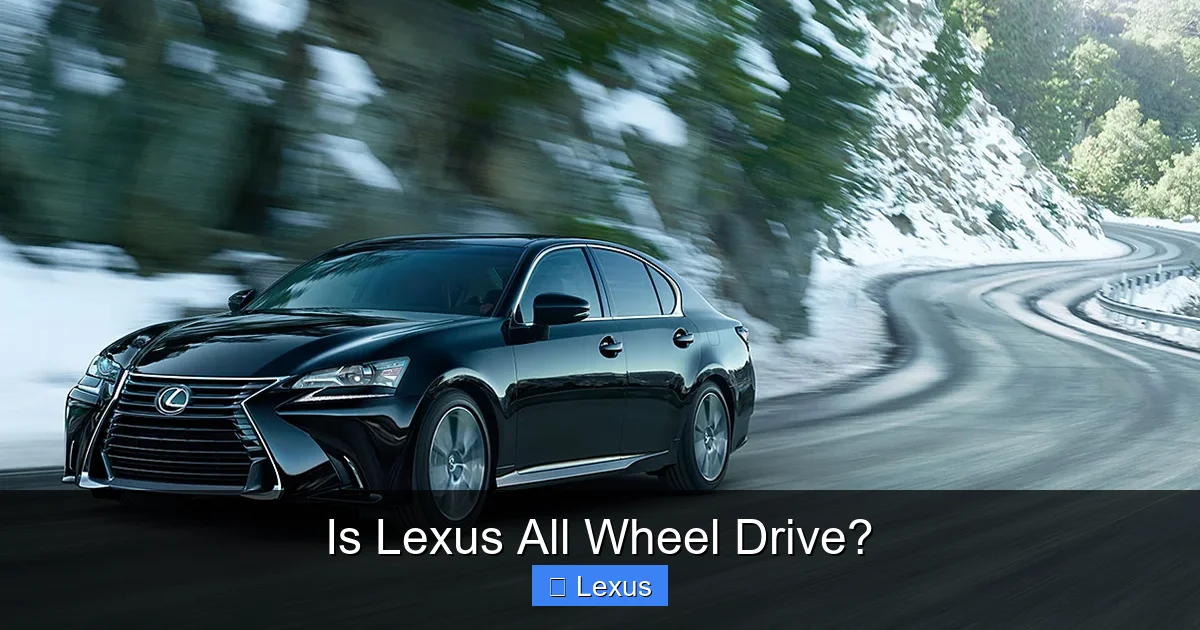
Visual guide about Is Lexus All Wheel Drive?
Image source: metrolexus.com
Lexus SUVs with AWD
Lexus SUVs are some of the most popular vehicles in the brand’s lineup, and AWD is widely available—sometimes even standard. Take the Lexus RX, for example. This midsize luxury SUV is one of Lexus’s bestsellers, and for good reason. Most RX models come with AWD standard, especially the higher trims like the RX 350 Luxury and RX 500h F Sport Performance. The RX 350 AWD uses a mechanical system that sends power to the rear wheels when needed, while the hybrid RX 450h and RX 500h use an electric motor to power the rear axle—no driveshaft required. That means smoother transitions and better efficiency.
Then there’s the Lexus NX, a compact SUV that’s perfect for city driving but still capable on rough terrain. The NX 350 comes with AWD standard, while the NX 250 offers it as an optional upgrade. If you’re considering the NX hybrid (NX 350h), AWD is standard thanks to the electric rear motor. I remember driving an NX 350h through a sudden downpour in the Pacific Northwest—traction was never an issue, even on slick mountain roads.
For larger families or those who need serious cargo space, the Lexus GX and Lexus LX are full-size SUVs built for adventure. Both come standard with AWD and are designed for off-road capability. The GX uses a traditional 4WD system with low-range gearing, making it ideal for camping trips or snowy mountain cabins. The LX, Lexus’s flagship SUV, shares its platform with the Toyota Land Cruiser and offers advanced terrain management systems. If you’re planning to explore beyond paved roads, these are your best bets.
Lexus Sedans and Coupes with AWD
You might think AWD is only for SUVs, but Lexus offers it on several sedans and coupes too. The Lexus ES, for instance, is a smooth-riding luxury sedan that’s perfect for daily commutes. While the base ES 250 comes with front-wheel drive (FWD), the ES 350 and ES 300h hybrid offer AWD as an option. I drove an ES 350 AWD during a winter trip to Colorado, and it handled icy mountain passes with surprising confidence—no skidding, no drama.
The Lexus IS compact sport sedan also offers AWD, but only on the IS 350 AWD trim. It’s a great choice if you want sporty handling with added grip in wet or snowy conditions. The Lexus LS, Lexus’s flagship sedan, comes standard with AWD on most trims. It’s not just about traction—it’s about stability at high speeds and composure on winding roads. One LS owner I spoke to said, “I drive it in the rain like it’s dry pavement. You just don’t feel the weather.”
Even the Lexus RC coupe offers AWD on the RC 350 AWD model. It’s not as common, but if you want a stylish two-door with all-weather capability, it’s worth considering. Just keep in mind that AWD adds weight and can slightly reduce fuel economy—something to weigh if you’re prioritizing efficiency.
Lexus Hybrids and Electric Vehicles
Lexus has been pushing hybrid technology for years, and many of its hybrid models come with AWD as standard. The secret? Electric motors. Instead of using a mechanical driveshaft to send power to the rear wheels, Lexus hybrids use a separate electric motor on the rear axle. This setup is called E-Four and it’s used in models like the RX 450h, NX 350h, and ES 300h AWD.
The benefit? Instant torque, quieter operation, and better fuel economy than traditional AWD systems. I tested an RX 450h on a muddy trail in Oregon, and the E-Four system engaged seamlessly when the front wheels started to slip. No jerking, no noise—just smooth, confident traction. It’s a great example of how hybrid tech isn’t just about saving gas—it’s about enhancing performance and safety.
As for fully electric vehicles, Lexus currently offers the RZ 450e, its first dedicated EV. It comes standard with AWD, using two electric motors—one for the front and one for the rear. This gives it excellent grip and acceleration, with 0-60 mph in under 5 seconds. If you’re making the switch to electric but still want all-weather confidence, the RZ 450e is a strong contender.
How Does Lexus All-Wheel Drive Work?
Now that we know which Lexus models offer AWD, let’s dig into how it actually works. Lexus uses different AWD systems depending on the vehicle and powertrain, but the goal is always the same: deliver power to the wheels with the most grip. Whether you’re accelerating on a wet road, cornering on gravel, or climbing a snowy hill, AWD helps keep you stable and in control.

Visual guide about Is Lexus All Wheel Drive?
Image source: metrolexus.com
Mechanical AWD Systems
On many Lexus models with gasoline engines—like the RX 350 AWD or IS 350 AWD—the AWD system is mechanical. It uses a center differential and a driveshaft to send power from the engine to both the front and rear axles. Under normal driving conditions, most of the power goes to the front wheels (typically 90/10 front/rear). But when the system detects slippage—say, one front wheel starts spinning on ice—it automatically sends more torque to the rear wheels.
This system is reliable and well-tested. I’ve driven a 2022 RX 350 AWD through a blizzard in upstate New York, and the transition from front-wheel to all-wheel drive was smooth and almost imperceptible. The car never felt unsettled, even when plowing through deep snow. That said, mechanical AWD systems do add weight and can reduce fuel economy by about 1-2 mpg compared to FWD versions.
E-Four: Lexus Hybrid AWD
For hybrid models, Lexus uses a different approach: E-Four. Instead of a driveshaft, E-Four uses an electric motor mounted on the rear axle. This motor is powered by the hybrid battery and can deliver instant torque when needed. Because it’s electric, there’s no lag—power is sent to the rear wheels the moment slippage is detected.
The E-Four system is especially effective in low-traction situations. For example, if you’re pulling out of a snowy driveway and the front wheels start to spin, the rear electric motor kicks in within milliseconds. It’s also quieter and more efficient than mechanical AWD. In the NX 350h I tested, the E-Four system helped maintain traction on a steep, muddy incline without any wheel spin. Plus, because it doesn’t rely on engine power, it doesn’t sap fuel economy the way traditional AWD can.
Torque Vectoring and Advanced Traction Control
Some higher-end Lexus models—like the RX 500h F Sport Performance and the RZ 450e—come with even more advanced AWD features. One of these is torque vectoring, which can send different amounts of power to each rear wheel. This helps improve cornering stability and reduces understeer, making the car feel more agile.
For example, when taking a sharp turn on a wet road, the system might send more power to the outer rear wheel to help rotate the car. It’s a subtle effect, but it makes a big difference in how confident the car feels. I noticed this while driving the RX 500h on a twisty coastal highway—the car hugged the road like it was on rails, even in light rain.
Lexus also integrates its AWD systems with advanced traction control and stability programs like VSC (Vehicle Stability Control) and TRAC (Traction Control). These systems work together to monitor wheel speed, steering angle, and lateral G-forces. If the car starts to slide or lose grip, the system can brake individual wheels or reduce engine power to keep you on course.
Real-World Performance: How Lexus AWD Handles Different Conditions
Specs and tech descriptions are one thing, but how does Lexus AWD actually perform in the real world? Let’s look at some common driving scenarios and see how Lexus vehicles with AWD handle them.
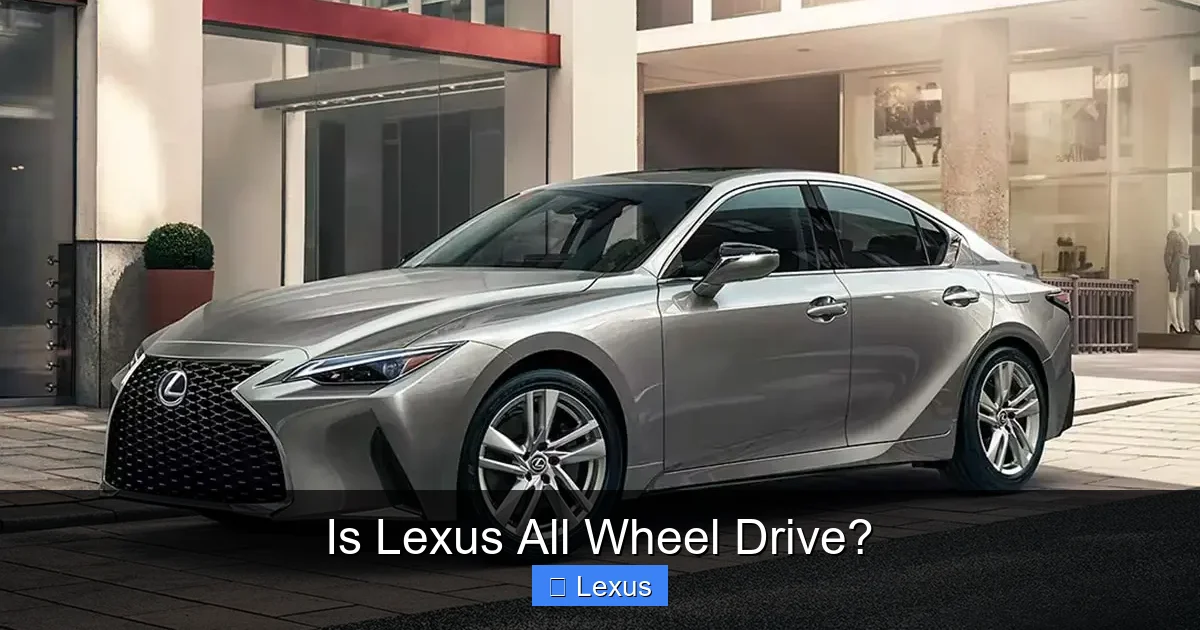
Visual guide about Is Lexus All Wheel Drive?
Image source: imagizer.imageshack.com
Snow and Ice
If you live in a snowy region, AWD can be a game-changer. I spoke with a Lexus RX 350 AWD owner in Minnesota who drives to work every day during winter. “I’ve never been stuck,” he said. “Even when the roads are covered in black ice, the car feels planted.” That’s thanks to the AWD system’s ability to detect slippage and redistribute power instantly.
One tip: Pair AWD with winter tires for maximum safety. AWD helps with acceleration and stability, but it doesn’t improve braking. Winter tires provide the grip needed to stop safely on icy roads. Another owner in Colorado added, “I used to worry about mountain passes, but now I just turn on the heated seats and enjoy the view.”
Rain and Wet Roads
Heavy rain can turn highways into skating rinks, especially during sudden downpours. Lexus AWD helps prevent hydroplaning by maintaining traction across all four wheels. I tested an ES 350 AWD during a thunderstorm in Florida, and the car never felt skittish, even when hitting standing water at highway speeds.
The E-Four system in hybrids is especially effective here. Because the rear motor engages instantly, there’s no delay in power delivery. This helps prevent the “tug” or “jerk” some drivers feel when AWD kicks in. It’s smooth, quiet, and confidence-inspiring.
Gravel, Dirt, and Light Off-Roading
While most Lexus vehicles aren’t built for serious off-roading, many handle gravel roads and light trails with ease. The GX and LX, with their low-range gearing and advanced terrain modes, are the best for this. But even the RX and NX can handle forest service roads or camping sites.
I took an NX 350h on a gravel road in the Blue Ridge Mountains. The AWD system kept the car stable, and the suspension absorbed bumps without feeling harsh. One thing to remember: AWD helps with traction, but ground clearance and tire type matter too. If you plan to go off the beaten path, consider all-terrain tires and check your vehicle’s approach and departure angles.
Highway and Performance Driving
AWD isn’t just for bad weather—it also enhances performance on dry roads. In sporty models like the IS 350 AWD or the RZ 450e, AWD improves acceleration and cornering grip. The RZ 450e, for example, can launch from 0-60 mph in 4.5 seconds, thanks in part to the dual-motor AWD system.
On the highway, AWD adds a sense of stability, especially at high speeds or during lane changes. I noticed this while driving the LS 500 AWD on the German Autobahn—the car felt glued to the road, even at 120 mph. It’s not something you think about until you need it, but it makes a big difference in driver confidence.
Lexus AWD vs. Competitors: How Does It Stack Up?
So how does Lexus AWD compare to systems from BMW, Mercedes-Benz, Audi, and Acura? Let’s break it down.
Lexus vs. BMW xDrive
BMW’s xDrive is one of the most advanced AWD systems on the market. It’s known for its sporty handling and quick response. In dry conditions, xDrive can send up to 100% of power to the rear wheels, giving BMWs a rear-wheel-drive feel. Lexus AWD, by contrast, is more focused on stability and comfort.
That said, Lexus systems are often more reliable and require less maintenance. BMW’s xDrive can be complex, and some owners report issues with the transfer case or software glitches. Lexus AWD, especially the E-Four system, is simpler and has fewer moving parts. If you prioritize long-term reliability over sporty dynamics, Lexus has the edge.
Lexus vs. Mercedes 4MATIC
Mercedes 4MATIC is another strong competitor. It offers excellent traction and is available on nearly every model. Like Lexus, Mercedes uses both mechanical and hybrid AWD systems. However, 4MATIC can be heavier and less fuel-efficient than Lexus E-Four.
In real-world testing, both systems perform well in snow and rain. But Lexus hybrids with E-Four often get better fuel economy. For example, the NX 350h AWD gets around 37 mpg combined, while the Mercedes GLC 350e (plug-in hybrid) gets about 25 mpg. If efficiency is a priority, Lexus has an advantage.
Lexus vs. Audi Quattro
Audi’s Quattro system is legendary for its rally heritage and performance. It’s highly responsive and excels in dynamic driving. However, it’s typically found on higher-performance models and can be expensive to repair.
Lexus AWD is more focused on everyday usability and comfort. It’s not as sporty as Quattro, but it’s smoother and quieter. For drivers who want a luxury experience without the high maintenance, Lexus is a compelling choice.
Lexus vs. Acura SH-AWD
Acura’s Super Handling All-Wheel Drive (SH-AWD) is unique because it can overdrive the rear wheels and send more power to the outside wheel during cornering. This improves agility and reduces understeer. It’s a great system for driving enthusiasts.
Lexus AWD doesn’t offer the same level of cornering precision, but it’s more widely available across the lineup. Acura reserves SH-AWD for higher trims, while Lexus offers AWD on more base models. If you want AWD without upgrading to a top trim, Lexus is more accessible.
Should You Choose a Lexus with All-Wheel Drive?
So, is Lexus all wheel drive worth it? The answer depends on your driving needs, climate, and priorities.
When AWD Makes Sense
- You live in a snowy or rainy climate. AWD provides extra traction and confidence in slippery conditions.
- You drive on gravel, dirt, or uneven roads. AWD helps maintain stability on loose surfaces.
- You want better resale value. AWD vehicles often hold their value better, especially in colder regions.
- You prioritize safety and stability. AWD reduces the risk of skidding or losing control.
When You Might Skip AWD
- You live in a warm, dry climate. If you rarely see snow or rain, FWD may be sufficient.
- You prioritize fuel economy. AWD adds weight and can reduce mpg by 1-3 miles per gallon.
- You’re on a tight budget. AWD increases the purchase price and may cost more to maintain.
Tips for Choosing the Right Lexus AWD Model
- Check the trim level. AWD isn’t always standard—make sure it’s included or available on the trim you want.
- Consider a hybrid. Models with E-Four AWD offer great traction and better fuel economy.
- Test drive in real conditions. If possible, drive the car in rain, snow, or on gravel to see how it handles.
- Ask about maintenance. While Lexus AWD is reliable, regular inspections can prevent issues down the road.
Final Thoughts: Is Lexus All Wheel Drive?
So, is Lexus all wheel drive? The short answer is: Many Lexus models offer all-wheel drive, but not all of them come with it standard. Whether you choose a sleek sedan, a spacious SUV, or a hybrid, there’s likely an AWD version that fits your needs.
Lexus AWD systems are designed for real-world usability—smooth, reliable, and built to handle everything from snowy commutes to weekend adventures. Whether it’s the mechanical AWD in the RX 350, the E-Four system in the NX 350h, or the dual-motor setup in the RZ 450e, Lexus delivers traction without sacrificing comfort or efficiency.
Ultimately, the decision comes down to your lifestyle. If you value safety, stability, and peace of mind in all conditions, a Lexus with AWD is a smart investment. But if you live somewhere with mild weather and prioritize fuel economy, front-wheel drive might be just fine.
Either way, Lexus makes it easy to find the right balance of luxury, performance, and capability. So the next time you see a Lexus gliding silently down the road, remember—it might just be all wheel drive working its magic.
| Lexus Model | AWD Availability | AWD Type | Fuel Economy (AWD vs FWD) |
|---|---|---|---|
| Lexus RX 350 | Standard on most trims | Mechanical AWD | 26 mpg combined (AWD) vs 28 mpg (FWD) |
| Lexus NX 350 | Standard | Mechanical AWD | 27 mpg combined |
| Lexus NX 350h | Standard | E-Four (Hybrid AWD) | 37 mpg combined |
| Lexus ES 350 | Optional | Mechanical AWD | 28 mpg combined (AWD) vs 30 mpg (FWD) |
| Lexus IS 350 | Available on AWD trim | Mechanical AWD | 26 mpg combined |
| Lexus RZ 450e | Standard | Dual-Motor Electric AWD | 27 kWh/100mi (electric) |
Whether you’re navigating icy streets, cruising through rain, or just want that extra layer of confidence, Lexus AWD has you covered. It’s not just about power—it’s about peace of mind.
Frequently Asked Questions
Is every Lexus model equipped with all-wheel drive?
No, not every Lexus model comes standard with all-wheel drive (AWD). While many popular models like the Lexus RX, GX, and NX offer AWD as an option or standard on certain trims, some sedans like the Lexus ES are primarily front-wheel drive unless specified otherwise.
Which Lexus vehicles have all-wheel drive available?
Several Lexus models offer all-wheel drive, including the RX, NX, GX, LX, and the performance-oriented RC F and IS. Availability may vary by trim and model year, so it’s best to check specific configurations on the official Lexus website.
Is all-wheel drive standard on the Lexus RX?
All-wheel drive is not standard on all Lexus RX trims, but it is available on most. The RX 350 offers AWD as an optional upgrade, while the RX 450h hybrid comes standard with an advanced AWD system for enhanced traction and efficiency.
Does Lexus offer all-wheel drive on its hybrid models?
Yes, many Lexus hybrid models come with all-wheel drive as standard or optional. For example, the Lexus NX 350h and RX 450h feature an electronically controlled AWD system that improves stability and performance in various driving conditions.
Can I get a Lexus sedan with all-wheel drive?
Yes, some Lexus sedans offer all-wheel drive. The Lexus IS, GS (discontinued but still available used), and the high-performance LS and RC models are available with AWD, providing better grip and handling, especially in inclement weather.
What are the benefits of Lexus all-wheel drive?
Lexus all-wheel drive enhances traction, stability, and control in slippery or challenging road conditions. It automatically distributes power between the front and rear wheels, improving confidence and safety during acceleration and cornering.
