
Does the Lexus Ls 460 Require Premium Gas?

The Lexus LS 460 is designed to run optimally on premium gasoline (91 octane or higher), though it can technically operate on regular fuel in a pinch. Using lower-octane gas may reduce performance, fuel efficiency, and engine longevity over time.
Key Takeaways
- Recommended Fuel Type: Lexus officially recommends premium unleaded gasoline (91 octane or higher) for the LS 460 to ensure peak performance and engine protection.
- Engine Knock Risk: Using regular gas (87 octane) can cause pre-ignition or “knocking,” especially under heavy load or high temperatures, potentially damaging the engine over time.
- Performance Impact: The LS 460’s 4.6L V8 engine is tuned for higher-octane fuel; using regular gas may result in reduced horsepower, slower acceleration, and lower fuel economy.
- Long-Term Engine Health: Consistently using lower-octane fuel can lead to increased carbon buildup, reduced spark plug life, and potential ECU adjustments that degrade driving dynamics.
- Warranty Considerations: While not always voided, using regular gas contrary to manufacturer recommendations could affect warranty claims related to engine damage.
- Cost-Benefit Analysis: The small upfront savings from regular gas are often outweighed by long-term maintenance costs and diminished resale value.
- Practical Tip: If you must use regular gas temporarily, avoid aggressive driving and refill with premium as soon as possible to minimize harm.
📑 Table of Contents
- Introduction: The Luxury Sedan and Its Fuel Demands
- Understanding Octane Ratings and Engine Requirements
- Manufacturer Recommendations and Warranty Implications
- Performance and Efficiency: The Real Cost of Cutting Corners
- When Might Regular Gas Be Acceptable?
- Long-Term Maintenance and Engine Longevity
- Conclusion: Premium Gas Is the Smart Choice
Introduction: The Luxury Sedan and Its Fuel Demands
When you slide behind the wheel of a Lexus LS 460, you’re not just driving a car—you’re experiencing a masterpiece of engineering, comfort, and refinement. From its whisper-quiet cabin to its buttery-smooth ride, the LS 460 embodies everything luxury automotive design stands for. But beneath that elegant exterior lies a high-performance 4.6-liter V8 engine, meticulously tuned to deliver both power and efficiency. And like any finely crafted machine, it has specific needs—especially when it comes to fuel.
One of the most common questions among current and prospective LS 460 owners is simple yet crucial: *Does the Lexus LS 460 require premium gas?* It’s a fair question, especially when fuel prices fluctuate and every dollar counts. After all, premium gasoline typically costs 20 to 50 cents more per gallon than regular. But the answer isn’t just about cost—it’s about protecting your investment, maintaining performance, and ensuring your luxury sedan lives up to its full potential for years to come.
Understanding Octane Ratings and Engine Requirements

Visual guide about Does the Lexus Ls 460 Require Premium Gas?
Image source: dealerinspire-image-library-prod.s3.us-east-1.amazonaws.com
To answer whether the LS 460 needs premium gas, we first need to understand what “premium” actually means—and why it matters. Gasoline is rated by its octane number, which measures the fuel’s resistance to premature combustion, also known as “knocking” or “pinging.” In simple terms, higher octane means the fuel can withstand more compression before igniting.
Most standard vehicles are designed to run on regular unleaded gasoline, which has an octane rating of 87. These engines have lower compression ratios and are built to ignite fuel at the right moment using a spark plug. But high-performance engines, like the one in the Lexus LS 460, operate at higher compression levels and generate more heat and pressure. This demands fuel that can resist early ignition under stress.
The LS 460’s 1UR-FSE V8 engine features direct fuel injection and variable valve timing, technologies that enhance power and efficiency—but also increase the risk of knocking if the wrong fuel is used. Lexus engineers designed this engine with premium fuel in mind, specifying a minimum octane rating of 91 (in the U.S.) to ensure optimal combustion timing and prevent engine damage.
What Happens If You Use Regular Gas?
Technically, the LS 460 *can* run on regular 87-octane gasoline. The engine control unit (ECU) is smart enough to detect knocking and will adjust ignition timing to compensate. This is called “detonation protection,” and it’s a safety feature found in many modern vehicles. But here’s the catch: while the car won’t immediately break down, you’re sacrificing performance, efficiency, and long-term reliability.
When the ECU detects lower-octane fuel, it retards the ignition timing to prevent knocking. This means the spark plug fires later in the combustion cycle, reducing power output and fuel economy. You might notice slower acceleration, a less responsive throttle, and a slight drop in miles per gallon. Over time, this retarded timing can also lead to increased carbon deposits in the combustion chamber, which may affect engine smoothness and emissions.
Moreover, consistent use of regular gas can accelerate wear on internal components. Spark plugs may foul faster, and the catalytic converter—already working hard in a luxury sedan—could become overloaded with unburned fuel, leading to costly repairs down the line.
Manufacturer Recommendations and Warranty Implications

Visual guide about Does the Lexus Ls 460 Require Premium Gas?
Image source: dealerinspire-image-library-prod.s3.us-east-1.amazonaws.com
Lexus is clear in its owner’s manual: the LS 460 is designed for premium unleaded gasoline with an octane rating of 91 or higher. This isn’t a suggestion—it’s a recommendation based on extensive testing and engineering validation. The automaker emphasizes that using fuel below the recommended octane can result in reduced performance and potential engine damage.
But what about the warranty? Will using regular gas void your coverage? The answer is nuanced. Lexus does not automatically void warranties simply because a customer used regular gas. However, if engine damage occurs—such as pre-ignition, valve damage, or catalytic converter failure—and it can be traced to the use of lower-octane fuel, the manufacturer may deny the claim. In such cases, the burden of proof falls on the owner to show that the damage wasn’t caused by improper fuel use.
This is especially important for LS 460 owners who lease their vehicles or plan to sell them later. A well-maintained service history that includes consistent use of premium fuel can boost resale value and reassure buyers that the engine has been properly cared for.
Real-World Owner Experiences
Many LS 460 owners report noticeable differences when switching between fuel types. One owner from California shared that after accidentally filling up with regular gas during a road trip, their car felt “sluggish” and the fuel economy dropped by nearly 2 mpg. Once they switched back to premium, performance returned to normal within a few tanks.
Another owner in Arizona, where summer temperatures regularly exceed 100°F, emphasized the importance of premium fuel in hot climates. “The engine runs hotter, and the risk of knocking goes up,” they explained. “I’ve always used premium, and my LS 460 still runs like new after 120,000 miles.”
These anecdotes align with engineering principles: high ambient temperatures increase the likelihood of pre-ignition, making high-octane fuel even more critical in warmer regions.
Performance and Efficiency: The Real Cost of Cutting Corners
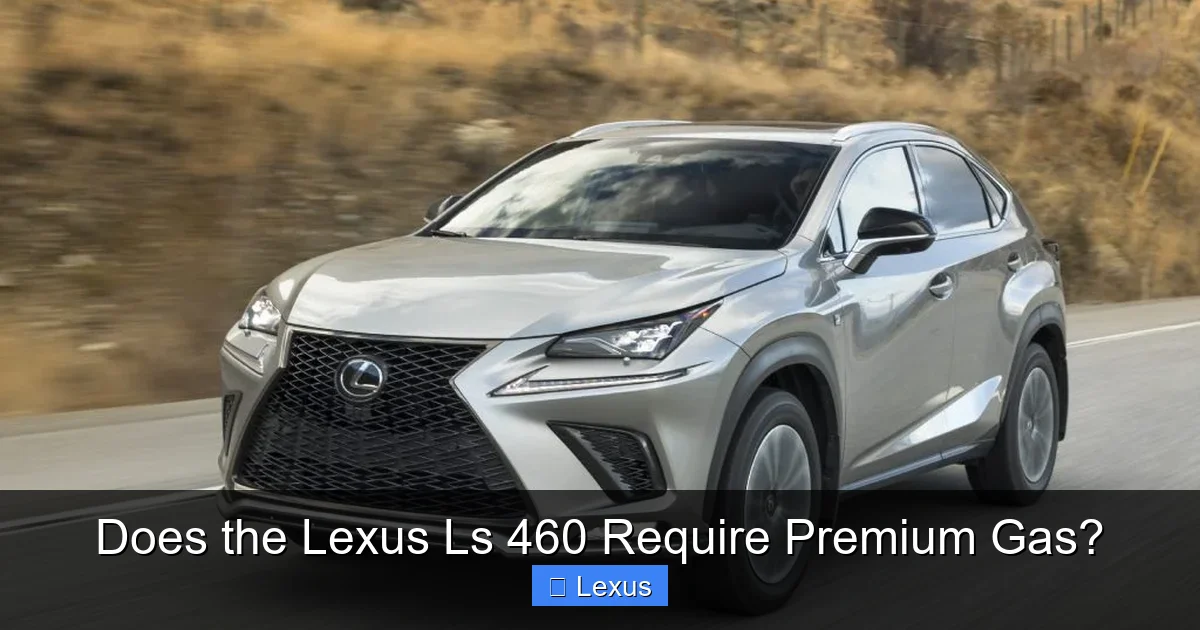
Visual guide about Does the Lexus Ls 460 Require Premium Gas?
Image source: lexusspecsnews.com
Let’s talk numbers. The LS 460’s 4.6L V8 produces around 380 horsepower and 367 lb-ft of torque when running on premium fuel. That power is delivered smoothly and quietly, thanks to advanced engine management systems. But when you use regular gas, those numbers drop—sometimes significantly.
Independent dyno tests have shown that engines tuned for premium fuel can lose 5–10% of their horsepower when running on 87 octane. For the LS 460, that could mean a reduction of 19 to 38 horsepower. While this might not be noticeable during casual city driving, it becomes apparent during highway merging, uphill climbs, or passing maneuvers.
Fuel economy is another casualty. The LS 460 averages about 16–18 mpg in the city and 24–26 mpg on the highway with premium gas. Using regular fuel can reduce these numbers by 1–2 mpg, depending on driving conditions. Over a year of driving 15,000 miles, that could mean an extra 30–60 gallons of fuel consumed—offsetting any savings from cheaper gas.
The Hidden Costs of Regular Gas
Beyond performance and efficiency, there are hidden costs to consider. Carbon buildup in the combustion chamber and on intake valves can lead to rough idling, hesitation, and reduced throttle response. Over time, this may require expensive cleaning procedures like walnut blasting or fuel system treatments.
Additionally, the oxygen sensors and catalytic converter work harder when lower-octane fuel is used, as incomplete combustion produces more pollutants. This can trigger check engine lights and lead to failed emissions tests—especially in states with strict environmental regulations.
And let’s not forget resale value. A well-maintained LS 460 with a history of premium fuel use will command a higher price on the used market. Buyers of luxury sedans expect meticulous care, and fuel choice is part of that equation.
When Might Regular Gas Be Acceptable?
There are rare situations where using regular gas in an LS 460 might be unavoidable—such as during a long road trip in a remote area with no premium fuel available. In these cases, it’s not the end of the world. Modern engines are designed with safeguards to prevent catastrophic damage.
If you must use regular gas temporarily, follow these tips:
– Avoid aggressive driving, especially hard acceleration and high-speed cruising.
– Keep the engine cool by ensuring the cooling system is in good condition.
– Refill with premium fuel as soon as possible—ideally within a few hundred miles.
– Consider adding a fuel system cleaner to help remove any carbon buildup.
However, this should be the exception, not the rule. Relying on regular gas regularly defeats the purpose of owning a high-performance luxury sedan.
Ethanol Blends and Fuel Quality
Another factor to consider is ethanol content. Most gasoline sold in the U.S. contains up to 10% ethanol (E10), which has a lower energy density than pure gasoline. This means you’ll get slightly lower fuel economy, regardless of octane. Some premium fuels are ethanol-free (E0), offering even better performance and protection for high-compression engines.
When choosing premium gas, look for top-tier brands that meet the Top Tier Detergent Gasoline standard. These fuels contain higher levels of cleaning agents that help prevent carbon buildup and maintain engine efficiency. Brands like Shell, Chevron, Exxon, and Costco (where available) are known for their quality.
Long-Term Maintenance and Engine Longevity
The LS 460 is built to last. Many owners report trouble-free driving well beyond 200,000 miles with proper maintenance. But that longevity depends on following the manufacturer’s guidelines—including fuel recommendations.
Using premium gas helps maintain optimal combustion, reduces engine stress, and minimizes wear on internal components. It also supports the longevity of the direct injection system, which can be prone to carbon buildup if fuel quality is poor.
Regular maintenance—such as oil changes, spark plug replacements, and fuel system cleanings—is essential, but it’s even more effective when paired with high-quality fuel. Think of premium gas as part of your car’s health regimen, like taking vitamins for your body.
Case Study: Two LS 460s, Two Fuel Choices
Consider two identical 2010 Lexus LS 460s, both driven 12,000 miles per year. One owner uses only premium fuel and follows the maintenance schedule. The other uses regular gas to save money.
After 10 years:
– The premium-fuel car shows no signs of engine knocking, maintains smooth acceleration, and averages 25 mpg on the highway.
– The regular-fuel car experiences occasional hesitation, requires a fuel system cleaning at 80,000 miles, and averages 23 mpg.
While the regular-fuel owner saved about $300 per year on gas (assuming a $0.30 per gallon difference), they spent $400 on cleaning and likely reduced the car’s resale value by $1,500–$2,000 due to perceived neglect.
In this scenario, the “savings” disappear—and then some.
Conclusion: Premium Gas Is the Smart Choice
So, does the Lexus LS 460 require premium gas? The short answer is yes—not because it will immediately break if you use regular, but because it was engineered to perform at its best with high-octane fuel. Using premium gasoline ensures maximum power, efficiency, and engine protection, aligning with the luxury and reliability Lexus is known for.
While the upfront cost is slightly higher, the long-term benefits far outweigh the savings from cheaper fuel. You’ll enjoy smoother performance, better fuel economy, fewer maintenance issues, and a higher resale value. Plus, you’ll drive with confidence, knowing your LS 460 is running exactly as its engineers intended.
In the world of luxury sedans,细节 matter. From the hand-stitched leather to the precision-tuned suspension, every element is designed for excellence. Fuel choice is no different. Treat your LS 460 with the care it deserves—fill it with premium gas, and it will reward you with years of refined, reliable driving.
Frequently Asked Questions
Can I use regular gas in my Lexus LS 460 in an emergency?
Yes, you can use regular 87-octane gas temporarily if premium isn’t available. However, avoid aggressive driving and refill with premium fuel as soon as possible to prevent engine knocking and performance loss.
Will using regular gas void my Lexus warranty?
Not automatically, but if engine damage is traced to the use of lower-octane fuel, warranty claims may be denied. Always follow the manufacturer’s fuel recommendations to protect your coverage.
How much does it cost more per year to use premium gas in an LS 460?
Depending on driving habits and fuel prices, the difference is typically $200–$400 per year. This small cost is often offset by better fuel economy, fewer repairs, and higher resale value.
Does premium gas clean my engine better than regular gas?
Premium gas itself isn’t inherently cleaner, but top-tier premium brands often contain more detergents that help prevent carbon buildup, especially in direct-injection engines like the LS 460’s.
Can I mix premium and regular gas in my LS 460?
Yes, mixing fuel types is safe and won’t harm the engine. The ECU will adjust accordingly, though performance may vary until you refill with the recommended octane level.
Is ethanol-free premium gas better for the LS 460?
Ethanol-free premium gas (E0) can offer slightly better fuel economy and reduce moisture buildup in the fuel system, making it a great choice for long-term engine health—especially in older LS 460 models.
