
Can You Drive a Totaled Car?

Driving a totaled car is possible in some cases, but it comes with serious risks and legal complications. While you may legally register and insure a rebuilt-title vehicle like certain Kias, safety, resale value, and mechanical reliability should be top concerns.
Key Takeaways
- Legal status varies by state: Some states allow driving a totaled car if it’s repaired and passes inspection, while others impose strict restrictions.
- Safety is a major concern: Even after repairs, structural damage from the original accident may compromise crash protection.
- Insurance challenges exist: Full coverage is hard to get on a rebuilt-title car, and premiums may be higher.
- Resale value drops significantly: Totaled cars with salvage or rebuilt titles sell for much less, even if fully functional.
- Mechanical reliability may suffer: Hidden damage can lead to future breakdowns, especially in complex systems like Kia’s electronics or transmission.
- Emissions and registration hurdles: Some states require special inspections before allowing a totaled car back on the road.
- Kia-specific considerations: Modern Kias have advanced safety tech that’s hard to fully restore after severe damage.
📑 Table of Contents
Can You Drive a Totaled Car? The Truth for Kia Owners
So, your Kia was in a serious accident—maybe a front-end collision, a rollover, or even a flood. The insurance company took a look and declared it a total loss. Now you’re wondering: can you still drive it? After all, it starts, the engine runs, and the interior looks fine. But before you hop in and hit the road, there are some critical things to consider.
The short answer? Yes, you *can* drive a totaled car in many cases—but it’s not always safe, legal, or smart. Whether your Kia is a Forte, Sportage, Sorento, or even a high-tech EV like the EV6, the decision to drive a totaled vehicle depends on several factors: the extent of the damage, how well it was repaired, your state’s laws, and your personal risk tolerance. While some people successfully rebuild and drive their totaled cars for years, others face unexpected breakdowns, safety issues, or legal trouble down the line.
In this guide, we’ll walk you through everything you need to know about driving a totaled Kia—from legal requirements and insurance hurdles to safety concerns and long-term reliability. Whether you’re considering buying a used Kia with a salvage title or trying to decide what to do with your own totaled vehicle, this article will help you make an informed choice.
What Does “Totaled” Actually Mean?
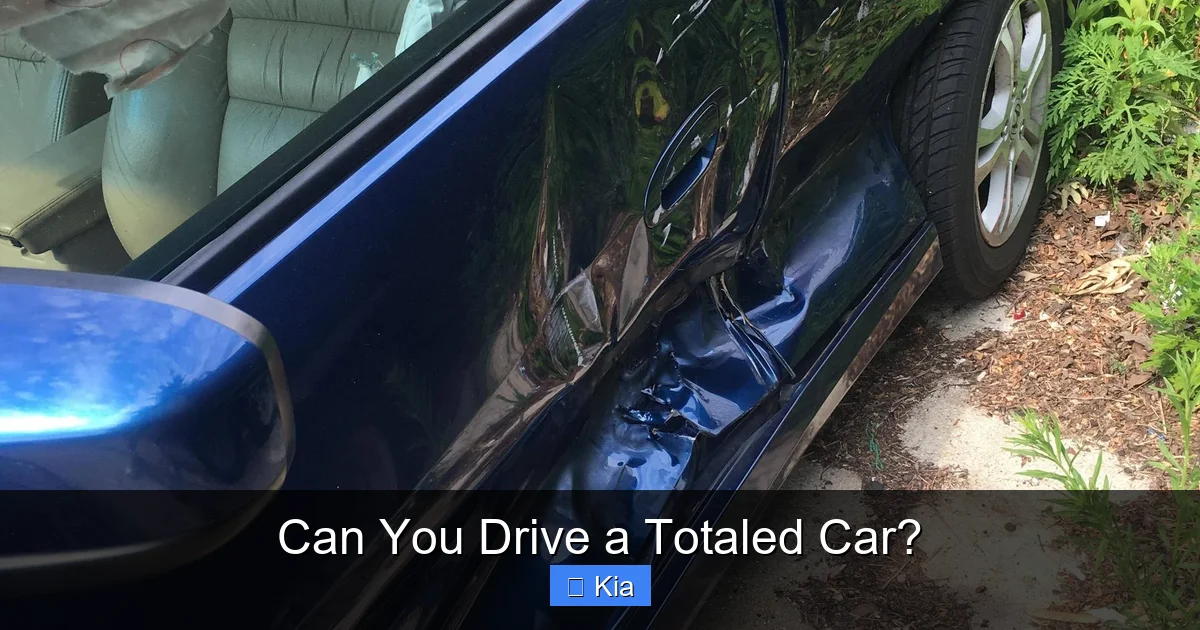
Visual guide about Can You Drive a Totaled Car?
Image source: i.imgur.com
Before we dive into whether you can drive a totaled car, let’s clarify what “totaled” really means. When an insurance company declares a vehicle a total loss, it doesn’t necessarily mean the car is completely destroyed. Instead, it means the cost to repair the damage exceeds a certain percentage of the car’s actual cash value (ACV)—usually between 70% and 100%, depending on your state.
For example, if your 2021 Kia Seltos is worth $18,000 and the repair estimate comes in at $14,000, your insurer might total it if your state’s threshold is 75%. Even if the car could technically be fixed, the insurer considers it not worth the expense. This decision protects them from paying for repairs that could leave the vehicle unsafe or unreliable.
Types of Total Loss Declarations
There are two main types of total loss designations: salvage and rebuilt.
A salvage title is issued when the car is declared a total loss but hasn’t been repaired yet. In most states, you can’t legally drive a car with a salvage title—it must be stored or transported on a trailer. However, you can often buy back the car from the insurance company (usually for a reduced price) and attempt to repair it.
Once the car is repaired and passes a state inspection, it can be rebranded with a rebuilt title (also called a reconstructed or reconditioned title). This allows you to register and drive the vehicle legally—but with caveats. Not all states issue rebuilt titles, and the inspection process can be rigorous.
How Kia Models Are Affected
Modern Kias are packed with advanced safety and driver-assist features—automatic emergency braking, lane-keeping assist, adaptive cruise control, and more. These systems rely on sensors, cameras, and software that can be easily damaged in a collision. Even if the visible damage seems minor, the underlying electronics might be compromised.
For instance, a side-impact crash in a Kia Soul might bend the frame slightly, throwing off the alignment of the blind-spot monitoring sensors. If those aren’t recalibrated properly, the system could give false warnings or fail to detect vehicles—putting you at risk.
That’s why repairing a totaled Kia isn’t just about welding and painting. It requires specialized knowledge, OEM parts, and often, professional recalibration of safety systems. Skimping on repairs might save money upfront but could lead to dangerous consequences later.
Legal Requirements for Driving a Totaled Car
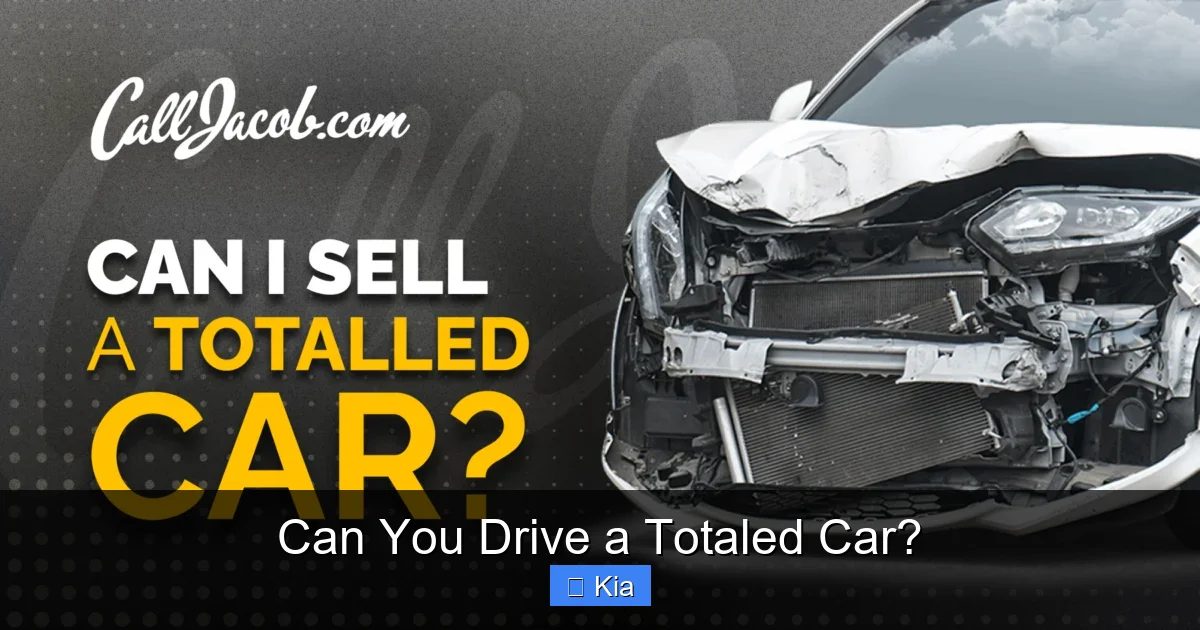
Visual guide about Can You Drive a Totaled Car?
Image source: calljacob.com
The legality of driving a totaled car depends heavily on where you live. Each state has its own rules about salvage titles, rebuilt inspections, and registration requirements. Ignoring these laws can result in fines, impoundment, or even criminal charges.
State-by-State Variations
In states like Texas, Florida, and Arizona, it’s relatively common to see rebuilt-title vehicles on the road. These states have established inspection programs that verify the car is safe to drive before issuing a rebuilt title. You’ll typically need to provide proof of repairs, pass a VIN inspection, and sometimes undergo a safety or emissions test.
Other states, like California and New York, have stricter regulations. California, for example, requires a “smog check” and a detailed inspection by the California Highway Patrol (CHP) for all salvage vehicles. If the car doesn’t meet standards, it can’t be registered—no exceptions.
Some states don’t allow rebuilt titles at all. In these cases, a totaled car can only be used for parts or scrap, not for driving.
Registration and Titling Process
If your state allows rebuilt titles, here’s what the process usually looks like:
1. Buy the car back from the insurer: Most insurers sell totaled vehicles at auction. You can often repurchase your own car for a fraction of its value.
2. Repair the damage: Use qualified mechanics and OEM (original equipment manufacturer) parts when possible. Keep all receipts and documentation.
3. Schedule a state inspection: This may include a VIN verification, safety check, and emissions test.
4. Apply for a rebuilt title: Submit your paperwork, inspection results, and fees to the DMV.
5. Register and insure the vehicle: Once titled, you can register it and get insurance—though options may be limited.
For Kia owners, it’s especially important to ensure that all safety systems are fully functional before the inspection. A failed inspection means more delays and expenses.
Penalties for Illegal Operation
Driving a salvage-title car without proper registration is illegal in most states. If you’re caught, you could face fines, vehicle impoundment, or even points on your license. In some cases, insurance companies may refuse to cover any accidents involving an improperly titled vehicle—leaving you personally liable for damages.
Insurance Challenges with Totaled Cars
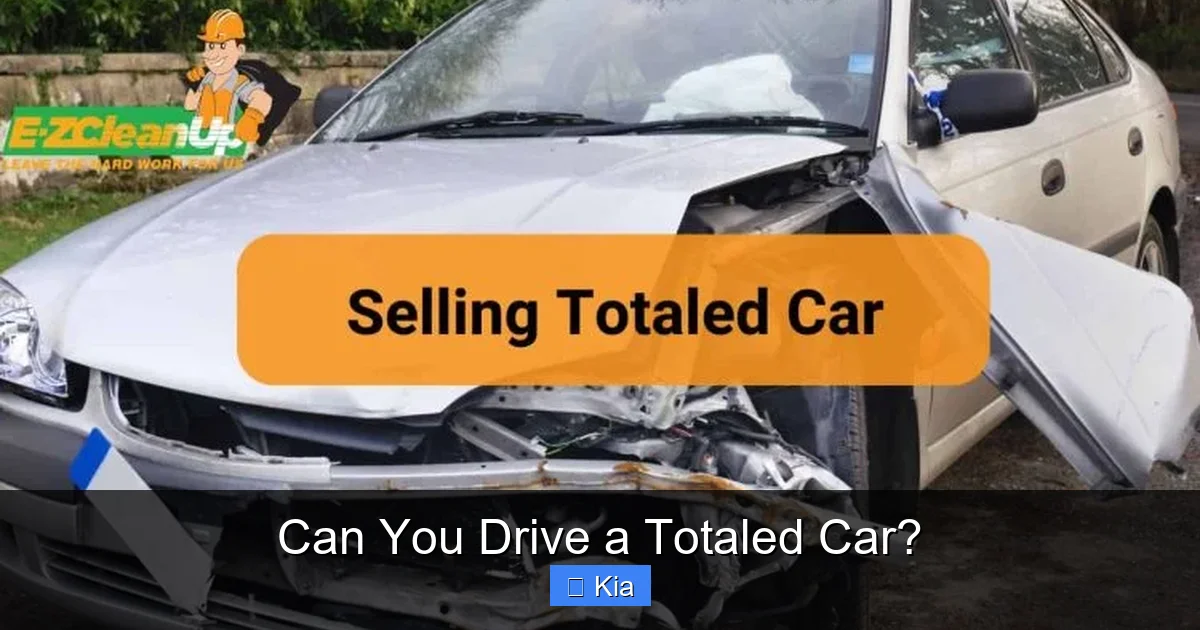
Visual guide about Can You Drive a Totaled Car?
Image source: ezcleanup.com
One of the biggest hurdles to driving a totaled car is getting insurance. Most standard auto insurers are hesitant to provide full coverage (including collision and comprehensive) on salvage or rebuilt-title vehicles. Here’s why.
Limited Coverage Options
Many major insurers—like State Farm, Geico, and Progressive—will only offer liability coverage on rebuilt-title cars. That means they’ll pay for damage you cause to others, but not for repairs to your own vehicle if you’re in another accident.
Some specialty insurers do offer full coverage for rebuilt vehicles, but premiums are often higher, and deductibles may be steep. You might also face restrictions, such as mileage limits or required inspections.
Difficulty Proving Value
Insurance companies base premiums on a car’s value. But rebuilt-title vehicles are notoriously hard to appraise. A 2020 Kia Telluride with a clean title might be worth $28,000, but the same model with a rebuilt title could be valued at $18,000 or less—even if it’s in perfect condition.
This lower valuation affects your coverage limits. If you only have $15,000 in comprehensive coverage and your car is worth $18,000, you’re underinsured. In the event of another total loss, you’d only get $15,000—not enough to replace the vehicle.
Claims and Inspection Requirements
Some insurers require annual inspections for rebuilt-title vehicles to maintain coverage. They may also deny claims if they determine the car wasn’t properly repaired or if hidden damage contributed to a new accident.
For example, if your rebuilt Kia Rio is rear-ended and the insurer discovers frame damage from the original accident wasn’t fully repaired, they might argue the car was already unsafe—and refuse to pay.
Safety Risks of Driving a Totaled Car
Even if your totaled Kia is legally registered and insured, safety should be your top priority. A car that’s been severely damaged may not protect you as well in a future crash.
Structural Integrity Concerns
Modern cars like the Kia Sorento or K5 are designed with crumple zones that absorb impact energy during a collision. If these zones are damaged and not properly repaired, the car may not perform as intended in another accident.
For instance, if the front frame rails were bent in a previous crash and only straightened—not replaced—they might not crumple correctly next time. This could transfer more force to the passenger cabin, increasing injury risk.
Airbag and Sensor Malfunctions
Airbags and seatbelt pretensioners are critical safety features, but they’re often destroyed in a total-loss accident. Even if new ones are installed, the system may not function correctly if the vehicle’s computer wasn’t reset or recalibrated.
Kia’s advanced driver-assistance systems (ADAS) rely on precise sensor alignment. A misaligned front-facing camera or radar sensor can cause features like forward collision warning or automatic braking to fail silently—without any warning light.
Electrical and Wiring Damage
Water damage from floods or fire can corrode wiring and electronics. Even if the car starts and runs, hidden electrical issues can cause sudden failures—like a dead battery, malfunctioning lights, or even a fire.
Kia’s UVO infotainment system and connected services depend on complex wiring. If this system was damaged and poorly repaired, it could lead to glitches or complete failure.
Real-World Example: The Flooded Kia Sportage
Imagine a Kia Sportage that was submerged in floodwater. The insurance company totals it due to electrical damage. The owner buys it back, dries it out, and replaces the engine control module. The car starts and drives fine—for a few months.
Then, one rainy day, the dashboard lights flicker, the transmission shifts erratically, and the car stalls on the highway. A mechanic discovers corroded wiring in the floor pan that wasn’t properly cleaned or replaced. The repair costs $3,000—more than the car is worth.
This scenario is more common than you think. Water damage can hide for months or even years, causing intermittent problems that are hard to diagnose.
Resale Value and Long-Term Ownership
Even if your rebuilt Kia runs perfectly, it will never be worth as much as a clean-title counterpart. This affects both resale value and your ability to trade it in.
Depreciation of Rebuilt Titles
Studies show that rebuilt-title vehicles sell for 20% to 40% less than similar clean-title models. For a $25,000 Kia Stinger, that’s a $5,000 to $10,000 loss—even if it’s in excellent condition.
Buyers are wary of rebuilt cars because of the unknowns: Was it properly repaired? Is it safe? Will it break down? This stigma makes it hard to sell, and you may need to accept a lowball offer.
Trade-In Challenges
Most dealerships won’t accept rebuilt-title vehicles as trade-ins, especially for newer models. Even if they do, the offer will be significantly lower than market value.
If you’re planning to upgrade to a new Kia in a few years, driving a totaled car could cost you thousands in lost equity.
Long-Term Reliability
While some rebuilt cars last for years without issues, others develop problems down the road. Hidden frame damage, improper welds, or subpar parts can lead to premature wear, alignment issues, or suspension failure.
Kia’s powertrains are generally reliable, but they’re not immune to stress from prior damage. A transmission that was strained in a previous accident might fail earlier than expected.
Should You Drive Your Totaled Kia?
So, after all this, should you drive your totaled Kia? The answer depends on your situation.
When It Might Make Sense
– You’re on a tight budget and can’t afford a new car.
– The damage was minor (e.g., rear-end collision with no frame damage).
– You have access to a skilled mechanic who can properly repair and inspect the vehicle.
– Your state allows rebuilt titles and you’re willing to go through the inspection process.
– You plan to drive the car for only a short time before replacing it.
When to Avoid It
– The car was severely damaged (rollover, front-end impact, flood).
– You can’t afford high insurance premiums or potential repair costs.
– You rely on advanced safety features that may not be fully restored.
– You plan to sell or trade in the car within a few years.
– Your state has strict regulations or doesn’t allow rebuilt titles.
Practical Tips for Kia Owners
If you decide to move forward, here are some tips:
– Use OEM parts: Aftermarket or used parts may not meet Kia’s safety standards.
– Get a pre-purchase inspection: Even if you own the car, have an independent mechanic check it before driving.
– Document everything: Keep repair receipts, inspection reports, and photos.
– Recalibrate safety systems: Have a Kia dealer or certified technician recalibrate ADAS features.
– Consider liability-only insurance: If full coverage is too expensive, at least protect yourself from third-party claims.
Conclusion
Driving a totaled car isn’t black and white. For some Kia owners, it’s a practical way to extend the life of a vehicle they can’t afford to replace. For others, it’s a risky gamble that could lead to safety issues, financial loss, or legal trouble.
The key is to do your homework. Understand your state’s laws, get professional repairs, and prioritize safety over savings. If your Kia was severely damaged, it may be wiser to cut your losses and invest in a clean-title vehicle.
Remember: just because you *can* drive a totaled car doesn’t always mean you *should*. Your safety, your wallet, and your peace of mind are worth more than a few thousand dollars in short-term savings.
Frequently Asked Questions
Can I legally drive a car with a salvage title?
No, in most states you cannot legally drive a car with a salvage title. It must be repaired, inspected, and rebranded with a rebuilt title before it can be registered and driven on public roads.
Will insurance cover a totaled Kia if I repair it?
Some insurers offer liability-only coverage for rebuilt-title Kias, but full coverage (collision and comprehensive) is rare and often expensive. Shop around with specialty insurers if you need full protection.
How much does it cost to repair a totaled Kia?
Repair costs vary widely based on the damage, but they often range from $5,000 to $15,000 or more. Using OEM parts and professional recalibration adds to the expense.
Can I sell a rebuilt-title Kia easily?
Selling a rebuilt-title Kia is more difficult than a clean-title one. Expect lower offers, fewer buyers, and longer wait times. Transparency about repairs helps build trust.
Do rebuilt-title cars pass emissions tests?
It depends on the state. Some require emissions testing as part of the rebuilt inspection, while others do not. Kias with modern engines usually pass if properly repaired.
Is it safe to drive a Kia that was totaled in a flood?
Flood-damaged Kias are especially risky due to hidden electrical corrosion. Even if they start and run, long-term reliability is questionable. Most experts recommend avoiding flood-damaged vehicles altogether.