
Are Kia Souls Good in the Snow?

Kia Souls can handle light to moderate snow well, especially with front-wheel drive and proper winter tires. While not a full off-roader, their elevated ground clearance and available AWD (on newer models) improve winter traction. With smart driving habits and the right prep, the Kia Soul is a surprisingly capable winter companion.
Key Takeaways
- Front-wheel drive is standard: Most Kia Souls come with FWD, which offers decent traction in snow when equipped with winter tires.
- Ground clearance matters: With 6.7 inches of clearance, the Soul handles snow-covered roads better than many sedans.
- All-wheel drive available (2023+): Newer models offer optional AWD, significantly boosting snow performance.
- Winter tires are essential: Even with FWD or AWD, winter tires dramatically improve grip, braking, and control in cold weather.
- Electronic safety features help: Standard features like ABS, traction control, and ESC improve stability on slippery roads.
- Not built for deep snow or off-roading: The Soul excels in city and suburban winter driving but isn’t ideal for heavy snowdrifts or mountain trails.
- Prepare for winter driving: Use snow wiper fluid, keep the gas tank half-full, and carry emergency supplies for safety.
📑 Table of Contents
- Are Kia Souls Good in the Snow?
- Understanding the Kia Soul’s Drivetrain Options
- Ground Clearance and Ride Height
- Safety Features That Help in Winter
- The Importance of Winter Tires
- Driving Tips for Kia Soul Owners in Snow
- Real-World Performance: What Owners Say
- Conclusion: Is the Kia Soul a Good Winter Car?
Are Kia Souls Good in the Snow?
If you’re living in a region where snow blankets the streets every winter, you’re probably wondering: Can my Kia Soul handle the cold, the ice, and the slush? It’s a fair question. The Kia Soul has long been praised for its quirky design, spacious interior, and great value. But when it comes to snow performance, does it hold up?
The short answer? Yes—especially with the right setup. While the Kia Soul isn’t a rugged winter warrior like a Jeep or Subaru Outback, it’s more than capable of handling typical winter conditions, especially in urban and suburban environments. With front-wheel drive (FWD) as standard and all-wheel drive (AWD) now available on newer models, the Soul offers a balanced mix of practicality and performance for snowy roads.
But let’s be real—no car is perfect in every winter scenario. The Soul shines in light to moderate snow, especially when equipped with winter tires and driven with care. It won’t plow through three-foot snowdrifts, but it will get you to work, school, or the grocery store without drama—most of the time.
In this guide, we’ll dive deep into how the Kia Soul performs in snowy conditions. We’ll look at its drivetrain options, ground clearance, safety features, and real-world driving tips. Whether you’re a current Soul owner or considering one as your next winter ride, this article will help you understand what to expect—and how to get the most out of your vehicle when the flakes start falling.
Understanding the Kia Soul’s Drivetrain Options

Visual guide about Are Kia Souls Good in the Snow?
Image source: motorverso.com
One of the biggest factors in how any car handles snow is its drivetrain. So, let’s break down what the Kia Soul offers.
Front-Wheel Drive (FWD) – The Standard Setup
The vast majority of Kia Souls come with front-wheel drive. This means the engine sends power to the front wheels only. FWD has some natural advantages in snow: the weight of the engine sits over the driven wheels, which helps with traction when accelerating from a stop. This is especially helpful when pulling away from a red light on a snowy street.
But FWD isn’t perfect. On steep hills or icy patches, the front wheels can lose grip, especially if the car is lightly loaded. That’s why many drivers notice a bit of wheel spin when trying to climb a snowy driveway or hill. Still, for everyday winter driving—like navigating city streets or plowed highways—FWD is perfectly adequate, especially with winter tires.
All-Wheel Drive (AWD) – A Game Changer (2023+ Models)
Here’s the exciting news: Starting in 2023, Kia introduced optional all-wheel drive on the Soul. This is a major upgrade for snow performance. AWD sends power to all four wheels, improving grip and stability in slippery conditions. It’s especially helpful when one or two wheels start to slip—the system can redirect power to the wheels with more traction.
For example, imagine you’re driving on a snowy road and hit a patch of black ice. With FWD, the front wheels might skid, making it hard to steer or stop. But with AWD, the rear wheels can help pull the car through, giving you better control. It’s not a miracle worker, but it’s a significant improvement.
The AWD system in the 2023+ Kia Soul is part-time, meaning it mostly operates in FWD mode for better fuel economy and only engages AWD when needed. Sensors monitor wheel slip and automatically send power to the rear wheels when traction is lost. This makes it a smart, efficient system for real-world winter driving.
If you live in an area with frequent snow or mountainous terrain, the AWD option is worth the extra cost. It gives you peace of mind and better performance when conditions get tough.
Ground Clearance and Ride Height
Visual guide about Are Kia Souls Good in the Snow?
Image source: motorverso.com
Another key factor in snow performance is ground clearance—the distance between the lowest part of the car and the ground. The higher the clearance, the better the car can handle deep snow, slush, and uneven roads.
How Much Clearance Does the Kia Soul Have?
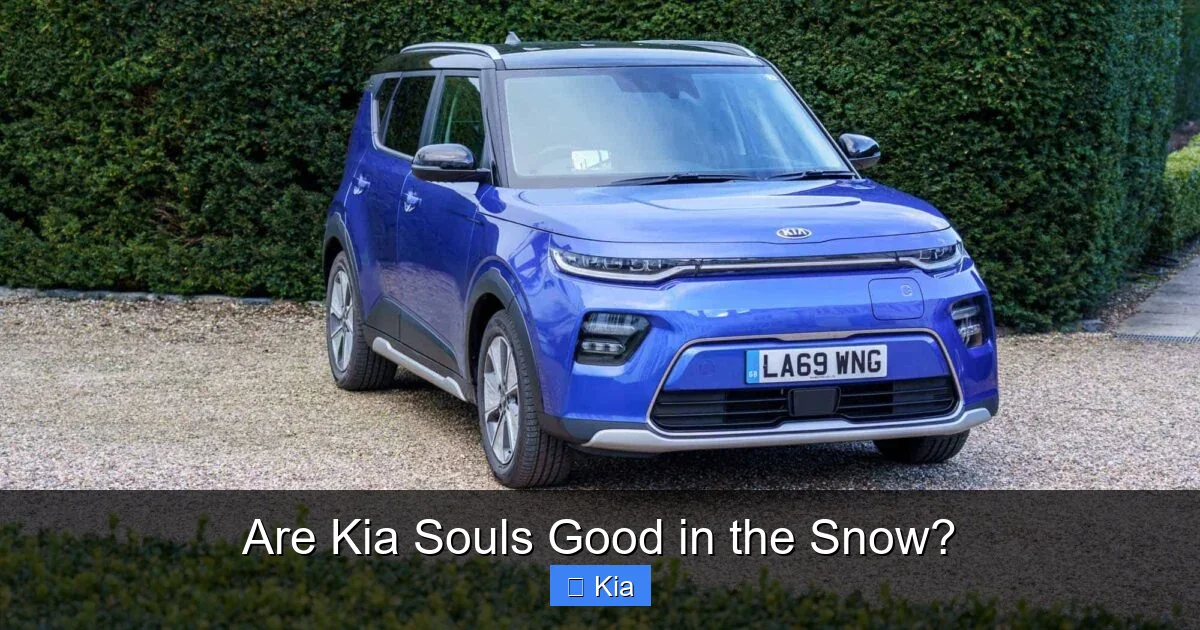
The Kia Soul offers 6.7 inches of ground clearance. That’s not huge compared to an SUV like the Subaru Forester (8.7 inches) or a Jeep Wrangler (over 10 inches), but it’s better than many compact cars and crossovers. For comparison, the Honda Civic has about 5.5 inches, and the Toyota Corolla sits at around 5.1 inches.
This extra inch or two makes a real difference when driving over snow-covered roads or parking lots. You’re less likely to get stuck or scrape the undercarriage on snowbanks. It also helps when driving over frozen ruts or uneven pavement common in winter.
Why Ride Height Matters in Snow
A higher ride height also improves approach and departure angles—meaning the car can handle steeper driveways or snow mounds without bottoming out. This is especially helpful in rural areas or older neighborhoods where snow removal isn’t always perfect.
Additionally, the Soul’s boxy design and upright stance give it a more SUV-like feel, which many drivers appreciate in winter. You sit higher, which improves visibility over snowbanks and other vehicles. This can reduce stress when navigating snowy intersections or parking lots.
That said, the Soul isn’t built for off-roading or deep snow. If you regularly drive on unplowed mountain roads or through heavy snowfall, a more rugged vehicle might be a better fit. But for city driving, suburban commutes, and light rural roads, the Soul’s clearance is more than sufficient.
Safety Features That Help in Winter
Visual guide about Are Kia Souls Good in the Snow?
Image source: motorverso.com
Modern cars come packed with safety tech, and the Kia Soul is no exception. These features aren’t just for accidents—they play a big role in preventing them, especially in winter conditions.
Electronic Stability Control (ESC)
ESC is standard on all Kia Souls. This system monitors the car’s movement and compares it to your steering input. If it detects that the car is starting to slide or lose control—like during a skid on ice—it automatically applies brakes to individual wheels and reduces engine power to help you regain control.
Imagine you’re turning a corner on a snowy road and the back end starts to slide out. ESC kicks in, gently braking the outer front wheel to help straighten the car. It’s like having a co-pilot that reacts faster than you can.
Traction Control System (TCS)
TCS works hand-in-hand with ESC. It prevents the wheels from spinning when you accelerate on slippery surfaces. If you floor it from a stop on snow, TCS will reduce engine power or apply the brakes to keep the wheels from spinning uselessly.
This is especially helpful when pulling out of a snowy driveway or accelerating on a hill. Without TCS, you might spin your wheels and get stuck. With it, you get smoother, more controlled starts.
Anti-lock Braking System (ABS)
ABS prevents the wheels from locking up during hard braking. On snow or ice, locked wheels can cause the car to skid uncontrollably. ABS pulses the brakes rapidly, allowing the wheels to keep turning and maintain steering control.
This means you can brake hard in an emergency and still steer around obstacles—something that’s crucial on icy roads.
Available Driver Assistance Features
Higher trims of the Kia Soul offer advanced safety features like:
– Forward Collision Warning with Automatic Emergency Braking
– Lane Departure Warning
– Blind Spot Monitoring
– Rear Cross-Traffic Alert
These systems add another layer of protection in winter. For example, if a car suddenly stops in front of you on a snowy highway, automatic braking can help prevent a collision. Blind spot monitoring is especially useful when visibility is reduced by snow-covered mirrors or fog.
While these features don’t replace safe driving, they’re valuable tools that can help you avoid accidents when conditions are tough.
The Importance of Winter Tires
Here’s the truth: No matter how good your car is, it’s only as good as its tires in winter. The Kia Soul comes with all-season tires from the factory, which are fine for mild winters but not ideal for serious snow and ice.
Why Winter Tires Make a Difference
Winter tires are made from a softer rubber compound that stays flexible in cold temperatures. All-season tires harden in the cold, reducing grip. Winter tires also have deeper treads and special siping (tiny grooves) that bite into snow and ice.
Studies show that winter tires can reduce braking distance by up to 30% on snow compared to all-season tires. That could mean the difference between stopping safely and sliding into an intersection.
Real-World Example
Let’s say you’re driving your Kia Soul at 30 mph on a snowy road. With all-season tires, you might need 100 feet to stop. With winter tires, that distance could drop to 70 feet. That extra 30 feet could save you from a collision.
Even with AWD, winter tires are essential. AWD helps with acceleration and stability, but it doesn’t improve braking. In fact, without winter tires, AWD can give a false sense of security—your car might feel grippy, but it won’t stop any faster.
When to Install Winter Tires
Most experts recommend installing winter tires when temperatures consistently drop below 45°F (7°C). That’s because all-season tires start to lose effectiveness in colder weather, even if there’s no snow on the ground.
You don’t need to wait for the first snowfall. In fact, it’s better to have them on before the roads get icy. Many drivers swap to winter tires in late fall and switch back in early spring.
All-Weather Tires: A Compromise?
Some drivers consider all-weather tires—a middle ground between all-season and winter tires. These are rated for severe snow conditions (look for the 3PMSF symbol) and can be used year-round.
They’re a good option if you don’t want to swap tires twice a year. However, they’re not as effective as dedicated winter tires in extreme cold or heavy snow. If you live in a harsh winter climate, dedicated winter tires are still the best choice.
Driving Tips for Kia Soul Owners in Snow
Even with the right car and tires, winter driving requires skill and preparation. Here are some practical tips to help you stay safe in your Kia Soul.
Slow Down and Increase Following Distance
Snow and ice reduce traction, so everything takes longer—accelerating, turning, and especially stopping. Reduce your speed and leave at least 6–8 seconds of following distance behind the car in front of you. This gives you time to react if they brake suddenly.
Accelerate and Brake Gently
Sudden movements can cause skids. Accelerate slowly to avoid spinning the wheels. Brake gently and early—don’t wait until the last second. If you have ABS, apply steady pressure and let the system do its job.
Use Lower Gears on Hills
If your Soul has a manual or sport mode, use a lower gear when climbing or descending snowy hills. This gives you more control and reduces strain on the brakes.
Avoid Cruise Control
Never use cruise control on snow or ice. If the wheels start to slip, the system might increase power, making the situation worse. Always maintain manual control.
Clear Snow from Your Car
Before driving, clear all snow and ice from the roof, windows, lights, and license plate. Snow on the roof can slide onto the windshield while driving, blocking your view. Ice on the lights reduces visibility to other drivers.
Keep an Emergency Kit
Pack a winter survival kit in your trunk. Include:
– Ice scraper and snow brush
– Jumper cables
– Blanket and warm clothing
– Flashlight and batteries
– Snacks and water
– Shovel and sand or cat litter (for traction)
– First aid kit
You never know when you might get stuck or stranded.
Plan Your Route
Check road conditions before heading out. Stick to main roads that are more likely to be plowed and salted. Avoid shortcuts through unplowed neighborhoods or rural roads unless necessary.
Real-World Performance: What Owners Say
To get a true sense of how the Kia Soul handles snow, it helps to hear from real owners.
Many Soul drivers in snowy states like Minnesota, Michigan, and upstate New York report that their cars perform well in typical winter conditions. With winter tires, they feel confident driving to work, running errands, and even taking weekend trips.
One owner from Wisconsin said, “I’ve had my Soul for three winters now. With winter tires, it handles snow just fine. I’ve never been stuck, even after a big storm. The only time I had trouble was when I tried to drive through a foot of unplowed snow in my driveway—lesson learned.”
Another driver in Colorado added, “I upgraded to the 2023 model with AWD, and it’s a night-and-day difference. I drove up to the mountains last winter and felt much more stable on icy roads.”
Of course, not all experiences are perfect. Some owners note that the Soul can feel a bit top-heavy in strong crosswinds, and deep snow can be challenging without AWD. But overall, the consensus is positive—especially when the car is properly equipped and driven with care.
Conclusion: Is the Kia Soul a Good Winter Car?
So, are Kia Souls good in the snow? The answer is a qualified yes.
The Kia Soul is a solid choice for winter driving in most conditions. Its front-wheel drive provides decent traction, and the available AWD (on 2023+ models) significantly improves performance in snow and ice. With 6.7 inches of ground clearance, it handles snow-covered roads better than many compact cars.
But the real key to winter success is preparation. Winter tires are non-negotiable if you live in a snowy area. Combined with the Soul’s standard safety features—like ESC, TCS, and ABS—you have a capable and safe winter vehicle.
The Soul won’t replace a dedicated winter SUV or truck, but for city driving, suburban commutes, and light rural roads, it’s more than up to the task. With smart driving habits and the right gear, your Kia Soul can be a reliable companion all winter long.
If you’re shopping for a used or new Kia Soul and winter performance is a priority, consider a 2023 or newer model with AWD and a full set of winter tires. It’s an investment that pays off in safety, confidence, and peace of mind when the snow starts to fall.
Frequently Asked Questions
Can a Kia Soul handle deep snow?
The Kia Soul can handle light to moderate snow well, especially with winter tires. However, it’s not designed for deep snow or off-roading. With only 6.7 inches of ground clearance, it may struggle in heavy snowdrifts or unplowed rural roads.
Do I need winter tires on my Kia Soul?
Yes, winter tires are highly recommended if you live in a snowy climate. They provide significantly better traction, braking, and control in cold weather compared to all-season tires, even on a car with AWD.
Does the Kia Soul have AWD?
All-wheel drive is available as an option on 2023 and newer Kia Soul models. Earlier models only come with front-wheel drive. AWD improves snow performance by sending power to all four wheels when needed.
Is the Kia Soul safe in icy conditions?
Yes, especially with standard safety features like ESC, TCS, and ABS. These systems help prevent skids and improve control on ice. Winter tires further enhance safety by improving grip.
Can I drive my Kia Soul in the mountains during winter?
The Kia Soul can handle mountain driving in winter if roads are plowed and conditions are manageable. With AWD and winter tires, it’s capable on icy or snowy mountain passes—but avoid deep snow or extreme conditions.
What’s the best way to prepare my Kia Soul for winter?
Install winter tires, check fluid levels (especially antifreeze and wiper fluid), keep the gas tank at least half-full, clear snow from the car before driving, and carry an emergency kit with blankets, food, and a shovel.
