
Can You Put Coolant in a Hot Car?

Putting coolant in a hot car can be dangerous and damage your engine. Always let your Kia cool down before adding coolant to avoid burns, pressure buildup, or warped components. Follow proper procedures to keep your cooling system running smoothly.
Key Takeaways
- Never add coolant to a hot engine: Opening the radiator cap on a hot car can cause scalding steam or coolant to erupt, leading to serious burns.
- Let the engine cool completely: Wait at least 30–60 minutes after driving before attempting to add coolant to your Kia.
- Use the correct coolant type: Kia vehicles require specific coolant formulations—check your owner’s manual to avoid mixing incompatible types.
- Check the coolant reservoir, not the radiator: Most modern Kias use a pressurized overflow tank; add coolant there when the system is cool.
- Watch for signs of low coolant: Overheating, dashboard warnings, or sweet-smelling leaks mean it’s time to inspect and refill.
- Regular maintenance prevents issues: Flush and replace coolant every 30,000 to 50,000 miles as recommended by Kia.
- When in doubt, consult a professional: If you’re unsure about coolant levels or system health, visit a certified Kia service center.
📑 Table of Contents
- Can You Put Coolant in a Hot Car?
- Why Adding Coolant to a Hot Engine Is Dangerous
- How Your Kia’s Cooling System Works
- Signs Your Kia Needs Coolant
- Step-by-Step: How to Safely Add Coolant to Your Kia
- Kia-Specific Coolant Recommendations
- Common Coolant Mistakes to Avoid
- When to See a Mechanic
- Conclusion
Can You Put Coolant in a Hot Car?
So, you’re driving your Kia down the highway on a sunny afternoon, and suddenly the temperature gauge starts creeping into the red zone. You pull over, pop the hood, and notice the coolant level is low. Your first instinct? Top it off right away. But hold on—before you reach for that coolant bottle, there’s a critical question you need to ask: *Can you put coolant in a hot car?*
The short answer is: **No, you should never add coolant to a hot engine.** While it might seem like the quickest fix, doing so can lead to serious safety hazards and long-term damage to your vehicle. Your Kia’s cooling system operates under high pressure and temperature, and introducing cold coolant—or opening the radiator cap—while the engine is still hot can cause sudden steam explosions, warped engine components, or even personal injury.
Understanding why this matters starts with knowing how your Kia’s cooling system works. The engine generates intense heat during operation, and coolant (also called antifreeze) circulates through the engine block and radiator to absorb and dissipate that heat. This system is sealed and pressurized to raise the boiling point of the coolant, allowing it to handle extreme temperatures without turning to steam. When the engine is hot, the pressure inside the system can exceed 15 psi—enough to shoot boiling liquid several feet into the air if the cap is removed prematurely.
So, while it’s tempting to “just top it off” when you see a low coolant level, patience is key. Letting your Kia cool down completely—usually 30 to 60 minutes after shutting off the engine—is the safest and most effective way to add coolant. This simple step protects both you and your vehicle, ensuring that your cooling system continues to function efficiently and your engine stays protected from overheating.
Why Adding Coolant to a Hot Engine Is Dangerous
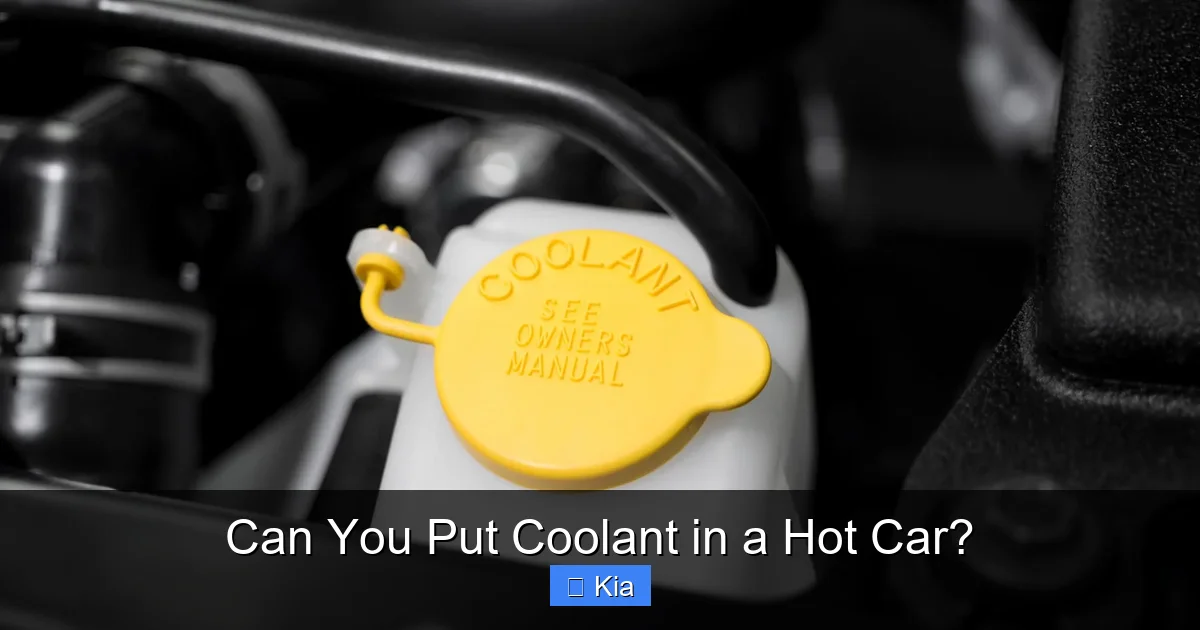
Visual guide about Can You Put Coolant in a Hot Car?
Image source: repairsmith-prod-wordpress.s3.amazonaws.com
Let’s dive deeper into why pouring coolant into a hot car is a risky move. The dangers go beyond just getting a minor burn—though that’s certainly a real concern. The real issue lies in the physics of your Kia’s cooling system.
When your engine is running, coolant temperatures can reach up to 220°F (104°C) or higher. At these temperatures, the coolant is under significant pressure, especially in a sealed system like the one found in most modern Kias. The radiator cap is designed to release pressure only when it reaches a certain threshold—typically around 13–16 psi. If you remove the cap while the system is still hot and pressurized, the sudden drop in pressure can cause the coolant to instantly boil and expand into steam.
This rapid phase change can result in a violent eruption of hot coolant and steam shooting out from under the cap. Imagine opening a shaken soda can—but with boiling liquid instead of fizz. The result? Severe burns to your hands, face, or arms. In extreme cases, the force can even damage nearby components or crack the radiator.
But the risks don’t stop at personal injury. Adding cold coolant to a hot engine can also cause thermal shock. When cold liquid hits hot metal surfaces—like the engine block or cylinder head—it can cause those components to contract rapidly. This sudden contraction may lead to warping, cracking, or microfractures in critical engine parts. Over time, these issues can lead to costly repairs, including head gasket failure or engine block damage.
For Kia owners, this is especially important. Many Kia models, such as the Sportage, Sorento, and Optima, use aluminum engine blocks and cylinder heads, which are more susceptible to thermal stress than older iron-block engines. Even a small temperature differential can cause warping in these lightweight materials.
Additionally, introducing cold coolant into a hot system disrupts the careful balance of the cooling cycle. The thermostat, which regulates coolant flow based on engine temperature, may not function properly if the system is suddenly cooled unevenly. This can lead to erratic temperature readings, poor engine performance, and reduced fuel efficiency.
How Your Kia’s Cooling System Works
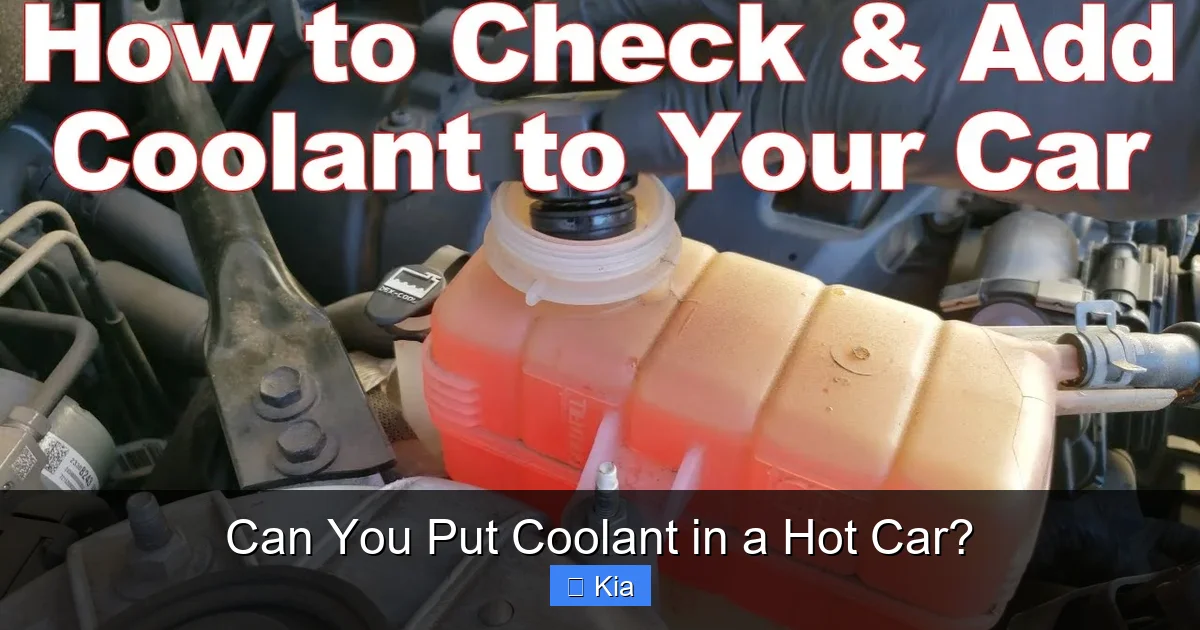
Visual guide about Can You Put Coolant in a Hot Car?
Image source: i.ytimg.com
To truly understand why you shouldn’t add coolant to a hot car, it helps to know how your Kia’s cooling system operates. This system is a marvel of engineering designed to keep your engine at an optimal temperature—typically between 195°F and 220°F (90°C to 104°C)—regardless of external conditions.
At the heart of the system is the coolant itself—a mixture of ethylene glycol or propylene glycol and water, often with additives to prevent corrosion and lubricate the water pump. This fluid circulates through the engine, absorbing heat from the combustion process. From there, it flows into the radiator, where air passing through the fins (either from driving or the electric cooling fan) helps dissipate the heat.
The radiator is connected to the engine via upper and lower hoses, and a water pump—usually driven by the serpentine belt—keeps the coolant moving. A thermostat sits between the engine and the radiator, acting as a gatekeeper. When the engine is cold, the thermostat remains closed, allowing the engine to warm up quickly. Once the engine reaches operating temperature, the thermostat opens, allowing coolant to flow into the radiator for cooling.
Modern Kias also use a pressurized coolant reservoir, often called an overflow tank or expansion tank. This translucent plastic container is connected to the radiator and allows for coolant expansion as it heats up. When the engine cools, vacuum pulls coolant back into the radiator from the reservoir. This design helps maintain consistent pressure and prevents coolant loss due to evaporation.
The radiator cap plays a crucial role in this system. It’s not just a cap—it’s a pressure valve. It maintains the system’s pressure, which raises the boiling point of the coolant. For example, at sea level, water boils at 212°F (100°C), but under 15 psi of pressure, the boiling point increases to around 250°F (121°C). This allows the coolant to absorb more heat without turning to steam.
Because the system is sealed and pressurized, opening it while hot is like opening a pressure cooker mid-cook. The sudden release of pressure can cause the coolant to flash-boil, leading to the dangerous eruption we discussed earlier.
Understanding this process makes it clear why patience is essential. Letting your Kia cool down allows the pressure to normalize and the coolant temperature to drop, making it safe to open the reservoir or radiator cap without risk.
Signs Your Kia Needs Coolant
Visual guide about Can You Put Coolant in a Hot Car?
Image source: as2.ftcdn.net
Even if you’re careful not to add coolant to a hot car, you still need to know when your Kia is running low. Coolant doesn’t just disappear—it’s a closed system—so a drop in level usually indicates a problem that needs attention.
One of the most obvious signs is the **temperature gauge** on your dashboard. If it starts creeping into the red zone or you see a warning light (often a thermometer symbol), your engine is overheating. This could be due to low coolant, a faulty thermostat, a clogged radiator, or a failing water pump.
Another common indicator is a **sweet, syrupy smell** inside or outside the car. Coolant has a distinct odor—similar to maple syrup or candy—and if you notice it while driving or after parking, it could mean there’s a leak. Check under the car for puddles of bright green, orange, pink, or yellow fluid. Kia typically uses green or blue coolant, but colors can vary by model and year.
You might also see **steam or smoke** coming from under the hood, especially after turning off the engine. This is a clear sign that coolant is boiling or leaking onto hot engine parts. Don’t ignore this—pull over immediately and turn off the engine.
Dashboard warning lights are another clue. Many newer Kias have a **low coolant warning light** that illuminates when the level in the reservoir drops below a certain point. This light is often accompanied by a message on the instrument cluster, such as “Check Coolant Level” or “Engine Overheat.”
Physical inspection is also important. Pop the hood (only when the engine is cool!) and check the coolant reservoir. It’s usually a translucent plastic tank with “MIN” and “MAX” markings. If the coolant level is below the “MIN” line, it’s time to add more. However, if the reservoir is completely empty, there’s likely a leak that needs professional diagnosis.
Other symptoms include **reduced heater performance** in the cabin. Since coolant also flows through the heater core to provide warmth, low levels can result in weak or cold air from the vents—even in winter.
Finally, watch for **coolant stains or crusty residue** around hoses, the radiator, water pump, or radiator cap. These are signs of slow leaks that can worsen over time.
If you notice any of these signs, don’t wait. Addressing low coolant early can prevent overheating, engine damage, and costly repairs.
Step-by-Step: How to Safely Add Coolant to Your Kia
Now that you know why you shouldn’t add coolant to a hot car, let’s walk through the correct way to do it. Following these steps will keep you safe and ensure your Kia’s cooling system stays in top condition.
Step 1: Let the Engine Cool Down
This is the most important step. After driving, turn off the engine and wait at least 30–60 minutes. You can speed up the process by opening the hood to allow heat to escape, but never rush it. The engine should be cool to the touch before you proceed.
Step 2: Locate the Coolant Reservoir
In most modern Kias, you won’t add coolant directly to the radiator. Instead, use the coolant reservoir (overflow tank), which is usually a translucent plastic container near the radiator. It has “MIN” and “MAX” markings on the side.
Step 3: Check the Coolant Level
Look at the reservoir. If the coolant is below the “MIN” line, you need to add more. If it’s at or above “MAX,” you’re good to go. Never overfill—coolant expands when hot, so leave some room.
Step 4: Use the Right Coolant
Check your owner’s manual to find the correct coolant type for your Kia. Most Kias require a specific ethylene glycol-based coolant, often labeled as “Kia Genuine Coolant” or “Asian Vehicle Formula.” Avoid mixing different types—using the wrong coolant can cause corrosion or sludge buildup.
If you’re unsure, stick with a pre-mixed 50/50 coolant (already diluted with water) to avoid mixing errors. Never use straight coolant or plain water unless directed by the manual.
Step 5: Slowly Add Coolant
Remove the reservoir cap (it’s usually twist-off or has a latch). Pour the coolant in slowly until it reaches the “MAX” line. Use a funnel if needed to avoid spills. Replace the cap securely.
Step 6: Check for Leaks and Test Drive
Start the engine and let it run for a few minutes with the heater on. Check the reservoir again after the engine warms up—coolant may drop as air escapes the system. Top off if needed. Then, take a short drive and monitor the temperature gauge to ensure everything is working properly.
Step 7: Schedule Maintenance if Needed
If you frequently need to add coolant, there’s likely a leak or another issue. Schedule an inspection at a certified Kia service center to diagnose and fix the problem.
Kia-Specific Coolant Recommendations
Not all coolants are created equal—and Kia vehicles have specific requirements to ensure optimal performance and longevity. Using the wrong type can lead to corrosion, clogged passages, or even engine damage.
Most Kias manufactured in the last 15–20 years use a **phosphate-free, organic acid technology (OAT)** coolant. This type is designed to protect aluminum components—common in Kia engines—and provide long-lasting corrosion resistance. It’s often green, blue, or pink in color, depending on the formulation.
For example, the **Kia Genuine Coolant** is formulated specifically for Kia vehicles and meets the manufacturer’s stringent standards. It’s compatible with all Kia models, including the Forte, Soul, Stinger, and Telluride. Using this coolant ensures that your cooling system remains protected and operates efficiently.
Avoid using traditional green coolant (IAT—inorganic acid technology) in newer Kias. While it was common in older vehicles, it contains silicates and phosphates that can cause sludge buildup and damage aluminum parts over time.
Similarly, don’t mix different coolant types. Combining OAT with IAT or HOAT (hybrid organic acid technology) can result in gel formation, reduced heat transfer, and clogged radiators.
Always refer to your owner’s manual for the exact coolant specification. If you’ve lost your manual, you can usually find it online through Kia’s official website or by contacting a dealership.
When purchasing coolant, look for labels that say “Asian Vehicle Formula” or “Meets Kia Specifications.” These are safe choices. Pre-mixed coolants are convenient and reduce the risk of improper dilution.
Common Coolant Mistakes to Avoid
Even experienced drivers can make mistakes when it comes to coolant. Here are some common pitfalls to watch out for:
- Adding coolant to a hot engine: As we’ve covered, this can cause burns, steam eruptions, and engine damage.
- Using the wrong coolant type: Mixing incompatible coolants can lead to corrosion and system failure.
- Overfilling the reservoir: Coolant expands when hot, so overfilling can cause leaks or pressure buildup.
- Ignoring low coolant warnings: Low coolant is often a sign of a leak or other issue—don’t just top it off and hope for the best.
- Using plain water as a substitute: Water lacks corrosion inhibitors and can freeze or boil at extreme temperatures.
- Skipping regular coolant flushes: Over time, coolant breaks down and loses its protective properties. Follow Kia’s recommended service intervals.
When to See a Mechanic
While adding coolant is a simple task, some situations require professional help. Visit a certified Kia service center if:
- You frequently need to add coolant (indicating a leak)
- The engine overheats despite proper coolant levels
- You notice coolant contamination (oil in coolant or vice versa)
- The coolant appears rusty, sludgy, or discolored
- You’re unsure about the correct coolant type or procedure
Conclusion
So, can you put coolant in a hot car? The answer is a firm no—especially when it comes to your Kia. Adding coolant to a hot engine is not only dangerous but can also cause serious damage to your vehicle’s cooling system and engine components. The risks of burns, steam eruptions, and thermal shock far outweigh the convenience of a quick top-off.
Instead, always let your Kia cool down completely before checking or adding coolant. Use the correct type of coolant as specified in your owner’s manual, and add it to the reservoir—not the radiator—when the system is cool. Regular maintenance, including coolant flushes and inspections, will keep your cooling system in peak condition and prevent costly repairs down the road.
By following these guidelines, you’ll protect both yourself and your vehicle. Your Kia is designed for reliability and performance, and proper coolant care is a key part of keeping it that way. When in doubt, consult a professional—your local Kia service center is always ready to help.
Frequently Asked Questions
Can I add coolant while the engine is still warm?
No, you should never add coolant while the engine is warm or hot. Wait until the engine has cooled completely—usually 30–60 minutes after turning it off—to avoid burns or system damage.
What happens if I put coolant in a hot car?
Adding coolant to a hot engine can cause steam or boiling coolant to erupt from the radiator, leading to serious burns. It can also cause thermal shock, warping engine components like the cylinder head or block.
Where do I add coolant in my Kia?
Most modern Kias use a coolant reservoir (overflow tank) located near the radiator. Add coolant there when the engine is cool, not directly into the radiator.
What type of coolant does my Kia need?
Check your owner’s manual for the correct coolant specification. Most Kias require a phosphate-free, OAT-based coolant, often labeled as “Kia Genuine Coolant” or “Asian Vehicle Formula.”
How often should I check my coolant level?
Check your coolant level every month or before long trips. Also inspect it if you notice overheating, leaks, or dashboard warnings.
Can I mix different colors of coolant?
No, never mix different types or colors of coolant. Mixing incompatible formulas can cause sludge, corrosion, or cooling system failure. Stick to the type recommended by Kia.