
Why Was the Kia Rondo Discontinued?

The Kia Rondo was discontinued primarily due to declining sales, shifting consumer preferences toward SUVs, and Kia’s strategic focus on more profitable models. Despite its practicality and family-friendly features, the compact MPV couldn’t compete in a market increasingly dominated by crossovers and larger vehicles.
If you’ve ever driven a Kia Rondo or even just spotted one on the road, you might have appreciated its boxy, no-nonsense design and surprising interior space. For families needing a little extra room without going full minivan, the Rondo offered a practical, affordable solution. But despite its strengths, the Kia Rondo quietly disappeared from U.S. showrooms after the 2017 model year. So, what happened? Why was the Kia Rondo discontinued?
The short answer is a mix of market trends, shifting consumer tastes, and Kia’s evolving business strategy. But the full story is more nuanced. The Rondo wasn’t a failure—it just arrived at the wrong time and in the wrong segment. As the automotive world pivoted toward SUVs, crossovers, and electrification, compact multi-purpose vehicles (MPVs) like the Rondo found themselves increasingly out of step with what buyers wanted.
In this article, we’ll explore the key reasons behind the Kia Rondo’s discontinuation, from declining sales numbers to broader industry shifts. We’ll also look at how Kia repositioned itself in the years that followed, and whether the Rondo’s legacy lives on in any way. Whether you’re a former owner, a curious shopper, or just a fan of underdog cars, this deep dive will give you a clear picture of why the Rondo had to say goodbye.
Key Takeaways
- Declining Sales: The Kia Rondo saw a steady drop in sales over its final years, making it less viable for continued production.
- Shift to SUVs and Crossovers: Consumers increasingly favored SUVs and crossovers over compact minivans, leading Kia to reallocate resources.
- Platform and Model Consolidation: Kia streamlined its lineup by retiring older platforms and focusing on newer, more efficient vehicle architectures.
- Stronger Competitors: Rivals like the Honda CR-V, Toyota RAV4, and even Kia’s own Sorento offered more appeal in the same segment.
- Limited Market Appeal: The Rondo’s niche as a compact seven-seater didn’t resonate widely enough to sustain long-term production.
- Focus on Electrification and Innovation: Kia shifted investment toward electric vehicles and advanced tech, leaving less room for aging models like the Rondo.
- End of Second Generation: The discontinuation aligned with the natural lifecycle of the Rondo’s second generation, which had been on the market since 2011.
📑 Table of Contents
The Rise and Fall of the Kia Rondo
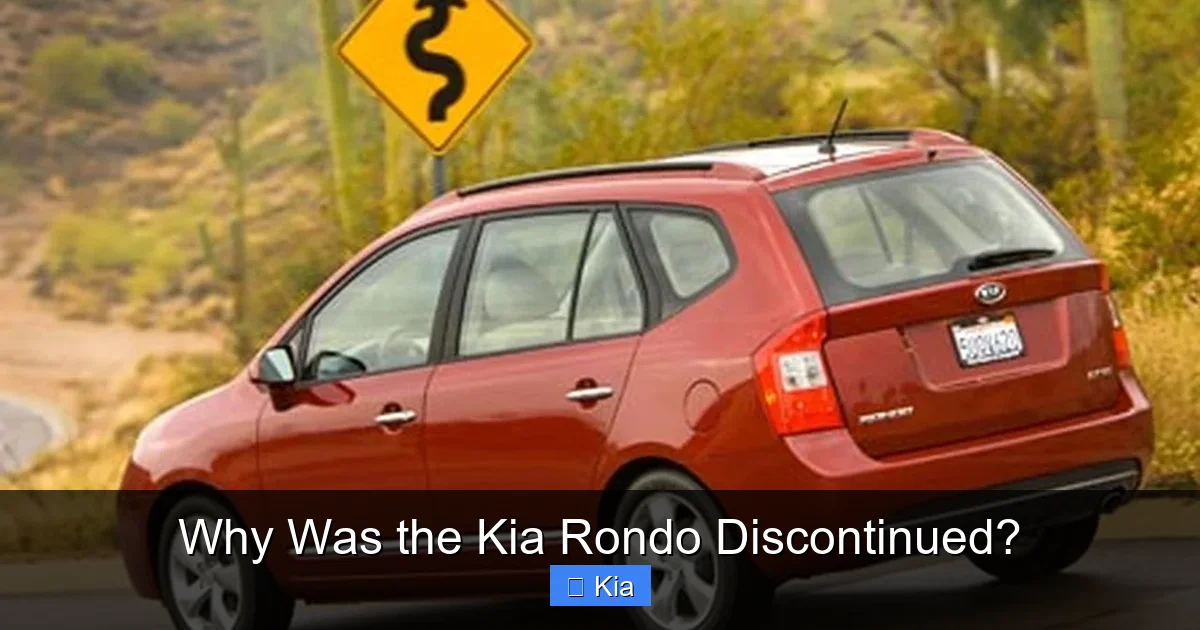
The Kia Rondo first hit the U.S. market in 2007 as a 2008 model, positioned as a compact MPV—essentially a smaller, more car-like alternative to traditional minivans. It was based on the same platform as the Hyundai Elantra and shared many mechanical components, offering a balance of affordability, fuel efficiency, and interior flexibility. With seating for up to seven passengers and a surprisingly roomy cabin, the Rondo appealed to small families, carpoolers, and anyone who needed extra space without the bulk of a minivan.
For its first few years, the Rondo found a modest but loyal following. It wasn’t flashy, but it was dependable. It came with standard features like air conditioning, power windows, and a decent sound system—especially for its price point. The second generation, launched in 2011, brought a more modern design, improved materials, and better safety ratings. It also introduced available all-wheel drive, a rarity in the compact MPV segment.
But even with these upgrades, the Rondo struggled to gain significant traction. Sales peaked in 2008 with just over 15,000 units sold in the U.S., but by 2015, that number had dropped to fewer than 5,000. By 2017, Kia announced it would discontinue the Rondo in North America, with no immediate replacement planned.
Why Sales Declined Over Time
One of the most straightforward reasons for the Rondo’s discontinuation was its declining sales. While it started strong, the model never achieved the kind of volume needed to justify ongoing investment. Several factors contributed to this drop:
First, the compact MPV segment itself was shrinking. Buyers who wanted more space were increasingly turning to crossovers—vehicles that offered similar interior room but with a higher driving position, more rugged styling, and better perceived safety. The Rondo, with its car-like ride and low ground clearance, didn’t offer the same sense of security or versatility.
Second, the Rondo faced stiff competition from both within and outside Kia’s lineup. The Honda CR-V, Toyota RAV4, and Ford Escape were all gaining popularity, and even Kia’s own Sportage and Sorento were pulling customers away. These vehicles offered more modern designs, better technology, and stronger brand recognition.
Third, the Rondo’s design, while functional, was never particularly stylish. It looked boxy and utilitarian—fine for practicality, but not for making a statement. As consumers began to prioritize aesthetics and brand image, the Rondo fell behind.
Finally, Kia itself was undergoing a transformation. In the 2010s, the brand shifted focus toward sportier designs, higher-quality interiors, and more advanced technology. Models like the Kia Optima and later the Stinger and Telluride helped redefine Kia as a more premium, design-driven automaker. The Rondo, with its budget-friendly roots, didn’t fit this new image.
Market Trends: The SUV and Crossover Boom
Visual guide about Why Was the Kia Rondo Discontinued?
Image source: momentcar.com
To understand why the Kia Rondo was discontinued, you have to look at the bigger picture: the massive shift in consumer preferences toward SUVs and crossovers.
In the early 2000s, minivans and MPVs were still relatively popular, especially among families. But by the 2010s, that began to change. Buyers started favoring vehicles that looked more adventurous, even if they were used primarily for city driving. The rise of the crossover—a vehicle built on a car platform but with SUV-like styling and ride height—was a game-changer.
Crossovers offered the best of both worlds: the fuel efficiency and handling of a car, with the space and commanding view of an SUV. They also appealed to a broader demographic, including younger buyers and urban dwellers who wanted versatility without the stigma of a “mom mobile.”
The Kia Rondo, by contrast, was a compact MPV—essentially a tall hatchback with three rows. It didn’t have the rugged look or high seating position that buyers now associated with safety and capability. Even though it could seat seven, it didn’t feel like an “adventure” vehicle. And in a market where image matters as much as function, that was a big drawback.
How Competitors Outpaced the Rondo
Let’s compare the Rondo to some of its key competitors during its final years:
– **Honda CR-V**: By 2015, the CR-V was one of the best-selling vehicles in America. It offered a spacious interior, excellent fuel economy, and a reputation for reliability. It also had a more modern design and better resale value than the Rondo.
– **Toyota RAV4**: Similarly, the RAV4 combined practicality with Toyota’s legendary dependability. It had available all-wheel drive, a user-friendly infotainment system, and a strong safety record—features that resonated with families.
– **Kia Sorento**: Even within Kia’s own lineup, the Sorento posed a threat. As a midsize SUV, it offered more power, a more upscale interior, and a more SUV-like driving experience. Buyers who wanted seven seats often chose the Sorento over the Rondo, even if it cost more.
– **Kia Sportage**: The Sportage, Kia’s compact crossover, also drew customers away from the Rondo. It was more stylish, had better tech, and appealed to younger buyers. While it only seated five, many families found it sufficient—and more desirable.
In short, the Rondo was caught in a squeeze. It was too small to compete with larger SUVs, and too boxy to compete with sleek crossovers. It occupied a niche that was rapidly disappearing.
Kia’s Strategic Shift and Model Consolidation
Visual guide about Why Was the Kia Rondo Discontinued?
Image source: otodaibang.com
Another major factor in the Rondo’s discontinuation was Kia’s broader corporate strategy. In the 2010s, Kia began a significant transformation under the leadership of design chief Peter Schreyer and CEO Han-Woo Park. The goal was to move Kia upmarket—to compete not just on price, but on design, quality, and innovation.
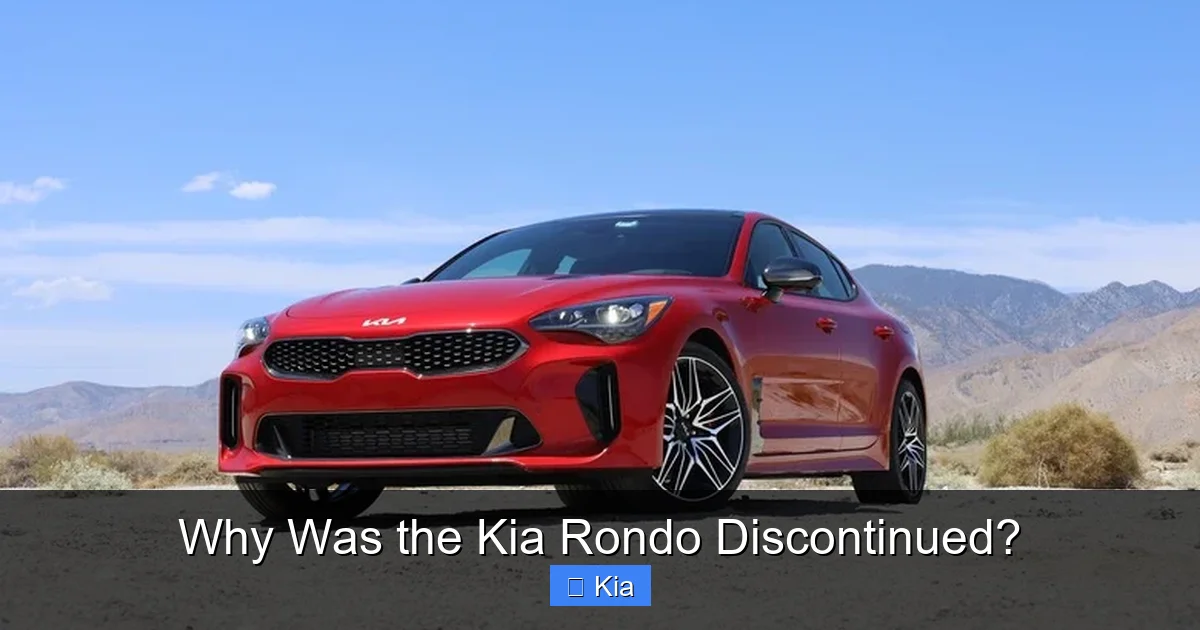
This shift led to a wave of new models and redesigns. The Optima became a stylish midsize sedan. The Sorento evolved into a premium-feeling SUV. The Stinger brought sports car performance to the brand. And the Telluride, launched in 2019, became an instant hit, winning awards and earning praise for its luxury-like interior and strong value.
As Kia invested in these newer, more profitable models, it made sense to phase out older ones that no longer fit the brand’s direction. The Rondo, with its aging platform and modest sales, was a natural candidate for retirement.
Platform and Production Efficiency
The Rondo was built on the same platform as the Hyundai Elantra and earlier versions of the Kia Forte. While this helped keep costs down, it also meant the Rondo shared many components with smaller, less premium vehicles. As Kia moved toward newer platforms—like the one used for the Sorento and Telluride—it became harder to justify continuing production of the older architecture.
Automakers regularly consolidate platforms to reduce costs and improve efficiency. By focusing on fewer, more modern platforms, Kia could streamline production, reduce complexity, and invest more in advanced technologies like hybrid systems and driver-assistance features.
The Rondo’s platform was simply too outdated to support these innovations. Retiring it allowed Kia to redirect resources toward vehicles that could better compete in the modern market.
Focus on Electrification and Future Mobility
Another reason for the Rondo’s discontinuation was Kia’s growing focus on electrification. In the late 2010s, Kia announced ambitious plans to launch a range of hybrid, plug-in hybrid, and fully electric vehicles. The brand introduced the Niro EV, the Soul EV, and later the EV6—a sleek, high-performance electric crossover.
These vehicles required significant investment in new technology, battery systems, and charging infrastructure. With limited R&D budgets, Kia had to prioritize models that could deliver the highest return. The Rondo, with its internal combustion engine and modest sales, didn’t fit into this electrified future.
Moreover, compact MPVs like the Rondo weren’t ideal candidates for electrification. Their boxy shapes aren’t aerodynamic, and their small size limits battery capacity. Crossovers like the Niro and EV6 offered better packaging for electric powertrains and appealed to the same eco-conscious buyers.
Limited Market Appeal and Niche Positioning
Visual guide about Why Was the Kia Rondo Discontinued?
Image source: slashgear.com
Even at its peak, the Kia Rondo was a niche vehicle. It wasn’t for everyone—and that was part of the problem.
The Rondo’s target audience was small families or individuals who needed occasional third-row seating but didn’t want a full-size minivan. It was ideal for school runs, weekend trips, or carpooling. But this niche was shrinking.
As childbearing rates declined and families became smaller, the demand for seven-seat vehicles dropped. At the same time, ride-sharing services like Uber and Lyft made it easier for people to get around without owning a large car. Why buy a seven-seater if you only need it once a month?
Additionally, the Rondo’s third row was cramped—better suited for children than adults. This limited its appeal for longer trips or larger families. Buyers who needed true eight-passenger capacity often opted for minivans like the Honda Odyssey or SUVs like the Chevrolet Tahoe.
Regional Differences in Popularity
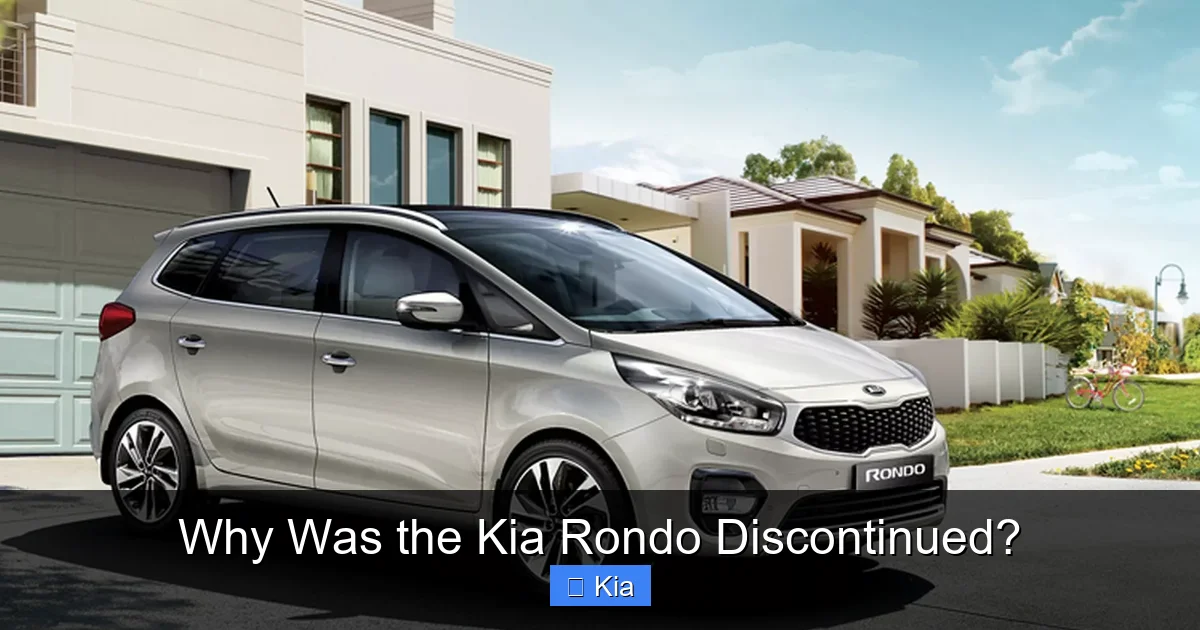
It’s worth noting that the Rondo didn’t disappear everywhere. In some international markets, particularly in Asia and Europe, compact MPVs remained more popular. Kia continued to sell the Rondo (under different names, like the Kia Carens) in countries where space efficiency and fuel economy were top priorities.
But in the U.S. and Canada—the Rondo’s primary markets—the shift toward SUVs was especially pronounced. American buyers love big vehicles, and the Rondo’s modest size and car-like driving dynamics didn’t align with that preference.
This regional divide highlights a key challenge for global automakers: what works in one market may not work in another. Kia had to make tough choices about where to focus its efforts, and North America’s love for SUVs made the Rondo a low priority.
The Legacy of the Kia Rondo
So, is the Kia Rondo completely gone? Not exactly.
While it’s no longer sold in the U.S., the Rondo’s spirit lives on in other ways. Kia’s current lineup includes several vehicles that echo the Rondo’s practicality and value:
– **Kia Seltos**: A subcompact SUV with available all-wheel drive and a spacious interior for its size. It’s not a seven-seater, but it offers similar versatility for small families.
– **Kia Sorento**: A midsize SUV with three rows of seating, modern tech, and strong safety ratings. It’s the closest thing to a spiritual successor—offering the Rondo’s family-friendly features with a more contemporary design.
– **Kia Carnival**: Launched in 2022, the Carnival is Kia’s new minivan—positioned as a “multi-purpose vehicle” with SUV-like styling. It’s more premium than the Rondo ever was, but it serves a similar purpose: hauling people comfortably and efficiently.
In a way, the Rondo paved the way for these models. It proved that there was a market for practical, affordable family vehicles—even if that market evolved over time.
Should Kia Bring Back the Rondo?
With the rise of micro-mobility and urban living, some argue that compact MPVs could make a comeback. In dense cities where parking is tight and fuel efficiency matters, a small, boxy vehicle like the Rondo could be ideal.
However, Kia is unlikely to revive the Rondo in its original form. The brand is now focused on crossovers, SUVs, and electric vehicles—segments with higher profit margins and stronger growth potential.
That said, elements of the Rondo—efficiency, practicality, value—are still core to Kia’s identity. You can see them in models like the Niro, which combines hybrid efficiency with SUV styling, or the Soul, which offers a boxy design with modern tech.
In that sense, the Rondo’s legacy isn’t dead—it’s just been reimagined.
Conclusion: A Practical Car in an Impractical Market
The Kia Rondo was discontinued not because it was a bad car, but because it was a practical car in an increasingly impractical market. It offered real value, solid reliability, and useful space—but it didn’t align with the trends shaping the automotive industry.
Declining sales, the SUV boom, platform consolidation, and Kia’s strategic shift all played a role in the Rondo’s exit. While it may be gone from U.S. roads, its influence can still be felt in Kia’s current lineup.
For those who owned one, the Rondo was a dependable workhorse—a car that did its job without fanfare. And in a world obsessed with image and innovation, there’s something to be said for that.
So while the Rondo may not have had the glamour of a sports car or the prestige of a luxury SUV, it served its purpose well. And sometimes, that’s enough.
If you’re in the market for a family vehicle today, you won’t find the Rondo—but you’ll find plenty of Kias that carry forward its spirit of practicality, value, and everyday usefulness. The Rondo may be discontinued, but its DNA lives on.
Frequently Asked Questions
Why was the Kia Rondo discontinued in the U.S.?
The Kia Rondo was discontinued in the U.S. after the 2017 model year due to declining sales, shifting consumer preferences toward SUVs and crossovers, and Kia’s strategic focus on more modern, profitable models.
Was the Kia Rondo a reliable car?
Yes, the Kia Rondo was generally considered reliable, with solid build quality and dependable engines. It earned decent safety ratings and was praised for its practicality, though it lacked the refinement of newer Kia models.
Did the Kia Rondo have third-row seating?
Yes, the Rondo offered optional third-row seating, making it one of the few compact vehicles with seven-passenger capacity. However, the third row was best suited for children due to limited legroom.
Is the Kia Rondo still sold anywhere?
The Rondo is no longer sold in North America, but Kia continues to sell a similar vehicle called the Kia Carens in international markets, particularly in Asia and Europe.
What replaced the Kia Rondo?
Kia didn’t directly replace the Rondo, but models like the Sorento, Seltos, and Carnival now serve similar family-oriented needs with more modern designs and technology.
Could the Kia Rondo make a comeback?
It’s unlikely the Rondo will return in its original form, but Kia may introduce a new compact MPV or electric people-mover in the future, especially as urban mobility and efficiency become more important.