
How to Rig a Dodger for Trout Fishing

Rigging a dodger for trout fishing is a game-changer for anglers targeting active, feeding trout in lakes and rivers. This guide breaks down everything you need—from choosing the right dodger to tying knots and setting depth—so you can start catching more fish with confidence.
If you’ve ever watched a trout dart through the water with lightning speed, you know how thrilling—and frustrating—it can be to hook one. These fish are smart, fast, and often picky about what they eat. That’s where the dodger comes in. A dodger is a small, metal or plastic blade that spins in the water, creating flash and vibration to attract trout from a distance. When rigged correctly, it acts like a dinner bell, drawing curious fish right to your lure.
But here’s the thing: not all dodger rigs are created equal. Some anglers slap one on and hope for the best. Others spend years perfecting their setup. The truth? With the right knowledge, you can rig a dodger that consistently puts fish in the boat—even on tough days. Whether you’re trolling a mountain lake or drifting down a river, mastering the dodger rig gives you a serious edge. It’s not magic, but it sure feels like it when that rod bends and the fight begins.
In this guide, we’ll walk you through everything you need to know about how to rig a dodger for trout fishing. From selecting the right gear to fine-tuning your presentation, we’ll cover it all in simple, practical steps. No jargon, no fluff—just real advice from anglers who’ve spent countless hours on the water. By the end, you’ll have a reliable, high-performing rig that turns curious looks into solid hookups.
Key Takeaways
- Choose the right dodger size and color: Match the dodger to water conditions and trout behavior—bright colors for murky water, natural tones for clear water.
- Use a quality leader material: Fluorocarbon leaders reduce visibility and increase bite rates, especially in clear water.
- Rig with a three-way swivel: This setup allows the dodger to spin freely while keeping your lure at the desired depth.
- Set your trolling speed between 1.5–2.5 mph: Trout respond best to slow, steady retrieves that mimic natural prey movement.
- Experiment with lure placement: Adjust the distance between the dodger and lure (6–18 inches) based on trout activity and depth.
- Maintain your gear: Regularly check knots, swivels, and line for wear to avoid break-offs during critical strikes.
- Practice makes perfect: Spend time on the water testing different rigs and speeds to find what works best in your local waters.
📑 Table of Contents
What Is a Dodger and Why Use It for Trout?
A dodger is a short, teardrop-shaped metal or plastic blade, usually 2 to 4 inches long, designed to spin freely when pulled through the water. It’s often chrome, gold, or painted in bright colors like chartreuse, orange, or pink. The spinning motion creates both flash and vibration—two things trout can’t ignore. Think of it as a miniature propeller that says, “Hey, dinner’s over here!”
Trout are visual predators. They rely heavily on sight to locate food, especially in clear water. The dodger’s flash mimics the movement of small baitfish or fleeing prey, triggering an instinctual strike response. Even when trout aren’t actively feeding, the dodger’s erratic spin can provoke a reaction bite. That’s why it’s such a versatile tool—it works in calm conditions, choppy water, and even when fish are scattered.
But the dodger isn’t just about attraction. It also helps stabilize your presentation. When trolling or drifting, your lure can wobble or spin unpredictably. The dodger adds weight and action, keeping your lure running true and at the right depth. Plus, it acts as a shock absorber, reducing the chance of tearing the hook out of a trout’s mouth during a hard strike.
How Dodgers Differ from Other Attractors
You might be wondering—how is a dodger different from a flasher, spinner, or dodger-style lure? Great question. While they all create action, their designs and purposes vary.
A flasher, like the popular “Slim Jim” or “Cowboy,” has multiple blades and a longer body. It creates more vibration and flash, making it ideal for deep trolling or murky water. But it’s bulkier and can be harder to rig with certain lures.
A spinner, like a Mepps or Panther Martin, has a spinning blade attached directly to the hook. It’s great for casting and retrieving in streams, but it doesn’t offer the same separation between attractor and lure that a dodger does.
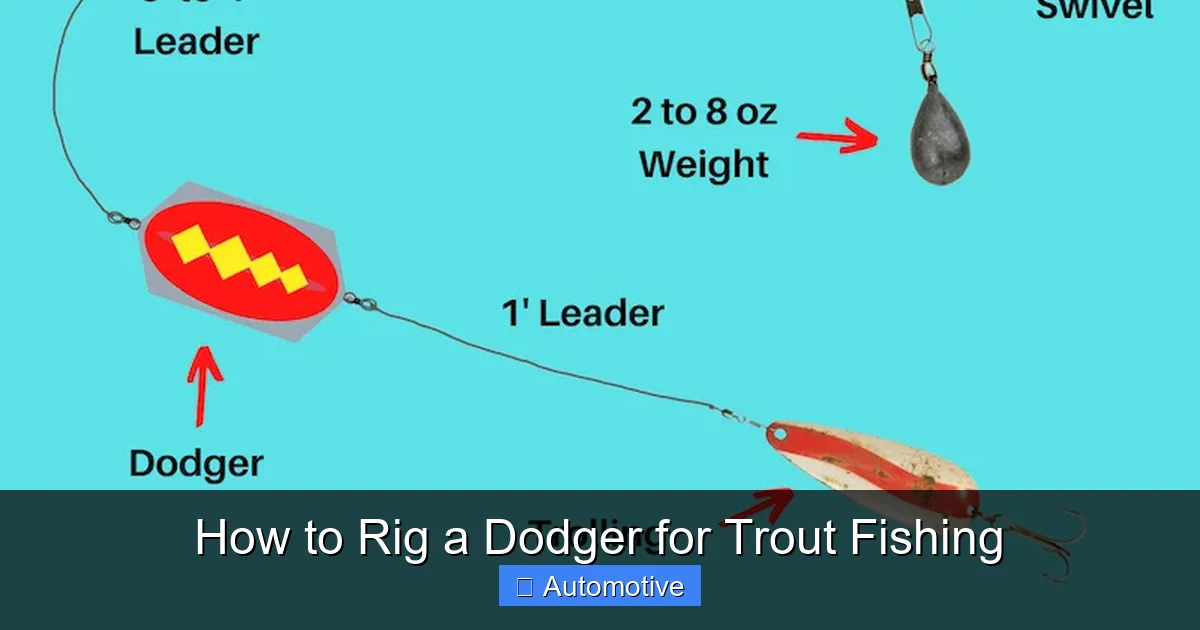
The dodger sits ahead of the lure, connected by a leader. This separation is key. It allows the dodger to spin independently, creating a more natural, erratic action. The trout sees the flash, follows it, and then strikes the trailing lure—often a worm, fly, or small spoon. This two-part presentation is what makes the dodger so effective.
When to Use a Dodger for Trout
Dodgers shine in specific conditions. They’re not always the best choice, but when used right, they’re nearly unbeatable.
Use a dodger when:
– Trout are suspended in open water and hard to reach with traditional methods.
– You’re trolling at slow speeds (1.5–2.5 mph) in lakes or reservoirs.
– Water clarity is moderate to high—trout can see the flash from a distance.
– You’re targeting active, feeding trout that respond to movement.
Avoid dodgers when:
– Trout are holding tight to the bottom in deep, cold water (a bottom-bouncer or slip sinker rig may work better).
– You’re fishing in heavy weeds or snaggy areas—the spinning blade can get tangled.
– Water is extremely murky—vibration-based lures like spinners or jigs may be more effective.
In short, the dodger is a precision tool. It works best when trout are willing to chase, and when you can present your lure at the right depth and speed.
Choosing the Right Dodger for Your Fishing Conditions
Visual guide about How to Rig a Dodger for Trout Fishing
Image source: sportfishingbuddy.com
Not all dodgers are the same. Picking the right one can mean the difference between a full cooler and going home empty-handed. Let’s break down the key factors to consider.
Size Matters
Dodgers come in various sizes, typically ranging from 2 to 4 inches in length. Smaller dodgers (2–2.5 inches) are ideal for light line, slow trolling, and smaller trout. They create a subtle flash that won’t spook wary fish. Larger dodgers (3–4 inches) move more water and are better for deeper trolling or when you need extra attraction in low-light conditions.
For most trout fishing scenarios, a 2.5- to 3-inch dodger is the sweet spot. It’s big enough to be seen but small enough to run smoothly at slow speeds.
Color and Finish
Color choice depends on water clarity and light conditions. In clear water on a sunny day, go for natural finishes like silver, gold, or copper. These mimic the scales of baitfish and blend in with the environment.
In overcast conditions or murky water, bright colors like chartreuse, orange, or pink stand out. They create high contrast, making it easier for trout to spot your rig from a distance.
Some dodgers have holographic or prismatic finishes that change color as they spin. These are excellent for triggering reaction bites, especially when trout are being picky.
Material and Durability
Most dodgers are made from stamped metal (like brass or aluminum) or molded plastic. Metal dodgers are heavier and spin more consistently, making them better for deeper trolling. Plastic dodgers are lighter and quieter, which can be an advantage in clear, calm water.
Look for dodgers with a durable finish that won’t chip or corrode. Saltwater anglers should opt for stainless steel or coated models to prevent rust.
Brand Recommendations
Some of the most trusted dodger brands among trout anglers include:
– **Slammer Tackle**: Known for their smooth-spinning, high-quality metal dodgers.
– **Mack’s Lure**: Offers a wide range of sizes and colors, including their popular “Wiggle Hound” series.
– **Worden’s**: Produces durable, American-made dodgers with excellent finishes.
– **Luhr Jensen**: A classic brand with reliable performance and consistent action.
Don’t be afraid to buy a few different styles and test them on the water. What works one day might not work the next—flexibility is key.
Essential Gear for Rigging a Dodger

Visual guide about How to Rig a Dodger for Trout Fishing
Image source: sportfishingbuddy.com
Before you can rig a dodger, you need the right tools and materials. Here’s a checklist of everything you’ll need to get started.
Fishing Rod and Reel
A medium-light to medium-action spinning or casting rod works best for dodger fishing. Look for a rod 6.5 to 7.5 feet long with a sensitive tip to detect light bites. Pair it with a reel that has a smooth drag system—trout can make sudden runs, and you don’t want to lose them to a stuck drag.
If you’re trolling, consider a longer rod (8–9 feet) for better line control and depth management.
Main Line and Leader
Use 4- to 8-pound test monofilament or fluorocarbon as your main line. Fluorocarbon is nearly invisible underwater and resists abrasion, making it ideal for clear water and rocky environments.
Attach a 12- to 24-inch fluorocarbon leader (6- to 10-pound test) between the dodger and your lure. This leader acts as a shock absorber and reduces the chance of the trout seeing the main line.
Swivels and Snap Swivels
A three-way swivel is the backbone of a solid dodger rig. It allows the dodger to spin freely while keeping your lure at the desired depth. Use a quality ball-bearing swivel to prevent line twist.
At the end of your leader, attach a snap swivel to easily change lures. This saves time and keeps your knots strong.
Lures and Baits
The dodger is just the attractor—your lure does the catching. Popular choices include:
– **Worms**: Nightcrawlers or red worms threaded onto a small hook.
– **Flies**: Woolly buggers, leech patterns, or nymphs.
– **Spoons**: Small, flashy spoons like the Kastmaster or Little Cleo.
– **Plastic grubs**: Soft plastic tails in natural colors.
Match your lure to the forage in your fishing area. If trout are feeding on minnows, use a spoon. If they’re eating insects, go with a fly or grub.
Tackle Box Essentials
Keep these items handy:
– Extra swivels and snaps
– Split shot (for adjusting depth)
– Hook remover or hemostats
– Line clippers
– Small pliers for crimping
Having the right gear on hand means you can adjust your rig quickly and get back to fishing.
Step-by-Step: How to Rig a Dodger for Trout Fishing
Visual guide about How to Rig a Dodger for Trout Fishing
Image source: sportfishingbuddy.com
Now for the main event—how to rig a dodger like a pro. Follow these steps to build a reliable, high-performing setup.
Step 1: Attach the Three-Way Swivel
Tie your main line to one eye of a three-way swivel using aPalomar knot or improved clinch knot. This knot is strong and easy to tie, even with cold, wet fingers.
Step 2: Connect the Dodger
Tie a 12- to 18-inch piece of 6- to 8-pound test fluorocarbon to the second eye of the swivel. Use a loop knot (like a Rapala knot) so the dodger can spin freely. Attach the dodger to the end of this leader using a snap or loop.
Step 3: Add the Lure Leader
Tie a 12- to 24-inch fluorocarbon leader to the third eye of the swivel. This is where your lure goes. Use a snap swivel at the end for quick lure changes.
Step 4: Choose Your Lure
Attach your chosen lure to the snap swivel. Make sure it’s secure and runs straight in the water.
Step 5: Set Your Depth
The length of your lure leader controls how deep your lure runs. A 12-inch leader keeps the lure close to the dodger, ideal for shallow water. A 24-inch leader lets the lure sink deeper, perfect for suspended trout.
You can also add a small split shot to the main line or leader to fine-tune depth.
Step 6: Test the Rig
Before casting, test your rig in the water. Watch how the dodger spins and how the lure moves. Adjust the leader length or weight if needed.
Pro Tips for Rigging Success
– **Keep it simple**: Don’t overcomplicate the rig. A clean, straightforward setup is easier to manage and more effective.
– **Check your knots**: Weak knots are the #1 cause of lost fish. Always double-check your connections.
– **Use a loop knot for the dodger**: This allows maximum spin and action.
– **Match leader length to conditions**: Shorter leaders for shallow, active fish; longer leaders for deep, cautious trout.
Trolling and Retrieval Techniques
Rigging the dodger is only half the battle. How you present it matters just as much.
Optimal Trolling Speed
Trout prefer a slow, steady retrieve. Aim for 1.5 to 2.5 miles per hour. Use a GPS or trolling motor with a speed display to stay consistent. Too fast, and the dodger won’t spin properly. Too slow, and it won’t attract attention.
Depth Control
Use a downrigger, diving planer, or weighted line to reach the desired depth. If you’re not using a downrigger, adjust your leader length and trolling speed to control depth. A longer leader sinks deeper.
Drift Fishing with a Dodger
You don’t need a motor to use a dodger. In rivers or windy lakes, drift fishing can be highly effective. Let the current or wind carry your rig naturally. Use a light sinker if needed to get down.
Watch for Strikes
Trout often hit the lure softly. Watch your rod tip for subtle twitches or pauses. Set the hook with a quick, firm motion—don’t wait too long.
Common Mistakes and How to Avoid Them
Even experienced anglers make mistakes when rigging dodgers. Here are the most common ones—and how to fix them.
Using the Wrong Leader Length
Too short, and the lure runs too close to the dodger, reducing action. Too long, and the lure sinks too deep or tangles. Start with 18 inches and adjust based on results.
Ignoring Water Conditions
Don’t use a bright orange dodger in crystal-clear water on a sunny day. Match your gear to the environment. When in doubt, go natural.
Overloading the Rig
Adding too many weights or lures can ruin the action. Keep it simple—dodger, leader, lure. That’s all you need.
Neglecting Maintenance
Check your swivels and snaps regularly. A worn swivel can cause line twist or break under pressure. Replace them at the first sign of wear.
Not Experimenting
Don’t stick to one setup. Try different colors, sizes, and lure combinations. The best rig today might not work tomorrow.
Conclusion
Rigging a dodger for trout fishing isn’t complicated—but it does require attention to detail. From choosing the right dodger to setting the perfect leader length, every decision affects your success. The beauty of the dodger rig is its versatility. It works in lakes, rivers, and reservoirs. It attracts trout in clear water and murky conditions. And with a little practice, it can become one of your most reliable tools.
Remember, fishing is as much about observation as it is about gear. Watch the water, listen to the fish, and be willing to adapt. The more time you spend on the water, the better you’ll understand what makes trout bite.
So grab your dodger, tie on a worm or fly, and get out there. The next big trout might be just one cast away.
Frequently Asked Questions
What size dodger is best for trout fishing?
A 2.5- to 3-inch dodger is ideal for most trout fishing situations. It provides enough flash and action without being too heavy or overwhelming for smaller fish.
Can I use a dodger in rivers?
Yes, dodgers work well in rivers when drift fishing. Use a lighter dodger and shorter leader to avoid snags, and let the current carry your rig naturally.
Do I need a downrigger to use a dodger?
No, a downrigger isn’t required. You can control depth with leader length, trolling speed, or by adding small weights to your line.
What’s the best lure to use with a dodger?
Worms, flies, and small spoons are all excellent choices. Match your lure to the local forage—trout are more likely to strike something familiar.
How far should the lure be from the dodger?
Start with 12 to 18 inches. Adjust based on depth and trout behavior—shorter for shallow water, longer for deeper presentations.
Can I use a dodger with braided line?
Yes, but use a fluorocarbon leader to reduce visibility. Braid has low stretch, so a leader adds shock absorption and prevents line bite.
