
Kawasaki Voyager 1700 Problems: What Owners Report

Owning a Kawasaki Voyager 1700 offers comfort and power for long-distance touring, but it’s not without its quirks. Based on real owner feedback, common issues include electrical glitches, transmission concerns, and fuel system hiccups—many of which are manageable with proper maintenance and awareness.
The Kawasaki Voyager 1700 is a heavyweight contender in the touring motorcycle world. Launched in 2009 as a successor to the popular Voyager XII, this full-dress bagger was built for riders who want to go the distance in style and comfort. With a massive 1,700cc V-twin engine, plush seating, integrated luggage, and a host of touring amenities, it quickly became a favorite among long-haul enthusiasts. But like any complex machine, it’s not immune to problems.
While the Voyager 1700 earns praise for its smooth power delivery and relaxed ride, real-world ownership reveals a pattern of recurring issues. These aren’t deal-breakers for most, but they’re important to know about—especially if you’re considering buying one used or want to keep your current ride in top shape. From electrical gremlins to transmission quirks, owner forums, repair logs, and dealer service reports paint a detailed picture of what to expect.
This article dives deep into the most commonly reported Kawasaki Voyager 1700 problems, based on feedback from actual riders. We’ll explore each issue in detail, explain why it happens, and offer practical solutions. Whether you’re a seasoned rider or new to the touring scene, understanding these potential pitfalls can save you time, money, and frustration down the road.
Key Takeaways
- Electrical issues are frequent: Many owners report problems with the instrument cluster, turn signals, and wiring harnesses, especially in older models.
- Transmission and clutch complaints: Some riders experience hard shifting, clutch slippage, or gear engagement issues, often linked to maintenance or wear.
- Fuel system and carburetion troubles: Early models with carburetors may suffer from poor fuel delivery, while fuel-injected versions can face sensor or injector faults.
- Suspension and ride quality concerns: Heavier riders or those carrying full loads sometimes find the stock suspension too soft or prone to bottoming out.
- Reliability improves with maintenance: Most Voyager 1700 problems are preventable with regular servicing, fluid changes, and timely part replacements.
- Aftermarket support is strong: A wide range of upgrades and fixes are available to address common flaws and enhance performance.
- Owner satisfaction remains high: Despite reported issues, many riders praise the bike’s comfort, power, and long-distance capability.
📑 Table of Contents
Electrical System Problems: The Most Common Complaint
One of the most frequently cited issues with the Kawasaki Voyager 1700 revolves around its electrical system. Owners report a range of problems—from flickering dash lights to complete instrument cluster failures. These issues often stem from aging wiring, poor connections, or moisture intrusion, especially in bikes that have seen years of highway miles and varying weather conditions.
Instrument Cluster Malfunctions
The digital instrument cluster on the Voyager 1700 is packed with information: speed, RPM, fuel level, trip meters, and warning lights. But many riders have experienced glitches where the display flickers, goes blank, or shows incorrect readings. In some cases, the entire cluster stops working, leaving the rider blind to critical data.
One owner from Ohio shared that his speedometer would randomly drop to zero while cruising at 70 mph, only to snap back to life moments later. After multiple trips to the dealer, the issue was traced to a faulty ground connection behind the dash. A simple cleaning and reseating of the connector fixed it—but it took weeks to diagnose.
This isn’t an isolated case. The cluster’s ribbon cable and solder joints can degrade over time, especially with vibration and temperature changes. Moisture can also seep into the housing, causing corrosion. Regular inspection and dielectric grease application can help prevent these problems.
Turn Signal and Lighting Issues
Another common electrical complaint involves the turn signals. Some owners report that their signals stop working intermittently or flash erratically. In worst-case scenarios, the hazard lights activate on their own—a dangerous distraction on the highway.
The root cause is often the turn signal relay or flasher unit. These components can wear out or become sensitive to voltage fluctuations. Replacing the relay with an upgraded or OEM-spec part usually resolves the issue. Additionally, checking the bulb sockets for corrosion and ensuring proper grounding can prevent future failures.
Headlight problems are less common but still reported. Some riders notice dimming or flickering headlights, especially when using auxiliary lights or heated gear. This points to an overloaded circuit or a weak alternator. Upgrading to a higher-output stator or adding a relay harness for accessories can help.
Wiring Harness and Grounding Concerns
The Voyager 1700’s wiring harness is complex, running from the handlebars to the rear fender. Over time, wires can chafe against sharp edges, especially near the steering head or under the seat. This leads to short circuits or open circuits, causing random electrical failures.
One California rider discovered that his cruise control stopped working after a long trip. A visual inspection revealed a frayed wire near the throttle grip. Repairing the harness and adding protective loom prevented further damage.
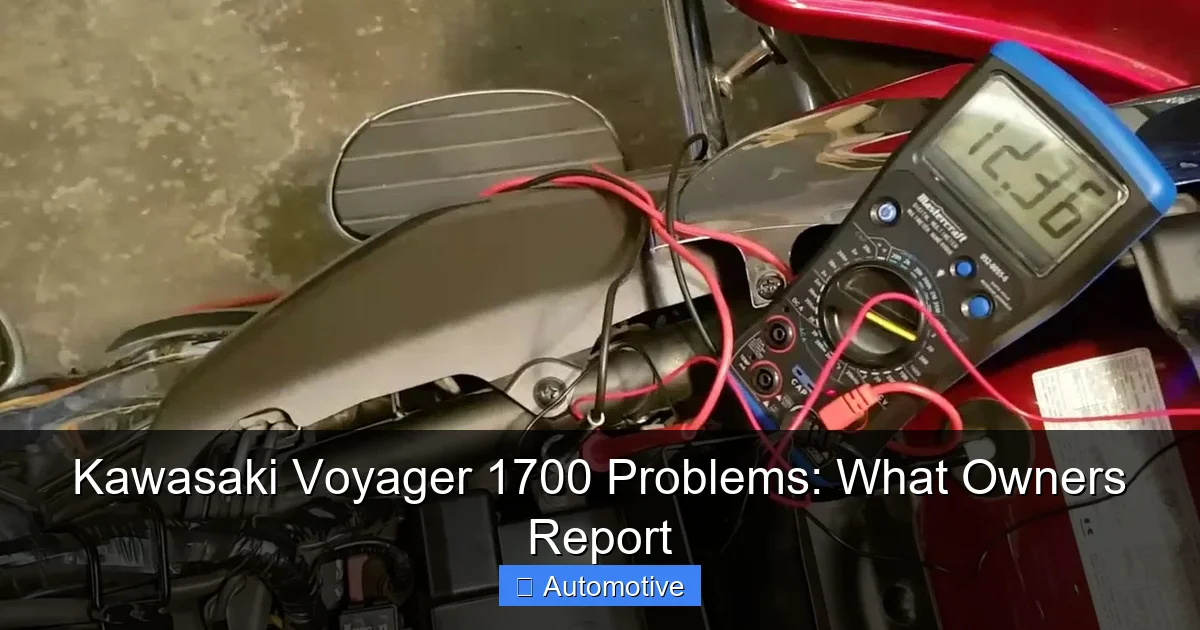
To avoid such issues, inspect your wiring during routine maintenance. Look for cracked insulation, pinched wires, or loose connectors. Pay special attention to ground points—clean and tighten them regularly. A multimeter can help test continuity and voltage drop.
Transmission and Clutch Issues: Shifting Woes
The Voyager 1700 uses a 5-speed transmission with a hydraulic clutch. While generally reliable, some owners report shifting problems that range from annoying to hazardous. These issues often appear after high mileage or inconsistent maintenance.
Hard Shifting and False Neutral
One of the most frustrating complaints is hard shifting—especially into second gear. Riders describe a “clunk” or resistance when shifting, sometimes resulting in a false neutral (where the bike feels like it’s in gear but isn’t).

Visual guide about Kawasaki Voyager 1700 Problems: What Owners Report
Image source: motorbikeinsider.com
This is often due to low or degraded transmission fluid. The Voyager 1700 uses engine oil for both the engine and transmission, so if the oil isn’t changed regularly, sludge and contaminants can build up. This affects clutch operation and gear engagement.
Another cause is worn shift forks or synchros. These internal components wear over time, especially if the bike is frequently ridden aggressively or shifted without proper clutch control. Rebuilding the transmission is expensive, but regular oil changes and smooth shifting habits can extend its life.
Clutch Slippage and Drag
Clutch slippage—where the engine revs but the bike doesn’t accelerate—is a serious safety issue. It’s often caused by worn clutch plates or improper adjustment. The Voyager 1700’s hydraulic clutch should self-adjust, but air in the system or a failing master/slave cylinder can cause problems.
One rider from Texas noticed his clutch slipping during uphill climbs. After bleeding the hydraulic system and replacing the clutch plates, the issue was resolved. He also upgraded to a high-performance clutch kit for better durability.
Clutch drag—where the bike creeps forward even with the clutch pulled—is another common issue. This makes stopping in traffic difficult and can lead to stalling. It’s usually due to air in the hydraulic system or a misadjusted clutch cable (on older models). Bleeding the system and checking fluid levels can fix it.
Neutral Finding Problems
Some owners struggle to find neutral at stops, especially when the bike is hot. This is often due to tight tolerances in the transmission or worn shift mechanism components.
A simple fix is to shift into first gear, then gently rock the shifter while pulling the clutch. This helps align the gears. If the problem persists, inspecting the shift drum and forks may be necessary.
Regular maintenance—especially oil changes every 3,000 to 5,000 miles—is key to preventing transmission issues. Using high-quality synthetic oil designed for wet clutches can also improve performance and longevity.
Fuel System and Engine Performance Concerns
The Voyager 1700’s 1,700cc V-twin engine is known for its torque and smoothness. However, fuel delivery problems can disrupt this experience, especially in older or poorly maintained bikes.
Carbureted Models: Fuel Delivery Issues
Early Voyager 1700 models (2009–2011) came with carburetors. While reliable when properly tuned, they’re prone to issues in cold weather, high altitudes, or after long storage.
Visual guide about Kawasaki Voyager 1700 Problems: What Owners Report
Image source: motorbikeinsider.com
Common problems include hard starting, rough idling, and hesitation under acceleration. These are often caused by clogged jets, stale fuel, or incorrect float levels. Ethanol-blended gasoline can also degrade rubber components in the carburetor over time.
One owner in Colorado reported that his bike would stall at low speeds. After cleaning the carburetors and replacing the fuel filter, performance improved dramatically. He also installed a fuel stabilizer for winter storage.
For carbureted models, regular cleaning and tuning are essential. Consider upgrading to a fuel injection system if you’re doing a major rebuild—though this is a costly modification.
Fuel-Injected Models: Sensor and Injector Faults
Later Voyager 1700 models (2012 and newer) feature fuel injection, which offers better fuel economy and emissions control. However, they’re not immune to problems.
Common issues include faulty oxygen sensors, clogged fuel injectors, or a malfunctioning fuel pump. Symptoms include poor fuel economy, hesitation, or check engine lights.
One rider from Florida had his bike go into “limp mode” during a cross-country trip. A diagnostic scan revealed a faulty O2 sensor. Replacing it restored normal operation. Regular use of fuel injector cleaner and premium gasoline can help prevent clogs.
The fuel pump is located inside the tank and can fail over time. Signs include whining noises, hard starting, or loss of power at high speeds. Replacing the pump requires removing the fuel tank, so it’s best done during a major service.
Air Intake and Exhaust Restrictions
Restricted airflow can also affect engine performance. A dirty air filter, clogged exhaust, or blocked catalytic converter can reduce power and efficiency.
The Voyager 1700’s air filter is located under the seat and should be inspected every 6,000 miles. Replacing it with a high-flow filter can improve throttle response.
Exhaust restrictions are less common but can occur if the mufflers or catalytic converters become clogged with carbon buildup. This is more likely in bikes that are frequently driven short distances or use low-quality fuel.
Suspension and Ride Quality: Comfort vs. Capability
The Voyager 1700 is designed for comfort, with a plush suspension setup that absorbs road imperfections. However, some riders—especially those carrying heavy loads or riding two-up—find the stock suspension lacking.
Soft Rear Suspension and Bottoming Out
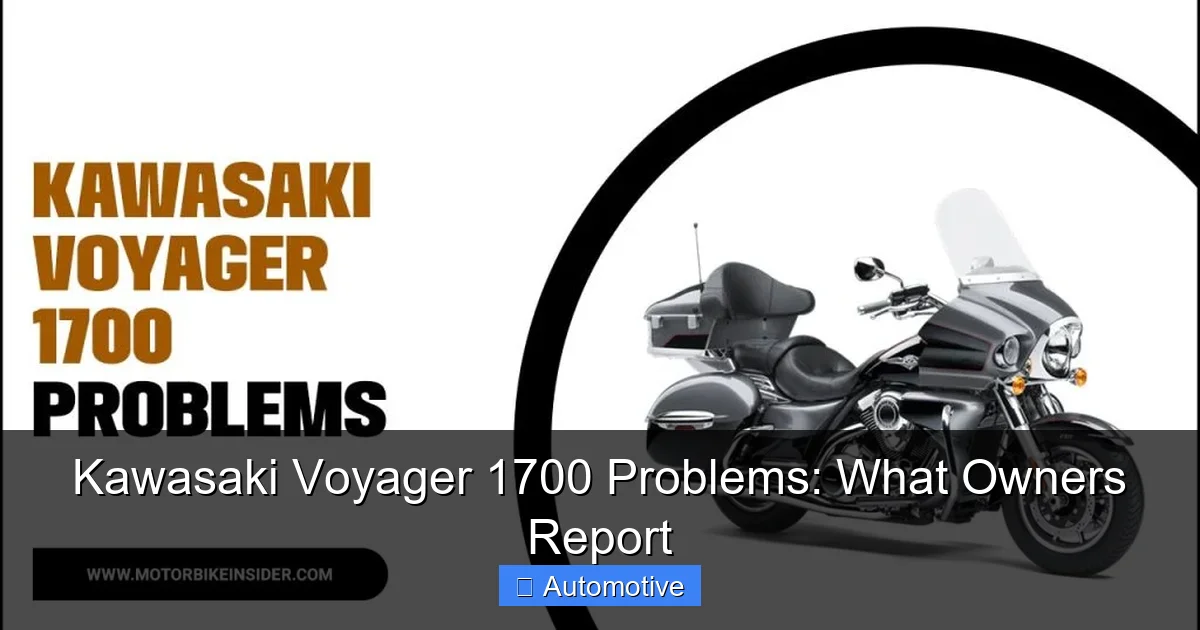
Many owners report that the rear shocks are too soft, causing the bike to bottom out over bumps or when loaded with gear and a passenger.
Visual guide about Kawasaki Voyager 1700 Problems: What Owners Report
Image source: motorbikeinsider.com
This is a common issue with factory suspension tuned for average-weight riders. Heavier individuals or those touring with full luggage may need upgraded shocks with adjustable preload and damping.
Aftermarket options like Progressive Suspension or Öhlins can significantly improve ride quality. Some riders also install air-assisted shocks for on-the-fly adjustability.
Front Fork Dive and Handling
The front forks can also feel soft under braking, leading to excessive dive and reduced stability.
Upgrading to heavier-weight fork oil or installing cartridge emulators can improve performance. Regular fork seal maintenance is also important to prevent leaks and maintain damping.
One rider from Michigan installed progressive fork springs and noticed a dramatic improvement in cornering confidence and braking performance.
Steering Head Bearings and Stability
At high speeds or on uneven roads, some riders report wobble or instability. This can be due to worn steering head bearings or improper tire balance.
Inspecting and replacing steering head bearings every 20,000 to 30,000 miles is recommended. Also, ensure tires are properly balanced and inflated.
Adding a steering damper can help reduce wobble, especially on older bikes or those with modified suspensions.
Reliability and Long-Term Ownership Insights
Despite the problems outlined above, the Kawasaki Voyager 1700 remains a reliable touring machine for many owners. The key to longevity is proactive maintenance and addressing issues early.
Maintenance Is Critical
Regular oil changes, fluid checks, and inspections can prevent most common problems. The Voyager 1700’s service intervals are straightforward, but many owners skip them due to the bike’s durability.
Using high-quality parts and fluids—especially for the engine, transmission, and brakes—can extend the bike’s life. Keep a maintenance log to track services and repairs.
Owner Satisfaction Remains High
Surveys and forum discussions show that most Voyager 1700 owners are happy with their purchase. The bike’s comfort, power, and touring features outweigh the occasional mechanical hiccup.
Many riders log over 100,000 miles without major issues, proving that with proper care, the Voyager 1700 can be a dependable long-term companion.
Aftermarket Support and Upgrades
A strong aftermarket community offers solutions for nearly every common problem. From electrical harness upgrades to performance exhausts, riders can customize their bikes to suit their needs.
Popular upgrades include LED lighting, upgraded audio systems, and improved seating. These not only enhance comfort but can also address known flaws.
Conclusion: Is the Kawasaki Voyager 1700 Right for You?
The Kawasaki Voyager 1700 is a capable and comfortable touring motorcycle with a loyal following. While it’s not without its problems—especially in the electrical, transmission, and suspension departments—most issues are manageable with proper maintenance and awareness.
For riders who prioritize long-distance comfort, ample storage, and a smooth V-twin engine, the Voyager 1700 remains a strong choice. By understanding the common pitfalls and staying on top of service, you can enjoy many miles of trouble-free touring.
Whether you’re buying used or maintaining your current ride, knowledge is power. Use this guide to make informed decisions and keep your Voyager 1700 running strong for years to come.
Frequently Asked Questions
Are Kawasaki Voyager 1700 problems common?
Yes, some issues like electrical glitches, transmission concerns, and suspension softness are frequently reported by owners. However, most are preventable with regular maintenance and timely repairs.
What is the most common problem with the Voyager 1700?
The most common issue is electrical problems, particularly with the instrument cluster, turn signals, and wiring harness. These often stem from aging components or poor connections.
How reliable is the Kawasaki Voyager 1700?
The Voyager 1700 is generally reliable when properly maintained. Many owners report high mileage with few major issues, especially if they follow the recommended service schedule.
Can I fix Voyager 1700 problems myself?
Many issues—like cleaning the carburetor, replacing bulbs, or bleeding the clutch—can be done at home with basic tools. More complex repairs, such as transmission work, may require a professional mechanic.
Should I buy a used Kawasaki Voyager 1700?
Yes, if it has a solid maintenance history and no major damage. Have a trusted mechanic inspect it, especially the electrical system, transmission, and suspension.
What upgrades help with Voyager 1700 problems?
Popular upgrades include LED lighting, upgraded suspension, high-flow air filters, and aftermarket exhausts. These can improve performance, comfort, and reliability.
