
Sell Car to Mechanic

Selling your car to a mechanic isn’t just convenient—it can be one of the smartest moves you make. Mechanics understand vehicle value, often pay fair prices, and handle paperwork quickly. Whether your car runs or not, a trusted mechanic can offer a fast, hassle-free sale.
So, you’ve decided it’s time to part ways with your car. Maybe it’s old, maybe it’s broken down one too many times, or maybe you just want something newer and shinier. Whatever the reason, selling a car can feel overwhelming. You’ve probably heard about trading it in at a dealership, listing it online, or even selling it to a junkyard. But have you considered selling your car to a mechanic?
It might sound unusual at first—after all, mechanics fix cars, not buy them. But here’s the truth: many mechanics are also car enthusiasts, resellers, or small business owners who see value in vehicles others overlook. Whether your car is running perfectly or sitting in the driveway with a dead engine, a mechanic might be the perfect buyer. And the best part? It’s often faster, easier, and more profitable than you’d expect.
In this guide, we’ll walk you through everything you need to know about selling your car to a mechanic. From understanding why they’re great buyers to navigating the sale process step by step, we’ll cover the pros, the pitfalls, and the insider tips that can help you get the best deal. Whether you’re dealing with a trusted local shop or a mechanic you’ve never met, this guide will help you make a smart, confident decision.
Key Takeaways
- Mechanics know cars inside and out: They assess value accurately based on condition, mileage, and market trends, often offering better deals than dealerships or private buyers.
- Faster sales process: No need to list online, meet strangers, or wait weeks. A mechanic can inspect and buy your car in a single visit.
- Great for non-running or high-mileage vehicles: Many mechanics specialize in repairs and resale, making them ideal buyers for cars others won’t touch.
- Negotiation is expected: Don’t accept the first offer. Use your knowledge of the car’s condition and market value to negotiate a fair price.
- Get everything in writing: Even with a trusted mechanic, always complete a bill of sale and transfer ownership properly to avoid future liability.
- Check local regulations: Some states require specific paperwork or inspections when selling a vehicle, so know the rules in your area.
- Build a long-term relationship: Selling to a mechanic you trust can lead to future perks like discounted repairs or trade-in opportunities.
📑 Table of Contents
Why Sell Your Car to a Mechanic?
Let’s start with the big question: why would you sell your car to a mechanic instead of a dealership or private buyer? At first glance, it might not seem like the most obvious choice. But when you dig deeper, the advantages become clear.
First and foremost, mechanics understand cars. They don’t just see a make and model—they see the engine, the transmission, the suspension, and all the little quirks that affect a car’s true value. This means they’re less likely to lowball you based on surface-level flaws. A small dent or a worn seat might scare off a private buyer, but a mechanic knows it’s cosmetic and won’t affect performance. They’re also more likely to recognize hidden value—like a well-maintained engine or rare parts—that others might miss.
Another major benefit is speed. Selling a car privately can take weeks or even months. You have to clean it, take photos, write a listing, respond to inquiries, schedule viewings, and hope the buyer follows through. And that’s before you even get to negotiations or paperwork. With a mechanic, the process is often much faster. Many mechanics are always on the lookout for project cars, parts donors, or vehicles they can refurbish and resell. If your car fits their needs, they might make an offer on the spot.
Then there’s the issue of condition. If your car isn’t running, selling it privately is nearly impossible. Most buyers want a vehicle they can drive away. But mechanics? They thrive on fixing things. A non-running car is just a challenge to them. They might buy it for parts, to rebuild, or even to use as a trade-in for a customer. This makes them ideal buyers for high-mileage, damaged, or mechanically challenged vehicles.
Finally, selling to a mechanic can be more personal and trustworthy. If you’ve been going to the same shop for years, you likely have a relationship built on trust. That can make the sale feel safer and more transparent. You’re not dealing with a faceless dealership or a stranger from Craigslist. You’re working with someone who’s seen your car up close and knows its history.
Mechanics as Savvy Buyers
Mechanics aren’t just repair experts—they’re also sharp businesspeople. Many run small shops and understand the resale market as well as any dealer. They know which models are in demand, which parts are valuable, and how much it costs to fix common issues. This knowledge allows them to make quick, informed offers.
For example, let’s say you have a 2008 Honda Civic with 180,000 miles. It runs, but the AC is out and the transmission is starting to slip. A private buyer might offer $1,500, thinking it’s on its last legs. A dealership might give you $2,000 as a trade-in. But a mechanic? They might offer $3,000. Why? Because they know a Civic’s engine is bulletproof, the transmission can be rebuilt for $800, and the AC compressor is a $300 fix. Once repaired, they can sell it for $5,000 or more. That $2,000 profit makes your car a great investment for them.
This kind of insight is what makes mechanics such valuable buyers. They don’t just see problems—they see potential.
Speed and Convenience
Time is money, and selling a car privately takes a lot of both. You’ll spend hours cleaning, photographing, and writing descriptions. Then comes the endless back-and-forth with potential buyers. Some will ghost you. Others will show up late or back out at the last minute. And don’t even get me started on the paperwork.
Selling to a mechanic cuts through all that noise. You call or visit the shop, describe the car, and let them inspect it. If they’re interested, they’ll make an offer. If you accept, the sale can be completed in a day. No waiting. No stress. Just a quick handshake and a check.
This is especially helpful if you need to sell fast—maybe you’re moving, upgrading, or facing financial pressure. A mechanic can often close the deal within 24 hours.
When Is Selling to a Mechanic the Best Option?
Visual guide about Sell Car to Mechanic
Image source: imag.malavida.com
Not every car sale is the same, and selling to a mechanic isn’t always the right move. But there are certain situations where it shines.
Non-Running or High-Mileage Vehicles
If your car won’t start, has major mechanical issues, or has over 150,000 miles, selling it privately is tough. Most buyers want a reliable daily driver, not a project. But mechanics love projects. They have the tools, skills, and space to fix what’s broken. A car that’s “junk” to one person is a goldmine to another.
For example, a 2005 Ford F-150 with a blown engine might be worthless to a private buyer. But a mechanic could drop in a used engine for $1,200, replace a few sensors, and sell it for $4,000. That’s a solid profit, and they’re happy to take on the work.
Cars with Minor Issues
Even if your car runs, small problems can scare off buyers. A check engine light, a noisy suspension, or a cracked windshield might seem minor to you, but they’re red flags to others. Mechanics, however, see these as simple fixes. They’re not afraid of a little work, and they know how to price repairs accurately.
Let’s say your 2010 Toyota Camry has a faulty oxygen sensor and a worn serpentine belt. A private buyer might knock $1,000 off the price. A mechanic might offer full value, knowing they can fix both issues for under $200.
Urgent Sales
Need to sell your car in a week? A mechanic can often move faster than anyone else. They don’t need to wait for financing, inspections, or buyer approvals. If they want the car, they’ll buy it—today.
This is especially useful if you’re facing repossession, moving out of state, or need cash fast.
Local Relationships
If you’ve been going to the same mechanic for years, they already know your car’s history. They’ve seen the maintenance records, replaced the brakes, and fixed the alternator. That familiarity builds trust and can lead to a better offer. They’re more likely to believe your car was well cared for, even if it’s not perfect.
How to Prepare Your Car for Sale
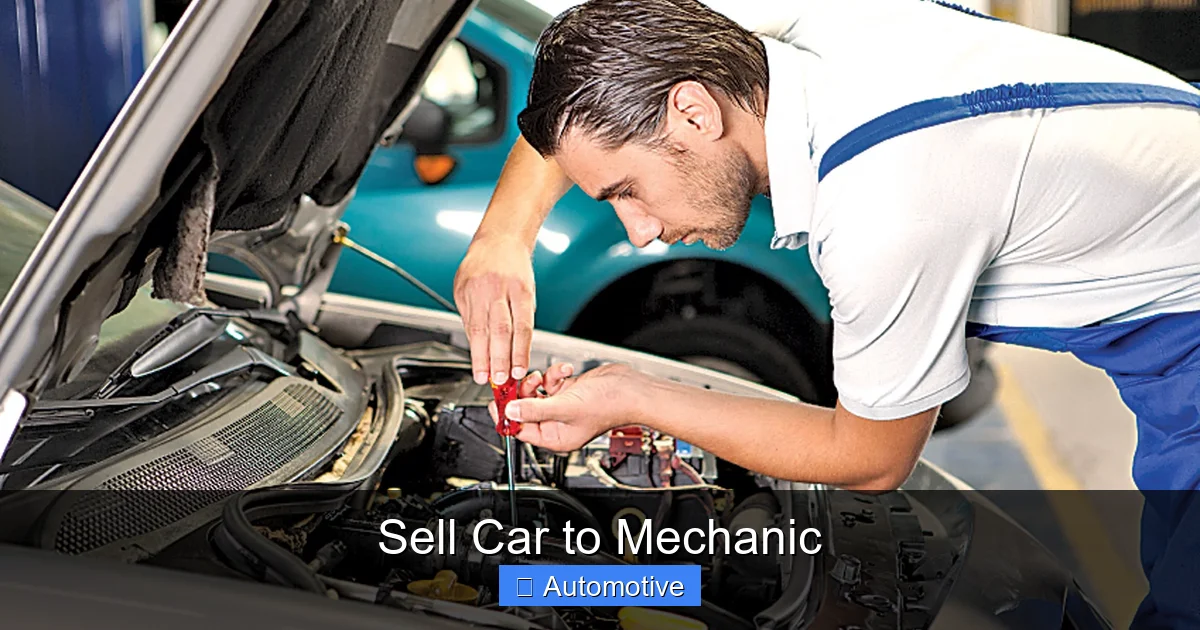
Visual guide about Sell Car to Mechanic
Image source: gwrench.com
Even when selling to a mechanic, presentation matters. You don’t need to detail it like you’re entering a car show, but a little effort can go a long way.
Gather Documentation
Start by collecting all relevant paperwork:
– Title (must be signed and notarized if required)
– Registration
– Maintenance records
– Repair receipts
– Vehicle history report (like Carfax or AutoCheck)
These documents prove your car’s history and show it’s been maintained. A mechanic will appreciate this—it reduces their risk and makes the car more valuable.
Clean It Up
You don’t need to hire a professional detailer, but a basic clean helps. Wash the exterior, vacuum the interior, and remove personal items. A clean car looks cared for, even if it’s not perfect. Plus, it makes inspection easier for the mechanic.
Be Honest About Issues
Don’t hide problems. If the transmission slips, the AC doesn’t work, or there’s a dent in the door, say so. Mechanics will find out anyway, and honesty builds trust. It also helps them give a fair offer based on real conditions.
Know Your Car’s Value
Before you sell, research your car’s market value. Use tools like Kelley Blue Book, Edmunds, or NADA Guides. Look at similar listings in your area. This gives you a baseline for negotiation. Even if the mechanic offers less, you’ll know whether it’s fair.
For example, if similar cars are selling for $6,000, and your car needs $500 in repairs, a $5,000 offer might be reasonable. But if they offer $3,500, you know you’re being lowballed.
The Sale Process: Step by Step
Visual guide about Sell Car to Mechanic
Image source: thumbs.dreamstime.com
Selling your car to a mechanic doesn’t have to be complicated. Here’s how it typically works.
1. Contact the Mechanic
Start by calling or visiting the shop. Explain that you’re looking to sell your car and ask if they’re interested. Be ready to describe the make, model, year, mileage, and condition. If they’re interested, they’ll likely schedule an inspection.
2. Inspection and Offer
The mechanic will inspect the car—usually in the shop bay with tools and lifts. They’ll check the engine, transmission, suspension, brakes, and electrical systems. They might also take it for a test drive.
After the inspection, they’ll make an offer. This could be cash, a check, or even a trade-in credit if you’re buying another vehicle from them.
3. Negotiate
Don’t accept the first offer. Negotiation is part of the process. If they offer $4,000 and you think it’s worth $5,000, explain why. Mention recent repairs, low mileage, or desirable features. Be polite but firm.
Remember, mechanics are businesspeople. They need to make a profit, but they also want good deals. A little back-and-forth can lead to a win-win.
4. Complete the Paperwork
Once you agree on a price, it’s time to finalize the sale. You’ll need to:
– Sign the title over to the mechanic
– Complete a bill of sale (available online or at the DMV)
– Provide a release of liability form (check your state’s requirements)
– Remove your license plates (in most states)
Make sure the mechanic gives you a copy of the bill of sale and any other documents. This protects you if the car is later involved in an accident or ticket.
5. Get Paid
Payment can be cash, check, or bank transfer. Avoid personal checks unless you trust the mechanic completely. Cash is instant, but be cautious with large amounts. A cashier’s check from their bank is a safe middle ground.
Pros and Cons of Selling to a Mechanic
Like any option, selling to a mechanic has its ups and downs.
Pros
- Fast and convenient: No waiting weeks for a buyer.
- Fair pricing: Mechanics understand real value, not just surface flaws.
- Great for problem cars: They’ll buy non-running or high-mileage vehicles.
- Trusted relationship: If you know the mechanic, the process feels safer.
- No advertising or showings: Skip the hassle of online listings.
Cons
- Lower offers than private sale: Mechanics need to make a profit, so they may offer less than a private buyer.
- Limited pool of buyers: Not all mechanics buy cars—only those who resell or need parts.
- Potential for lowballing: Some mechanics may take advantage if you’re in a hurry.
- Less transparency: Unlike online listings, you can’t compare multiple offers easily.
The key is to weigh these factors based on your situation. If speed and convenience matter most, a mechanic is a great choice. If you want top dollar and have time, a private sale might be better.
Tips for Getting the Best Deal
Want to maximize your sale price? Follow these tips.
Shop Around
Don’t just sell to the first mechanic who offers. Contact a few shops and compare offers. Even a $500 difference adds up.
Time Your Sale
Sell when demand is high. For example, convertibles sell better in spring, while SUVs do well in winter. Also, avoid selling right after major repairs—mechanics may assume the car is on its last legs.
Highlight the Positives
Emphasize what’s good about your car. Low mileage? Recent transmission rebuild? New tires? These details can justify a higher price.
Be Ready to Walk Away
If the offer is too low, don’t be afraid to say no. There are other buyers—mechanics, dealerships, or private parties. Walking away shows you’re serious about getting a fair deal.
Use Your Knowledge
If you’ve done your own repairs or maintenance, mention it. A car with documented DIY work can be more valuable to a mechanic who appreciates hands-on care.
Common Mistakes to Avoid
Even with the best intentions, it’s easy to make mistakes when selling your car.
Selling Without a Title
Never sell a car without a clear title. If you’ve lost it, apply for a duplicate before listing. The mechanic needs it to register the car.
Skipping the Bill of Sale
A bill of sale is legally required in most states. It protects both parties and proves the transfer of ownership.
Not Removing Personal Items
Check the glove box, trunk, and under seats. Leave nothing behind—especially important documents or valuables.
Ignoring State Laws
Each state has different rules for selling a car. Some require emissions tests, safety inspections, or notarized signatures. Check your DMV website before selling.
Accepting a Bad Offer Out of Desperation
If you’re in a rush, it’s tempting to take the first offer. But even in urgent situations, take 10 minutes to call two other shops. You might be surprised by the difference.
Conclusion
Selling your car to a mechanic isn’t just a backup plan—it’s a smart, strategic move in the right situation. Whether your car is running perfectly or sitting in the driveway with a dead battery, a mechanic can offer a fast, fair, and hassle-free sale. They understand value, appreciate condition, and often see potential where others see problems.
Of course, it’s not the best option for everyone. If you want the highest possible price and have time to wait, a private sale might be better. But if you value speed, convenience, and trust, selling to a mechanic is hard to beat.
The key is to go in prepared. Know your car’s value, gather your documents, and don’t be afraid to negotiate. With the right approach, you can turn that old car into cash—and maybe even build a lasting relationship with a mechanic who’ll keep your next vehicle running smoothly.
So the next time you’re thinking about selling your car, don’t overlook the local garage. That mechanic fixing your brakes might just be the perfect buyer.
Frequently Asked Questions
Can I sell my car to a mechanic if it doesn’t run?
Yes, absolutely. Many mechanics specialize in buying non-running cars for parts, repairs, or resale. They have the tools and expertise to fix what’s broken, making them ideal buyers for vehicles that won’t start.
Will a mechanic pay as much as a private buyer?
Not always. Mechanics need to make a profit, so their offers may be lower than private sales. However, they often pay more than dealerships or junkyards, especially for cars with potential.
Do I need to clean my car before selling it to a mechanic?
It’s not required, but a basic clean helps. It shows the car was cared for and makes inspection easier. You don’t need a full detail—just wash it and remove personal items.
What paperwork do I need to sell my car to a mechanic?
You’ll need the title, registration, bill of sale, and a release of liability form. Maintenance records are also helpful but not always required.
Can I sell my car to a mechanic if I still owe money on it?
Only if the mechanic pays off the loan. Otherwise, you’ll need to pay the balance first or work with your lender to transfer ownership. Most mechanics won’t buy a car with an outstanding lien.
Is it safe to sell my car to a mechanic I don’t know?
It can be, but do your research. Check reviews, ask for references, and meet at the shop during business hours. Always get everything in writing and avoid cash transactions over $10,000 without proper documentation.
