
How to Sell a Used Car in Florida

Selling a used car in Florida doesn’t have to be stressful. With the right preparation, paperwork, and pricing strategy, you can complete the process smoothly and legally. This guide walks you through every step—from cleaning your car to signing over the title—so you can sell with confidence.
Key Takeaways
- Clean and detail your car: First impressions matter—a clean, well-maintained vehicle attracts more buyers and higher offers.
- Research fair market value: Use tools like Kelley Blue Book or Edmunds to price your car competitively based on condition, mileage, and location.
- Gather all required documents: You’ll need the title, vehicle history report, maintenance records, and a completed bill of sale.
- Advertise effectively: Use high-quality photos, write a clear description, and list on trusted platforms like Craigslist, Facebook Marketplace, or Autotrader.
- Complete the sale legally: Sign the title correctly, file a Notice of Sale with the Florida DMV, and provide a bill of sale to avoid future liability.
- Be cautious with test drives: Always verify buyer identity, accompany them, and consider meeting in a safe, public location.
- Consider selling to a dealer or online buyer: For a faster, hassle-free sale, explore options like CarMax, Carvana, or Vroom—though you may get less than private sale value.
📑 Table of Contents
- How to Sell a Used Car in Florida: A Step-by-Step Guide
- Step 1: Prepare Your Car for Sale
- Step 2: Determine the Right Price
- Step 3: Gather the Required Documents
- Step 4: Advertise Your Car Effectively
- Step 5: Handle Test Drives and Negotiations Safely
- Step 6: Complete the Sale and Transfer Ownership
- Alternative Selling Options
- Conclusion
How to Sell a Used Car in Florida: A Step-by-Step Guide
So, you’ve decided it’s time to sell your used car in Florida. Maybe you’re upgrading to something newer, downsizing, or just ready for a change. Whatever the reason, selling a car can feel overwhelming—especially when you’re not sure where to start. But don’t worry. With the right approach, you can sell your vehicle quickly, safely, and for a fair price.
Florida has specific rules and requirements for selling a used car, and skipping a step could lead to headaches down the road—like being held responsible for a ticket issued to the new owner. That’s why it’s crucial to follow the process carefully. From preparing your car to finalizing the paperwork, this guide covers everything you need to know. Whether you’re selling privately or trading in, we’ll walk you through each stage so you can feel confident and in control.
The good news? Selling a used car in Florida doesn’t require a license or special expertise. With a little time, effort, and attention to detail, anyone can do it. In this article, we’ll break down the entire process into manageable steps. You’ll learn how to price your car, where to advertise, what documents to prepare, and how to close the deal legally. Let’s get started.
Step 1: Prepare Your Car for Sale
Visual guide about How to Sell a Used Car in Florida
Image source: wheelzy.com
Before you even think about listing your car, take the time to get it in the best possible shape. A well-prepared vehicle not only sells faster but also commands a higher price. Think of it this way: would you buy a car that looks dirty, smells bad, or has visible damage? Probably not. The same goes for your potential buyers.
Clean and Detail Your Vehicle
Start with a thorough cleaning—both inside and out. Wash the exterior, wax it if possible, and clean the windows inside and out. Don’t forget the tires and rims; a little tire shine can make a big difference. Inside, vacuum the seats, carpets, and trunk. Wipe down all surfaces, including the dashboard, door panels, and center console. If there are stubborn stains or odors, consider using a fabric cleaner or odor eliminator. For really tough smells—like smoke or pets—you might want to invest in a professional detailing service.
A clean car shows that you’ve taken care of it, which builds trust with buyers. Plus, it just feels better to sell something you’re proud of.
Address Minor Repairs and Maintenance
You don’t need to overhaul the engine, but fixing small issues can boost your car’s value. Replace burnt-out light bulbs, fix cracked windshield wipers, and top off fluids like oil, coolant, and windshield washer fluid. If your tires are worn or uneven, consider replacing them—especially if they’re close to the legal tread depth limit.
Even small things matter. A missing glove compartment latch or a squeaky door hinge might seem trivial, but they can make buyers wonder what else is wrong. Fixing these minor issues shows attention to detail and can help justify your asking price.
Gather Maintenance Records and Vehicle History
Buyers love transparency. If you’ve kept records of oil changes, brake jobs, or major repairs, gather them together. These documents prove that the car has been well-maintained and can increase buyer confidence.
You should also obtain a vehicle history report using the car’s VIN. Services like Carfax or AutoCheck provide detailed reports that include accident history, title status, odometer readings, and service records. Sharing this report with potential buyers shows you have nothing to hide and can help justify your price.
Step 2: Determine the Right Price
Visual guide about How to Sell a Used Car in Florida
Image source: factorywarrantylist.com
Pricing your car correctly is one of the most important steps in the selling process. Overprice it, and it might sit on the market for months. Underprice it, and you leave money on the table. The goal is to find that sweet spot where your car is competitive but still reflects its true value.
Research Market Value Using Trusted Tools
Start by checking pricing guides like Kelley Blue Book (KBB), Edmunds, or NADA Guides. These tools allow you to input your car’s make, model, year, mileage, condition, and location to get a fair market value estimate.
For example, if you’re selling a 2018 Honda Civic with 60,000 miles in good condition in Miami, KBB might suggest a private party value of $14,500. But remember—these are estimates. You’ll need to adjust based on your car’s specific features, upgrades, or flaws.
Compare Similar Listings in Your Area
Next, look at what similar cars are selling for in your local market. Check listings on Craigslist, Facebook Marketplace, Autotrader, and Cars.com. Pay attention to cars with similar mileage, condition, and features.
Let’s say you find three 2018 Honda Civics in Tampa priced at $14,200, $14,800, and $15,000. The one at $15,000 has leather seats and a sunroof, while yours has cloth seats and no sunroof. That means you should price yours closer to $14,200–$14,500.
Adjust for Condition and Extras
Be honest about your car’s condition. If it has minor scratches, dents, or interior wear, price it accordingly. On the flip side, if it has low mileage, new tires, or aftermarket upgrades (like a premium sound system), you can justify a higher price.
A good rule of thumb:
– Excellent condition: Price at or slightly above market value
– Good condition: Price at market value
– Fair condition: Price 10–15% below market value
Also, consider your urgency. If you need to sell quickly, pricing slightly below market value can attract more buyers.
Step 3: Gather the Required Documents
Visual guide about How to Sell a Used Car in Florida
Image source: pictures.dealer.com
Selling a car in Florida isn’t just about handing over the keys—it’s a legal transaction that requires proper documentation. Missing a single form could delay the sale or leave you liable for issues after the transfer. Here’s what you’ll need:
Vehicle Title
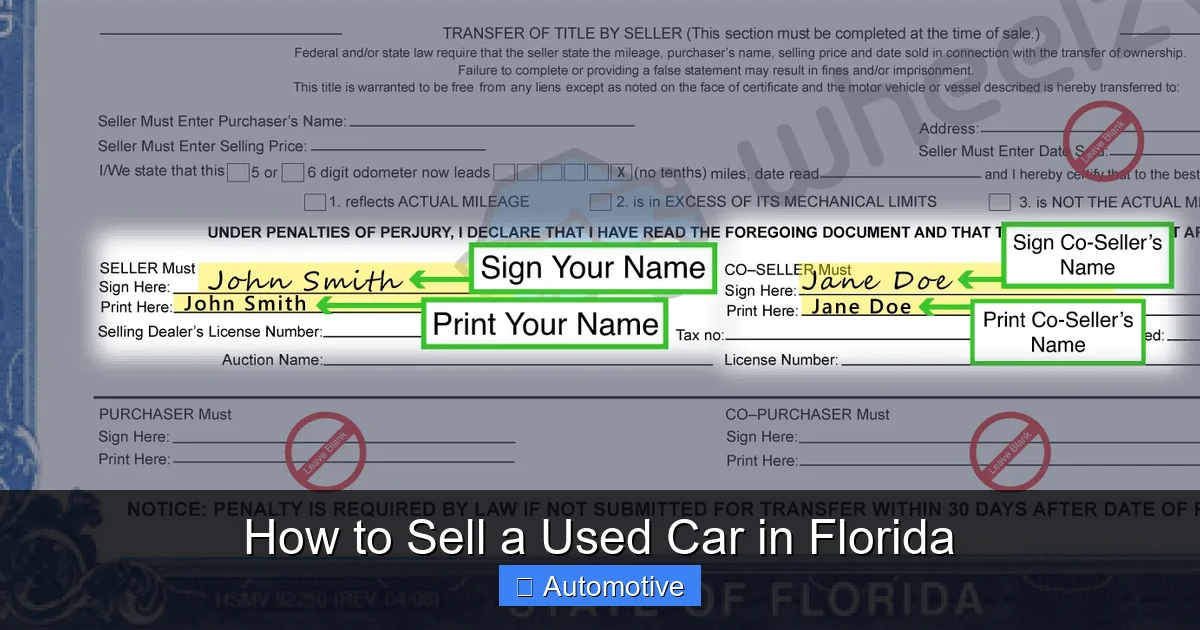
The title is the most important document. It proves you own the car and have the right to sell it. Make sure the title is signed correctly by all owners listed. If there’s a lien (loan) on the car, you’ll need to pay it off before selling—or work with the lender to transfer ownership.
In Florida, the title must be signed in the presence of a notary public if it’s being transferred to a new owner. Some counties also require a notarized bill of sale. Check with your local DMV office to confirm requirements.
Bill of Sale
While not always required, a bill of sale is highly recommended. It serves as a legal record of the transaction and includes details like the sale price, date, and both parties’ information.
You can download a free Florida bill of sale template from the Florida Highway Safety and Motor Vehicles (FLHSMV) website. Fill it out completely and have both you and the buyer sign it. Keep a copy for your records.
Odometer Disclosure Statement
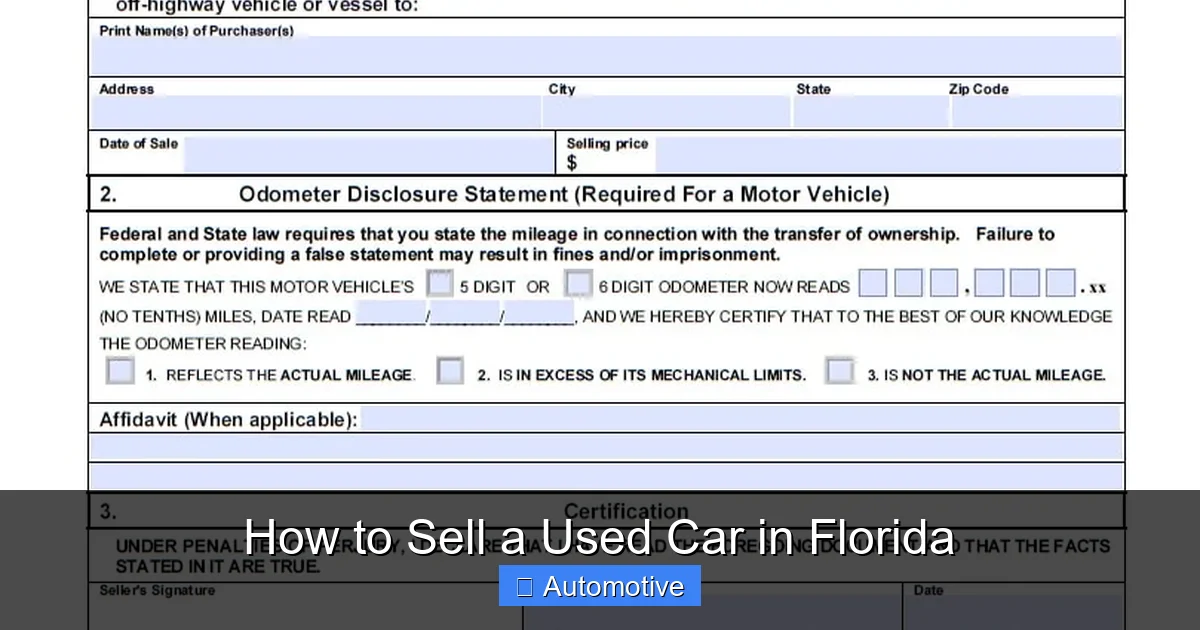
Federal law requires you to disclose the vehicle’s mileage at the time of sale. This is usually done on the title itself, but if your title doesn’t have a space for it, you’ll need a separate odometer disclosure form.
Be honest—lying about mileage is illegal and can lead to fines or legal action.
Release of Liability Form
After the sale, you must file a Release of Liability with the Florida DMV. This form notifies the state that you’re no longer responsible for the vehicle. You can submit it online through the FLHSMV website or by mail.
Filing this form is critical. Without it, you could be held liable for parking tickets, toll violations, or accidents involving the new owner.
Vehicle History Report and Maintenance Records
As mentioned earlier, providing a vehicle history report and maintenance records builds trust and can justify your asking price. Print them out or share them digitally with serious buyers.
Step 4: Advertise Your Car Effectively
Now that your car is clean, priced, and documented, it’s time to find a buyer. The way you advertise can make or break your sale. A great listing attracts more interest, leads to faster offers, and helps you get closer to your asking price.
Choose the Right Platforms
There are several places to list your car in Florida:
– **Craigslist:** Free and widely used, but requires caution due to scams.
– **Facebook Marketplace:** Easy to use and integrates with your social network. Great for local buyers.
– **Autotrader and Cars.com:** More professional platforms with built-in tools for pricing and financing.
– **Local classifieds:** Check newspapers or community boards, especially in smaller towns.
For maximum exposure, consider listing on multiple platforms. Just be sure to update or remove listings once the car is sold to avoid confusion.
Write a Clear and Honest Description
Your listing should be detailed, accurate, and easy to read. Start with a strong headline that includes the year, make, model, and key features (e.g., “2018 Honda Civic LX – Low Miles, Clean Title, Excellent Condition”).
In the description, include:
– Mileage
– Condition (exterior, interior, mechanical)
– Features (automatic transmission, AC, backup camera, etc.)
– Recent repairs or maintenance
– Reason for selling
– Any flaws (be upfront—this builds trust)
Avoid vague terms like “runs great” or “must see.” Instead, say, “New brakes installed in March 2024,” or “Only 45,000 miles, one owner, no accidents.”
Take High-Quality Photos
Photos are the first thing buyers see. Take pictures in good lighting—preferably during the day and outdoors. Capture:
– Exterior (front, back, sides, close-ups of wheels)
– Interior (dashboard, seats, trunk, back seat)
– Engine bay
– Any damage or flaws (so buyers know what to expect)
Use a smartphone with a good camera, and avoid filters or heavy editing. A clean, well-lit photo of a clean car makes a powerful first impression.
Respond Promptly to Inquiries
When buyers reach out, respond quickly and professionally. Answer questions honestly and be ready to schedule a test drive. If you’re not available, let them know when you can follow up.
A fast response shows you’re serious and organized—qualities buyers appreciate.
Step 5: Handle Test Drives and Negotiations Safely
Once you have interested buyers, it’s time for test drives and price talks. This is where many sellers feel nervous—especially about safety and haggling. But with the right precautions, you can protect yourself and close the deal smoothly.
Verify Buyer Identity and Insurance
Before allowing a test drive, ask to see the buyer’s driver’s license and proof of insurance. Make a copy of both. This protects you in case of an accident or damage during the drive.
Never let someone drive your car alone unless you’re confident in their driving and have verified their credentials. Always accompany them on the test drive.
Meet in a Safe, Public Location
Arrange to meet at a well-lit, busy place like a shopping center parking lot or police station. Avoid meeting at your home, especially if you live alone.
Let a friend or family member know where you’re going and who you’re meeting. It’s always better to be safe than sorry.
Be Prepared to Negotiate
Most buyers will try to negotiate. That’s normal. Decide in advance the lowest price you’re willing to accept—your “walk-away number”—and stick to it.
If a buyer offers $13,500 on a $14,500 listing, you can counter with $14,000. Be firm but polite. Remember, you’re not obligated to accept any offer.
Step 6: Complete the Sale and Transfer Ownership
Once you’ve agreed on a price, it’s time to finalize the sale. This step is crucial—skipping it could leave you legally responsible for the car.
Sign the Title Correctly
Both you and the buyer must sign the title in the presence of a notary public. Make sure all information is accurate, including the sale price and odometer reading.
If there’s a lien, the lender must sign off before the title can be transferred.
Provide a Bill of Sale
Hand over the completed bill of sale. Keep a copy for your records.
Remove License Plates
In Florida, license plates stay with the owner—not the car. Remove them before handing over the vehicle. The buyer will need to register the car and get new plates.
File a Notice of Sale
Within 30 days of the sale, submit a Notice of Sale (Form HSMV 82050) to the Florida DMV. This releases you from liability. You can do this online at the FLHSMV website.
Cancel Your Insurance
Once the car is sold, contact your insurance company to cancel or adjust your policy. Don’t wait—you’re still responsible for coverage until the transfer is complete.
Alternative Selling Options
If you’d rather skip the hassle of private selling, consider these alternatives:
Sell to a Dealership
Trade-ins are quick and convenient. Dealers handle all the paperwork, and you can often apply the value toward a new car. The downside? You’ll usually get less than private sale value.
Sell to an Online Buyer
Companies like CarMax, Carvana, and Vroom offer instant quotes and free pickup. They’re reliable and fast, but again, the offer may be lower than what you’d get privately.
Use a Consignment Service
Some dealers or specialty shops will sell your car for you for a fee. This can save time but reduces your profit.
Conclusion
Selling a used car in Florida doesn’t have to be complicated. By preparing your vehicle, pricing it fairly, gathering the right documents, and following legal steps, you can sell safely and successfully. Whether you choose a private sale or go through a dealer, the key is to stay organized and informed.
Take your time, be honest with buyers, and don’t rush the process. A little effort upfront can lead to a smoother sale and a better price. And remember—once the title is signed and the Notice of Sale is filed, you’re free and clear. Good luck!
Frequently Asked Questions
Do I need a license to sell a used car in Florida?
No, you don’t need a license to sell your own personal vehicle in Florida. However, if you’re selling cars regularly as a business, you may need a dealer license.
Can I sell my car if I still have a loan on it?
Yes, but you’ll need to pay off the loan first or work with the lender to transfer ownership. The title cannot be transferred until the lien is released.
Do I have to provide a warranty when selling a used car in Florida?
No, private sellers are not required to offer a warranty. Most used cars are sold “as-is,” meaning the buyer accepts the vehicle in its current condition.
How long does it take to sell a used car in Florida?
It varies, but most cars sell within 2–6 weeks if priced correctly and advertised well. Clean, popular models may sell faster.
What happens if I don’t file a Notice of Sale?
If you don’t file a Notice of Sale, you could be held liable for tickets, tolls, or accidents involving the new owner. Always submit the form to protect yourself.
Can I sell my car online without meeting the buyer?
It’s not recommended. Meeting in person allows you to verify the buyer’s identity, complete paperwork, and ensure a safe transaction. Scams are common in online-only sales.