
Can I Sell My Car If I Have a Title Loan on It

Yes, you can sell your car even if you have a title loan, but it’s not as simple as just handing over the keys. You’ll need to pay off the loan first or coordinate with the lender to transfer ownership. This guide walks you through the process, your options, and how to avoid common pitfalls.
So, you’ve got a car—maybe it’s been your trusty ride for years—but now you’re stuck with a title loan and thinking about selling. Maybe you need cash fast, or perhaps the monthly payments are too much to handle. Whatever the reason, you’re asking the big question: *Can I sell my car if I have a title loan on it?*
The short answer? Yes, you can. But it’s not as simple as just posting an ad and handing over the keys. A title loan means your lender holds a lien on your vehicle—essentially, they have a legal claim to it until the loan is paid off. That lien must be cleared before you can transfer full ownership to a new buyer. So while selling is possible, it requires planning, communication with your lender, and sometimes a bit of extra cash.
Think of it like selling a house with a mortgage. You can’t just sell the house and walk away—you have to pay off the mortgage first (or have the buyer assume it). The same logic applies to your car. The good news is that with the right steps, you can sell your car, pay off the loan, and walk away clean—or even walk away with some extra cash if your car’s value exceeds the loan balance.
In this guide, we’ll walk you through everything you need to know: how title loans work, the steps to sell your car legally, your options if you’re underwater on the loan, and tips to make the process smooth and stress-free. Whether you’re selling to a private buyer or trading in at a dealership, we’ve got you covered.
Key Takeaways
- You can sell your car with a title loan, but the lender must be involved. The loan must be paid off before or during the sale to release the lien on the title.
- The sale price must cover the loan balance. If your car is worth less than what you owe (underwater), you’ll need to pay the difference out of pocket.
- Get a payoff quote from your lender. This tells you exactly how much you need to pay to clear the loan and release the title.
- Sell to a private buyer or dealership. Both options work, but dealerships may handle the payoff process for you.
- Avoid selling without clearing the loan. Doing so can lead to legal issues, damage your credit, and leave the buyer unable to register the car.
- Consider refinancing or loan modification first. If you’re struggling to make payments, explore alternatives before selling.
- Always get everything in writing. Protect yourself and the buyer with a bill of sale and signed documentation from the lender.
📑 Table of Contents
Understanding Title Loans and How They Affect Car Ownership
Before we dive into selling, let’s make sure we’re on the same page about what a title loan actually is. A title loan is a type of secured loan where you use your car’s title as collateral. In exchange for quick cash—often with high interest rates—you give the lender the physical title to your vehicle. You keep driving the car, but the lender holds the title until the loan is fully repaid.
This means that while you’re still the registered owner, the lender has a legal interest in the car. They’re not just lending you money—they’re securing that loan with your vehicle. If you default, they can repossess the car. But as long as you’re making payments, you can continue using it normally.
Now, here’s the key point: because the lender holds the title, you can’t legally transfer ownership to someone else until that lien is removed. That’s why selling a car with a title loan isn’t as straightforward as selling one you own outright. The buyer can’t get a clean title—and therefore can’t register or insure the car—until the loan is paid off and the lien is released.
How Title Loans Work: A Quick Breakdown
Title loans are typically short-term, high-interest loans designed for people who need cash fast but may not qualify for traditional bank loans. The amount you can borrow usually ranges from 25% to 50% of your car’s value, depending on the lender and your state’s regulations.
For example, if your car is worth $8,000, you might be able to borrow $2,000 to $4,000. The loan term is often 30 days, but some lenders offer longer terms. Interest rates can be extremely high—sometimes over 100% APR—so it’s important to understand the full cost before signing.
When you take out a title loan, you’ll typically:
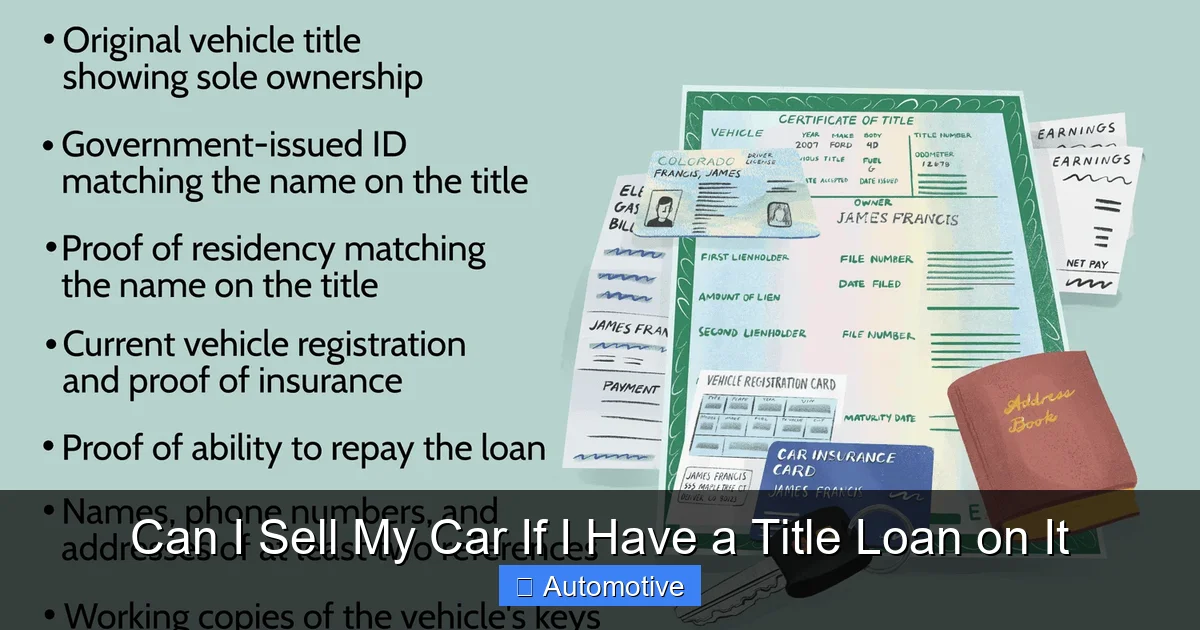
– Provide proof of ownership (the car title)
– Show proof of income and identity
– Hand over the physical title to the lender
– Keep the car and continue driving it
Once the loan is repaid in full, the lender returns the title to you. But if you sell the car before that, the process gets more complicated.
The Lien: Why It Matters
The lien is the legal claim the lender has on your car. It’s recorded with your state’s Department of Motor Vehicles (DMV) or equivalent agency. This lien prevents you from selling or transferring the title without the lender’s permission.
Think of it like a red flag on your car’s title. When a buyer runs a vehicle history report, they’ll see that there’s an outstanding lien. That means they can’t register the car in their name until the lien is cleared. Most buyers won’t take that risk—so you’ll need to resolve the lien before or during the sale.
Can You Legally Sell a Car with a Title Loan?
Visual guide about Can I Sell My Car If I Have a Title Loan on It
Image source: investopedia.com
Yes, you can legally sell your car even if you have a title loan—but only if you handle the lien properly. The law requires that any outstanding liens be satisfied before ownership can be transferred. That means the loan must be paid off, and the lender must release the lien.
You can’t just sell the car and hope the buyer pays off the loan. That’s not how it works. The buyer needs a clean title to register the vehicle, and the lender won’t release the title until the debt is settled.
So, while selling is possible, it’s not as simple as handing over the keys. You’ll need to work with your lender, possibly pay off the loan in full, and ensure the lien is removed before the sale is complete.
What Happens If You Try to Sell Without Paying Off the Loan?
Attempting to sell your car without clearing the title loan can lead to serious problems:
– **The buyer can’t register the car.** Without a clean title, the DMV won’t allow the new owner to register or insure the vehicle.
– **You remain liable for the loan.** Even if you sell the car, you’re still responsible for repaying the debt unless the buyer assumes the loan (which is rare).
– **Legal and financial risks.** If the buyer stops making payments or damages the car, you could still be on the hook. Plus, the lender could repossess the vehicle—even after it’s been sold.
– **Damage to your credit.** If the loan goes into default, it will hurt your credit score and make it harder to borrow in the future.
In short, selling without resolving the lien is risky and could leave you in a worse position than before.
When Is It Safe to Sell?
It’s safe to sell your car with a title loan when:
– You’ve paid off the loan in full and received the title back.
– You’re selling to a buyer who agrees to pay off the loan at the time of sale (common with dealerships).
– You’re working with a private buyer who understands the process and is willing to wait for the title to be released.
In all cases, communication with your lender is essential. They need to know you’re selling the car and must be involved in releasing the lien.
Step-by-Step Guide to Selling Your Car with a Title Loan
Selling a car with a title loan doesn’t have to be overwhelming. With the right steps, you can do it smoothly and legally. Here’s how:
Step 1: Contact Your Lender and Get a Payoff Quote
The first thing you need to do is call your title loan lender and request a **payoff quote**. This is a document that tells you exactly how much you owe to clear the loan, including any interest, fees, or penalties.
The payoff amount is usually higher than your current balance because it includes accrued interest up to the payoff date. It’s valid for a short period—often 10 to 30 days—so act quickly once you get it.
Example:
Let’s say you owe $3,500 on your loan, but the payoff quote is $3,650. That extra $150 covers interest and fees. You’ll need that full amount to release the title.
Keep this quote handy—you’ll need it for the next steps.
Step 2: Determine Your Car’s Market Value
Next, find out how much your car is actually worth. Use trusted sources like Kelley Blue Book (KBB), Edmunds, or NADA Guides. Enter your car’s make, model, year, mileage, and condition to get a fair market value.
Why is this important? Because you need to know if your car is worth more than what you owe. If it is, you can sell it and walk away with cash. If not, you’ll need to cover the difference.
Example:
Your car is worth $6,000, and your payoff quote is $3,650. That means you could potentially make $2,350 from the sale (minus any fees).
But if your car is worth $3,000 and you owe $3,650, you’re “underwater” or “upside down” on the loan. You’d need to pay $650 out of pocket to cover the difference.
Step 3: Decide How to Sell: Private Sale vs. Dealership
You have two main options: sell to a private buyer or trade in at a dealership. Each has pros and cons.
**Private Sale:**
– Pros: Usually higher sale price, more control over the process.
– Cons: More work, need to handle the lien release yourself, buyer may be hesitant.
**Dealership Trade-In:**
– Pros: Convenient, dealer may handle the payoff process, faster transaction.
– Cons: Lower offer, may not get full market value.
If you choose a private sale, make sure the buyer understands the lien situation and is willing to wait for the title to be released. You’ll need to coordinate with the lender to transfer ownership after the loan is paid.
If you go with a dealership, they’ll often contact your lender directly, pay off the loan, and deduct the amount from your trade-in value. This can simplify the process, but make sure you understand the final numbers.
Step 4: Pay Off the Loan and Release the Lien
Once you have a buyer and the funds, it’s time to pay off the loan. Here’s how:
1. **Use the sale proceeds to pay the lender.** If you’re selling privately, you can bring the buyer to the lender’s office or bank to complete the transaction. The buyer pays you, you pay the lender, and the lender releases the title.
2. **Get a lien release letter.** This is a document from the lender stating that the loan is paid and the lien is removed. You’ll need this to transfer the title.
3. **Submit the release to the DMV.** In most states, the lender will file the release electronically, but you may need to submit paperwork yourself.
Tip: Always get a receipt or confirmation that the loan is paid in full. Keep copies of all documents.
Step 5: Transfer the Title to the Buyer
With the lien released, you can now transfer the title. Sign the title over to the buyer, complete a bill of sale, and provide any required documents (like a smog check, if applicable).
The buyer will take the title and lien release to the DMV to register the car in their name. Make sure everything is filled out correctly to avoid delays.
Step 6: Notify Your Insurance Company
Once the sale is complete, contact your auto insurance company to cancel or adjust your policy. You don’t want to keep paying for a car you no longer own.
What If You’re Underwater on Your Title Loan?
Being “underwater” means you owe more on your car than it’s worth. This is common with title loans, especially if the car has depreciated quickly or the loan has high interest.
If you’re underwater, you have a few options:
Option 1: Pay the Difference Out of Pocket
If you have the cash, you can pay the difference between the sale price and the loan payoff. For example, if your car sells for $3,000 but you owe $3,650, you’d pay $650 to cover the gap.
This lets you sell the car and walk away clean—no debt, no lien.
Option 2: Roll the Difference into a New Loan
Some dealerships may allow you to roll the negative equity into a new car loan. But be cautious—this can lead to even more debt and higher monthly payments.
Only consider this if you’re buying a more affordable car and can manage the payments.
Option 3: Refinance the Title Loan First
If you’re struggling with high payments, consider refinancing your title loan before selling. Some lenders offer lower interest rates or longer terms, which could reduce your monthly burden and make it easier to sell later.
Just make sure the new loan doesn’t trap you in more debt.
Option 4: Keep the Car and Pay It Off
If selling isn’t urgent, you might be better off keeping the car and paying off the loan. Once it’s paid, you can sell it for full market value without any liens.
This avoids the hassle of being underwater and gives you more control over the sale.
Tips for a Smooth and Legal Sale
Selling a car with a title loan can be tricky, but these tips will help you avoid common mistakes:
Be Transparent with Buyers
Don’t hide the fact that you have a title loan. Be upfront with potential buyers. Most will appreciate your honesty, and it builds trust.
You can say something like:
“I do have a title loan on this car, but I’m happy to work with you to pay it off at the time of sale. The lender will release the title once the loan is cleared.”
Get Everything in Writing
Use a bill of sale that includes:
– Names and addresses of buyer and seller
– Vehicle details (VIN, make, model, year)
– Sale price
– Date of sale
– Statement that the loan will be paid off at closing
Both parties should sign it.
Meet at a Safe Location
If selling privately, meet at a bank, lender’s office, or police station. These locations are secure and often have notaries or staff who can help with the transaction.
Verify the Buyer’s Payment Method
Avoid cash for large amounts. Use a cashier’s check or bank transfer. Make sure the check clears before handing over the car.
Keep Records
Save copies of:
– Payoff quote
– Lien release letter
– Bill of sale
– Title transfer documents
These protect you in case of disputes.
Alternatives to Selling Your Car
Selling might not be your only option. Consider these alternatives:
Refinance the Loan
If high payments are the issue, refinancing could lower your monthly cost. Look for lenders offering better terms.
Loan Modification
Some lenders may allow you to extend the loan term or reduce payments temporarily.
Sell for Parts or Scrap
If the car isn’t running, you might sell it to a junkyard. They’ll often pay off the loan and give you the difference—if any.
Voluntary Repossession
As a last resort, you can return the car to the lender. This will hurt your credit, but it stops the debt from growing.
Conclusion
So, can you sell your car if you have a title loan on it? Absolutely—but it takes planning, communication, and sometimes a bit of extra cash. The key is to work with your lender, get a payoff quote, and ensure the lien is released before transferring ownership.
Whether you sell privately or trade in at a dealership, transparency and documentation are your best friends. Don’t try to cut corners—doing so could leave you liable for the debt and damage your credit.
If you’re underwater, explore alternatives like refinancing or paying down the loan first. And always remember: selling a car with a title loan is possible, but it’s not a quick fix. Take your time, do your research, and protect yourself every step of the way.
With the right approach, you can sell your car, pay off your loan, and move forward—without the stress of a lingering debt.
Frequently Asked Questions
Can I sell my car if I have a title loan on it?
Yes, you can sell your car even with a title loan, but the loan must be paid off first. The lender holds a lien on the title, so it can’t be transferred until the debt is cleared.
What happens if I sell my car without paying off the title loan?
If you sell without paying off the loan, the buyer can’t register the car, and you remain responsible for the debt. The lender could also repossess the vehicle, even after the sale.
How do I find out how much I owe to pay off my title loan?
Contact your lender and request a payoff quote. This document shows the exact amount needed to clear the loan, including interest and fees.
Can a dealership help me sell my car with a title loan?
Yes, many dealerships will handle the payoff process. They’ll pay off your lender and deduct the amount from your trade-in value, simplifying the sale.
What if my car is worth less than what I owe on the title loan?
If you’re underwater, you’ll need to pay the difference out of pocket, roll it into a new loan, or consider alternatives like refinancing or keeping the car until it’s paid off.
Do I need the physical title to sell my car?
No, you don’t need the physical title to sell, but the lender must release the lien. Once the loan is paid, they’ll send the title to you or the buyer to complete the transfer.