
How Much Does Mecum Charge to Sell a Car

Wondering how much Mecum charges to sell a car? Mecum Auctions typically charges a seller’s commission of 10% of the final sale price, with additional fees for services like photography and marketing. Understanding these costs upfront helps you plan and maximize your profit.
If you’re thinking about selling a classic, muscle, or collector car, you’ve probably heard of Mecum Auctions. Known for their high-energy live events and massive online reach, Mecum is one of the largest and most respected names in the collector car auction world. From the glitz of Monterey to the heartland energy of Kissimmee, Mecum brings together passionate buyers and sellers from across the globe. But before you roll your prized ride onto the auction block, there’s one big question on every seller’s mind: How much does Mecum charge to sell a car?
The short answer? It depends. Mecum’s fee structure isn’t one-size-fits-all. While the core cost is a seller’s commission based on the final sale price, there are additional factors—like optional services, event location, and whether your car sells or not—that can influence your total out-of-pocket expense. The good news? Mecum is generally transparent about its pricing, and with a little planning, you can minimize costs and maximize your return.
In this guide, we’ll break down every fee, explain how Mecum’s commission works, and share insider tips to help you get the most value when selling your vehicle. Whether you’re a first-time seller or a seasoned collector, understanding the full cost of selling through Mecum is essential to making smart financial decisions.
Key Takeaways
- Standard seller’s commission: Mecum charges 10% of the final hammer price, which is the most significant cost when selling a car.
- Additional service fees: Optional services like professional photography, video production, and premium placement may incur extra charges.
- No sale, no fee policy: If your car doesn’t sell, you typically don’t pay the commission, though some administrative fees may apply.
- Reserve price considerations: Setting a reserve can protect your minimum sale amount but may affect bidding momentum.
- Consignment vs. outright sale: Mecum offers both options, with consignment being more common and commission-based.
- Marketing and exposure: Mecum invests heavily in promotion, which can increase your car’s visibility and final sale price.
- Location and event selection: Fees and competition vary by auction location—choose wisely to optimize results.
📑 Table of Contents
- Understanding Mecum Auctions: A Quick Overview
- Mecum’s Seller Commission: The Core Cost
- Additional Fees and Optional Services
- Reserve Price vs. No Reserve: How It Affects Your Costs
- Choosing the Right Auction Event
- Tips to Minimize Costs and Maximize Profit
- Real-World Example: Selling a 1970 Plymouth Hemi ‘Cuda
- Conclusion: Is Mecum Worth the Cost?
Understanding Mecum Auctions: A Quick Overview
Before diving into the costs, it helps to understand what Mecum Auctions is and how it operates. Founded in 1980 by Dana Mecum, the company has grown from a small regional auction house into a powerhouse in the collector car market. Today, Mecum hosts over 20 major auctions annually across the U.S., including flagship events in Kissimmee, Florida; Monterey, California; and Dallas, Texas.
Mecum specializes in high-profile vehicles—think vintage Corvettes, Shelby Mustangs, rare Ferraris, and even motorcycles, boats, and memorabilia. Their auctions are broadcast live on major networks like NBC and are streamed globally, giving your car exposure to thousands of potential buyers. This level of visibility is a huge advantage, especially for rare or high-value vehicles.
Sellers can choose between two main options: consignment and outright sale. With consignment—the most common route—you retain ownership until the car sells, and Mecum handles marketing, logistics, and the auction process. In an outright sale, you transfer ownership to Mecum upfront, often at a discounted price, in exchange for immediate cash. Most private sellers opt for consignment because it offers the potential for a higher final price.
Now that you know how Mecum works, let’s get into the nitty-gritty: the fees.
Mecum’s Seller Commission: The Core Cost
Visual guide about How Much Does Mecum Charge to Sell a Car
Image source: premierfinancialservices.com
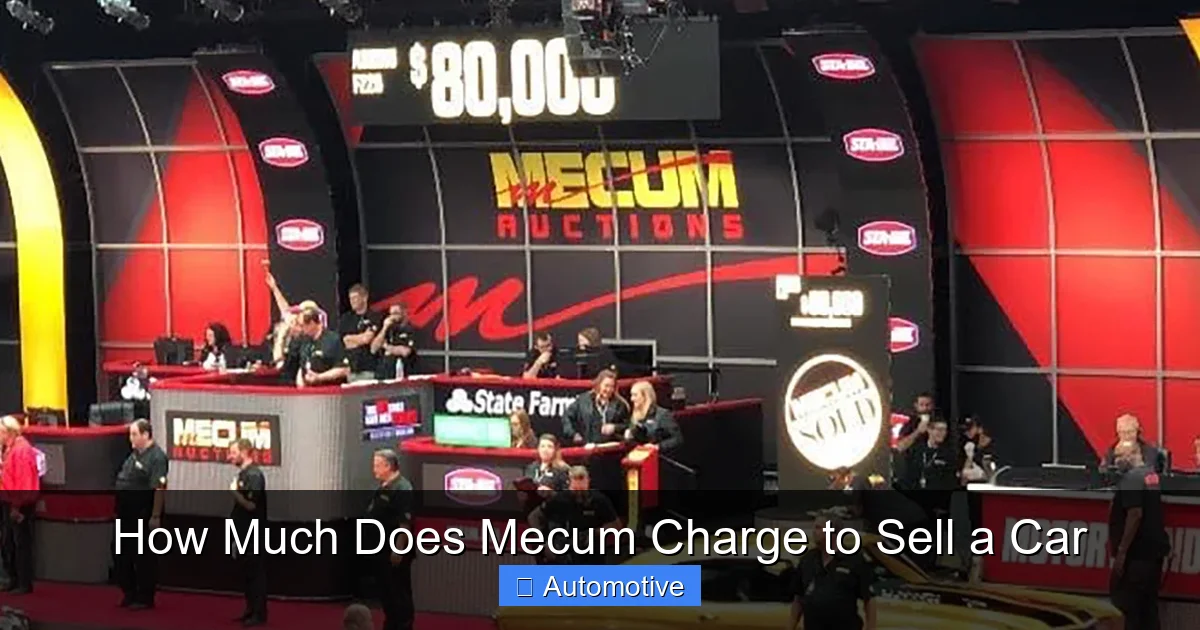
The biggest expense when selling a car through Mecum is the seller’s commission. This is a percentage of the final hammer price—the amount the winning bidder pays before taxes and buyer premiums. As of 2024, Mecum’s standard seller commission is 10%.
For example, if your 1967 Ford Mustang sells for $80,000, Mecum will take $8,000 as their commission. That leaves you with $72,000 before any additional fees or expenses.
It’s important to note that this 10% rate is typical for most vehicles, but Mecum may adjust it based on the car’s value, rarity, or the specific auction event. High-profile or ultra-rare vehicles (like a Ferrari 250 GTO) might qualify for a negotiated lower rate, especially if the seller has a strong relationship with Mecum or is consigning multiple vehicles. Conversely, lower-value cars might see a slightly higher effective rate due to fixed overhead costs.
How the Commission Is Calculated
The commission is calculated solely on the hammer price—not the total amount the buyer pays. Buyers often pay additional fees, such as a buyer’s premium (usually 10–13%), taxes, and documentation fees. These extras go to Mecum or the buyer, not the seller, so they don’t affect your commission.
Let’s look at a real-world example:
– Your 1970 Chevrolet Chevelle SS sells for $95,000 (hammer price).
– Mecum’s 10% commission = $9,500.
– The buyer pays an additional 10% buyer’s premium ($9,500), plus taxes and fees.
– You receive $85,500 from the sale (minus any other agreed-upon fees).
This structure ensures Mecum is incentivized to get the highest possible price for your car—because their earnings are directly tied to the final bid.
No Sale, No Commission (Usually)
One of the biggest perks of selling through Mecum is their “no sale, no fee” policy. If your car doesn’t meet its reserve price (more on that later) or doesn’t sell at all, you typically don’t pay the 10% commission. This protects sellers from losing money on unsold vehicles.
However, there are some caveats. While the commission is waived, Mecum may still charge small administrative or listing fees—especially if you’ve used premium services like professional photography or video. These fees are usually disclosed upfront in your consignment agreement, so it’s crucial to read the fine print.
Additionally, if you withdraw your car after it’s been marketed or featured in promotional materials, Mecum may charge a cancellation fee. Always clarify these terms before signing.
Additional Fees and Optional Services
Visual guide about How Much Does Mecum Charge to Sell a Car
Image source: carcollectorsclub.com
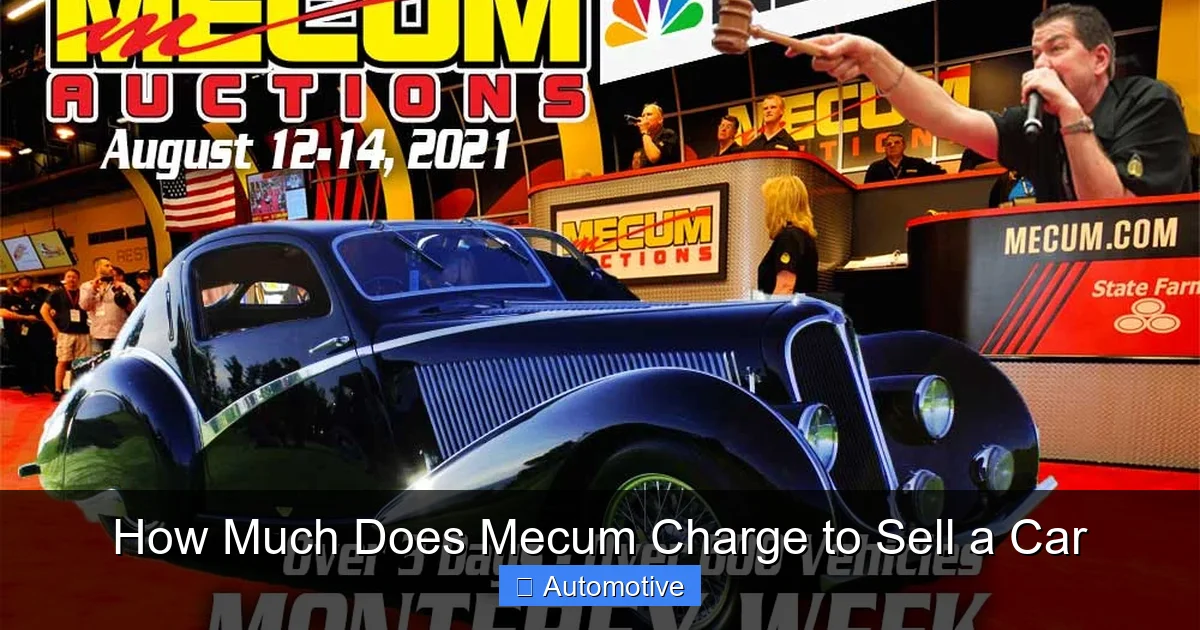
While the 10% commission is the main cost, Mecum offers a range of optional services that can enhance your car’s presentation and sale potential—but come at an extra cost. These fees vary by event and service level, so it’s smart to budget for them if you want to maximize your car’s appeal.
Photography and Video Production
First impressions matter—especially in the world of collector cars. Mecum offers professional photography and video services to showcase your vehicle in the best light. High-quality images and dynamic video walkarounds can significantly boost bidding interest.
– Standard photography: Often included in the base consignment package, especially for higher-value vehicles.
– Premium photography: Enhanced lighting, multiple angles, and detailed shots of engine, interior, and undercarriage. May cost $100–$300.
– Video production: A professionally shot video with voiceover, music, and dynamic shots. Can range from $200 to $500 or more, depending on length and complexity.
For example, a seller consigning a rare 1963 Corvette Sting Ray might invest in a premium video to highlight its numbers-matching engine and unrestored patina. This kind of presentation can justify a higher starting bid and attract serious collectors.
Premium Placement and Featured Listings
Mecum auctions feature hundreds of vehicles, and not all spots are created equal. Cars placed in high-traffic areas or featured in prime broadcast segments get more attention—and often sell for more.
– Featured placement: Your car is highlighted in the auction catalog, website, and live broadcast. May cost $200–$500.
– Prime floor position: Placement near the auction stage or in a high-visibility area. Often reserved for high-value or sponsor vehicles, but sometimes available for a fee.
These services aren’t mandatory, but they can make a big difference—especially in competitive auctions like Kissimmee, where over 2,000 cars are sold over 10 days.
Transportation and Logistics
If your car isn’t local to the auction site, you’ll need to get it there. Mecum doesn’t provide free transport, so you’ll either drive it yourself or hire a professional hauler.
– Self-transport: Driving your car to the auction saves money but adds wear and tear. Also consider lodging and time off work.
– Professional transport: Enclosed carriers typically charge $1.50–$2.50 per mile, depending on distance and vehicle value. For a cross-country move (e.g., California to Florida), expect to pay $2,000–$4,000.
Some sellers negotiate transport costs into their consignment agreement, especially for high-value vehicles. Mecum may also have preferred haulers they recommend.
Storage and Handling Fees
Once your car arrives at the auction site, it’s stored in a secure facility until sale. Mecum usually includes basic storage in the consignment fee, but extended storage (beyond the auction dates) may incur daily charges—typically $25–$50 per day.
If your car requires special handling—like a trailer for a boat or motorcycle—additional fees may apply. Always confirm storage terms in your agreement.
Reserve Price vs. No Reserve: How It Affects Your Costs
Visual guide about How Much Does Mecum Charge to Sell a Car
Image source: carcollectorsclub.com
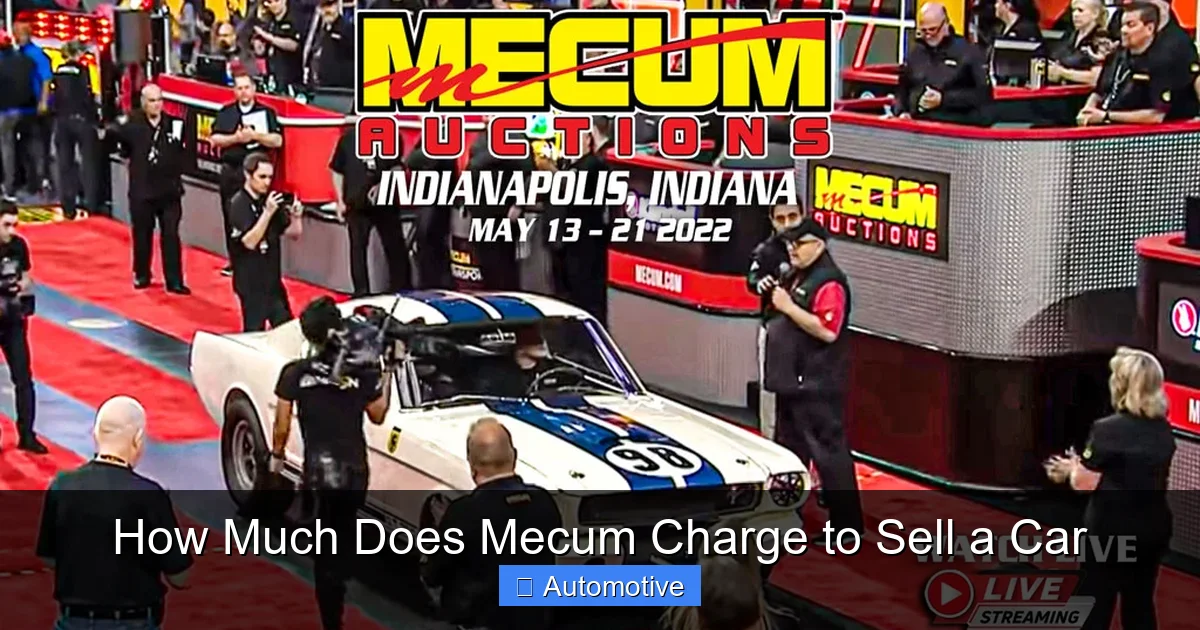
One of the most important decisions you’ll make as a seller is whether to set a reserve price or sell without reserve (also called “no reserve” or “absolute” auction).
A reserve price is the minimum amount you’re willing to accept for your car. If bidding doesn’t reach that amount, the car doesn’t sell. No reserve means the car will sell to the highest bidder, regardless of price.
Reserve Price: Pros and Cons
Pros:
– Protects you from selling below your desired price.
– Gives you peace of mind, especially for rare or sentimental vehicles.
– Can attract serious buyers who know the car has value.
Cons:
– May discourage bidding if the reserve is set too high.
– If the reserve isn’t met, the car doesn’t sell—and you may still incur some fees.
– Can make your car appear “overpriced” to bidders.
For example, if you set a $100,000 reserve on a 1969 Dodge Charger R/T, but the highest bid is $85,000, the car won’t sell. You’ll need to decide whether to lower the reserve, relist it at a future auction, or take it home.
No Reserve: Pros and Cons
Pros:
– Creates excitement and competitive bidding—buyers know the car will sell.
– Often results in faster sales and higher final prices due to auction momentum.
– Mecum may offer incentives (like reduced fees) for no-reserve consignments.
Cons:
– Risk of selling below market value if bidding is light.
– No safety net—once the gavel falls, the deal is done.
Many sellers choose a “soft reserve”—a confidential minimum discussed with Mecum but not disclosed to bidders. This gives you protection while maintaining auction energy.
How Reserve Choice Affects Fees
Interestingly, your reserve decision doesn’t directly change Mecum’s commission rate. Whether you sell with or without reserve, the 10% still applies—if the car sells.
However, no-reserve cars often attract more bidders and higher final prices, which can offset the lack of a safety net. Mecum may also prioritize no-reserve vehicles in marketing, giving them better exposure.
If your car doesn’t sell due to an unmet reserve, you avoid the 10% commission—but may still pay for services used (like photography). With no reserve, the car sells no matter what, ensuring you get paid (even if it’s less than hoped).
Choosing the Right Auction Event
Not all Mecum auctions are the same. The location, timing, and audience can significantly impact your car’s sale price—and your total costs.
Flagship Events: Kissimmee, Monterey, Dallas
Mecum’s biggest auctions attract the most buyers and media attention. These events typically have higher consignment volumes and stiffer competition, but also greater potential for high sale prices.
– Kissimmee, Florida (January): The largest collector car auction in the world. Over 2,000 vehicles, massive crowds, and strong bidding. Ideal for muscle cars, classics, and hot rods.
– Monterey, California (August): High-end, luxury-focused event. Attracts wealthy collectors and international buyers. Best for European exotics, rare Ferraris, and concours-quality vehicles.
– Dallas, Texas (June): Growing in prestige, with a mix of American muscle and imports. Strong regional buyer base.
Consigning at these events may involve higher demand for premium services and faster turnaround times. Fees are generally standard, but competition for prime placement is fierce.
Regional and Specialty Auctions
Mecum also hosts smaller auctions in cities like Indianapolis, Chicago, and Seattle. These events are less crowded, which can be good or bad.
– Pros: Lower competition, easier access to prime placement, potentially lower stress.
– Cons: Fewer bidders, less media coverage, possibly lower final prices.
For a rare but niche vehicle—like a vintage motorcycle or a restored tractor—a regional auction with a targeted audience might yield better results than a massive flagship event.
Online-Only Auctions
In recent years, Mecum has expanded into online auctions, especially for lower-value or hard-to-ship vehicles. These events have lower overhead and may offer reduced fees.
– Lower commission: Some online auctions charge 8–9% instead of 10%.
– Reduced service fees: Photography and video may be less expensive or DIY.
– Limited exposure: Fewer live bidders, but strong online traffic.
Online auctions are a great option for sellers with budget constraints or vehicles that don’t need the glitz of a live event.
Tips to Minimize Costs and Maximize Profit
Selling a car at auction isn’t just about showing up—it’s about strategy. Here are proven tips to reduce your costs and boost your final sale price.
1. Do Your Homework on Pricing
Before consigning, research recent sales of similar vehicles on Mecum’s website or platforms like Hagerty or Bring a Trailer. Set a realistic reserve or no-reserve price based on condition, originality, and market trends.
Overpricing can scare off bidders; underpricing leaves money on the table.
2. Invest in Presentation
Even if you skip premium video, make sure your car is clean, detailed, and mechanically sound. A well-presented car builds confidence in buyers and justifies higher bids.
Consider a professional detail ($100–$300) and address any minor issues (e.g., burnt-out bulbs, worn tires) before the auction.
3. Negotiate Your Consignment Agreement
Don’t be afraid to discuss fees with your Mecum representative—especially if you’re consigning a high-value car or multiple vehicles. You may be able to:
– Reduce the commission rate (e.g., 8–9% for cars over $250,000).
– Waive photography or video fees.
– Get free transport or storage.
Remember: Mecum wants your business. Use that to your advantage.
4. Time Your Sale Strategically
Market demand fluctuates. Muscle cars sell best in spring and summer; convertibles peak in warmer months. Avoid consigning a winter vehicle in January unless it’s a rare exception.
Also, consider the auction calendar. Selling just before a major holiday or car show can boost interest.
5. Leverage Mecum’s Marketing Power
Mecum promotes auctions through TV, social media, email newsletters, and print ads. Make sure your car is included in their promotional materials by opting into featured listings or press releases.
A well-marketed car can attract out-of-state or international buyers, driving up the final price.
6. Be Prepared for the Unexpected
Even with the best planning, things can go sideways. Your car might need repairs before sale, transport could be delayed, or bidding might be lighter than expected.
Build a buffer into your budget for unexpected costs, and have a backup plan (like relisting at a future auction) if your car doesn’t sell.
Real-World Example: Selling a 1970 Plymouth Hemi ‘Cuda
Let’s walk through a realistic scenario to see how Mecum’s fees play out.
You’re selling a fully restored 1970 Plymouth Hemi ‘Cuda with documented history. You estimate its value at $300,000.
– You consign it to Mecum’s Kissimmee auction.
– You opt for premium photography ($250) and a video ($400).
– You choose a soft reserve of $275,000.
– Transport from Ohio to Florida costs $1,800.
– The car sells for $310,000.
Total costs:
– Commission (10% of $310,000): $31,000
– Photography: $250
– Video: $400
– Transport: $1,800
– Total: $33,450
Net proceeds: $310,000 – $33,450 = $276,550
That’s a strong return, especially considering the car’s reserve was $275,000. The investment in presentation and transport paid off.
Now, imagine the same car didn’t sell. You’d avoid the $31,000 commission but still pay $2,450 in services and transport. That’s why presentation and pricing are so critical.
Conclusion: Is Mecum Worth the Cost?
So, how much does Mecum charge to sell a car? On average, you’re looking at a 10% commission on the sale price, plus optional fees for services like photography, video, and transport. While these costs add up, they’re often justified by Mecum’s massive reach, professional presentation, and ability to attract serious buyers.
For rare, high-value, or hard-to-sell vehicles, Mecum’s platform can mean the difference between a quick private sale and a six-figure auction result. The key is to go in with eyes wide open—understand the fees, choose the right auction, and invest in presentation.
If you’re selling a car worth $50,000 or more, Mecum is likely a smart choice. For lower-value vehicles, consider whether the 10% commission (and added fees) is worth the exposure. In some cases, private sales or smaller auctions may yield better net returns.
Ultimately, selling through Mecum isn’t just about the money—it’s about the experience. There’s something electric about hearing your car cross the block, watching bidders compete, and knowing your vehicle found the right home. And with the right strategy, that experience can also be a profitable one.
Frequently Asked Questions
How much does Mecum charge to sell a car?
Mecum charges a standard seller’s commission of 10% of the final hammer price. Additional fees may apply for services like photography, video, and transport.
Do I pay Mecum if my car doesn’t sell?
No, you typically don’t pay the 10% commission if your car doesn’t sell. However, you may still be responsible for optional service fees used before the auction.
Can I negotiate Mecum’s commission rate?
Yes, especially for high-value or multiple vehicle consignments. Mecum may offer reduced rates (e.g., 8–9%) for premium sellers.
What’s the difference between reserve and no reserve?
A reserve price is the minimum you’ll accept; the car won’t sell below it. No reserve means the car sells to the highest bidder, regardless of price.
Are there extra fees for premium services?
Yes, services like professional photography, video production, and featured placement typically cost extra, ranging from $100 to $500 or more.
Which Mecum auction should I choose?
Choose based on your car’s type and value. Kissimmee is great for muscle cars, Monterey for exotics, and regional events for niche vehicles.