
How to Sell a Car with a Bad Engine

Selling a car with a bad engine doesn’t have to be stressful or costly. With honesty, smart pricing, and the right marketing approach, you can turn a problematic vehicle into cash—even if it doesn’t run. Whether you’re selling privately, to a junkyard, or through an online platform, knowing your options makes all the difference.
Key Takeaways
- Understanding how to sell a car with a bad engine: Provides essential knowledge
📑 Table of Contents
- How to Sell a Car with a Bad Engine: A Complete Guide
- Understand Why the Engine Failed
- Determine the Value of Your Car with a Bad Engine
- Choose the Best Way to Sell Your Car
- Prepare Your Car for Sale
- Market Your Car Effectively
- Close the Sale Safely and Legally
- Final Thoughts: Turning a Problem into Opportunity
How to Sell a Car with a Bad Engine: A Complete Guide
So your car won’t start—or worse, it starts but makes a sound like a coffee grinder having a panic attack. The engine is clearly on its last legs, and you’re wondering: “Can I even sell this thing?” The short answer? Yes, absolutely. But it takes strategy, honesty, and a little know-how.
Selling a car with a bad engine isn’t the same as selling a running vehicle. You won’t get top dollar, and you’ll need to manage expectations—both yours and the buyer’s. But with the right approach, you can still walk away with cash in hand, free up space in your driveway, and avoid the hassle of long-term storage or repair bills.
The key is understanding your options and being upfront about the car’s condition. Whether you’re dealing with a seized engine, blown head gasket, or complete engine failure, there are buyers out there who see value where others see junk. From mechanics looking for parts to hobbyists restoring classic cars, your “lemons” might just be someone else’s treasure.
In this guide, we’ll walk you through every step of selling a car with a bad engine—from evaluating its worth to closing the deal. We’ll cover pricing strategies, where to sell, how to market your vehicle, and what to avoid. By the end, you’ll feel confident moving forward, even if your car isn’t going anywhere under its own power.
Understand Why the Engine Failed
Visual guide about How to Sell a Car with a Bad Engine
Image source: cashforcar.nz
Before you list your car for sale, it helps to know exactly what went wrong with the engine. This isn’t just for your own peace of mind—it’s critical information for potential buyers and can affect how you price and market the vehicle.
Common Engine Problems That Kill Cars
Engines can fail for many reasons, and some are more “fixable” than others in the eyes of buyers. Here are a few common culprits:
- Overheating: Often caused by a coolant leak, broken water pump, or faulty thermostat. If the engine overheated severely, it may have warped the cylinder head or blown the head gasket.
- Oil starvation: Low oil levels or a failed oil pump can lead to seized bearings and scored cylinder walls. This usually means a full rebuild or replacement.
- Timing belt/chain failure: In interference engines, a broken timing belt can cause pistons to collide with valves, resulting in catastrophic internal damage.
- Hydrolock: When liquid (usually water or coolant) enters the combustion chamber, it can’t be compressed, bending rods or cracking the block.
- Worn-out components: Over time, piston rings, valve seals, and bearings wear down, leading to loss of compression and poor performance.
Knowing the root cause helps you explain the issue clearly to buyers. For example, saying “engine seized due to oil leak” is more informative—and less alarming—than just saying “engine doesn’t work.”
Can the Engine Be Repaired or Replaced?
This is a big question—and it affects your car’s value. Some buyers are willing to take on a repair project, especially if the rest of the car is in good shape. Others just want parts or a shell for a rebuild.
Ask yourself:
- Is the engine repairable with a reasonable investment?
- Would a used or remanufactured engine be a cost-effective fix?
- Are replacement parts readily available for this make and model?
For example, a 2005 Honda Civic with a blown head gasket might be worth fixing—parts are cheap, and the car is reliable. But a 1998 luxury SUV with a cracked engine block? Probably not.
If the repair cost exceeds the car’s value, most buyers will see it as a parts car or a project for someone with mechanical skills and time.
Determine the Value of Your Car with a Bad Engine
Visual guide about How to Sell a Car with a Bad Engine
Image source: cashforcar.nz
Pricing a non-running car is tricky. You can’t just look up the “good condition” value and subtract a little. You need to assess what the car is actually worth in its current state.
Use Online Valuation Tools (with a Caveat)
Start by checking your car’s value on sites like Kelley Blue Book (KBB), Edmunds, or NADA Guides. But here’s the catch: these tools assume the car is in working condition. So you’ll need to adjust the number yourself.
Here’s a simple method:
- Look up the “fair” or “good” condition value for your car (same year, make, model, mileage).
- Subtract 30% to 50% for a non-running engine, depending on severity.
- Factor in the car’s overall condition—rust, interior wear, tire condition, etc.
For example, if your 2012 Toyota Camry is worth $8,000 in good condition, a bad engine might drop it to $3,000–$4,000. But if the interior is pristine and the body is rust-free, you might push closer to $4,500.
Check Local Listings for Comparable Sales
Search Facebook Marketplace, Craigslist, or OfferUp for similar cars in your area. Look for keywords like “engine bad,” “needs engine,” or “for parts.”
You might find a 2010 Ford Focus listed for $2,200 with a seized engine—or a 2008 Subaru Outback for $3,500 that “runs but has engine noise.” These real-world examples give you a better sense of what buyers are willing to pay.
Consider the Scrap or Salvage Value
If your car is very old or heavily damaged, it might be worth more as scrap metal or salvage. Most junkyards pay by the ton—typically $150 to $300 per ton, depending on metal prices and location.
A compact car might weigh around 2,500 pounds (1.25 tons), so you could get $200–$400 just for the metal. But if the car has valuable parts (like a working transmission, wheels, or electronics), you might get more selling it whole to a salvage yard.
Some online services like CarMax, Carvana, or CashForCars will also buy non-running cars—often offering free towing. They’ll assess the value and give you a cash offer, usually within 24 hours.
Choose the Best Way to Sell Your Car
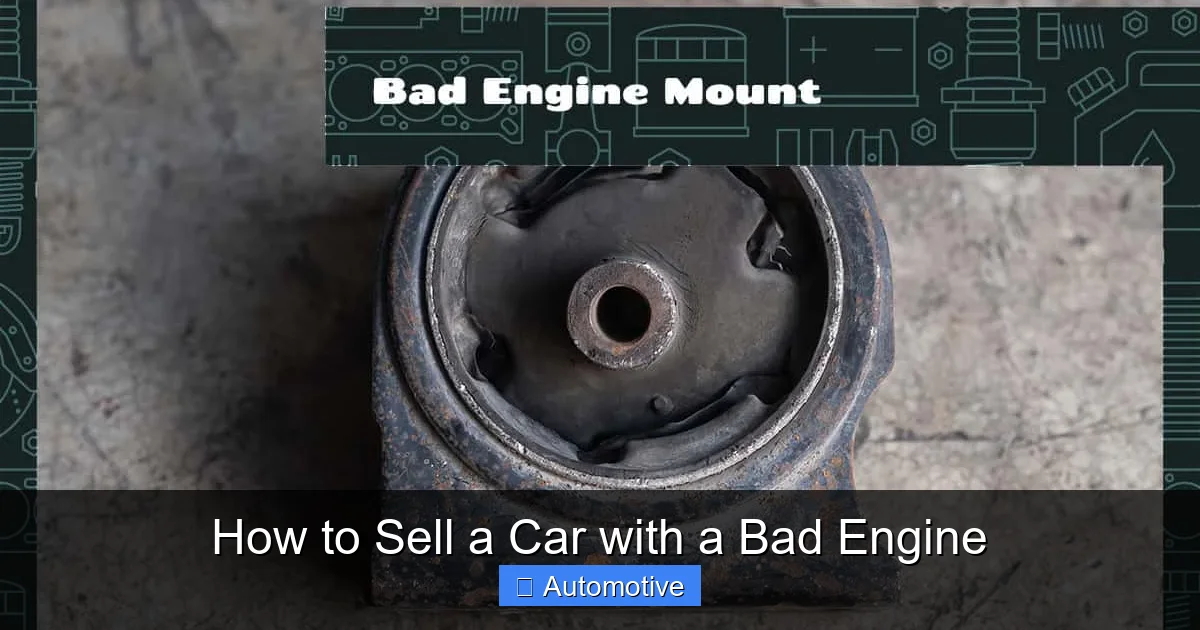
Visual guide about How to Sell a Car with a Bad Engine
Image source: upgradedvehicle.com
Once you know your car’s value, it’s time to decide how to sell it. Each method has trade-offs in terms of speed, convenience, and profit.
Sell Privately (Best for Higher Returns)
Selling directly to a private buyer usually gets you the most money—but it takes more effort.
Pros:
- Higher sale price than junkyards or trade-ins
- You can negotiate and explain the car’s condition in detail
- Buyers may be mechanics or enthusiasts looking for a project
Cons:
- Requires time to list, respond to inquiries, and meet buyers
- You’ll need to handle paperwork and possibly a test drive (even if it doesn’t run)
- Risk of scams or no-shows
Tip: Be clear in your listing that the engine is bad. Use phrases like “engine seized,” “needs major engine work,” or “not running—sold as-is.” This filters out buyers looking for a daily driver and attracts the right audience.
Sell to a Junkyard or Salvage Yard (Fast and Easy)
If you want a quick, no-hassle sale, a junkyard might be your best bet.
Pros:
- Fast cash—often same day
- Free towing in many cases
- No need to clean or repair the car
Cons:
- Lower payout (usually $100–$500)
- They may lowball you if they think you’re desperate
- Less control over who buys it
To get the best offer, call multiple yards and compare quotes. Some specialize in certain brands or models and may pay more.
Use an Online Car-Buying Service (Convenient and Reliable)
Companies like CarMax, Vroom, or Shift will buy your car—even if it doesn’t run.
Pros:
- Free online appraisal
- Free towing and fast payment
- No need to meet strangers or negotiate
Cons:
- Offers are often lower than private sale
- May require a recent inspection or photo upload
- Not available in all areas
These services are great if you value convenience over maximum profit.
Trade It In (Rare, But Possible)
Most dealerships won’t accept a car with a bad engine as a trade-in—especially if it doesn’t run. But some might, especially if you’re buying a new car and they can use it for parts or resell it.
Pros:
- One-stop shopping—sell and buy in one trip
- May qualify for tax savings (in some states, you only pay tax on the difference)
Cons:
- Very low trade-in value
- Dealers may refuse outright
- You’re limited to their inventory
If you go this route, be upfront about the engine issue. Don’t try to hide it—dealers will find out, and it could kill the deal.
Prepare Your Car for Sale
Even with a bad engine, presentation matters. A clean, well-documented car sells faster and for more money.
Clean the Interior and Exterior
You don’t need a full detail, but remove trash, vacuum the seats, and wipe down surfaces. A clean car signals that it was cared for—even if the engine failed.
Wash the exterior to remove dirt and grime. Rust or dents are expected, but a clean car looks more valuable.
Gather All Paperwork
Have these ready:
- Title: Must be signed and notarized (if required in your state)
- Registration: Shows the car is legally yours
- Maintenance records: Prove the car was maintained before the engine failed
- Bill of sale: A simple form stating the sale terms (you can find templates online)
If you’ve lost the title, contact your local DMV to get a duplicate. Most states allow you to sell a car without a title in certain cases (e.g., to a junkyard), but it’s easier with one.
Take High-Quality Photos
Even if the car doesn’t run, good photos help. Take pictures from multiple angles:
- Front, back, and sides
- Interior (seats, dashboard, trunk)
- Engine bay (show the problem if possible)
- Tires and undercarriage (to show rust or damage)
Use natural light and avoid shadows. A well-lit photo of a non-running car can still look appealing.
Write a Clear, Honest Listing
Your ad should include:
- Year, make, model, and mileage
- Engine issue (be specific: “engine seized,” “blown head gasket,” etc.)
- Overall condition (body, interior, tires)
- Reason for selling
- Asking price and whether it’s negotiable
- Contact info (phone or email)
Example listing:
“2011 Honda Accord, 145k miles. Engine seized due to oil leak—does not run. Body is in good shape, no major rust. Interior clean, AC works. Title in hand. Asking $2,800 OBO. Serious buyers only.”
Avoid vague terms like “mechanical issues” or “needs work.” Be specific so buyers know what they’re getting.
Market Your Car Effectively
Where you list your car matters. Different platforms attract different buyers.
Facebook Marketplace
Great for local sales. You can target people in your area and message quickly. Use clear photos and respond fast to inquiries.
Tip: Join local car enthusiast groups. Mechanics and DIYers often browse these for project cars.
Craigslist
Still popular for used cars. Post in the “cars & trucks” section. Be cautious of scams—never accept checks or wire transfers.
OfferUp or Letgo
Mobile-friendly apps with built-in messaging. Good for quick sales, but watch for lowball offers.
Specialty Forums or Classifieds
If your car is a specific model (like a Toyota Prius or Ford Mustang), try brand-specific forums. Enthusiasts may want it for parts or restoration.
Signs in the Yard (Old School, But Effective)
Put a “For Sale” sign in the window with your phone number. You might get a call from a neighbor or passerby.
Close the Sale Safely and Legally
Once you have a serious buyer, it’s time to finalize the deal.
Meet in a Safe, Public Place
Avoid meeting at your home. Use a police station, mall parking lot, or busy shopping center. Bring a friend if possible.
Verify the Buyer’s Identity
Ask for a driver’s license and check that the name matches the payment method.
Accept Secure Payment
Cash is safest for private sales. If using a cashier’s check, wait for it to clear. Avoid personal checks or wire transfers.
Complete the Paperwork
Sign the title over to the buyer. In most states, you’ll need to fill out the odometer reading and sale price. Keep a copy for your records.
Provide a bill of sale that includes:
- Date of sale
- Buyer and seller names and addresses
- Vehicle details (VIN, year, make, model)
- Sale price
- “As-is” disclaimer
This protects you from liability after the sale.
Notify the DMV
In most states, you must report the sale to the DMV within a few days. This releases you from responsibility if the buyer gets a ticket or causes an accident.
Some states require a release of liability form—check your local DMV website.
Final Thoughts: Turning a Problem into Opportunity
Selling a car with a bad engine isn’t ideal—but it’s far from impossible. With honesty, preparation, and the right strategy, you can sell your non-running vehicle quickly and fairly.
Remember: transparency is your best friend. Buyers appreciate honesty, and it reduces the risk of disputes. Price your car realistically, present it well, and choose a sales method that fits your timeline and goals.
Whether you sell to a junkyard for quick cash or to a mechanic looking for a project, you’re not just getting rid of a problem—you’re giving someone else a chance to fix, restore, or reuse your car.
And who knows? That “dead” engine might just be the start of someone else’s dream build.
Frequently Asked Questions
Can I sell a car with a bad engine if it doesn’t run?
Yes, you can sell a car that doesn’t run. Many buyers—especially mechanics, DIYers, and salvage yards—are interested in non-running vehicles for parts or repair projects. Just be clear about the condition in your listing.
How much can I get for a car with a bad engine?
The value depends on the car’s age, make, model, mileage, and overall condition. Typically, you’ll get 30% to 50% of the car’s value in good condition. For very old or damaged cars, scrap value ($200–$500) may be the best option.
Do I need a title to sell a car with a bad engine?
In most cases, yes—especially for private sales. Some junkyards or online buyers may accept a car without a title, but it’s easier and safer to have one. Contact your DMV if you’ve lost the title.
Should I fix the engine before selling?
Only if the repair cost is low and will significantly increase the sale price. For major engine work, it’s usually not worth the investment. Focus on cleaning the car and fixing minor issues instead.
Can I trade in a car with a bad engine?
Most dealerships won’t accept a non-running car as a trade-in, but some might—especially if you’re buying a new vehicle. Expect a very low offer, and be upfront about the engine issue.
Is it legal to sell a car with a bad engine?
Yes, as long as you disclose the problem honestly. Selling a car “as-is” with full transparency is legal in all states. Hiding major issues could lead to legal trouble or buyer disputes.