
New Alternator and Battery and Car Still Dies

Even with a new alternator and battery, your car might still die due to hidden electrical issues, faulty wiring, or parasitic drains. This guide explores the most common culprits and how to fix them fast.
You’ve just dropped a few hundred dollars on a brand-new alternator and a fresh battery. You’re feeling confident—your car should be running like new, right? But then, a few days later, you turn the key and… nothing. The engine cranks slowly, or worse, doesn’t start at all. Your car still dies. What gives?
It’s frustrating, confusing, and honestly, a little maddening. You did everything “right.” You replaced the two most common culprits behind a dead car. So why is your vehicle still acting up? The truth is, modern cars are complex electrical systems. A dead battery or a failing alternator are just the tip of the iceberg. Beneath the surface, a web of wiring, sensors, and modules can silently sabotage your ride—even with new parts under the hood.
In this guide, we’ll walk you through the most common reasons your car still dies after replacing the alternator and battery. We’ll break down the hidden electrical gremlins, show you how to test for them, and give you practical fixes you can try at home. Whether you’re a DIY mechanic or just trying to understand what your mechanic is talking about, this article will help you get to the root of the problem—and keep your car running reliably.
Key Takeaways
- Parasitic drain can silently kill your battery: Even small power draws from accessories or faulty modules can drain a battery overnight, especially if the car sits unused.
- Faulty wiring or corroded connections disrupt power flow: Damaged cables, loose terminals, or corrosion can prevent the alternator from charging the battery properly.
- A bad ground connection mimics alternator failure: A poor ground between the engine, chassis, and battery can cause charging issues and intermittent stalling.
- The alternator may be defective or incorrectly installed: Not all new parts are flawless—defective alternators or incorrect pulley alignment can lead to undercharging.
- Voltage regulator issues affect charging performance: Whether internal or external, a failing regulator can cause overcharging or undercharging, damaging the battery.
- Extreme temperatures impact battery and alternator efficiency: Cold weather reduces battery capacity, while heat accelerates component wear and electrical resistance.
- Scan for trouble codes and test the charging system: Use an OBD2 scanner and multimeter to diagnose electrical problems before replacing more parts.
📑 Table of Contents
- Understanding the Charging System: Why New Parts Aren’t Always the Fix
- Common Causes Why Your Car Still Dies After Replacing Alternator and Battery
- How to Diagnose the Problem: Step-by-Step Troubleshooting
- When to Call a Professional Mechanic
- Preventing Future Problems: Maintenance Tips
- Real-Life Example: The Case of the Phantom Drain
- Conclusion: Don’t Give Up—Find the Real Cause
Understanding the Charging System: Why New Parts Aren’t Always the Fix
Before we dive into the troubleshooting, let’s quickly recap how your car’s charging system works. It’s not just about the battery and alternator—it’s a team effort.
The battery provides the initial power to start the engine. Once the engine is running, the alternator takes over, generating electricity to power the car’s systems and recharge the battery. The voltage regulator controls how much power the alternator sends to the battery, ensuring it doesn’t overcharge or undercharge.
When this system works smoothly, your car starts reliably, headlights stay bright, and electronics function without a hitch. But when something goes wrong—even with new components—the whole system can fail.
So why would a new alternator and battery not solve the problem? Simple: the issue might not be the parts themselves, but how they’re connected, supported, or influenced by other components. Think of it like replacing the engine in a boat but forgetting to check the propeller. The new engine is great, but if the propeller is broken, the boat still won’t move.
In your car, the alternator and battery are the “engine,” but the wiring, grounds, fuses, and control modules are the “propeller.” If any of those are faulty, your car will still die—no matter how new the main parts are.
How the Alternator and Battery Work Together
Let’s break it down further. The alternator uses the engine’s mechanical energy (via a belt) to generate electricity. This electricity powers everything from your headlights to your infotainment system. It also recharges the battery so it’s ready for the next start.
The battery, on the other hand, stores energy chemically and releases it when needed. It’s especially important during startup, when the alternator isn’t yet spinning fast enough to produce power.
For this system to work, three things must happen:
1. The alternator must generate sufficient voltage (usually 13.5–14.5 volts when the engine is running).
2. The battery must accept and hold a charge.
3. The electrical connections between them must be clean, tight, and free of resistance.
If any of these fail, your car can still die—even with brand-new parts.
Why Replacing Parts Doesn’t Always Solve the Problem
Here’s a hard truth: replacing parts is often the first step, but not always the solution. Mechanics and DIYers alike tend to follow a “replace and hope” approach. But modern cars have so many interdependent systems that a single faulty wire can throw everything off.
For example, a corroded ground strap might prevent the alternator from charging the battery, even if both are new. Or a parasitic drain from a stuck relay could slowly kill the battery overnight, making you think the alternator isn’t working.
That’s why diagnosis is key. You need to test the system, not just replace components. We’ll show you how to do that in the sections ahead.
Common Causes Why Your Car Still Dies After Replacing Alternator and Battery
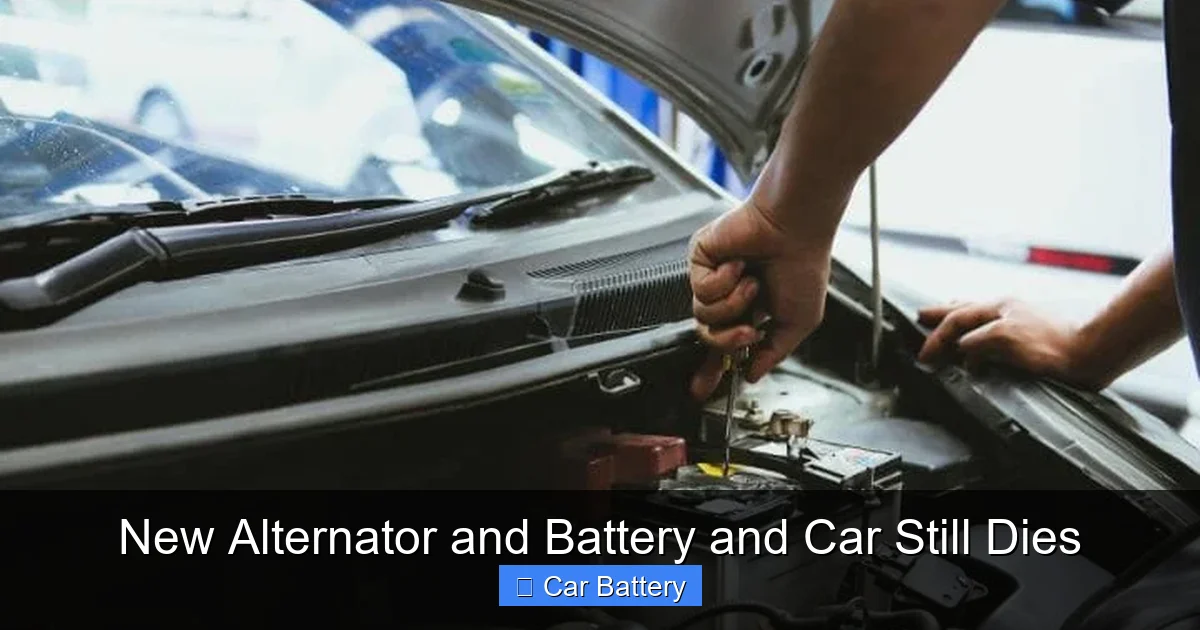
Visual guide about New Alternator and Battery and Car Still Dies
Image source: blogproautomotive.com
Now that we understand the basics, let’s look at the most common reasons your car still dies—even with a new alternator and battery. These are the hidden culprits that often get overlooked.
1. Parasitic Battery Drain
A parasitic drain is when something in your car continues to draw power from the battery even when the engine is off. This can slowly drain the battery over hours or days, leading to a no-start condition.
Common sources of parasitic drain include:
– Faulty interior lights (e.g., trunk or glove box light staying on)
– Malfunctioning relays or control modules (like the body control module or radio)
– Aftermarket accessories (alarms, dash cams, phone chargers) wired incorrectly
– Stuck relays or switches
For example, imagine you installed a dash cam that’s supposed to turn off when the car is off. But if it’s wired to a constant power source and doesn’t have a proper cutoff, it could drain 0.5 amps continuously. Over 24 hours, that’s 12 amp-hours—enough to kill a weak or small battery.
To test for parasitic drain:
1. Turn off the car and remove the key.
2. Disconnect the negative battery cable.
3. Set your multimeter to measure current (amps) and connect it between the negative terminal and the cable.
4. A normal draw is usually under 50 milliamps (0.05 amps). If it’s higher, start pulling fuses one by one to isolate the circuit causing the drain.
2. Faulty or Corroded Wiring and Connections
Even the best alternator and battery can’t do their job if the wires connecting them are damaged or corroded. Over time, vibration, heat, and moisture can degrade cables, especially the large ones running from the alternator to the battery.
Look for:
– Frayed or cracked insulation
– Green or white corrosion on terminals
– Loose or wiggly connections
– Burn marks or melted plastic (signs of arcing)
For instance, if the main power cable from the alternator to the battery is corroded inside, it can create high resistance. This means the alternator sends out 14 volts, but only 12 volts reach the battery—not enough to charge it properly.
To fix this:
– Clean all terminals with a wire brush and baking soda solution.
– Tighten connections to the manufacturer’s torque specs.
– Replace any damaged cables or terminals.
3. Bad Ground Connections
Grounding is just as important as power delivery. Your car’s electrical system relies on a solid ground path from the battery to the chassis and engine. If this path is broken or corroded, current can’t flow properly.
Common ground issues include:
– Corroded ground straps between the engine and chassis
– Loose ground bolts
– Paint or rust under ground connections
A bad ground can cause all sorts of problems: dim lights, erratic electronics, and yes—failure to start or sudden stalling.
To test grounds:
– Use a multimeter to check resistance between the battery negative terminal and the engine block. It should be near zero ohms.
– Visually inspect ground straps and connections.
– Clean and tighten all ground points.
4. Defective or Incorrectly Installed Alternator
Not all new alternators are created equal. Some are remanufactured, and others are aftermarket units that may not meet OEM specs. In rare cases, a brand-new alternator can be defective right out of the box.
Also, improper installation can cause problems:
– Wrong pulley size or alignment (causing belt slippage)
– Loose mounting bolts (leading to vibration and failure)
– Incorrect wiring (reversed polarity or loose connectors)
If your alternator isn’t spinning freely or the belt is squealing, it might not be generating enough power. Use a multimeter to check voltage at the battery with the engine running. It should read 13.5–14.5 volts. If it’s below 13 volts, the alternator isn’t charging properly.
5. Voltage Regulator Failure
The voltage regulator controls how much power the alternator sends to the battery. In most modern cars, it’s built into the alternator. But if it fails, the alternator might overcharge (boiling the battery) or undercharge (leaving the battery weak).
Symptoms of a bad regulator:
– Battery warning light on the dashboard
– Flickering headlights
– Electrical components acting erratically
– Battery swelling or leaking (from overcharging)
If you suspect a regulator issue, have the alternator tested at an auto parts store. Many offer free charging system tests.
6. Extreme Temperatures
Weather plays a big role in battery and alternator performance. Cold weather reduces a battery’s ability to deliver power—by up to 50% at 0°F. This is why cars struggle to start in winter, even with new batteries.
Heat, on the other hand, accelerates chemical reactions inside the battery, shortening its lifespan. It also increases resistance in wiring, making it harder for the alternator to charge effectively.
If you live in a hot or cold climate, consider:
– Using a battery with higher cold cranking amps (CCA)
– Parking in a garage or using a battery blanket in winter
– Checking fluid levels and connections more frequently in summer
How to Diagnose the Problem: Step-by-Step Troubleshooting
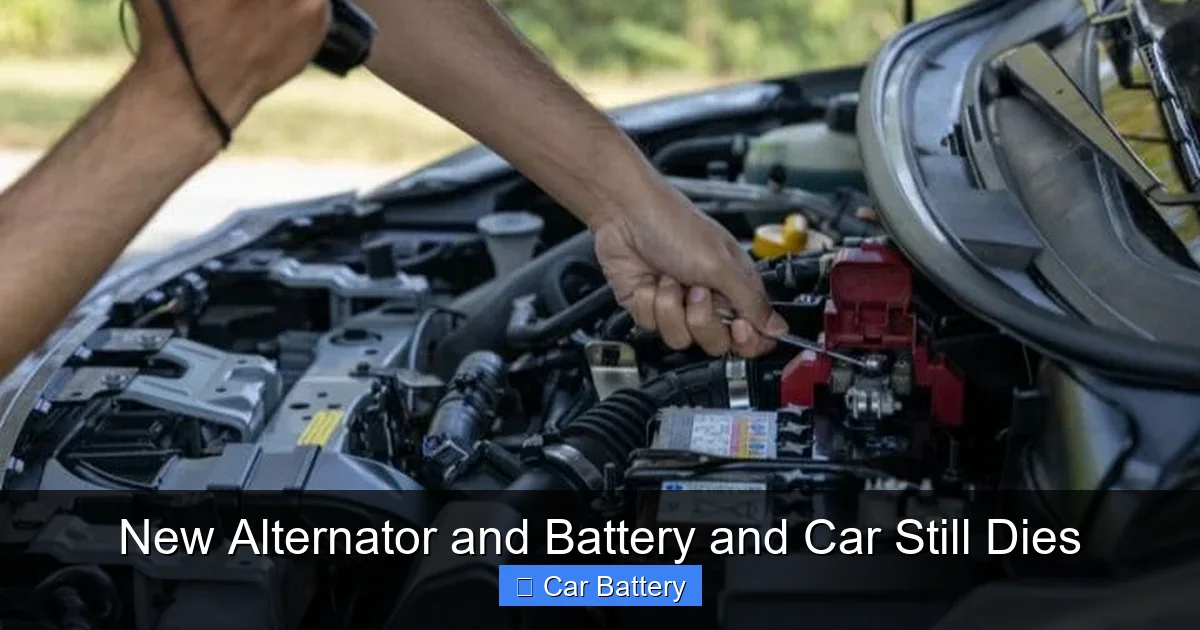
Visual guide about New Alternator and Battery and Car Still Dies
Image source: blogproautomotive.com
Now that you know the possible causes, let’s walk through a systematic way to find the real issue. Don’t guess—test.
Step 1: Check the Battery Voltage
Start with a simple voltage test.
– Turn off the car and wait 10 minutes (to let surface charge dissipate).
– Set your multimeter to DC volts and connect it to the battery terminals.
– A healthy battery should read 12.6 volts or higher.
– If it’s below 12.4 volts, the battery may not be holding a charge.
Step 2: Test the Alternator Output
With the engine running, check the voltage again.
– It should read between 13.5 and 14.5 volts.
– If it’s below 13 volts, the alternator isn’t charging.
– If it’s above 15 volts, the regulator may be faulty.
Step 3: Perform a Parasitic Drain Test
As described earlier, use a multimeter to measure current draw with the car off.
– Normal: under 50 milliamps.
– High draw? Start pulling fuses to find the culprit.
Step 4: Inspect Wiring and Grounds
Visually check all major cables and connections.
– Look for corrosion, fraying, or looseness.
– Clean and tighten as needed.
– Test ground resistance with a multimeter.
Step 5: Scan for Trouble Codes
Use an OBD2 scanner to check for diagnostic trouble codes (DTCs).
– Codes like P0562 (low system voltage) or P0620 (alternator control circuit) can point to electrical issues.
– Even if the check engine light isn’t on, some codes may be stored.
Step 6: Test Under Load
Turn on high-draw accessories (headlights, AC, radio) and recheck voltage.
– The alternator should maintain 13.5+ volts.
– If voltage drops significantly, the alternator may be weak.
When to Call a Professional Mechanic
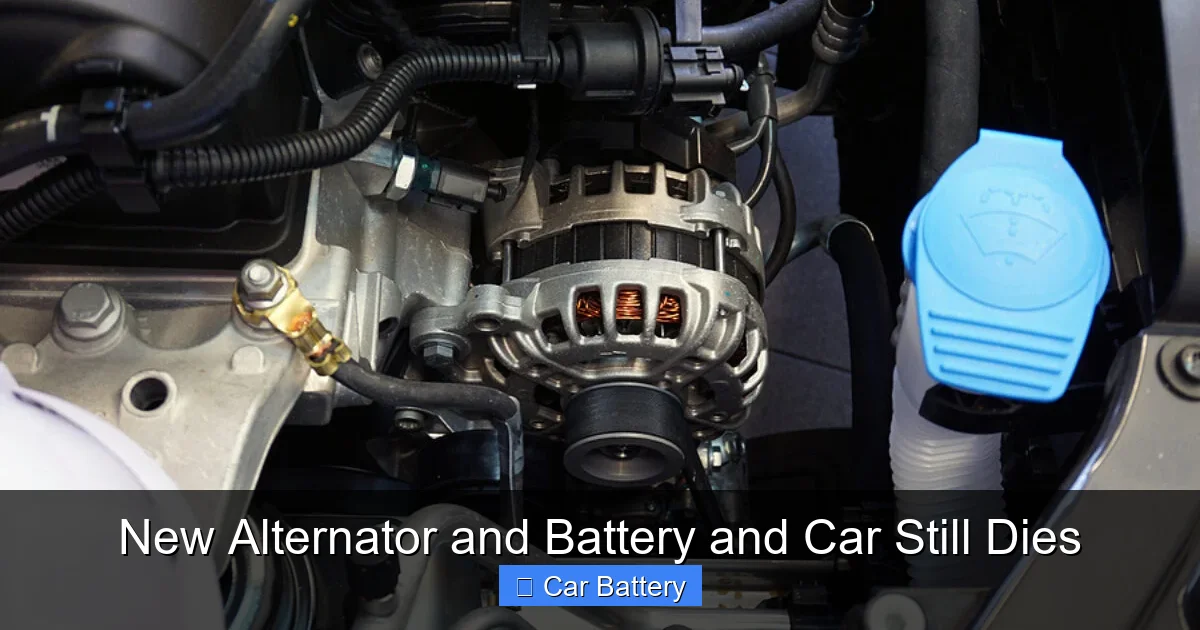
Visual guide about New Alternator and Battery and Car Still Dies
Image source: carmechan.com
While many of these tests can be done at home, some issues require professional tools and expertise.
Call a mechanic if:
– You can’t find the source of a parasitic drain
– The alternator tests good but the car still dies
– You suspect a faulty control module (like the PCM or BCM)
– There’s evidence of electrical fire or melted wiring
Modern cars have complex computer systems that manage charging, and sometimes only a dealer or specialist can access the right diagnostic software.
Preventing Future Problems: Maintenance Tips
Once you’ve fixed the issue, keep it from happening again with regular maintenance.
Regular Inspections
– Check battery terminals and cables every 6 months.
– Look for corrosion, looseness, or damage.
– Clean terminals with a wire brush and baking soda solution.
Belt and Pulley Checks
– Inspect the serpentine belt for cracks, glazing, or wear.
– Ensure the alternator pulley spins freely and aligns with the belt.
Battery Health Monitoring
– Use a battery tester or multimeter to check voltage regularly.
– Replace the battery every 3–5 years, depending on climate and usage.
Avoid Unnecessary Accessories
– Be cautious with aftermarket electronics.
– Ensure they’re wired correctly and have proper fuses.
Keep It Clean
– Wash under the hood periodically to remove dirt and debris.
– Prevent moisture buildup that can lead to corrosion.
Real-Life Example: The Case of the Phantom Drain
Let’s look at a real-world scenario. Sarah bought a used SUV and noticed it would sometimes not start in the morning. She replaced the battery and alternator—still died.
She took it to a shop, and they found a parasitic drain of 120 milliamps. After pulling fuses, they discovered the issue: the rear wiper motor was stuck in the “on” position, even with the switch off. The motor was drawing power constantly, killing the battery overnight.
The fix? Replacing the wiper motor and relay. Total cost: $180. Much cheaper than another alternator.
This shows how a small, overlooked component can cause big problems—even with new major parts.
Conclusion: Don’t Give Up—Find the Real Cause
It’s frustrating when your car still dies after replacing the alternator and battery. But don’t lose hope. The solution is often hiding in the details: a corroded wire, a stuck relay, or a bad ground.
By understanding how your car’s electrical system works and following a systematic troubleshooting process, you can find and fix the real issue. Use a multimeter, check for drains, inspect connections, and don’t ignore warning signs.
Remember, new parts are only as good as the system they’re installed in. Take the time to diagnose properly, and you’ll save money, time, and frustration in the long run.
Your car doesn’t have to be a mystery. With the right knowledge and tools, you can keep it running smoothly—no matter what.
Frequently Asked Questions
Why does my car still die after replacing the alternator and battery?
Even with new parts, issues like parasitic drain, bad grounds, or faulty wiring can prevent proper charging. The alternator and battery rely on a healthy electrical system to function.
How can I tell if my alternator is working correctly?
Use a multimeter to check battery voltage with the engine running. It should read between 13.5 and 14.5 volts. If it’s lower, the alternator may not be charging.
What is a parasitic drain, and how do I find it?
A parasitic drain is when something draws power from the battery when the car is off. Use a multimeter to measure current draw and pull fuses to isolate the circuit causing it.
Can a bad ground cause my car to die?
Yes. A poor ground connection disrupts the electrical circuit, preventing the alternator from charging the battery and causing stalling or no-start conditions.
Should I replace the alternator and battery at the same time?
Not necessarily. Test both first. A weak battery can strain a new alternator, but a bad alternator can ruin a new battery. Diagnose before replacing.
How often should I check my car’s electrical system?
Inspect battery terminals and cables every 6 months. Test voltage annually and check for corrosion, especially in extreme climates.
