
How Long Should I Run a Car to Charge the Battery

Running your car for just 10–15 minutes may not fully recharge a dead battery—especially in cold weather or with older batteries. To properly restore charge, aim for at least 30 minutes of driving, preferably on the highway, and consider using a smart charger for long-term battery health.
Key Takeaways
- Short idling won’t cut it: Letting your car idle for 10–15 minutes typically only provides a small trickle of charge—nowhere near enough to fully recharge a depleted battery.
- Drive for at least 30 minutes: To effectively recharge your car battery, drive continuously for 30 minutes or more, especially at highway speeds where the alternator works more efficiently.
- Alternator output matters: The alternator generates power while the engine runs, but it takes time to replenish the energy used during startup—especially after a deep discharge.
- Cold weather increases charging time: In winter, batteries lose capacity and require longer runtimes to recharge due to thicker engine oil and reduced chemical efficiency.
- Use a battery charger for best results: For optimal charging—especially after a jump-start or long storage—use a quality smart charger instead of relying solely on driving.
- Frequent short trips drain the battery: If you only drive short distances regularly, your battery may never fully recharge, leading to gradual weakening over time.
- Watch for warning signs: Slow cranking, dim lights, or frequent jump-starts indicate your battery isn’t holding a charge and may need professional testing or replacement.
📑 Table of Contents
- How Long Should I Run a Car to Charge the Battery?
- Why Your Car Battery Dies (And Why It Matters)
- How the Alternator Charges the Battery
- How Long Should You Run the Car to Charge the Battery?
- Why Idling Isn’t Enough (And What to Do Instead)
- Best Practices for Maintaining Battery Health
- When to Use a Battery Charger Instead of Driving
- Signs Your Battery Isn’t Charging Properly
- Conclusion: Drive Smart, Charge Right
How Long Should I Run a Car to Charge the Battery?
We’ve all been there—you hop in your car, turn the key, and… nothing. Or worse, it cranks slowly, like the engine is struggling to wake up. You jump-start it, get going, and then wonder: “How long should I run the car to charge the battery so this doesn’t happen again?”
It’s a common question, and the answer isn’t as simple as “just let it idle for 10 minutes.” While that might help a little, it’s rarely enough to fully recharge a battery—especially if it was deeply discharged. The truth is, how long you need to run your car depends on several factors: the battery’s condition, the weather, how it died in the first place, and even your driving habits.
In this guide, we’ll break down exactly how long you should run your car to charge the battery, why idling isn’t enough, and what you can do to keep your battery healthy for the long haul. Whether you’re dealing with a dead battery after a long weekend or just trying to avoid future issues, this article will give you practical, science-backed advice.
Why Your Car Battery Dies (And Why It Matters)
Visual guide about How Long Should I Run a Car to Charge the Battery
Image source: weldingtroop.com
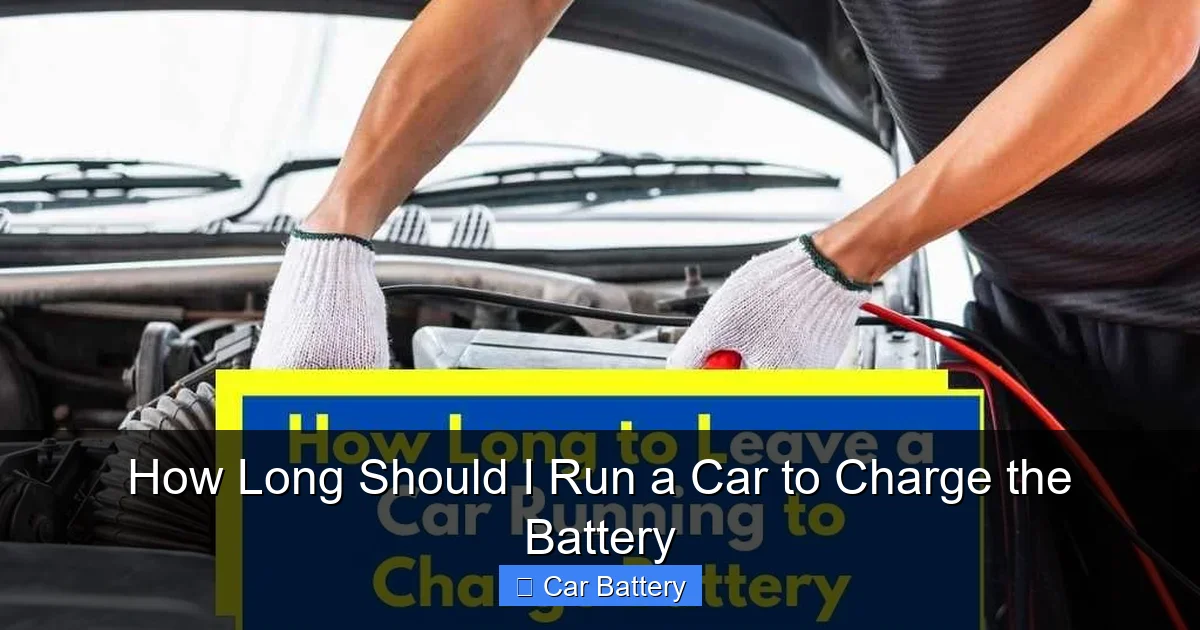
Before we dive into charging times, it’s important to understand why car batteries die in the first place. Most modern cars use a 12-volt lead-acid battery to start the engine and power electronics when the engine is off. Once the engine is running, the alternator takes over, generating electricity to power the car and recharge the battery.
But here’s the catch: starting your car uses a lot of power—often 200–600 amps in just a few seconds. That’s a massive drain on the battery. If your battery was already weak, or if you left lights on, used the radio for hours with the engine off, or simply didn’t drive enough, that energy isn’t fully replaced.
Common Causes of Battery Drain
- Leaving lights or electronics on: Interior lights, trunk lights, or even a phone charger left plugged in can slowly drain the battery overnight.
- Short driving trips: If you only drive 5–10 minutes at a time, the alternator doesn’t have enough time to recharge the battery fully.
- Extreme temperatures: Cold weather slows chemical reactions in the battery, reducing its capacity. Heat accelerates internal corrosion.
- Old or worn-out battery: Most car batteries last 3–5 years. After that, they lose their ability to hold a charge.
- Parasitic drain: Some electronics (like alarms or infotainment systems) draw small amounts of power even when the car is off. Over time, this can kill the battery.
Understanding these causes helps explain why simply “letting the car run” isn’t always the solution. If the battery is old or the drain was severe, you’ll need more than a quick idle to get it back to full strength.
How the Alternator Charges the Battery
Visual guide about How Long Should I Run a Car to Charge the Battery
Image source: weldingtroop.com
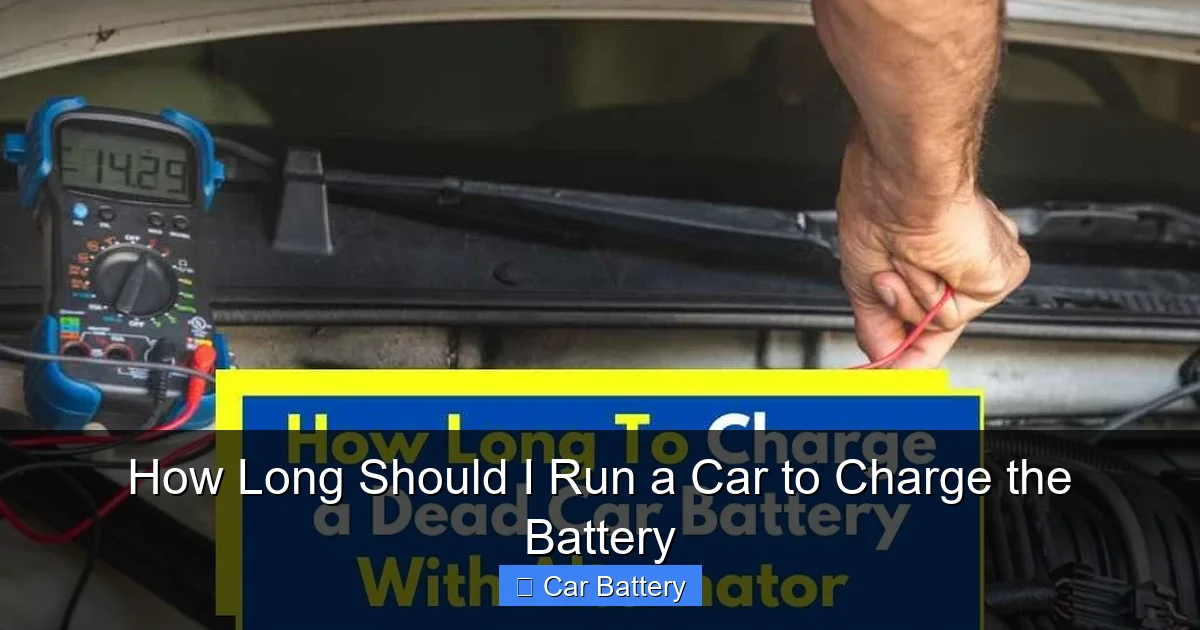
The alternator is the heart of your car’s charging system. It’s a small generator powered by a belt connected to the engine. When the engine runs, the alternator produces electricity—typically between 13.5 and 14.5 volts—which charges the battery and powers the car’s electrical systems.
But here’s a key point: the alternator doesn’t instantly “refill” the battery like a gas pump. It works gradually, and its output depends on engine speed (RPM). At idle, the alternator spins slower and produces less power. At higher RPMs—like when you’re driving on the highway—it generates significantly more electricity.
Charging Speed Depends on Engine RPM
- Idling (600–800 RPM): Produces about 20–40 amps. Enough to power basic systems, but not enough to rapidly recharge a dead battery.
- City driving (1,500–2,500 RPM): Generates 40–70 amps. Better, but still slow for recharging.
- Highway driving (2,500–3,500 RPM): Can produce 70–100+ amps. This is where the alternator really shines and can effectively recharge the battery.
So, if you’re trying to charge your battery, driving—especially at higher speeds—is far more effective than idling.
How Much Charge Is Needed?
A typical car battery holds about 48 amp-hours (Ah) of energy. Starting the car might use 20–30 Ah. To fully recharge that, you’d need to replace those amp-hours—but the alternator doesn’t deliver them all at once.
Let’s say your alternator is producing 50 amps at highway speeds. In theory, it could replace 25 Ah in 30 minutes. But in reality, charging isn’t 100% efficient. Some energy is lost as heat, and the battery accepts charge more slowly as it gets closer to full.
So, even under ideal conditions, it takes time—and consistent driving—to fully recharge a depleted battery.
How Long Should You Run the Car to Charge the Battery?
Visual guide about How Long Should I Run a Car to Charge the Battery
Image source: smartcdn.gprod.postmedia.digital
Now for the million-dollar question: how long should you run your car to charge the battery?
The short answer: At least 30 minutes of continuous driving, preferably at highway speeds.
But let’s break that down based on different scenarios.
After a Jump-Start
If your battery was completely dead and you needed a jump-start, the battery is likely deeply discharged—maybe down to 50% or less. In this case:
– 10–15 minutes of idling: Might give you just enough charge to restart the car if it stalls, but won’t fully recharge it.
– 30 minutes of city driving: Better, but still may not be enough if the battery was very low.
– 30–60 minutes of highway driving: Ideal. This gives the alternator enough time and RPM to replenish the lost charge.
Example: You jump-start your car in a parking lot. You drive home—15 minutes on city streets. The battery light goes off, but the next morning, the car struggles to start. Why? Because 15 minutes wasn’t enough to fully recharge it.
After Leaving Lights On
If you accidentally left your headlights on overnight, the battery may be partially drained—say, 70% charged. In this case:
– 20–30 minutes of driving: Should be sufficient to restore most of the charge.
– Idling for 30 minutes: Might help, but it’s inefficient. You’re better off driving.
Tip: If you realize you left the lights on, don’t just start the car and let it idle. Drive it. The alternator works better under load.
In Cold Weather
Cold weather is a battery killer. At 32°F (0°C), a battery can lose up to 35% of its capacity. At 0°F (-18°C), it can lose over 50%. Plus, engine oil thickens, making it harder to start—which uses even more battery power.
In winter:
– Double your charging time. If you normally need 30 minutes, aim for 45–60 minutes.
– Drive at higher RPMs when possible. Avoid short trips. If you must make a short trip, consider using a battery maintainer afterward.
Example: You start your car on a -10°F morning. It cranks slowly. You drive 10 minutes to work, park, and come back—same issue. The battery never got a proper charge.
For Older or Weak Batteries
If your battery is 4–5 years old or showing signs of weakness (slow cranking, dim lights), it may not accept a charge as efficiently. In this case:
– Driving may not be enough. The battery could have sulfation—a buildup of lead sulfate crystals that reduces capacity.
– Use a smart charger. These devices can desulfate the battery and charge it more effectively than the alternator.
Tip: Have your battery tested at an auto parts store. Many offer free testing and can tell you if it’s time for a replacement.
Why Idling Isn’t Enough (And What to Do Instead)
Many people think, “I’ll just let the car run for 10 minutes and it’ll be fine.” Unfortunately, that’s a myth.
The Problem with Idling
When you idle, the engine runs at low RPM—typically 600–800. At this speed, the alternator produces minimal power. Plus, the car’s electrical systems (lights, radio, heater, etc.) are still drawing power.
So, you’re essentially trying to fill a bucket with a tiny hose while someone is scooping water out with a cup. Net gain? Very little.
Studies and real-world tests show that:
– Idling for 10 minutes may only add 5–10% charge to a depleted battery.
– It can take 30–60 minutes of idling to achieve what 15 minutes of highway driving can do.
And that’s if the battery is in good condition. If it’s old or damaged, even long idling may not help.
Better Alternatives to Idling
- Drive the car: Even 20–30 minutes of continuous driving is far more effective.
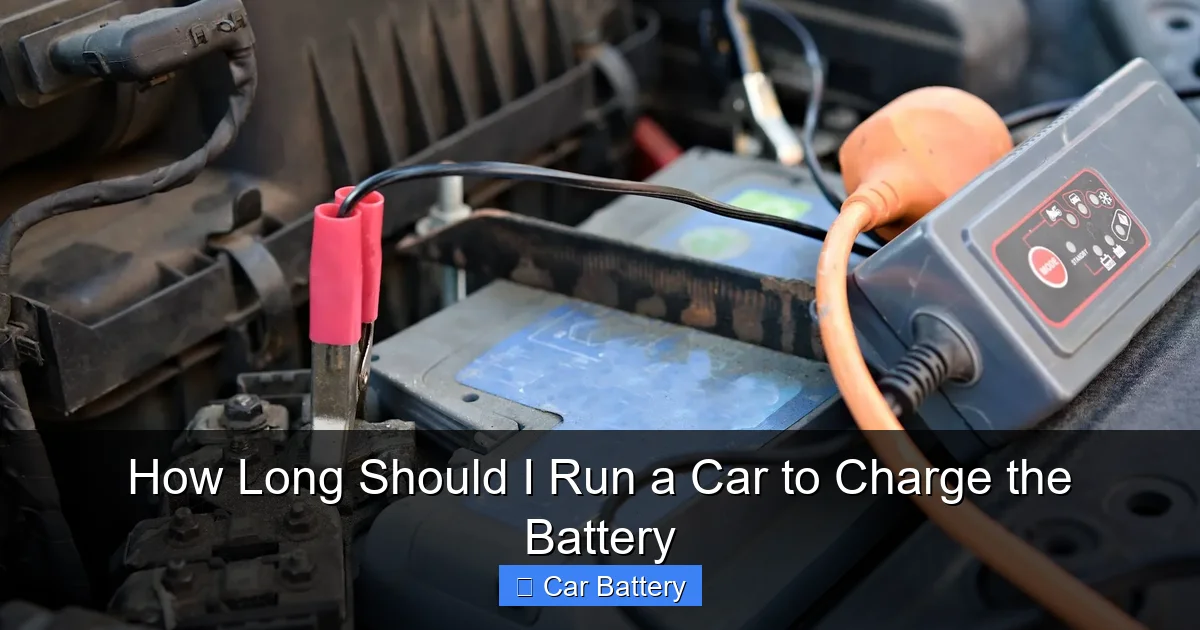
- Use a battery charger: A smart charger can fully recharge a battery in 2–6 hours, depending on capacity and discharge level.
- Combine both: Jump-start the car, drive for 30 minutes, then plug in a charger overnight for a full recharge.
Example: You’re at a friend’s house and realize you left the lights on. Instead of idling in the driveway, take a 20-minute drive around the neighborhood. You’ll return with a much healthier battery.
Best Practices for Maintaining Battery Health
Charging your battery after it dies is one thing—but preventing it from dying in the first place is even better. Here are some proven tips to keep your battery in top shape.
Drive Regularly and Consistently
Frequent short trips are one of the biggest enemies of car batteries. Each time you start the car, you drain the battery. If you don’t drive long enough to recharge it, the battery gradually weakens.
Solution:
– Try to drive at least 20–30 minutes, 3–4 times per week.
– If you only make short trips, consider taking a longer drive once a week to “exercise” the battery.
Use a Battery Maintainer for Infrequent Use
If you have a classic car, motorcycle, or vehicle that sits for weeks or months, use a battery maintainer (also called a trickle charger or smart charger). These devices:
– Provide a slow, steady charge.
– Prevent sulfation.
– Automatically shut off when the battery is full.
Tip: Look for a charger with “float mode” or “maintenance mode” for long-term storage.
Check Connections and Clean Terminals
Corroded or loose battery terminals can prevent proper charging. Over time, white or greenish buildup can form on the terminals, acting as an insulator.
How to clean:
1. Turn off the engine.
2. Disconnect the negative terminal first, then the positive.
3. Use a wire brush or battery terminal cleaner to remove corrosion.
4. Reconnect the positive terminal first, then the negative.
5. Apply a thin layer of dielectric grease to prevent future buildup.
Test Your Battery and Charging System
Most auto parts stores offer free battery and alternator testing. They can tell you:
– The battery’s state of charge.
– Its cold cranking amps (CCA).
– Whether the alternator is charging properly.
Do this once a year, especially before winter.
Avoid Excessive Electrical Load
Using high-draw electronics (like powerful sound systems, heated seats, or phone chargers) with the engine off can drain the battery quickly.
Rule of thumb: If the engine is off, limit electrical use to 10–15 minutes max.
When to Use a Battery Charger Instead of Driving
While driving is effective, it’s not always the best or most practical way to charge your battery. Here’s when you should reach for a charger instead.
After a Deep Discharge
If your battery was completely dead (e.g., from leaving lights on for 12+ hours), it may have suffered internal damage. A smart charger can:
– Apply a controlled charge to prevent overheating.
– Use desulfation modes to break down sulfate crystals.
– Monitor voltage and current for safety.
Driving alone may not fully restore such a battery.
For Long-Term Storage
If you’re storing a car for weeks or months, a battery maintainer is essential. Idling or short drives won’t cut it.
If You Have Limited Driving Time
Not everyone can drive for 30 minutes every time the battery dies. A charger gives you flexibility—charge overnight while you sleep.
For Older Vehicles or High-End Cars
Some vehicles have sensitive electronics that can be damaged by inconsistent charging. A smart charger provides a clean, stable charge.
Tip: Invest in a quality smart charger (like those from NOCO, Battery Tender, or CTEK). They’re affordable (usually $50–$100) and can extend your battery’s life by years.
Signs Your Battery Isn’t Charging Properly
Even if you drive regularly, your battery might not be charging correctly. Watch for these warning signs:
- Slow engine cranking: The engine turns over sluggishly, especially in cold weather.
- Dim headlights or interior lights: Lights flicker or are noticeably dimmer than usual.
- Battery warning light on the dashboard: Indicates a problem with the charging system.
- Frequent jump-starts: If you need a jump more than once every few months, something’s wrong.
- Swollen or bloated battery case: A sign of overcharging or internal damage.
If you notice any of these, have your battery and alternator tested immediately. Ignoring the issue can lead to a dead battery at the worst possible time.
Conclusion: Drive Smart, Charge Right
So, how long should you run a car to charge the battery? The answer isn’t one-size-fits-all, but the general rule is clear: 30 minutes of driving—preferably at highway speeds—is the minimum needed to meaningfully recharge a depleted battery. Idling for 10–15 minutes? Not enough. Cold weather? Add more time. Old battery? Consider a charger.
The best approach combines smart driving habits with proper maintenance. Drive regularly, avoid short trips when possible, clean your terminals, and test your battery annually. And when in doubt, use a smart charger—it’s faster, safer, and more effective than relying on the alternator alone.
Your car battery is a small but mighty component. Treat it well, and it’ll keep you moving for years to come.
Frequently Asked Questions
Can I charge my car battery by just letting it idle?
No, idling alone is not enough to fully recharge a dead or depleted battery. At idle, the alternator produces minimal power, and the car’s electronics continue to draw energy. You’ll get only a small trickle of charge—nowhere near enough to restore a deep discharge.
How long should I drive to charge a dead battery?
Aim for at least 30 minutes of continuous driving, preferably at highway speeds (2,500+ RPM). This gives the alternator enough time and power to replenish the energy used during startup. In cold weather or with older batteries, you may need 45–60 minutes.
Will a short 10-minute drive recharge my battery?
Probably not. A 10-minute drive, especially in city traffic, provides limited charging time and lower alternator output. While it might help slightly, it’s unlikely to fully recharge a depleted battery and could lead to repeated starting issues.
Is it better to use a battery charger or drive the car?
A smart battery charger is often better for full recharging, especially after a deep discharge or for long-term maintenance. It provides a controlled, efficient charge and can extend battery life. Driving works well for mild discharges but may not fully restore a weak or old battery.
Can cold weather affect how long it takes to charge a battery?
Yes, cold weather significantly slows charging. Batteries lose capacity in the cold, and engine oil thickens, increasing the power needed to start. In winter, you may need to double your charging time—aim for 45–60 minutes of driving to achieve what 30 minutes would in warmer weather.
How often should I test my car battery?
Have your battery and charging system tested at least once a year, preferably before winter. Most auto parts stores offer free testing and can detect issues like low voltage, weak cranking power, or alternator problems before they leave you stranded.
