
Car Battery Is Black Negative or Positive

Most car batteries have a black negative terminal and a red positive terminal, but color alone isn’t always reliable. Always check for symbols (+/-), terminal size, or labeling to confirm polarity and prevent dangerous mistakes.
If you’ve ever popped the hood of your car and stared at the battery like it’s a puzzle from another planet, you’re not alone. One of the most common questions—especially for new drivers or DIY enthusiasts—is: “Is the black terminal on a car battery negative or positive?” It’s a simple question, but getting it wrong can lead to serious consequences, from fried electronics to dangerous sparks. Understanding battery polarity isn’t just about following color codes—it’s about safety, vehicle health, and peace of mind.
Car batteries are the heart of your vehicle’s electrical system. They provide the initial surge of power to start the engine and keep everything from your headlights to your infotainment system running when the engine is off. But like any powerful energy source, they demand respect. The two terminals—positive and negative—must be connected correctly every time you jump-start, replace, or maintain your battery. Misidentifying them can turn a routine task into a costly or hazardous situation. So let’s clear up the confusion once and for all: yes, in most cases, the black cable connects to the negative terminal, but there’s more to the story than just color.
Key Takeaways
- Black usually means negative: On most car batteries, the black cable connects to the negative (-) terminal, while red connects to the positive (+).
- Don’t rely on color alone: Aftermarket parts or wear can change cable colors—always verify with markings or symbols.
- Terminal size matters: The positive terminal is often slightly larger in diameter than the negative on many batteries.
- Look for +/- symbols: Most batteries have clear “+” and “–” markings molded into the casing near each terminal.
- Wrong connection risks damage: Reversing polarity can fry electronics, blow fuses, or even cause battery explosion.
- Use safety gear: Wear gloves and goggles when handling car batteries to protect against acid and sparks.
- When in doubt, consult the manual: Your vehicle’s owner’s manual or battery label provides definitive polarity info.
📑 Table of Contents
Understanding Car Battery Basics
Before diving into terminal colors, it helps to understand what a car battery actually does and how its terminals work. A standard 12-volt lead-acid car battery consists of six cells, each producing about 2.1 volts. These cells are connected in series to deliver the 12+ volts needed to crank your engine. Each cell has two lead plates—one made of lead dioxide (positive) and one made of sponge lead (negative)—submerged in an electrolyte solution of sulfuric acid and water.
The terminals are the external connection points where you attach the vehicle’s electrical system. One terminal is designated positive (+), and the other is negative (–). Electricity flows from the negative terminal through the car’s chassis (which acts as a ground) and back to the positive terminal, completing the circuit. This flow is essential for everything from starting your car to charging your phone via the USB port.
Now, here’s the key: the polarity—the assignment of positive and negative—is fixed by the battery’s internal chemistry. You can’t change it. What you *can* change is how you connect cables to those terminals. And that’s where confusion often begins.
Why Polarity Matters
Reversing the connections—hooking the positive cable to the negative terminal and vice versa—can cause immediate and severe damage. Modern vehicles are packed with sensitive electronics: ECUs (Engine Control Units), sensors, infotainment systems, and more. These components are designed to receive power in a specific direction. Reverse the polarity, and you risk frying circuit boards, blowing fuses, or even causing a short circuit that could lead to fire or battery explosion.
Even if no visible damage occurs, reversed polarity can degrade battery life and harm the alternator. That’s why correctly identifying which terminal is which isn’t just a good practice—it’s a necessity.
Decoding Terminal Colors: Black vs. Red
Visual guide about Car Battery Is Black Negative or Positive
Image source: c8.alamy.com
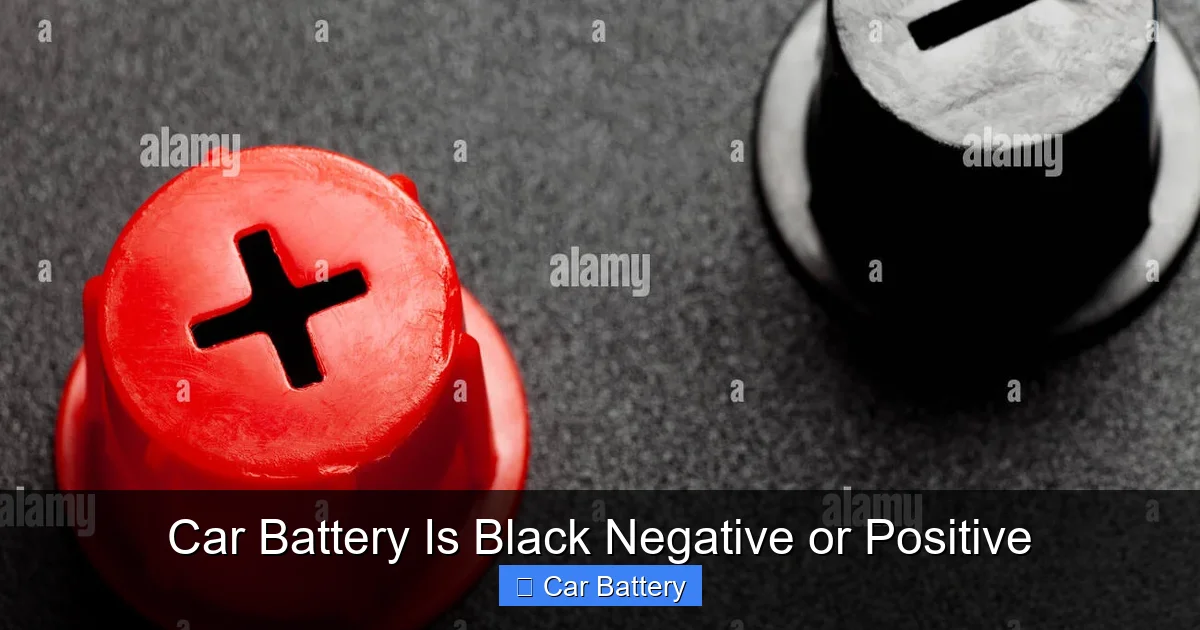
So, back to the original question: Is the black terminal negative or positive? The short answer is: **black typically indicates the negative terminal**, while red indicates the positive. This color coding follows international electrical standards and is used by most automotive manufacturers.
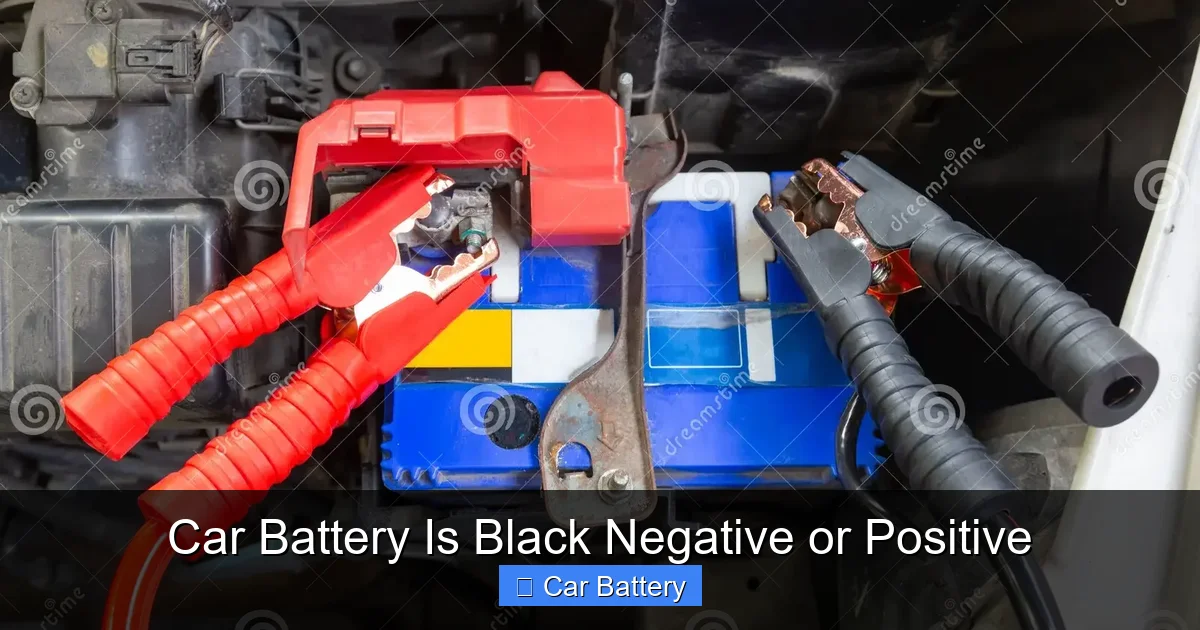
When you look at a typical car battery, you’ll usually see two thick cables clamped to the terminals. One is wrapped in red insulation (or has a red cover), and the other is black. The red cable connects to the positive (+) terminal, and the black cable connects to the negative (–) terminal. This convention helps mechanics, drivers, and even first-time jump-starters quickly identify the correct connections.
But here’s the catch: **color isn’t foolproof**. Over time, cable insulation can fade, get dirty, or be replaced with non-standard parts. Some aftermarket batteries or custom setups might use different colors. In rare cases, manufacturers may deviate from the standard—especially in older or imported vehicles. That’s why relying solely on cable color can be risky.
Real-World Example: Jump-Starting a Friend’s Car
Imagine you’re helping a friend whose car won’t start. You grab your jumper cables—red and black clamps—and pop both hoods. You see two batteries. On yours, the red cable is clearly connected to a terminal marked “+,” and the black to “–.” On your friend’s car, the cables are faded, and one looks almost brown. You assume the darker one is negative and connect accordingly.
But what if your assumption is wrong? If you accidentally connect the red clamp to the negative terminal, you’ve just created a reverse polarity situation. The moment you touch the final clamp, sparks fly, and your friend’s car might not only fail to start—it could suffer electrical damage.
This scenario underscores why color should be just one clue, not the only one.
How to Identify Positive and Negative Terminals Reliably
Visual guide about Car Battery Is Black Negative or Positive
Image source: thumbs.dreamstime.com
To avoid mistakes, use multiple methods to confirm terminal polarity. Here are the most reliable ways to tell which is which—beyond just looking at cable color.
Check for +/- Symbols
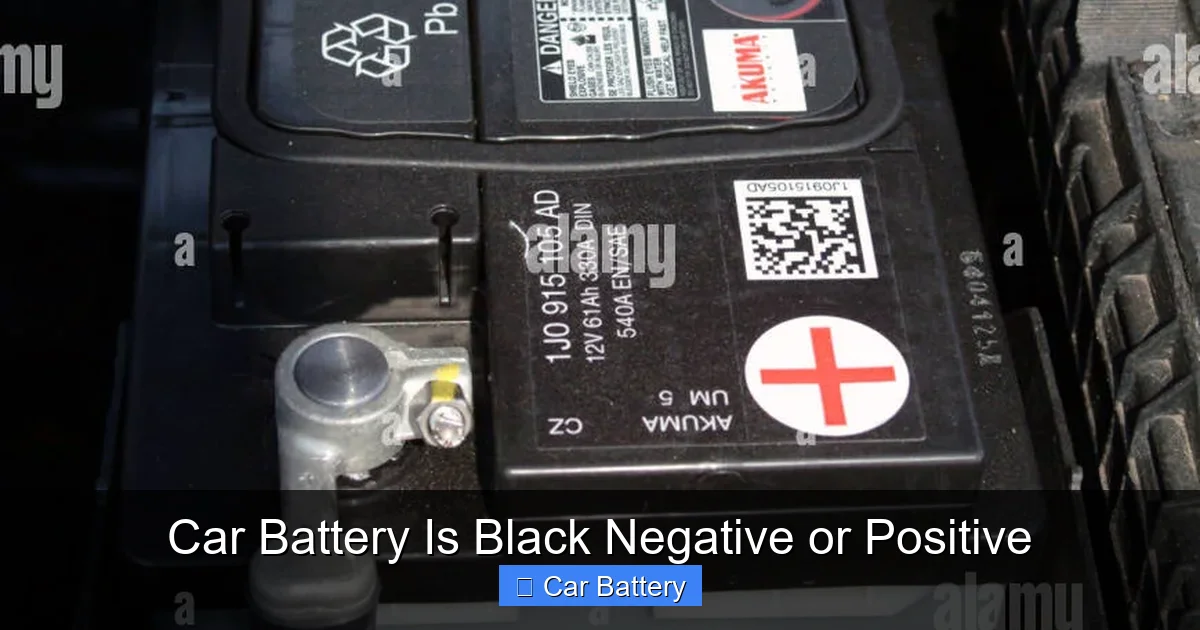
The easiest and most accurate method is to look for the “+” and “–” symbols molded directly into the battery casing near each terminal. These markings are standardized and rarely missing. Even if the cables are faded or replaced, the symbols remain. On most batteries, the positive terminal will have a bold “+” sign, often in red or raised lettering, while the negative terminal has a “–” sign, sometimes in black or white.
If you can’t see the symbols clearly, wipe away dirt or corrosion with a dry cloth. Never assume—take a moment to verify.
Compare Terminal Size
On many car batteries, especially older or standard lead-acid types, the positive terminal is slightly larger in diameter than the negative. This physical difference helps prevent incorrect connections. If one terminal looks noticeably thicker, it’s likely the positive one.
However, this isn’t universal. Some modern batteries, particularly AGM (Absorbent Glass Mat) or lithium-ion types, have identical-sized terminals. So while size can be a helpful clue, don’t rely on it exclusively.
Look at Cable Routing and Labels
Sometimes, the battery or nearby components have labels like “POS” or “NEG” printed on them. Additionally, the positive cable often runs directly to the starter motor or fuse box, while the negative cable connects to the chassis or engine block (ground). Tracing the cables can give you a strong indication of polarity.
For example, if you see a thick red cable running from the battery to a large bolt on the engine, that’s almost certainly the positive connection. The black cable bolted to the frame is likely the ground (negative).
Use a Multimeter (For Confirmation)
If you’re still unsure, a multimeter is your best friend. Set it to DC voltage (20V range), and touch the red probe to one terminal and the black probe to the other. If the reading is positive (e.g., +12.6V), the red probe is on the positive terminal. If it shows a negative value (e.g., -12.6V), you’ve got it backward.
This method is foolproof and especially useful when dealing with unfamiliar batteries or troubleshooting electrical issues.
Common Mistakes and How to Avoid Them
Visual guide about Car Battery Is Black Negative or Positive
Image source: c8.alamy.com
Even experienced drivers make mistakes when it comes to battery polarity. Here are some common pitfalls and how to steer clear of them.
Assuming All Batteries Follow the Same Rules
Not all vehicles use the same battery layout. Some European cars, for instance, have batteries in the trunk or under the rear seat. Others use dual batteries or high-voltage systems in hybrids. Always check your owner’s manual or look for labels before assuming standard polarity.
Ignoring Corrosion or Damage
Corrosion—a powdery white or blue buildup—can obscure terminal markings and make identification harder. Clean terminals with a baking soda and water solution and a wire brush before attempting any work. Damaged or loose cables can also lead to misidentification, so inspect them carefully.
Rushing During Jump-Starts
In emergencies, it’s tempting to connect jumper cables quickly. But rushing increases the risk of error. Always follow the correct sequence: connect red to dead battery positive, red to good battery positive, black to good battery negative, and black to a grounded metal part on the dead car (not the negative terminal). This minimizes sparking near the battery, reducing explosion risk.
Using Non-Standard Cables
Cheap or mismatched jumper cables might not follow standard color coding. Always use high-quality cables with clearly marked clamps. If in doubt, label them yourself with tape or tags.
Safety First: Handling Car Batteries Responsibly
Car batteries contain sulfuric acid and produce hydrogen gas—both hazardous. Always prioritize safety when working with them.
Wear Protective Gear
Use safety goggles to protect your eyes from acid splashes and gloves to prevent skin contact. Long sleeves and closed-toe shoes are also recommended.
Work in a Well-Ventilated Area
Hydrogen gas is flammable and can ignite with a single spark. Avoid smoking, using open flames, or creating sparks near the battery.
Never Touch Both Terminals at Once
Your body can complete a circuit if you touch both terminals simultaneously, leading to electric shock. Keep one hand behind your back when connecting or disconnecting cables.
Dispose of Old Batteries Properly
Car batteries are highly recyclable. Take them to an auto parts store, recycling center, or hazardous waste facility. Never throw them in the trash.
When to Replace Your Battery
Even with correct polarity, batteries don’t last forever. Most last 3–5 years, depending on climate, driving habits, and maintenance. Signs it’s time for a replacement include:
– Slow engine crank (especially in cold weather)
– Dim headlights or interior lights
– Frequent need for jump-starts
– Swollen or leaking battery case
– Battery warning light on the dashboard
When replacing a battery, always double-check polarity before connecting cables. New batteries often come with protective caps and clear markings, making identification easier.
Conclusion
So, is the black terminal on a car battery negative or positive? In the vast majority of cases, **black means negative**, and red means positive. But color alone shouldn’t be your only guide. Always confirm polarity using symbols, terminal size, cable routing, or a multimeter. Taking a few extra seconds to verify can save you from costly repairs, electrical damage, or even personal injury.
Understanding your car’s battery isn’t just about fixing a dead engine—it’s about respecting the power under your hood and keeping yourself and your vehicle safe. Whether you’re jump-starting a friend’s car, replacing your own battery, or just curious about how things work, knowing how to identify positive and negative terminals is a fundamental skill every driver should have.
Remember: when it comes to car batteries, assumptions can be dangerous. Look, double-check, and when in doubt, consult your manual or a professional. Your car—and your peace of mind—will thank you.
Frequently Asked Questions
Is the black terminal always negative on a car battery?
In most cases, yes—the black cable connects to the negative terminal. However, aftermarket parts or wear can alter cable colors, so always verify with +/- symbols or other indicators.
What happens if I connect the battery cables backward?
Reversing polarity can damage your car’s electronics, blow fuses, harm the alternator, or even cause the battery to explode. Always double-check connections before powering up.
Can I use a multimeter to check battery polarity?
Absolutely. Set the multimeter to DC voltage, touch the probes to the terminals, and check the reading. A positive value means the red probe is on the positive terminal.
Why is the positive terminal sometimes bigger?
On many batteries, the positive terminal is slightly larger to prevent incorrect connections. This physical difference helps users identify polarity by touch or sight.
Do all cars have the battery under the hood?
No. Some vehicles, especially luxury or European models, place the battery in the trunk, under a seat, or in the fender. Always consult your owner’s manual for location and polarity info.
How often should I check my car battery?
Inspect your battery every 6 months for corrosion, loose cables, or swelling. Test voltage annually, especially before winter, to ensure reliable performance.
