
Car Cover Not Waterproof? Why It Leaks and What to Do

Quick Answer
If your car cover is not waterproof, first work out whether rain is passing through the fabric or moisture is forming underneath as condensation. A worn coating, leaking seams, the wrong type of cover, poor fit, and damaged fabric are common causes. Independent car cover testing from Car and Driver also shows that outdoor covers can differ significantly in moisture protection.
What to check first
- Check the label: Water-resistant and waterproof don’t mean the same thing in everyday use.
- Inspect the seams: Needle holes and worn seam tape can let rain through.
- Look for damage: Small tears, thin spots, and worn coatings often leak first.
- Check for condensation: A damp car doesn’t automatically mean rain penetrated the cover.
- Test one area: Use a controlled hose test instead of waiting for another storm.
Best next step
- If water passes directly through sound fabric, check the warranty or replace the cover with a breathable outdoor model designed for rain.
I understand how frustrating this is. You buy a cover to keep rain off the car, then remove it after a storm and find water underneath.
I’ve found that the important question isn’t simply, “Why did my cover get wet?” You need to identify where that moisture came from before replacing or treating anything.
In This Guide
Why Is My Car Cover Not Waterproof?
A car cover may let water through because it was never designed to block prolonged rain, or because its protective layer has deteriorated. Seams, abrasion, age, fit, and fabric construction can all change how well it sheds water.
A waterproof car cover is a vehicle cover designed to stop liquid water from passing through its outer barrier during normal intended use. A water-resistant cover mainly slows water penetration and sheds lighter exposure.
1. The cover may only be water-resistant
This is the first thing I check. Product listings often use terms such as all-weather, weatherproof, water-repellent, and waterproof as though they mean the same thing.
In practice, performance can differ. A thin cover may handle a short shower but become saturated during hours of steady rain.
- Indoor cover: Mainly protects against dust and light contact.
- Water-resistant cover: Sheds brief rain and splashes but may eventually soak through.
- Outdoor weather cover: Designed for sun, rain, wind, dust, and other exposure.
- Waterproof-style cover: Uses a stronger water barrier, sealed construction, or coated fabric to limit penetration.
2. The seams may be leaking
I’ve seen covers where the main fabric sheds water well but the stitching becomes wet almost immediately. Every stitched seam creates tiny needle openings unless the construction includes an effective water barrier.
Pay special attention to the roof line, mirror pockets, antenna area, and panels joining across the hood and trunk.
3. The outer coating may be worn
Many synthetic covers rely on a coating or laminated layer. Sun exposure, washing, folding, rubbing, and normal aging can weaken that barrier.
A common clue is uneven performance. One section beads water while another darkens and absorbs it.
4. Rubbing can create thin spots
A loose cover moves in wind. Over time, repeated contact around mirrors, spoilers, roof edges, and bumpers can wear the material.
Kelley Blue Book also warns that an improperly secured cover can flap and abrade vehicle paint during storage. Their long-term car storage guidance recommends choosing the correct indoor or outdoor cover and securing it properly.
Section Takeaway: A wet car doesn’t automatically prove that the whole cover has failed. Check its rating, seams, coating, high-wear areas, and fit before deciding what went wrong.
Is the Moisture Rain or Condensation?
Moisture beneath a car cover can come from outside rain or from water vapor trapped underneath. Telling the difference can save you from replacing a perfectly usable cover.
I usually look at the moisture pattern first. Rain penetration and condensation often leave different clues.
| What you see | Likely cause | What to check |
|---|---|---|
| Wet patch directly below a seam | Seam leakage | Stitching and seam tape |
| One fabric panel soaked through | Worn coating or damaged fabric | Thin spots, fading, abrasion |
| Fine moisture over many surfaces | Possible condensation | Ventilation and trapped humidity |
| Wet vehicle after covering it damp | Trapped moisture | Condition before installation |
| Water near an opening or loose edge | Wind-driven rain | Fit, elastic hem, and straps |
Condensation becomes more likely when warm, humid air gets trapped and temperatures change. A completely sealed plastic barrier can make that moisture harder to escape.
This is why breathability matters. For longer storage, Edmunds recommends a weatherproof outdoor cover when a garage isn’t available and also stresses cleaning the vehicle before storage in its long-term vehicle storage guide.
Try the dry-car test
Start with a completely dry car and dry cover. Install the cover before rain arrives and inspect the vehicle afterward.
If distinct wet spots line up with soaked areas of fabric or seams, penetration becomes more likely. Fine moisture spread across otherwise protected surfaces can point toward condensation.
How Do I Find Where My Car Cover Is Leaking?
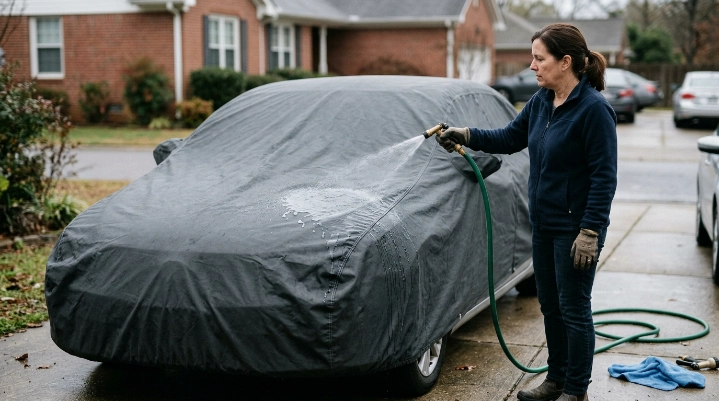
You can isolate most leaks with a simple controlled water test. I prefer this method because waiting for another storm makes the result harder to interpret.
- Dry the cover fully. Testing damp fabric makes the source harder to identify.
- Inspect it in good light. Look for holes, stretched material, peeling layers, and damaged stitching.
- Place the cover on a dry vehicle. Secure it as you normally would.
- Wet one small section. Use gentle hose flow for about 10 minutes rather than a pressure washer.
- Check underneath. Look directly below the test area for droplets or damp fabric.
- Repeat on seams. Test the roof seam, mirror areas, and other stitched joints separately.
Don’t blast the cover with high-pressure water. That creates a harsher condition than normal rainfall and can force water through openings that otherwise wouldn’t leak.
Inspect the underside too
Turn the dry cover over and look for changes in texture. Peeling coatings, brittle areas, broken seam tape, or visible daylight through pinholes are strong warning signs.
I also rub suspicious areas gently between my fingers. A section that feels much thinner than surrounding material deserves closer inspection.
Can You Fix a Car Cover That Is No Longer Waterproof?
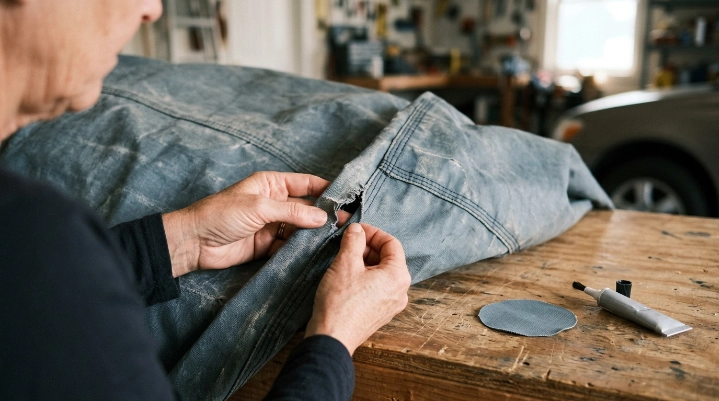
Small localized problems can sometimes be repaired. Widespread coating failure usually means replacement makes more sense.
Patch small holes
For a small tear, use a repair method approved for that specific cover material. A random household adhesive can harden, separate, or damage coated fabric.
Place patches where they won’t create a rough surface against the paint. Follow the cover manufacturer’s instructions whenever possible.
Repair leaking seams carefully
If a seam leaks but the surrounding material remains sound, a compatible seam treatment may help. Test any product on a hidden area first.
Don’t assume tent waterproofing chemicals are automatically safe for every car cover. Different coatings can react differently.
Be cautious with waterproofing sprays
A water-repellent treatment can sometimes restore water beading on compatible fabric. It cannot rebuild a cracked laminate or replace missing layers.
Before spraying the whole cover, check its care label and manufacturer instructions. Some treatments can change breathability, feel, or surface appearance.
- Worth repairing: One small tear, one failed seam, or a localized worn area.
- Probably replace: Multiple leaks, peeling coating, brittle material, large tears, or widespread saturation.
When Should I Replace a Leaking Car Cover?
Replace it when the material itself can no longer provide dependable outdoor protection. Repeated repairs aren’t useful if water is entering through several unrelated areas.
As of 2026, independent testing still shows meaningful differences between inexpensive weather-resistant covers and heavier outdoor designs. Material construction and fit matter more than the word “waterproof” printed in a product title.
Signs replacement is the smarter choice
- The main fabric allows water through during a controlled test.
- Several seams leak at the same time.
- The outer surface no longer beads water anywhere.
- The coating is peeling, cracking, or flaking.
- The cover has several thin or abraded spots.
- The fit is loose enough to flap badly in wind.
- The manufacturer specifies indoor use but you park outdoors.
If the cover is fairly new, check the warranty before modifying it. Applying an aftermarket coating or cutting the fabric could affect a warranty claim.
Choose the replacement for your parking conditions
A garage-kept daily driver has different needs from a vehicle parked outside through heavy rain. Buy for your real environment instead of the longest feature list.
Drivers in hail-prone areas should also remember that waterproofing isn’t impact protection. Kelley Blue Book’s hail-damage guidance recommends covered parking as the strongest protection and discusses padded or purpose-built alternatives when shelter isn’t available.
How Can I Keep My Car Dry Under a Cover?
Start with a dry vehicle, a clean cover, good ventilation, and a secure fit. Those four habits solve many moisture problems before they begin.
- Cover a dry car: Don’t trap wash water or rain beneath the material when you can avoid it.
- Use an outdoor-rated cover: Indoor dust covers aren’t designed for prolonged rain.
- Keep the cover clean: Dirt can hold moisture and create abrasive contact with paint.
- Secure every strap: A stable cover reduces flapping and wind-driven rain at the edges.
- Check ventilation: Breathable materials or designed vents help moisture escape.
- Inspect after severe weather: Look for shifted straps, pooling water, tears, or exposed panels.
- Dry the cover before storage: Folding it wet can encourage odor, mildew, and material deterioration.
Fit matters more than many owners expect. A cover should follow the vehicle closely without being stretched tight across sharp edges.
I prefer model-specific sizing when a car spends a lot of time outdoors. A loose universal cover has more material available to move around in wind.
Section Takeaway: The best moisture protection comes from matching the cover to the environment, keeping both surfaces clean and dry, and preventing wind from turning the cover into a moving abrasive sheet.
Frequently Asked Questions
Why is my waterproof car cover wet underneath?
The moisture may be rain penetration, condensation, or water that was already on the vehicle. Dry both the car and cover, then perform a controlled water test to determine whether liquid is passing through the material.
Are waterproof car covers actually waterproof?
Performance varies by construction and condition. Some outdoor covers can stop rain effectively, while others are better described as water-resistant and may allow moisture through during long or severe exposure.
Can rain damage a car under a cover?
Occasional moisture doesn’t automatically mean damage. However, repeatedly trapping water and dirt against the vehicle can create conditions you want to avoid, so remove the cover and allow the car and cover to dry when significant moisture collects underneath.
Should a car cover be breathable?
Breathability is useful for outdoor and longer-term storage because trapped moisture needs a way to escape. The goal is a cover that resists outside water while still managing water vapor underneath.
Can I put a tarp over my car cover?
A tarp may block rain, but it can also trap moisture and move against the vehicle in wind. If you use an extra barrier temporarily, secure it carefully and check the vehicle frequently instead of treating it as a permanent solution.
Can I waterproof an old car cover with spray?
Sometimes, if the manufacturer says the material accepts that type of treatment. A spray may restore surface water repellency, but it won’t repair major coating failure, worn fabric, open holes, or damaged seams.
Should I return a new car cover if it leaks?
If a new cover advertised for outdoor rain protection allows water directly through intact fabric during normal use, document the issue and check the seller or manufacturer’s warranty. Don’t apply coatings or modify it before reviewing the return terms.
Final Takeaway
If your car cover is not waterproof, don’t replace it based on one wet morning alone. First determine whether you’re seeing rain penetration, condensation, trapped water, or leakage around seams and openings.
A simple dry-car and hose test can usually narrow down the cause. Repair small isolated defects, but replace a cover when the fabric or protective coating has failed across larger areas.
Most importantly, choose a cover for where the vehicle actually sits. A breathable, secure, correctly fitted outdoor cover gives you a much better starting point than relying on a “waterproof” label alone.