
Mildew Under Car Cover: Why It Happens and How to Stop It

Quick Answer
Mildew under a car cover usually develops because moisture gets trapped between the cover, vehicle, and surrounding air. The fix is to uncover and completely dry the vehicle, clean the affected surfaces and cover, then correct the moisture source using better airflow and a breathable cover; the EPA’s moisture-control guidance also emphasizes fast drying and lower humidity as the key defenses against fungal growth.
Most likely causes
- Wet vehicle: The cover went on before rainwater, wash water, or condensation had dried.
- Poor ventilation: Damp air cannot escape easily from beneath the cover.
- Non-breathable material: Plastic-like covers may hold humidity close to the vehicle.
- Dirty surfaces: Dust, pollen, leaves, and other organic grime give fungal growth more material to live on.
- Humid storage: A damp garage, carport, or outdoor parking area keeps supplying moisture.
What to do first
- Remove the cover, move the car to a dry ventilated area, and do not reinstall the cover until both surfaces are completely dry.
Finding mildew under a car cover is frustrating because the cover was supposed to protect the car. I’ve seen this happen most often when a clean-looking vehicle gets covered while a little moisture is still hiding around mirrors, trim, wheel arches, or the cover itself.
The good news is that a mildew problem usually points to a storage-condition issue you can correct. Here’s how I’d diagnose it, clean it up, and keep it from returning in 2026 and beyond.
In This Guide
Why Does Mildew Form Under a Car Cover?
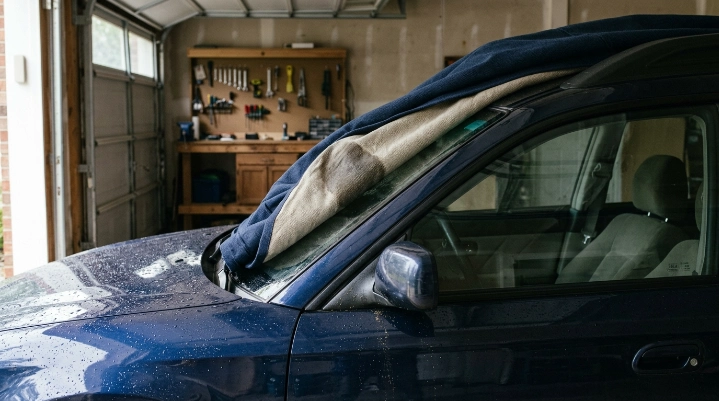
Mildew forms under a car cover when moisture remains trapped long enough for fungal growth to develop. Humidity, condensation, limited airflow, dirt, and a damp cover can all contribute.
Definition: Mildew is a type of fungal growth that usually appears flatter and more powdery than the thicker, fuzzier growth people commonly call mold. Both are strongly associated with damp conditions.
Condensation can happen even without rain
A car does not need to be visibly wet when you install the cover. Temperature changes can cause moisture in the surrounding air to condense on cooler body panels.
This is especially noticeable after a warm, humid day followed by a cooler night. Moisture can develop beneath a cover even though no rain reached the vehicle.
Putting a cover over a wet car traps the problem
Covering a freshly washed car is one of the easiest ways to create a damp pocket. Water hides around door handles, mirrors, emblems, weather seals, spoilers, and trim.
- After washing: water keeps dripping from seams after the main panels look dry.
- After rain: moisture remains around seals, wheel arches, and lower body panels.
- After morning dew: thin moisture can remain almost invisible on paint and glass.
I prefer to leave a washed vehicle uncovered until those problem areas have stopped releasing water. A quick microfiber wipe around trim afterward often finds moisture the first drying pass missed.
The cover itself may be damp
A car can be completely dry while the inside of its cover is still wet. Folding and storing a damp cover lets moisture remain inside the fabric.
Reinstalling that cover simply returns the moisture to the car. Always dry both sides before storage.
| Condition | What It Suggests | First Check |
|---|---|---|
| Mildew mainly on cover underside | Cover stayed damp | Cover drying and storage method |
| Water beads beneath cover | Condensation or trapped humidity | Ventilation and material breathability |
| Problem follows every wash | Car covered too soon | Hidden water around trim |
| Musty cabin as well | Possible interior moisture problem | Carpet, trunk, seals, drains, and leaks |
Section Takeaway: Mildew is a moisture warning. Find out whether the water is coming from the car, the cover, condensation, or the storage environment before simply cleaning the visible growth.
Can Mildew Under a Car Cover Damage the Paint?
Mildew itself does not automatically mean your clear coat is ruined. However, prolonged dampness, contamination, and cover movement can create conditions that are much less friendly to the vehicle’s finish.
Moisture is usually the bigger concern
Modern automotive paint has a protective clear coat, so superficial mildew or residue may clean off without permanent damage. The risk rises when moisture stays against the vehicle for long periods.
Industry guidance from Covercraft on breathable car-cover materials warns that trapped humidity can contribute to mold, rust, and corrosion. That is why I treat persistent dampness as the real problem.
Dirt under the cover can scratch the finish
A cover should not go over a dusty or gritty car for extended storage. Dirt between the fabric and paint can become abrasive when wind moves the cover.
- Dust and sand: can rub against the clear coat.
- Tree debris: can hold moisture and stain surfaces.
- Bird droppings or sap: should be removed before covering.
- Damp grime: makes the environment more favorable for fungal growth.
Check unpainted areas too
Don’t focus only on the hood and roof. Look around weatherstripping, window trim, emblems, convertible-top fabric, plastic cowl panels, and wheel-well edges.
If you notice active corrosion, bubbling paint, persistent water inside electrical areas, or damaged weather seals, the issue has moved beyond routine cover care.
Mechanic Alert: If trapped water has reached wiring, electronic modules, or corrosion beneath trim you cannot safely inspect, have a qualified technician diagnose the moisture source.
How Do You Remove Mildew Under a Car Cover Safely?
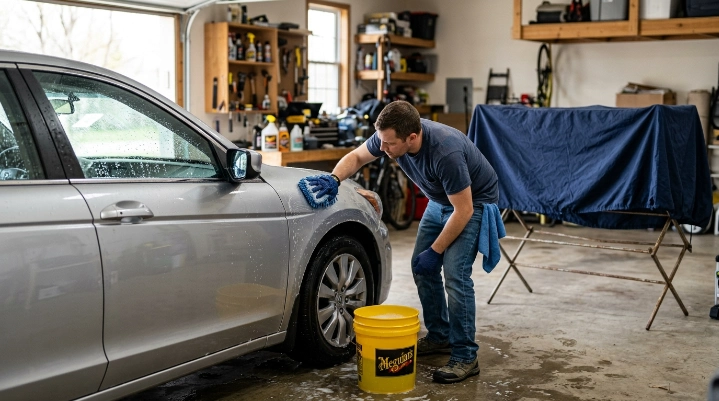
Start by separating the car and cover, then dry everything before aggressive cleaning. Cleaning the vehicle while immediately putting the same damp cover back on will usually restart the cycle.
Step 1: Move the vehicle into dry, ventilated conditions
- Remove the cover carefully without dragging debris across the paint.
- Spread the cover out so both sides can dry.
- Move the car into a garage, carport, or dry shaded area if possible.
- Open the doors briefly if the cabin also smells musty.
- Inspect paint, glass, trim, weather seals, carpet, and the trunk.
Do not assume every dark or powdery mark is mildew. Road film, pollen, water spotting, and deteriorating cover material can look similar.
Step 2: Wash the exterior normally first
For exterior paint, I would begin with ordinary automotive washing rather than strong household mold chemicals. Rinse loose contamination away, use a paint-safe car shampoo, and work with clean microfiber towels or a wash mitt.
Avoid household bleach on automotive paint, rubber, upholstery, or trim unless the vehicle or product manufacturer specifically approves it. Strong cleaners can discolor materials or strip protective products.
Step 3: Inspect after washing
After the car dries, check whether the mark disappeared completely. Remaining spots may be staining, mineral deposits, bonded contamination, or clear-coat damage rather than active mildew.
- Surface is clean and smooth: normal washing may have solved it.
- Spot remains but feels smooth: investigate staining or water spots.
- Paint looks cloudy or etched: consider a professional detailer.
- Rust is visible: address corrosion instead of repeatedly cleaning the surface.
Step 4: Clean the car cover separately
Follow the cover manufacturer’s washing directions because materials vary widely. Some can use a washing machine, while others require hand washing or specific detergents.
Let the cover dry completely before putting it back on the vehicle. Pay special attention to thicker hems, elastic sections, straps, and multilayer areas.
What if mildew is inside the car?
Interior mold or mildew deserves more caution because upholstery, carpet padding, and insulation can retain hidden moisture. Consumer Reports’ automotive guidance also emphasizes checking vehicles for damp carpeting, water entry, and musty odors when moisture damage is suspected.
The National Institute of Environmental Health Sciences notes that molds and mildews are fungi associated with damp environments. It also recommends professional help for major mold cleanup situations.
Section Takeaway: Clean the vehicle and cover as two separate jobs, then solve the moisture source before re-covering the car. If the cabin has widespread fungal growth or hidden water intrusion, professional help is the safer choice.
How Do You Prevent Mildew From Coming Back?
The best prevention strategy is simple: never trap water under the cover. That means drying the car, drying the cover, improving ventilation, and checking the storage area.
Never cover a damp car
After washing or rain, give hidden water enough time to escape. Mirrors, trim channels, door handles, spoilers, roof racks, fuel doors, and license-plate recesses are common trouble spots.
A short drive may push water out of crevices, but it does not guarantee the vehicle is completely dry. Inspect it again before installing the cover.
Keep the storage environment dry
EPA recommendations are written for buildings rather than car storage specifically. Still, they provide useful benchmarks for a garage where humidity is contributing to the problem.
| Moisture-Control Benchmark | General EPA Guidance | How to Apply It to Car Storage |
|---|---|---|
| Preferred relative humidity | About 30%–50% | Useful target for a climate-controlled garage |
| Upper humidity guidance | Keep below 60% where possible | Persistent readings above this suggest better ventilation or dehumidification may help |
| Drying wet materials | Ideally within 24–48 hours | Do not leave a wet cover bundled or sitting against the vehicle |
A small digital hygrometer can help if your garage always feels damp. You are looking for a pattern, especially overnight or during rainy weather.
Keep both surfaces clean
- Wash the vehicle before long-term storage.
- Remove leaves, pollen, insects, and organic residue.
- Clean the inside surface of the cover when needed.
- Store the cover completely dry.
- Inspect the vehicle periodically during extended storage.
Long storage is where I would be most cautious. Removing the cover periodically also gives you a chance to catch condensation, rodents, leaks, battery issues, and tire-pressure changes early.
What Type of Car Cover Is Best for Preventing Mildew?
A breathable, correctly fitted cover designed for your storage environment is usually a better choice than an impermeable plastic sheet. Water resistance and breathability are not the same thing.
Breathable vs. fully waterproof material
A truly impermeable layer may stop rain from passing through, but it can also reduce the escape of humidity already beneath the cover. Breathable automotive fabrics are designed to let more moisture vapor escape.
| Cover Type | Main Advantage | Moisture Concern | Best Use |
|---|---|---|---|
| Breathable indoor cover | Dust and light-contact protection | Low if car and garage are dry | Clean, dry garage |
| Breathable outdoor cover | Weather protection with vapor escape | Condensation can still occur in humid conditions | Outdoor daily-driver storage |
| Impermeable plastic tarp | Blocks direct water | High risk of trapping existing moisture | Generally poor choice directly against paint |
Fit matters too
An oversized cover can flap in the wind and rub against dirty paint. A cover that is excessively tight may place unnecessary pressure on mirrors, trim, antennas, and sharp body edges.
Choose the correct size and secure it according to the manufacturer’s instructions. The goal is controlled coverage without turning the vehicle into a sealed plastic package.
Indoor and outdoor covers are not interchangeable
A soft indoor cover may protect against garage dust but lack the weather resistance needed outside. Outdoor covers need to manage rain, ultraviolet exposure, wind, contamination, and changing temperatures.
If your parking location stays chronically humid, changing covers alone may not solve the problem. Improving the storage environment can matter just as much.
Frequently Asked Questions About Mildew Under a Car Cover
Why is my car wet underneath a waterproof cover?
The moisture may be condensation rather than rain leaking through the material. Humid air trapped beneath an impermeable cover can condense as the vehicle’s body temperature changes.
Can I put a car cover on after washing my car?
Yes, but only after the car has dried completely. Check mirrors, trim, door handles, emblems, spoilers, wheel arches, and other areas where water continues dripping after the main panels look dry.
Will a breathable car cover completely stop condensation?
No cover can guarantee zero condensation in every climate. Breathable materials help moisture vapor escape, but high outdoor humidity, temperature swings, wet ground, or a damp garage can still create moisture beneath the cover.
Should I use bleach to remove mildew from car paint?
I would not make household bleach the first choice for automotive paint or trim. Start with normal paint-safe washing products and follow the vehicle, surface, or detailing-product manufacturer’s instructions before using stronger chemicals.
How often should I remove a car cover during long-term storage?
There is no universal interval for every climate and cover. During extended storage, inspect the vehicle regularly and remove the cover sooner whenever you see condensation, damp fabric, musty odors, dirt buildup, or changing weather conditions.
Can mildew under a cover cause rust?
Mildew itself is not what rusts steel, but the damp conditions that support mildew can also support corrosion where moisture reaches exposed metal. Check chips, scratches, fasteners, underbody areas, and damaged trim if the car stayed wet for an extended period.
Why does my car smell musty even after removing the cover?
A persistent interior smell suggests moisture may be inside the cabin rather than only under the exterior cover. Inspect carpets, floor mats, the trunk, weather seals, sunroof drains, door seals, and other possible water-entry points.
The bottom line: mildew under a car cover is a signal that moisture is not escaping quickly enough. Dry the car and cover, clean both properly, use a breathable cover, and correct any humidity or water-entry problem before covering the vehicle again.
If the mildew keeps returning despite those changes, stop treating the cover as the only culprit. A leaking seal, damp garage, drainage issue, or hidden interior moisture source may need a closer inspection.
“`
