
How to Clean Throw Up Out of a Car Seat Like a Pro

Dealing with a sudden bout of car sickness is one of the most unpleasant experiences a vehicle owner can face. Knowing how to clean throw up out of a car seat quickly and correctly is essential to saving your interior and preventing permanent damage. When vomit sits on fabric, leather, or foam cushions, it rapidly seeps deep into the fibers, creating stubborn stains and unbearable odors.
Acting fast is crucial because stomach acid can break down delicate car interior materials, and bacteria multiplies quickly in warm vehicle environments. According to the NHTSA vehicle safety guidance, maintaining a clean and safe cabin environment is vital for driver and passenger well-being, especially when managing unexpected biological spills.
This comprehensive guide breaks down the safest, most effective methods to remove vomit, eliminate lingering odors, and restore your car seat without spending a fortune at an auto detail shop.
Quick Answer
To clean throw up out of a car seat, remove solid waste immediately using a plastic scraper. Blot liquid with paper towels without rubbing. Apply a mixture of warm water, mild dish soap, and white vinegar, or a specialized enzymatic cleaner. Blot, rinse with clean water, and thoroughly dry the area with a wet-dry vacuum or fan.
Why Immediate Action Matters
When vomit happens inside your car, every minute counts. Stomach contents are heavily acidic and packed with digestive enzymes. If left untreated, this mixture can permanently discolor fabric, degrade leather conditioning, and ruin foam padding.
Furthermore, moisture trapped inside car seats creates a breeding ground for mold and mildew. Professional detailing services often charge hundreds of dollars for biohazard interior cleanings, making a prompt DIY approach both budget-friendly and practical.
Tools and Materials Needed
Before you begin scrubbing, gather the right supplies to ensure you do not make the mess worse. Using incorrect household chemicals can bleach your upholstery or set the stain permanently.
- Protective gear: Disposable gloves and a face mask
- Solid waste removal: Plastic spatula, spoon, or stiff cardboard
- Absorbent materials: Microfiber cloths and heavy-duty paper towels
- Cleaning solutions: Warm water, mild dish soap, white vinegar, or an enzymatic pet/biohazard cleaner
- Odor neutralizer: Baking soda
- Drying tools: Portable fan or wet-dry vacuum extractor
Step-by-Step Guide to Cleaning Throw Up from Different Seat Types
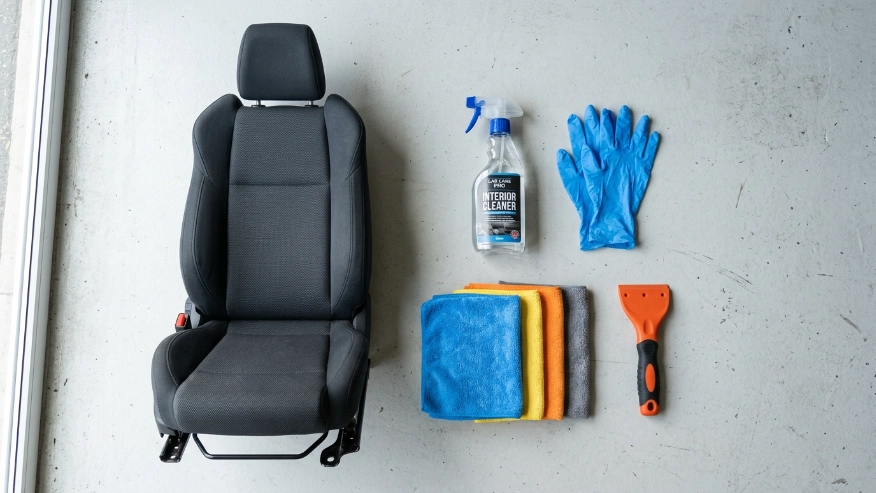
Different upholstery materials require tailored cleaning approaches. Review your owner’s manual or look for manufacturer cleaning codes (such as W for water-based cleaners or S for solvent-based cleaners) before applying any liquid.
Step 1: Remove Excess Solid Matter
Put on your gloves and mask. Use a plastic spatula or stiff cardboard to gently scoop up any solid chunks. Do not press downward, as this forces the matter deeper into the seat foam. Lift the debris upward and discard it into a plastic trash bag.
Step 2: Blot Up Liquid Spills
Press clean paper towels or old rags firmly onto the wet area to absorb excess liquid. Lift and repeat with fresh towels until no more moisture transfers to the paper. Avoid wiping or scrubbing aggressively, which spreads the stain over a larger surface area.
Step 3: Apply the Cleaning Solution
For standard fabric seats, mix two cups of warm water, one tablespoon of liquid dish soap, and one tablespoon of white vinegar in a spray bottle. Mist the solution lightly over the affected area.
If you are dealing with leather or faux-leather seats, avoid vinegar and harsh soaps. Use a specialized leather cleaner or a very mild solution of saddle soap and water to prevent drying out the hide.
Step 4: Agitate and Lift the Stain
Gently work the cleaning solution into the fibers using a soft-bristled brush or a microfiber cloth, moving in circular motions. For stubborn organic stains, enzymatic cleaners are exceptionally effective because the biological proteins break down odor molecules at a chemical level.
Step 5: Rinse and Extract Moisture
Dampen a clean cloth with plain water and blot the area to remove soap residue. If you have a wet-dry vacuum, use the upholstery attachment to extract dirty water and dissolved particles from deep inside the seat foam.
Step 6: Neutralize Odors and Dry Completely
Sprinkle a generous layer of baking soda over the damp area once the bulk of the moisture is gone. Allow it to sit for at least 30 minutes to absorb lingering smells, then vacuum it up thoroughly. Set up a portable house fan inside the vehicle with doors open to accelerate complete drying.
Cleaning Method Comparison by Material
| Seat Material | Recommended Cleaner | What to Avoid | Estimated DIY Time |
|---|---|---|---|
| Standard Fabric | Dish soap, vinegar, enzymatic spray | Bleach, excessive water soaking | 45–60 minutes |
| Perforated Leather | Specialized leather cleaner | Soaking liquid through perforation holes | 30–45 minutes |
| Vinyl / Faux Leather | Mild soap and water solution | Acetone, harsh chemical solvents | 30 minutes |
| Alcantara / Suede | Dedicated upholstery foam cleaner | Excessive rubbing, water saturation | 60 minutes |
Common Mistakes Car Owners Should Avoid
- Using hot water right away: Hot water cooks protein-based stains like vomit into the fabric, making the odor and discoloration permanent. Always use cold or lukewarm water first.
- Over-wetting the seat: Pouring too much water onto the cushion floods the internal foam padding. Trapped moisture inside foam causes persistent mold and musty odors that are nearly impossible to remove later.
- Skipping the drying phase: Leaving seats damp invites bacterial growth and unpleasant mildew smells. Always ensure the interior is completely bone dry.
- Using harsh household bleach: Bleach destroys fabric dyes, weakens seat stitching, and creates hazardous fumes inside a confined vehicle cabin.
When to Call a Professional Mechanic or Detailer
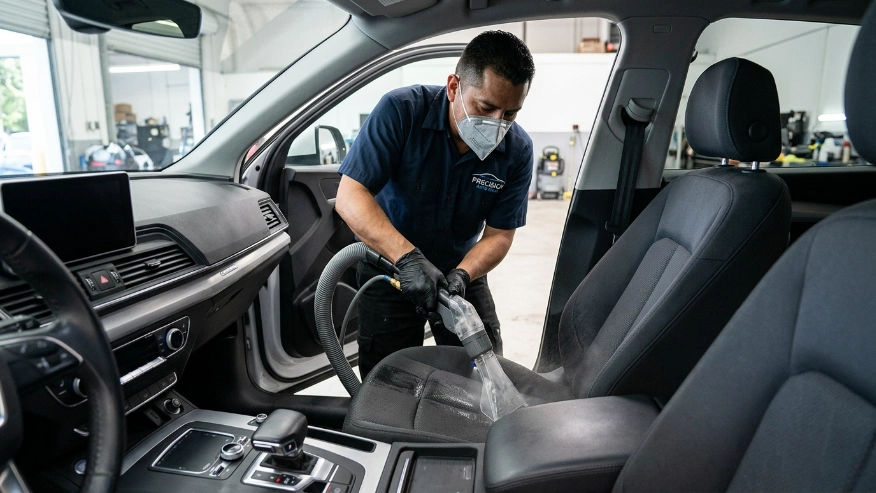
While DIY cleaning handles most minor incidents, certain situations require professional intervention. Consider booking an appointment with an auto detailing or biohazard remediation specialist if:
- The vomit soaked deep into electronic seat adjustment switches or seatbelt buckle mechanisms.
- The foul odor persists strongly after multiple deep-cleaning and deodorizing attempts.
- The vehicle features integrated side-airbags housed inside the seat backrests, which can be compromised by excessive liquid intrusion.
- Mold has already begun to form inside the dense seat cushions.
Expert Tip:
If vomit reaches deep into the seatbelt retractor mechanism or electrical wiring harness beneath the seat, do not attempt to disassemble it yourself; consult a certified technician to maintain safety system integrity.
FAQs
Can I use laundry detergent to clean throw up out of a car seat?
Yes, you can use a small amount of liquid laundry detergent mixed with warm water, but ensure you rinse the area thoroughly. High-sudsing detergents leave behind a sticky residue that attracts dirt over time if not completely extracted.
How do I get the sour vomit smell out of my car permanently?
Baking soda is excellent for absorbing surface odors, but deep smells require an enzymatic odor neutralizer spray. These formulas break down the remaining microscopic organic molecules rather than just masking the scent with artificial fragrances.
Will vinegar ruin my car’s fabric seats?
No, white vinegar is safe for standard automotive fabrics and helps neutralize alkaline biological odors. However, avoid using vinegar on genuine leather seats, as the acid can strip natural protective oils.
Is it safe to use a steam cleaner on car seats after vomit?
Steam cleaners can be effective, but use them with caution. Excessive steam heat can set protein stains permanently or push moisture deeper into the seat padding. Always blot and extract rather than just steaming.
What should I do if throw up gets inside the seatbelt buckle?
If vomit enters the mechanical latch, spray it out with compressed air and electrical contact cleaner designed for automotive use. Test the latch mechanism repeatedly to ensure it clicks securely and releases smoothly before driving again.
Conclusion
Knowing how to clean throw up out of a car seat safely protects your vehicle’s interior condition, resale value, and cabin air quality. By acting quickly, using appropriate cleaners like enzymatic sprays, and drying the upholstery completely, you can eliminate stains and foul odors effectively. Take your time, monitor moisture levels to prevent mold, and enjoy a clean, fresh-smelling cabin on your next drive.
