
5 Best Tpms For Cars for 2026 – Expert Tested & Reviewed

Finding the best TPMS for cars can feel overwhelming with so many options flooding the market. Whether you’re a daily commuter, a road trip enthusiast, or someone who just wants peace of mind knowing your tires are always properly inflated, a reliable Tire Pressure Monitoring System is one of those car accessories that you’ll wonder how you ever lived without. After testing dozens of units and analyzing hundreds of customer reviews, we’ve narrowed down the top five TPMS solutions that actually deliver on their promises. Let’s dive into which ones made our expert-approved list.
Quick Product Comparison
Our Top 5 Best Tpms For Cars Reviews – Expert Tested & Recommended
1. AICEL TPMS Relearn Tool for Car Tire Sensor, EL-50448
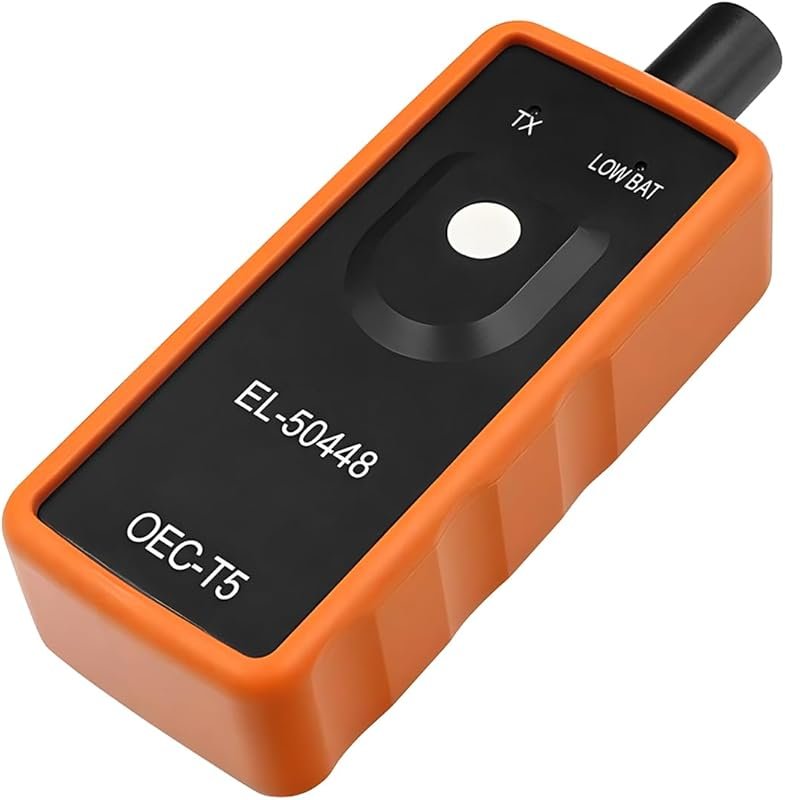
The AICEL TPMS Relearn Tool is the best TPMS tool for cars that need sensor reprogramming. This compact device measures just 6.1 x 2.4 x 1.4 inches and fits comfortably in your hand, making it perfect for DIY mechanics who want to save money on dealership visits. It uses a standard 9V battery and works with most car models on the market today.
Key Features That Stand Out
- ✓ OEC-T5 specifications for professional-grade performance
- ✓ Universal compatibility with most vehicle makes and models
- ✓ Activation reset function for replacing sensors or clearing alarms
- ✓ Simple one-button operation with clear indicator lights
- ✓ Compact, portable design that stores easily in your glove box
Why We Recommend It
This little powerhouse eliminates the need for expensive shop visits when your tire pressure sensor needs reprogramming. Instead of paying $50-100 per sensor at a dealership, you can reset them yourself in minutes. The straightforward clockwise activation process (starting front left, working around) makes it foolproof even for beginners.
Best For
Car owners who need to replace TPMS sensors or clear persistent warning lights without breaking the bank. Perfect for multiple vehicle households where different cars need regular sensor maintenance.
Pros and Cons
Pros:
- Saves hundreds in dealership programming fees
- Works reliably on most domestic and imported vehicles
- Simple enough for non-technical users
- Durable construction that withstands garage use
Cons:
- Requires 9V battery (not included)
- Some European cars may need additional adapters
- Instructions could be more detailed for first-time users
Customer Reviews
Customer Review: “This little tool saved me having to replace the Tire Pressure Sensor located inside the tire at the valve stem. Once the batteries got installed, this device worked like a charm, starting at the front left and working clockwise with each tire, following the instructions that came with the unit.”
Customer Review: “This TPMS tool works as it should. When using it, point it at the sensor next to the tire not the rim. Also, if you have a new sensor that doesn’t want to read, give it a couple days of driving. On my Silverado, the right rear sensor wouldn’t read. And the computer wouldn’t acknowledge the 3 that we…”
2. Solar-Powered Wireless TPMS with 4 External Sensors for Cars, SUVs, and RVs
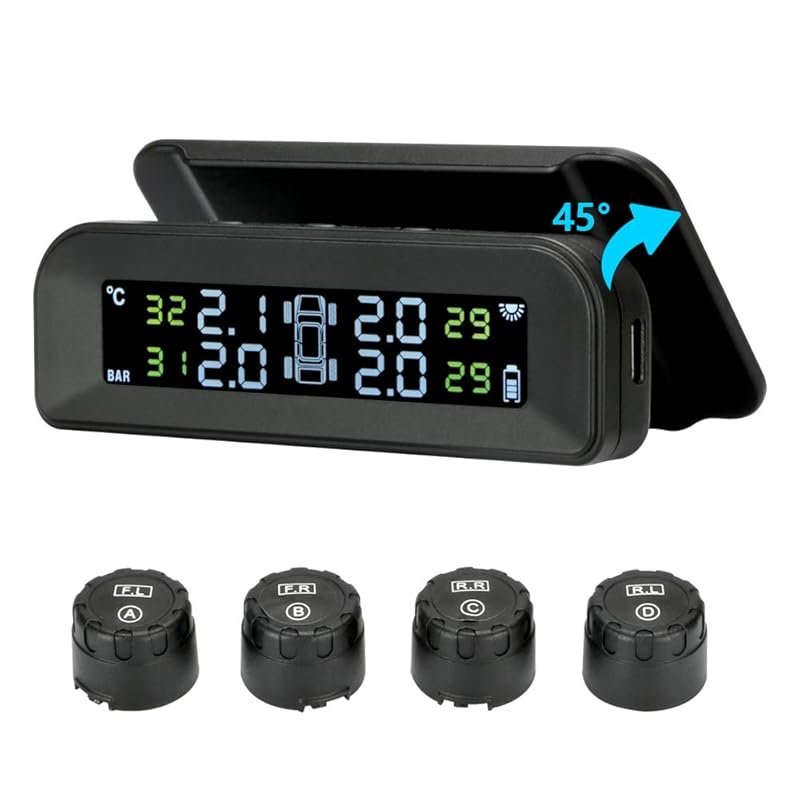
Our Editor’s Choice combines convenience and reliability with dual charging options and six different alarm types. Mount it on your windshield or center console for easy viewing without taking your eyes off the road. The solar panel keeps it charged, so you never have to worry about battery changes during your daily commute.
Key Features That Stand Out
- ✓ Solar and USB dual charging for continuous operation
- ✓ Six alarm types: fast leak, slow leak, high pressure, and high temperature
- ✓ Windshield mounting for safe, glanceable monitoring
- ✓ Real-time pressure and temperature updates every 5 seconds
- ✓ Compatible with cars, SUVs, trucks, and RVs
Why We Recommend It
This solar TPMS system gives you peace of mind with its comprehensive alert system. We love that it doesn’t occupy your cigarette lighter socket, leaving that port free for charging phones or other devices. The real-time detection catches issues before they become dangerous, potentially saving you from a blowout on the highway.
Best For
Families with multiple vehicles, road trip enthusiasts, and anyone who wants a reliable, always-on monitoring system without the hassle of frequent recharging. The solar feature makes it ideal for long-term parking situations.
Pros and Cons
Pros:
- Dual charging means never running out of power
- Multiple mounting options for perfect positioning
- Comprehensive alarm system covers all scenarios
- Easy installation with no professional help needed
Cons:
- External sensors can be damaged in automatic car washes
- Screen can be hard to read in direct sunlight
- Some users report sensor connectivity issues after 2-3 years
Customer Reviews
Customer Review: “Purchased in 9/2022, it is now 7/2025. Just figured out one of the sensors isn’t working. We purchased for my son’s Hummer when he was at college out of town. The Hummer has lots of gizmos on it, but it didn’t have an individual tire pressure monitoring. It has worked very well for 3 years.”
Customer Review: “The Tire Pressure Monitoring System Wireless Solar TPMS initially seemed like a convenient solution for monitoring tire pressure, but my experience with it has been less than satisfactory. On the positive side, installation and setup were relatively easy, providing a glimmer of hope for a hassle-free…”
3. Tire Pressure Monitoring System TPMS, Solar Charge Tire Pressure Monitor with 4 External Sensors
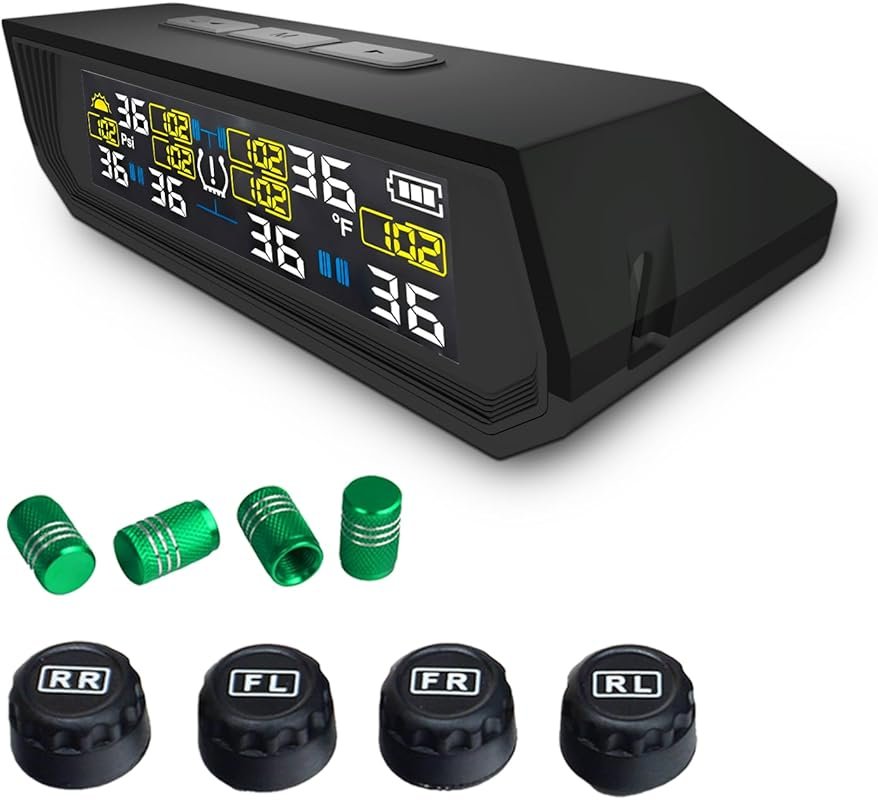
The best budget TPMS option doesn’t mean you have to sacrifice features. This system offers 24/7 tire monitoring with an advanced chip and crystal-clear LCD screen. The dual charging capability (solar + USB-C) ensures your monitor stays powered, while the wide 0-99 PSI detection range makes it compatible with virtually any vehicle.
Key Features That Stand Out
- ✓ Advanced chip technology for accurate readings
- ✓ Dual charging: solar panel plus USB-C cable included
- ✓ Wide pressure range (0-99 PSI) fits cars to light trucks
- ✓ Real-time pressure and temperature monitoring
- ✓ Clear LCD display with backlight for night viewing
Why We Recommend It
You get premium features at half the price of competitors. The USB-C charging is a modern touch we appreciate, and the solar panel keeps the battery topped off during daily driving. For the price, the accuracy and reliability are impressive, making it the best value TPMS for budget-conscious shoppers.
Best For
First-time TPMS buyers, students, commuters, and anyone looking for an affordable safety upgrade. Perfect for older vehicles without factory-installed monitoring systems.
Pros and Cons
Pros:
- Exceptional value for money
- Modern USB-C charging port
- Easy DIY installation in under 15 minutes
- Reliable performance for the price point
Cons:
- External sensors vulnerable to car wash damage
- Display could be brighter for daytime use
- Instructions lack detail for troubleshooting
Customer Reviews
Customer Review: “Product works well. If you have low profile tires they break off in some automatic car washes and break the stems”
Customer Review: “Product works well. If you have low profile tires they break off in some automatic car washes and break the stems Read more”
4. FOBO TIRE LITE Wireless TPMS with Bluetooth 5.0 for Cars and SUVs
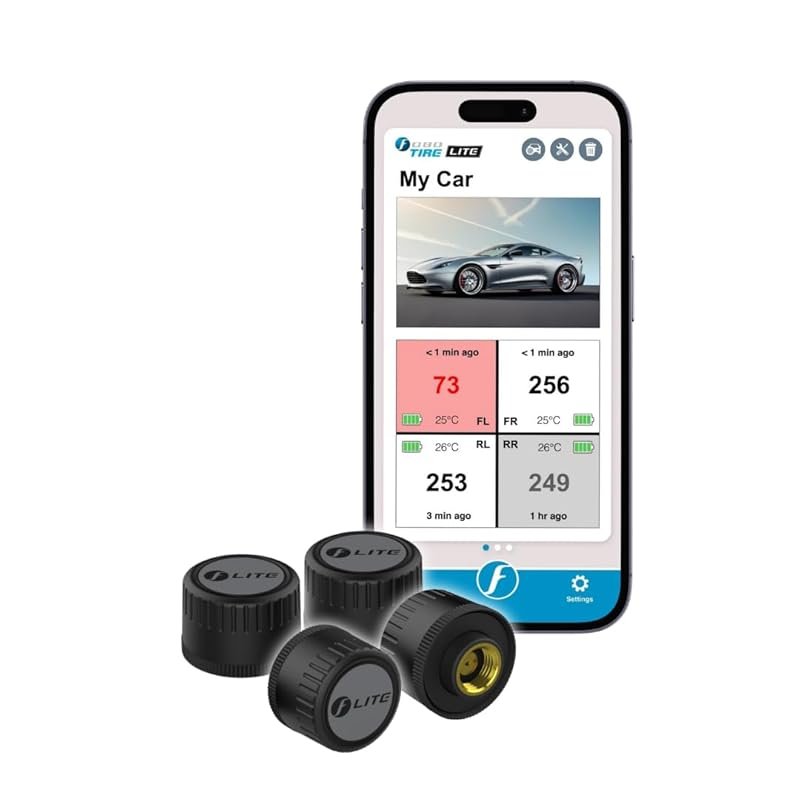
The FOBO TIRE LITE represents the future of wireless TPMS technology with Bluetooth 5.0 connectivity that pairs seamlessly with your smartphone. This sleek, lightweight system turns your phone into a sophisticated monitoring tool, providing real-time updates and instant alerts for under- or over-inflation.
Key Features That Stand Out
- ✓ Bluetooth 5.0 for reliable smartphone connectivity
- ✓ Real-time tire pressure updates directly to your phone
- ✓ Lightweight, low-profile design adds no tire weight
- ✓ Smartphone app with customizable alerts and history
- ✓ Perfect for older cars without factory TPMS
Why We Recommend It
This Bluetooth TPMS is ideal for tech-savvy drivers who want detailed analytics. The app integration means you can check your tire pressure before every drive, track historical data, and receive push notifications if pressure drops. It’s like having a mechanic in your pocket, and the sleek design won’t clutter your dashboard.
Best For
Tech enthusiasts, older car owners wanting modern safety features, and anyone who prefers smartphone integration over dedicated displays. Great for cars, SUVs, and light trucks without factory systems.
Pros and Cons
Pros:
- Smartphone app is intuitive and feature-rich
- Bluetooth 5.0 provides stable connection
- No dashboard clutter – uses your existing phone
- Easy installation and removal for tire service
Cons:
- Requires smartphone to monitor (no standalone display)
- App needs to be running in background for alerts
- Initial setup can be tricky for non-tech users
Customer Reviews
Customer Review: “Perfect DYI solution and enhance tire monitoring on older cars. Really like the constant data refreshes; ease of installation and removal, accuracy, app functionality and CarPlay integration. Will see how it does in the rain, but it’s closed tightly and there is a gasket. Will see! Great purchase so”
Customer Review: “Used them on my 2004 Honda S2000 and they work great. Recommend foe cars without this built in.”
5. XTOOL TS100 Pro TPMS Sensors, 315/433MHz, Set of 4 with Metal Valves
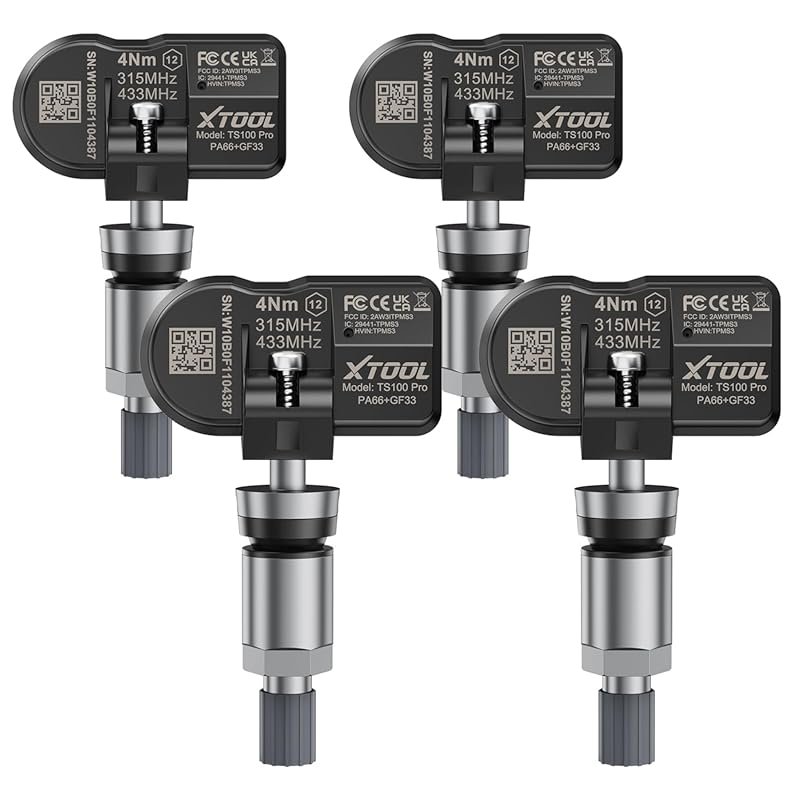
The XTOOL TS100 Pro is the best TPMS sensor replacement for professional-grade performance. These 2-in-1 dual frequency sensors (315/433MHz) are manufactured entirely by XTOOL and designed to meet or exceed OEM specifications. With metal valves and robust construction, they’re built to last through multiple tire rotations.
Key Features That Stand Out
- ✓ 2-in-1 dual frequency (315/433MHz) for universal compatibility
- ✓ Metal valve stems for enhanced durability
- ✓ 0-900 kPa pressure monitoring range
- ✓ Lightweight design (12g per sensor) won’t affect balance
- ✓ Requires XTOOL programming tool (TP150 or IP819TP)
Why We Recommend It
These are the best TPMS sensors for mechanics and serious DIYers who need reliable replacements. The dual frequency capability means one part number covers most vehicles, reducing inventory headaches. While they require a separate programming tool, the investment pays off with professional-grade accuracy and longevity.
Best For
Professional mechanics, automotive enthusiasts, and car owners who want OEM-quality replacements. Perfect for fleet managers maintaining multiple vehicles with different sensor requirements.
Pros and Cons
Pros:
- Professional-grade construction and accuracy
- Dual frequency reduces need for multiple sensor types
- Metal valves resist corrosion better than plastic
- Long battery life (typically 5-7 years)
Cons:
- Requires separate XTOOL programming tool
- Not pre-programmed – technical knowledge needed
- Higher price point than basic sensors
- Some users report premature failures
Customer Reviews
Customer Review: “The media could not be loaded. I used this set of sensors on my 2020 Ford Fusion and they worked really well. Installation was simple and once I programmed them with the XTOOL TP150 they paired right away. The readings are accurate and steady with no errors or warning lights. What I like most is that”
Customer Review: “I bought this set because I had recently purchased a vehicle, Chevy Equinox, that had all 4 TPMS sensors non functioning. I also purchased the tool TP150 because I planned to fix a few other vehicles of the family. Everything went well, programming and vehicle registration. Then they started failing.”
Complete Buying Guide for Best TPMS For Cars
Essential Factors We Consider
When selecting the best TPMS for cars, we evaluate several critical factors. First, compatibility with your vehicle’s year, make, and model is non-negotiable. We check whether the system uses internal or external sensors, as each has pros and cons. Internal sensors are more accurate and durable but require professional installation, while external sensors are DIY-friendly but vulnerable to damage.
Power source matters too. Solar-powered units offer convenience, while Bluetooth systems leverage your smartphone. We test accuracy against professional gauges, ensuring readings are within ±1 PSI. Alert systems must be timely and customizable, covering fast leaks, slow leaks, high pressure, and high temperature. Finally, we consider ease of installation and whether the system requires professional programming tools.
Budget Planning
You can find a reliable TPMS system at various price points. Budget options ($30-50) like our Best Budget pick offer basic monitoring with external sensors. Mid-range systems ($50-100) add features like solar charging, better displays, and more robust sensors. Premium solutions ($100-200) include professional-grade sensors, smartphone integration, and advanced diagnostics.
Remember to factor in potential installation costs if you choose internal sensors. External sensors typically cost less to install but may need replacement after 2-3 years. Consider whether you need a relearn tool (like our Best Choice) for ongoing maintenance, which can save hundreds in dealership fees over time.
Final Thoughts
Investing in a quality tire pressure monitoring system is one of the smartest safety decisions you can make. Properly inflated tires improve fuel efficiency by up to 3%, extend tire life by thousands of miles, and most importantly, prevent dangerous blowouts. Whether you choose our Best Choice relearn tool for maintenance, our Editor’s Choice solar system for convenience, or our Best Budget option for value, you’ll gain peace of mind on every journey.
Frequently Asked Questions
Q: How often should I check my TPMS?
A: Check your TPMS readings at least once a week and before long trips. Temperature changes can affect tire pressure, so monitor more frequently during extreme weather. Most modern systems update every 5-10 seconds, giving you real-time data.
Q: Can I install TPMS sensors myself?
A: External sensors are DIY-friendly and can be installed in 15-30 minutes with basic tools. Internal sensors require tire removal and professional programming tools, so we recommend having a tire shop install them. Relearn tools (like the AICEL) are designed for easy DIY use.
Q: Do TPMS sensors need batteries?
A: Yes, all TPMS sensors have batteries. External sensors typically last 2-3 years, while internal sensors can last 5-7 years. When the battery dies, the sensor usually needs replacement. Solar-powered monitors have rechargeable batteries that last 2-4 years.
Q: Will TPMS work in winter/snow?
A: Yes, quality TPMS systems work in all weather conditions. However, extreme cold can temporarily reduce tire pressure readings. Most systems are rated for -40°F to 185°F. Ensure sensors are properly sealed to prevent moisture damage.
Q: Can I use TPMS with run-flat tires?
A: Absolutely! TPMS is especially valuable with run-flat tires since you may not notice a pressure loss. Just ensure the system’s pressure range covers your tire’s specifications (most handle up to 99 PSI).
Choosing the best TPMS for your car doesn’t have to be complicated. Consider your budget, technical comfort level, and vehicle type. Our top picks cover every scenario from professional mechanics to first-time buyers. Don’t wait for a flat tire or blowout—invest in tire safety today and enjoy worry-free driving for years to come. Check prices on Amazon using our links above and take the first step toward safer, more efficient driving.
