275/60r20 Tire Size Calculator

Understanding your 275/60R20 tire size is essential for safety, performance, and compatibility. A tire size calculator simplifies this by converting measurements, comparing alternatives, and ensuring accurate fitment on your vehicle.
In This Article
- 1 Key Takeaways
- 2 📑 Table of Contents
- 3 What Is a 275/60R20 Tire?
- 4 How a Tire Size Calculator Works
- 5 Benefits of Using a 275/60R20 Tire Size Calculator
- 6 How to Use a 275/60R20 Tire Size Calculator
- 7 Common Mistakes to Avoid
- 8 Real-World Example: Upgrading from 275/60R20
- 9 Conclusion
- 10 Frequently Asked Questions
- 10.1 What does 275/60R20 mean?
- 10.2 Can I use a tire size calculator for other sizes?
- 10.3 Is it safe to change tire size on my vehicle?
- 10.4 Will a different tire size affect my speedometer?
- 10.5 Do I need to recalibrate my speedometer after changing tire size?
- 10.6 Where can I find a reliable tire size calculator?
Key Takeaways
- Know Your Tire Code: 275/60R20 breaks down into width (275mm), aspect ratio (60%), construction (Radial), and rim diameter (20 inches).
- Use a Calculator for Accuracy: A tire size calculator helps you compare overall diameter, circumference, and revolutions per mile to avoid speedometer errors.
- Check Clearance and Fitment: Ensure your new tires won’t rub against suspension, fenders, or brakes—especially after lifting or leveling your truck or SUV.
- Consider Speed and Load Ratings: Always match or exceed your vehicle’s required load index and speed rating for safe operation.
- Compare Plus-Sizing Options: Use the calculator to explore upsizing or downsizing while maintaining overall diameter within 3% of the original.
- Maintain Handling and Ride Quality: Changing tire dimensions affects steering, braking, and comfort—choose wisely based on driving needs.
- Consult Professionals When Unsure: If you’re modifying your vehicle or unsure about fitment, talk to a tire expert or mechanic.
📑 Table of Contents
What Is a 275/60R20 Tire?
Let’s start with the basics. If you’ve ever looked at the side of your tire, you’ve probably seen a string of numbers like “275/60R20.” But what does it all mean? This code isn’t just random—it’s a detailed blueprint of your tire’s size and construction. Understanding it helps you make smarter decisions when replacing or upgrading your tires.
The “275” refers to the tire’s width in millimeters from sidewall to sidewall when mounted and inflated. That’s about 10.8 inches wide—a common size for trucks, SUVs, and some crossovers. The “60” is the aspect ratio, meaning the sidewall height is 60% of the tire’s width. So, 60% of 275mm gives you a sidewall height of roughly 165mm. The “R” stands for radial construction, which is the standard for modern tires, offering better fuel efficiency, heat dissipation, and tread life. Finally, the “20” tells you the wheel (or rim) diameter in inches—so this tire fits a 20-inch wheel.
Why This Size Matters
The 275/60R20 is a popular choice for vehicles like the Ford F-150, Chevrolet Silverado, GMC Sierra, and various full-size SUVs. It strikes a balance between aggressive off-road capability and on-road comfort. It provides a wide contact patch for better traction, especially in wet or snowy conditions, while still offering a smooth ride on highways.
But here’s the catch: not all 275/60R20 tires are created equal. Variations in tread design, rubber compound, and internal structure can affect performance. That’s why using a 275/60R20 tire size calculator becomes so valuable—it helps you compare not just size, but how different tires will behave on your vehicle.
How a Tire Size Calculator Works
A tire size calculator is a digital tool that takes the numbers from your tire code and translates them into real-world measurements. Instead of guessing, you get precise data on overall diameter, sidewall height, circumference, and how many times the tire rotates per mile. This is especially important when you’re considering switching to a different size or brand.

Visual guide about 275/60r20 Tire Size Calculator
Image source: tire-size-calculator.net
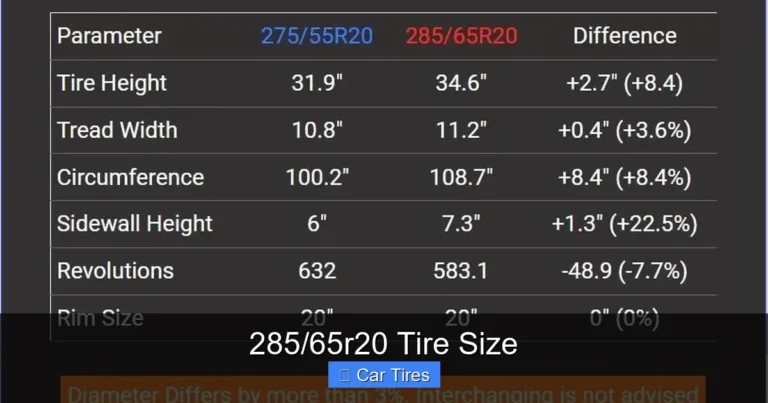
For example, let’s say you’re thinking about upgrading from a 275/60R20 to a slightly taller 285/65R20. At first glance, it seems like a small change. But without a calculator, you might not realize that the new tire is over an inch taller and rotates fewer times per mile. That could throw off your speedometer, affect your transmission shift points, and even trigger warning lights on your dashboard.
Key Measurements Explained
When you plug “275/60R20” into a tire size calculator, here’s what you typically get:
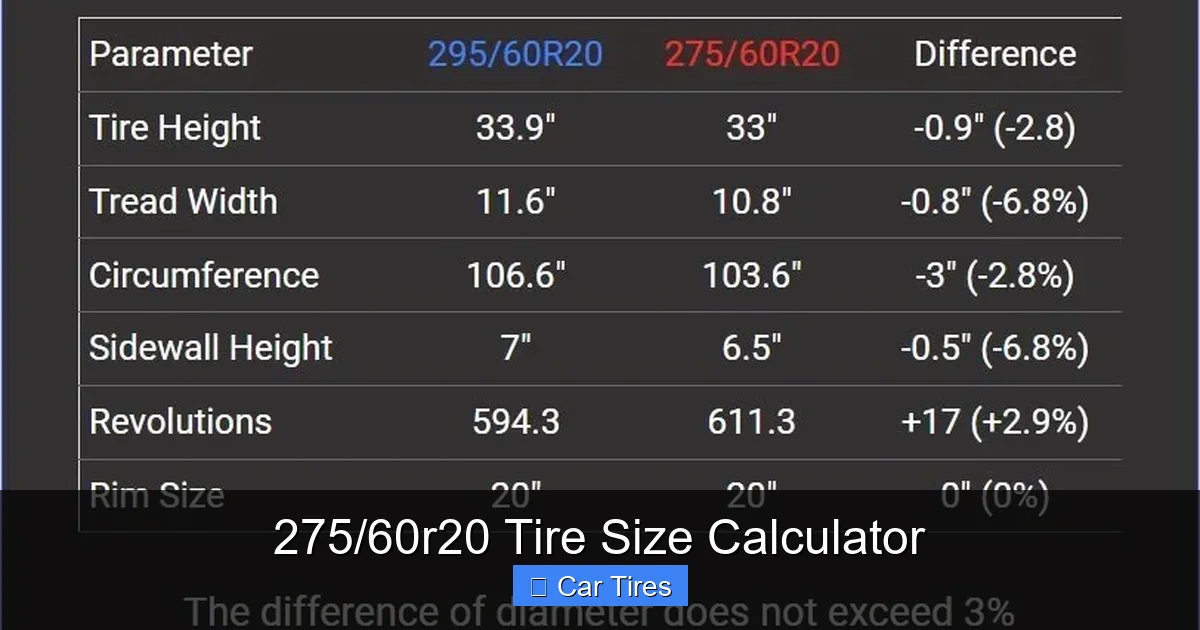
- Overall Diameter: About 32.99 inches. This is the total height of the tire from ground to top.
- Sidewall Height: Approximately 6.5 inches (165mm). This affects ride comfort and impact absorption.
- Circumference: Around 103.6 inches. This determines how far the tire travels in one full rotation.
- Revolutions Per Mile: Roughly 611. This tells you how many times the tire spins to cover a mile.
These numbers are crucial because they help you compare tires side by side. If you’re replacing your tires, you want the new ones to be as close as possible to the original specs—ideally within 3%. A difference beyond that can cause problems with your vehicle’s electronics, especially on newer models with advanced driver-assistance systems (ADAS).
Why Use a Calculator Instead of Guessing?
Many people assume that if a tire fits on the rim, it’s good to go. But that’s not always true. Even a half-inch difference in diameter can affect your odometer readings. Over time, this means your car thinks you’ve driven fewer miles than you actually have—leading to missed maintenance schedules and inaccurate resale value estimates.
Also, modern vehicles rely on tire rotation data for systems like traction control, ABS, and stability control. If your tires are spinning at a different rate than expected, these systems might not work correctly. A tire size calculator helps you avoid these hidden pitfalls.
Benefits of Using a 275/60R20 Tire Size Calculator
Now that you know how it works, let’s talk about why you should use a 275/60R20 tire size calculator in the first place. It’s not just for gearheads or off-road enthusiasts—it’s a practical tool for anyone who wants to make informed decisions about their tires.

Visual guide about 275/60r20 Tire Size Calculator
Image source: alltirechains.com
1. Avoid Speedometer and Odometer Errors
Your vehicle’s speedometer is calibrated based on the original tire size. If you install tires with a different overall diameter, the speedometer will read incorrectly. For example, if your new tires are larger, your speedometer might show 60 mph when you’re actually going 63 mph. That’s not just annoying—it could lead to speeding tickets or unsafe driving.
A tire size calculator lets you compare the revolutions per mile between your current and new tires. If the difference is minimal, your speedometer stays accurate. If it’s significant, you’ll know to get it recalibrated or choose a different size.
2. Ensure Proper Fitment and Clearance
Just because a tire fits on your rim doesn’t mean it fits under your fender. Larger tires can rub against suspension components, brake lines, or the inner fender when turning or going over bumps. This can cause damage, noise, and even safety hazards.
Using a calculator, you can estimate the overall diameter and compare it to your current setup. If the new tire is too tall or too wide, you’ll know before you buy. Some calculators even let you input your vehicle’s make and model to check for known fitment issues.
3. Compare Different Tire Options
Let’s say you’re choosing between two tires: one is 275/60R20, and the other is 285/60R20. They look similar, but the second one is wider. A calculator shows that the 285/60R20 has a slightly larger diameter (33.48 inches vs. 32.99 inches) and fewer revolutions per mile (598 vs. 611). That means it will affect your speedometer and may require recalibration.
But the wider tire also offers better grip and stability, which might be worth it if you tow trailers or drive on rough terrain. The calculator helps you weigh the pros and cons based on real data, not just marketing claims.
4. Plan for Vehicle Modifications
If you’ve lifted your truck or installed leveling kits, you might have more room for bigger tires. But how much bigger can you go? A tire size calculator helps you explore options like 285/70R20 or even 305/60R20 while staying within safe limits.
For example, a 285/70R20 has an overall diameter of about 34.75 inches—nearly two inches taller than a 275/60R20. That could give you better ground clearance for off-roading, but it might also require trimming fenders or adjusting suspension. The calculator gives you the numbers to make an informed decision.
5. Maintain Fuel Efficiency and Performance
Tire size affects rolling resistance, which in turn impacts fuel economy. Larger, heavier tires can reduce gas mileage, especially in city driving. A calculator helps you compare the weight and diameter of different options so you can choose a tire that balances performance and efficiency.
Also, changing tire size can alter your vehicle’s gearing. Larger tires act like taller gears, which can reduce engine strain at highway speeds but hurt acceleration. If you tow heavy loads, this could be a problem. The calculator helps you understand these trade-offs.
How to Use a 275/60R20 Tire Size Calculator
Using a tire size calculator is easier than you might think. Most online tools are free, user-friendly, and require just a few inputs. Here’s a step-by-step guide to get the most out of it.
Visual guide about 275/60r20 Tire Size Calculator
Image source: tireblogger.com
Step 1: Enter Your Current Tire Size
Start by typing in “275/60R20” (or whatever size you currently have). The calculator will instantly display key measurements like diameter, sidewall height, and revolutions per mile. This gives you a baseline to compare against.
Step 2: Input the New Tire Size
Now, enter the size you’re considering—say, “285/65R20” or “265/60R20.” The calculator will show you how the new tire compares in terms of height, width, and rotation. Look for the percentage difference in overall diameter. If it’s under 3%, you’re usually safe. Over 3%, and you may need to take extra steps.
Step 3: Review the Results
Pay attention to these key outputs:
- Diameter Difference: Should be minimal to avoid speedometer errors.
- Width Change: Wider tires may improve grip but could rub if clearance is tight.
- Revolutions Per Mile: A big change affects odometer and transmission behavior.
- Load and Speed Ratings: Make sure the new tire meets or exceeds your vehicle’s requirements.
Step 4: Check Fitment with Your Vehicle
Some calculators let you select your vehicle’s year, make, and model. This helps identify known fitment issues. For example, a 275/60R20 might fit perfectly on a 2020 Ford F-150 but rub on a 2015 model due to different suspension design.
If the calculator doesn’t have this feature, check forums or manufacturer guides. Off-road communities often share real-world experiences with tire upgrades.
Step 5: Make Your Decision
Once you have all the data, decide whether the new tire is right for you. If the numbers look good and the tire meets your performance needs, go for it. If not, keep searching or consult a professional.
Common Mistakes to Avoid
Even with a calculator, it’s easy to make mistakes if you’re not careful. Here are some common pitfalls and how to avoid them.
Ignoring Load and Speed Ratings
Size isn’t the only thing that matters. Every tire has a load index (how much weight it can carry) and a speed rating (maximum safe speed). For example, a 275/60R20 with a load index of 115 can carry up to 2,679 pounds. If your vehicle requires a higher rating, you could be risking a blowout.
Always check your owner’s manual or door jamb sticker for the recommended load and speed ratings. Don’t assume all tires with the same size meet the same standards.
Overlooking Wheel Width Compatibility
A 275mm-wide tire needs a wheel that’s the right width—usually between 8 and 10 inches for this size. If your wheel is too narrow or too wide, the tire won’t seat properly, which can cause uneven wear, poor handling, or even failure.
Most tire manufacturers provide a recommended wheel width range. Stick to it unless you’re working with a specialist.
Assuming All Radial Tires Are the Same
Just because two tires are both “R” (radial) doesn’t mean they’re identical. Differences in belt design, ply construction, and rubber compounds can affect performance. A tire size calculator won’t tell you about these details, so always read reviews and check ratings from trusted sources like Tire Rack or Consumer Reports.
Forgetting About Seasonal Tires
If you live in an area with snow or ice, you might consider switching to winter tires in colder months. A 275/60R20 winter tire will have the same size code but different tread patterns and rubber compounds. A calculator can help you compare winter and all-season options to ensure consistent fitment year-round.
Real-World Example: Upgrading from 275/60R20
Let’s walk through a practical example. Imagine you drive a 2021 Chevrolet Tahoe with stock 275/60R20 tires. You love the look but want better off-road performance. You’re considering upgrading to 285/65R20 all-terrain tires.
Using a tire size calculator, you input both sizes. Here’s what you find:
- 275/60R20: 32.99” diameter, 611 revs/mile
- 285/65R20: 33.48” diameter, 598 revs/mile
The new tire is about 0.5 inches taller and rotates 13 fewer times per mile. That’s a 1.5% increase in diameter—well within the 3% safety margin. Your speedometer will be slightly off (showing 59 mph when you’re actually going 60), but it’s not enough to cause major issues.
However, the wider tread (285mm vs. 275mm) might rub on tight turns, especially if your Tahoe has stock suspension. You check online forums and find that some owners report minor rubbing. To avoid this, you decide to install a 1-inch leveling kit and trim the inner fender liner.
After the upgrade, your Tahoe looks more aggressive, handles better on dirt roads, and still drives smoothly on the highway. The tire size calculator helped you make a smart, informed decision.
Conclusion
Choosing the right tire isn’t just about looks or price—it’s about safety, performance, and compatibility. The 275/60R20 tire size calculator is a simple yet powerful tool that takes the guesswork out of tire selection. Whether you’re replacing worn-out tires, upgrading for off-road use, or just curious about your options, this calculator gives you the data you need to make the best choice.
From avoiding speedometer errors to ensuring proper fitment, the benefits are clear. Take the time to understand your tire code, compare options, and consult professionals when needed. Your vehicle—and your peace of mind—will thank you.
Frequently Asked Questions
What does 275/60R20 mean?
The 275/60R20 tire size means the tire is 275 millimeters wide, has a sidewall height that is 60% of the width, uses radial construction, and fits a 20-inch wheel. This size is common on trucks and SUVs for a balance of comfort and capability.
Can I use a tire size calculator for other sizes?
Yes, a tire size calculator works for any tire code, such as 265/70R17 or 285/55R20. Simply enter the numbers to compare dimensions, revolutions per mile, and overall diameter across different sizes.
Is it safe to change tire size on my vehicle?
It can be safe if the new size is within 3% of the original diameter and meets load and speed requirements. Always check clearance and consult a professional if you’re unsure.
Will a different tire size affect my speedometer?
Yes, if the overall diameter changes significantly. Larger tires make the speedometer read slower than actual speed, while smaller tires make it read faster. A calculator helps you avoid this issue.
Do I need to recalibrate my speedometer after changing tire size?
If the diameter difference is more than 3%, recalibration is recommended. Some vehicles allow this through the onboard computer, while others may need a professional tool or module.
Where can I find a reliable tire size calculator?
Many tire retailers like Tire Rack, Discount Tire, and SimpleTire offer free online tire size calculators. They’re easy to use and provide accurate comparisons for any tire size.