10 Common Causes of Car Overheating

Contents
- 1 Key Takeaways
- 2 📑 Table of Contents
- 3 Why Your Car Overheats: Understanding the Basics
- 4 1. Low Coolant Levels: The Silent Culprit
- 5 2. Faulty Thermostat: The Gatekeeper Gone Bad
- 6 3. Radiator Problems: When Heat Can’t Escape
- 7 4. Water Pump Failure: The Heart of the Cooling System
- 8 5. Cooling Fan Malfunctions: No Airflow, No Cooling
- 9 6. Head Gasket Failure: The Nightmare Scenario
- 10 Other Causes: Belts, Hoses, and Air Pockets
- 11 Conclusion: Stay Cool, Stay Safe
- 12 Frequently Asked Questions

Emergency First Aid Kit

Bluetooth FM Transmitter

Pressure Washer for Car
Interior Cleaner Spray
Car overheating can leave you stranded and lead to costly repairs if ignored. This guide breaks down the 10 most common causes—from low coolant to faulty thermostats—and offers simple solutions to keep your engine cool and running smoothly.
Key Takeaways
- Low coolant levels are the #1 cause of overheating: Always check your coolant reservoir and top it off as needed to maintain proper engine temperature.
- A malfunctioning thermostat can trap heat: If your engine heats up quickly but the radiator stays cool, the thermostat may be stuck closed.
- Radiator issues block heat dissipation: Clogs, leaks, or damaged fins reduce airflow and cooling efficiency.
- Water pump failure stops coolant circulation: Listen for whining noises or check for leaks near the pump—it’s essential for moving coolant through the system.
- Cooling fan problems prevent airflow: Electric fans that don’t turn on or spin slowly can cause overheating, especially in traffic.
- Head gasket failure leads to severe overheating: Look for white exhaust smoke, milky oil, or bubbles in the coolant—these are red flags.
- Regular maintenance prevents most overheating issues: Schedule routine checks of your cooling system to catch problems early.
📑 Table of Contents
- Why Your Car Overheats: Understanding the Basics
- 1. Low Coolant Levels: The Silent Culprit
- 2. Faulty Thermostat: The Gatekeeper Gone Bad
- 3. Radiator Problems: When Heat Can’t Escape
- 4. Water Pump Failure: The Heart of the Cooling System
- 5. Cooling Fan Malfunctions: No Airflow, No Cooling
- 6. Head Gasket Failure: The Nightmare Scenario
- Other Causes: Belts, Hoses, and Air Pockets
- Conclusion: Stay Cool, Stay Safe
Why Your Car Overheats: Understanding the Basics
Picture this: You’re driving down the highway on a hot summer day, windows down, music playing—then suddenly, your temperature gauge spikes into the red zone. Your dashboard warning light flashes, and steam begins to rise from under the hood. Panic sets in. You pull over, pop the hood, and wonder: What just happened?
Car overheating is one of the most stressful and potentially damaging situations a driver can face. It doesn’t just ruin your day—it can lead to warped cylinder heads, blown head gaskets, or even a completely seized engine. The good news? Most overheating issues are preventable. By understanding the root causes and knowing what to look for, you can avoid costly repairs and keep your vehicle running smoothly.
In this comprehensive guide, we’ll explore the 10 most common causes of car overheating. From simple fixes like topping off coolant to more complex mechanical failures, we’ll break down each issue in plain, easy-to-understand language. Whether you’re a seasoned car enthusiast or a first-time driver, this article will equip you with the knowledge to diagnose, prevent, and respond to overheating like a pro.
1. Low Coolant Levels: The Silent Culprit
Let’s start with the most obvious—and most common—cause of car overheating: low coolant levels. Coolant, also known as antifreeze, is the lifeblood of your engine’s cooling system. It absorbs heat from the engine and carries it to the radiator, where it’s released into the air. Without enough coolant, your engine can’t shed heat effectively, leading to a rapid temperature rise.

Visual guide about 10 Common Causes of Car Overheating
Image source: finetunedautos.ca
Why Coolant Levels Drop
Coolant doesn’t just disappear on its own—there’s usually a reason it’s low. Common causes include:
- Leaks in the system: Small cracks in hoses, the radiator, or the water pump can allow coolant to seep out over time.
- Evaporation: Older coolant can break down and evaporate, especially in hot climates.
- Improper maintenance: Skipping coolant flushes or failing to top off the reservoir can lead to gradual depletion.
How to Check and Fix Low Coolant
Checking your coolant level is quick and easy. Here’s how:
- Park your car on a level surface and let the engine cool completely.
- Locate the coolant reservoir (usually a translucent plastic tank near the radiator).
- Check the level against the “MIN” and “MAX” marks. If it’s below “MIN,” you need to add coolant.
- Use the correct type of coolant (check your owner’s manual) and pour it slowly into the reservoir.
Pro Tip: Never open the radiator cap when the engine is hot—pressurized steam can cause serious burns. Always wait until the engine is cool.
Prevention Is Key
To avoid low coolant issues, make it a habit to check your coolant level every few weeks. Also, inspect hoses and the radiator for signs of leaks, such as puddles under your car or a sweet, syrupy smell (a telltale sign of coolant). If you notice a leak, don’t delay—get it fixed before it leads to overheating.
2. Faulty Thermostat: The Gatekeeper Gone Bad
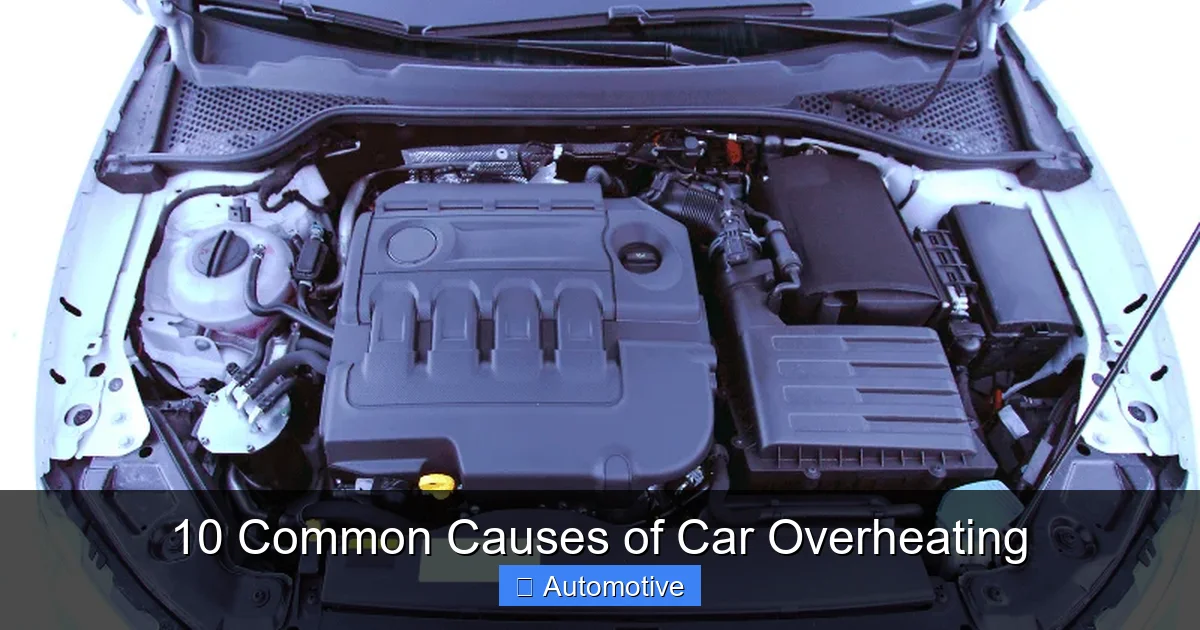
Your thermostat is a small but mighty component that regulates coolant flow based on engine temperature. When the engine is cold, the thermostat stays closed, allowing it to warm up quickly. Once the engine reaches operating temperature (usually around 195°F to 220°F), the thermostat opens, letting coolant flow to the radiator to prevent overheating.
Visual guide about 10 Common Causes of Car Overheating
Image source: autocareaids.com
What Happens When the Thermostat Fails?
A faulty thermostat can get stuck in either the open or closed position. If it’s stuck open, your engine may take longer to warm up, reducing fuel efficiency. But if it’s stuck closed, coolant can’t reach the radiator, causing the engine to overheat rapidly—even on short drives.
Symptoms of a Bad Thermostat
- Engine overheats quickly, especially at idle or low speeds.
- Temperature gauge fluctuates wildly.
- Heater doesn’t produce warm air (if stuck open).
- Coolant reservoir bubbles or overflows.
How to Diagnose and Replace
Diagnosing a bad thermostat often involves checking the upper and lower radiator hoses. When the engine is cold, both hoses should be cool. After the engine warms up, the upper hose should get hot—if it doesn’t, the thermostat may be stuck closed.
Replacing a thermostat is relatively straightforward and inexpensive (typically $20–$50 for the part). Most are located in a housing near the engine’s cylinder head. However, if you’re not comfortable doing it yourself, a mechanic can handle it in under an hour.
Prevention Tips
Thermostats usually last 50,000 to 100,000 miles, but they can fail early due to corrosion or poor-quality coolant. To extend its life, use the correct coolant mixture and replace it during major cooling system services.
3. Radiator Problems: When Heat Can’t Escape
The radiator is the engine’s primary heat exchanger. It’s designed to dissipate heat from the coolant as air flows through its fins. But when the radiator is clogged, damaged, or leaking, it can’t do its job—leading to overheating.

Visual guide about 10 Common Causes of Car Overheating
Image source: autocareaids.com
Common Radiator Issues
- Clogs: Dirt, debris, or rust can block the radiator’s internal tubes, restricting coolant flow.
- Leaks: Corrosion or physical damage can cause holes, leading to coolant loss.
- Damaged fins: Bent or crushed fins reduce airflow, especially in stop-and-go traffic.
- Old age: Over time, radiators can degrade, especially if not properly maintained.
Signs Your Radiator Needs Attention
Watch for these warning signs:
- Coolant leaks under the front of the car.
- Overheating in traffic but normal temps on the highway (indicates poor airflow).
- Rust or sludge in the coolant.
- Visible damage to the radiator fins.
How to Maintain Your Radiator
Regular maintenance can prevent radiator problems:
- Flush the cooling system every 30,000 to 50,000 miles to remove debris and old coolant.
- Inspect the radiator for leaks and damage during oil changes.
- Keep the front of the car clean to prevent debris buildup.
- Use a radiator sealant only as a temporary fix—permanent repairs are better.
When to Replace the Radiator
If your radiator is severely corroded, has multiple leaks, or is over 10 years old, replacement may be the best option. A new radiator costs between $300 and $800, including labor, but it’s a worthwhile investment to protect your engine.
4. Water Pump Failure: The Heart of the Cooling System
The water pump is the unsung hero of your car’s cooling system. It’s responsible for circulating coolant through the engine, radiator, and heater core. Without it, coolant would just sit still—and your engine would overheat in minutes.
How the Water Pump Works
The pump is typically driven by a belt (serpentine or timing belt) and uses an impeller to push coolant through the system. It’s usually located at the front of the engine and is sealed to prevent leaks.
Symptoms of a Failing Water Pump
Watch for these red flags:
- Coolant leaks near the front of the engine (often with a green or orange trail).
- Whining or grinding noise from the pump area.
- Overheating, especially under load or at high speeds.
- Steam coming from the engine bay.
- Loose or wobbly pulley (visible when the engine is off).
Why Water Pumps Fail
Common causes include:
- Worn bearings: Leads to noise and eventual seizure.
- Seal failure: Allows coolant to leak out.
- Impeller damage: Corrosion or cavitation can break the impeller blades.
- Belt issues: A slipping or broken belt stops the pump from turning.
Replacement and Prevention
Water pump replacement is labor-intensive, often requiring removal of the timing belt or serpentine belt. Costs range from $400 to $800. To extend its life, replace the timing belt (if applicable) on schedule and use quality coolant to prevent corrosion.
5. Cooling Fan Malfunctions: No Airflow, No Cooling
Your car’s cooling fan(s) kick in when the engine gets hot, especially when you’re idling or driving slowly. They pull air through the radiator to help dissipate heat. If the fan isn’t working, your engine can overheat—even if everything else is functioning properly.
Types of Cooling Fans
- Electric fans: Common in modern cars, controlled by a temperature sensor or the engine control unit (ECU).
- Mechanical fans: Driven by the engine via a clutch, found in older vehicles.
Common Fan Problems
- Blown fuse or relay: Prevents the fan from receiving power.
- Faulty temperature sensor: Doesn’t signal the fan to turn on.
- Motor failure: The fan motor burns out over time.
- Clutch failure (mechanical fans): The clutch doesn’t engage properly.
How to Test the Cooling Fan
Turn on the A/C—the fan should run. If it doesn’t, check the fuse and relay first. You can also use a multimeter to test for power at the fan connector. If there’s power but the fan doesn’t spin, the motor is likely bad.
DIY Fixes and When to Call a Pro
Replacing a fuse or relay is easy and cheap. But if the fan motor or sensor is faulty, it’s best to have a mechanic handle it. Ignoring a bad fan can lead to repeated overheating and engine damage.
6. Head Gasket Failure: The Nightmare Scenario
The head gasket seals the cylinder head to the engine block, keeping coolant, oil, and combustion gases separate. When it fails, coolant can leak into the combustion chamber or oil passages—causing severe overheating and potential engine destruction.
Symptoms of a Blown Head Gasket
- White, sweet-smelling exhaust smoke (coolant burning).
- Milky or frothy oil on the dipstick (coolant mixing with oil).
- Bubbles in the coolant reservoir.
- Overheating that doesn’t improve after adding coolant.
- Loss of power or rough running.
Why Head Gaskets Fail
Common causes include:
- Chronic overheating (the #1 cause).
- Poor engine maintenance.
- Manufacturing defects.
- Engine detonation or pre-ignition.
Repair Costs and Prevention
Head gasket repair is one of the most expensive fixes—often $1,500 to $3,000 or more. The best prevention? Avoid overheating in the first place by maintaining your cooling system and addressing issues promptly.
Other Causes: Belts, Hoses, and Air Pockets
Beyond the major components, several smaller issues can contribute to overheating:
- Serpentine belt failure: If the belt breaks, the water pump and fan stop working.
- Collapsed or cracked hoses: Restrict coolant flow or cause leaks.
- Air pockets in the cooling system: Prevent proper coolant circulation after a refill.
How to Bleed Air from the System
After adding coolant, run the engine with the radiator cap off (when cool) and squeeze the upper radiator hose to release trapped air. Some cars have a bleed screw—consult your manual.
Conclusion: Stay Cool, Stay Safe
Car overheating is rarely a random event—it’s usually the result of a preventable issue. By understanding the 10 common causes, from low coolant to head gasket failure, you can take proactive steps to protect your engine and avoid roadside emergencies.
Regular maintenance is your best defense. Check coolant levels, inspect hoses and belts, and listen for unusual noises. If you notice any warning signs—like rising temperature or leaks—don’t ignore them. A small fix today can save you thousands in repairs tomorrow.
Remember: Your car’s cooling system is designed to keep things running smoothly. Treat it well, and it will do the same for you.
Frequently Asked Questions
Can I drive my car if it’s overheating?
No, you should never drive an overheating car. Continuing to drive can cause severe engine damage, including warped heads or a seized engine. Pull over safely, turn off the engine, and call for assistance.
How often should I check my coolant level?
Check your coolant level every few weeks or before long trips. Also, inspect it during oil changes or if you notice any leaks or temperature fluctuations.
Is it safe to add water instead of coolant?
In an emergency, you can add distilled water to the coolant reservoir, but it’s not a long-term solution. Coolant contains additives that prevent corrosion and freezing—use the correct coolant mixture for your vehicle.
Why does my car overheat only in traffic?
This usually indicates a cooling fan problem. At low speeds, the fan is essential for airflow. If it’s not working, the radiator can’t cool the coolant effectively.
Can a dirty air filter cause overheating?
Indirectly, yes. A clogged air filter reduces engine efficiency and can increase operating temperature, especially under load. However, it’s not a direct cause of overheating.
How much does it cost to fix a car overheating issue?
Costs vary widely—from $20 for a new thermostat to $3,000 for a head gasket repair. Most common fixes (coolant top-off, fan replacement) range from $100 to $500.