
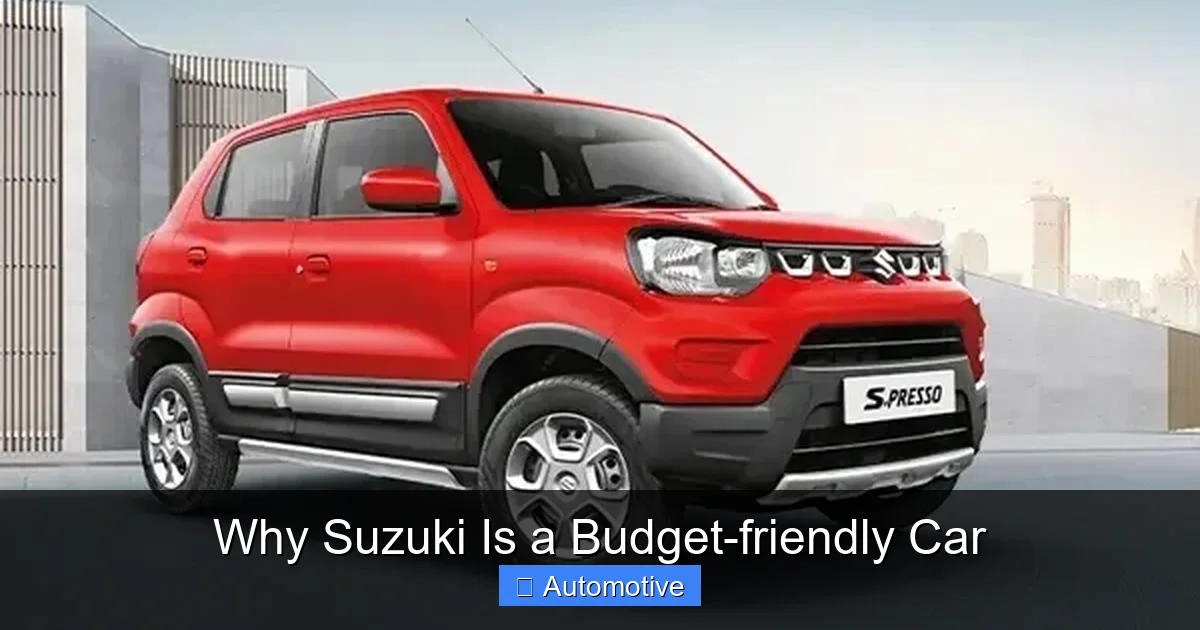
Why Suzuki Is a Budget-friendly Car

Choosing a Suzuki means getting more car for less money without sacrificing quality or reliability. From affordable pricing to low running costs, Suzuki vehicles are designed to keep your wallet happy while delivering practical, efficient, and fun driving experiences.
When it comes to buying a car, most people are looking for one thing above all else: value. Not just a flashy badge or a powerful engine, but real, everyday value—something that won’t break the bank to buy, own, or maintain. That’s exactly where Suzuki shines. For decades, Suzuki has built a reputation as a brand that delivers reliable, efficient, and surprisingly fun-to-drive vehicles at prices that won’t make your wallet cry. Whether you’re a first-time car buyer, a student on a tight budget, or a family looking to stretch every dollar, Suzuki offers a lineup that’s hard to ignore.
What makes Suzuki stand out in a crowded automotive market isn’t just one thing—it’s a combination of smart engineering, practical design, and a no-nonsense approach to affordability. Unlike some brands that charge a premium for even basic features, Suzuki packs value into every model. From the compact Swift to the rugged Jimny and the versatile Vitara, each vehicle is designed with real-world needs in mind. You get modern technology, solid build quality, and fuel-efficient performance—all without the luxury markup. And because Suzuki focuses on simplicity and reliability, you spend less time at the mechanic and more time enjoying the drive.
Key Takeaways
- Affordable Purchase Price: Suzuki offers some of the most competitively priced new cars on the market, making them accessible to a wide range of buyers.
- Excellent Fuel Efficiency: With advanced engine technology and lightweight designs, Suzuki cars consume less fuel, saving you money at the pump.
- Low Maintenance and Repair Costs: Suzuki vehicles are built with simplicity and durability in mind, resulting in fewer breakdowns and affordable servicing.
- High Resale Value: Despite their low initial cost, many Suzuki models retain strong resale value thanks to their reputation for reliability.
- Compact and Practical Design: Ideal for city driving and tight parking spaces, Suzuki cars maximize utility without the bulk—or the price tag—of larger vehicles.
- Generous Standard Features: Even base models come well-equipped with modern tech, safety features, and comfort amenities.
- Global Support and Parts Availability: With a vast service network and widely available parts, owning a Suzuki is convenient and cost-effective long-term.
📑 Table of Contents
- Affordable Purchase Price: Getting More Car for Less
- Fuel Efficiency: Saving Money at the Pump
- Low Maintenance and Repair Costs: Keeping Ownership Affordable
- High Resale Value: Getting Your Money Back
- Compact and Practical Design: Big Utility in a Small Package
- Generous Standard Features: No Need to Upgrade
- Global Support and Parts Availability: Peace of Mind Anywhere
Affordable Purchase Price: Getting More Car for Less
One of the most obvious reasons Suzuki is a budget-friendly car is its affordable purchase price. When you walk into a dealership, you’ll quickly notice that Suzuki models are priced well below many competitors in their class. For example, the Suzuki Swift starts at a price point that’s often thousands of dollars less than similar hatchbacks from brands like Honda or Toyota. This lower entry cost makes Suzuki an attractive option for buyers who want a new car without taking on a massive loan.
But affordability doesn’t mean cutting corners. Suzuki uses smart engineering and efficient manufacturing processes to keep costs down without compromising on quality. The company focuses on what drivers actually need—reliable transportation, good fuel economy, and everyday usability—rather than loading up on unnecessary luxury features that inflate the price. This philosophy allows Suzuki to offer well-equipped base models that still include essentials like air conditioning, power windows, and touchscreen infotainment systems.
Let’s look at a real-world example. Say you’re comparing the Suzuki Swift GLX to a similarly sized hatchback from another brand. The Swift might come standard with a 7-inch touchscreen, Apple CarPlay, Android Auto, and a rearview camera—features that are often optional or part of expensive upgrade packages on other cars. Yet, the Swift’s starting price remains competitive, sometimes even lower. This means you’re not just saving money upfront; you’re also getting more value from day one.
Another factor that keeps Suzuki’s prices low is the brand’s focus on compact and subcompact vehicles. These smaller cars require fewer materials to build, which reduces production costs. They’re also lighter, which improves fuel efficiency and reduces wear on components like brakes and tires. By specializing in these efficient vehicle types, Suzuki can pass the savings directly to the consumer.
For budget-conscious buyers, this affordability opens up opportunities. Instead of stretching your finances to afford a used car with high mileage, you can buy a brand-new Suzuki with a full warranty and modern safety features. Or, if you’re upgrading from an older vehicle, a Suzuki might allow you to get into a newer model with better technology and lower running costs—all while staying within your budget.
Fuel Efficiency: Saving Money at the Pump

Visual guide about Why Suzuki Is a Budget-friendly Car
Image source: enews.hamariweb.com
If you’ve ever watched gas prices climb and felt a knot in your stomach, you’re not alone. Fuel costs are one of the biggest ongoing expenses of car ownership, and they can quickly eat into your monthly budget. This is another area where Suzuki excels. Suzuki vehicles are engineered for maximum fuel efficiency, helping you save money every time you fill up.
The secret lies in a combination of lightweight design, aerodynamic shaping, and advanced engine technology. Suzuki uses high-tensile steel and aluminum components to reduce vehicle weight without sacrificing safety. A lighter car requires less energy to move, which directly translates to better fuel economy. For instance, the Suzuki Swift weighs in at around 970 kg (2,138 lbs), making it one of the lightest cars in its class. This low weight, combined with a small but efficient 1.2-liter Dualjet engine, delivers impressive fuel consumption figures—often exceeding 20 km/L (around 47 mpg) in real-world driving.
But it’s not just about the engine. Suzuki integrates smart technologies like idle-stop systems, which automatically shut off the engine when the car is stationary (like at a red light) and restart it when you press the accelerator. This reduces unnecessary fuel consumption in city traffic, where idling can account for a significant portion of fuel use. Additionally, many Suzuki models come with continuously variable transmissions (CVTs) or efficient manual gearboxes that optimize engine performance and fuel delivery.
Let’s put this into perspective. Imagine you drive 15,000 kilometers (about 9,300 miles) per year. If your current car averages 12 km/L (28 mpg) and fuel costs $1.50 per liter, you’d spend roughly $1,875 annually on fuel. Switch to a Suzuki Swift that averages 20 km/L (47 mpg), and your annual fuel cost drops to around $1,125. That’s a savings of $750 per year—money that can go toward insurance, maintenance, or even a vacation.
And it’s not just the Swift. Models like the Suzuki Baleno, Vitara, and S-Cross also deliver strong fuel economy, especially in their smaller engine variants. Even the Suzuki Jimny, known for its off-road capability, manages decent fuel efficiency thanks to its compact size and lightweight construction. This makes Suzuki a great choice not only for city commuters but also for rural drivers who need a capable vehicle without the gas-guzzling drawbacks of larger SUVs.
Low Maintenance and Repair Costs: Keeping Ownership Affordable

Visual guide about Why Suzuki Is a Budget-friendly Car
Image source: images.theindiadaily.com
Buying a car is just the first expense. What really determines whether a car is budget-friendly is how much it costs to keep it running over time. This is where Suzuki truly earns its reputation as a wallet-friendly brand. Suzuki vehicles are designed for simplicity, durability, and ease of maintenance—all of which translate to lower long-term costs.
One of the biggest advantages is the brand’s focus on proven, reliable mechanical components. Suzuki avoids overly complex systems that are expensive to repair. Instead, they use straightforward engines, transmissions, and suspension setups that are easy for mechanics to work on and less likely to fail. This means fewer surprise breakdowns and lower labor costs when service is needed.
Parts availability is another major benefit. Suzuki has a global presence, with dealerships and service centers in over 190 countries. This widespread network ensures that replacement parts are readily available and competitively priced. Whether you need a new brake pad, air filter, or alternator, you’re unlikely to face long waits or inflated prices. In many regions, Suzuki parts are also compatible across multiple models, which helps keep inventory costs down and prices low.
Routine maintenance is equally affordable. Oil changes, tire rotations, and brake inspections are all straightforward and inexpensive on Suzuki vehicles. Many models also come with extended service intervals, meaning you don’t need to visit the mechanic as often. For example, some Suzuki engines are designed to go 10,000 to 15,000 kilometers between oil changes, compared to the older standard of 5,000 kilometers. This not only saves money but also reduces downtime.
Let’s consider a practical example. Suppose you own a Suzuki Swift and follow the recommended maintenance schedule. Over five years, your total maintenance cost—including oil changes, filters, brakes, and inspections—might come to around $1,200. Compare that to a similarly sized car from a premium brand, where the same services could easily exceed $2,000 due to higher labor rates and more expensive parts. Over time, these savings add up.
Suzuki also offers competitive warranty packages. Most new Suzuki vehicles come with a 3-year/100,000-kilometer warranty, covering major components like the engine and transmission. Some markets even offer extended warranties or service plans that lock in maintenance costs at a fixed rate. This gives buyers peace of mind and protects against unexpected repair bills.
Another often-overlooked factor is insurance. Because Suzuki cars are generally less expensive to repair and have lower theft rates (thanks to their practical, non-luxury image), insurance premiums tend to be lower than for comparable vehicles from premium brands. This is another way Suzuki helps keep the total cost of ownership down.
High Resale Value: Getting Your Money Back
Visual guide about Why Suzuki Is a Budget-friendly Car
Image source: images.drivespark.com
When you buy a car, you’re not just spending money—you’re also making an investment. A budget-friendly car should hold its value well, so when it’s time to sell or trade in, you get a fair return. Surprisingly, many Suzuki models do just that. Despite their low initial price, Suzuki vehicles often retain strong resale value, especially in markets where reliability and fuel efficiency are highly valued.
Several factors contribute to this. First, Suzuki’s reputation for durability means that used Suzuki cars are still seen as reliable and dependable. Buyers know they’re getting a vehicle that’s likely to last, which increases demand in the used car market. Second, because Suzuki cars are affordable to maintain and fuel-efficient, they appeal to a wide range of second-hand buyers—from students to small families to ride-share drivers.
For example, a three-year-old Suzuki Swift with average mileage might retain 60–65% of its original value, which is on par with or better than many competitors. The Suzuki Jimny, in particular, has developed a cult following due to its off-road capability and retro styling. Used Jimnys often sell for close to their original price, especially in regions with high demand for compact 4x4s.
This strong resale value is a hidden benefit of choosing Suzuki. It means that even though you paid less upfront, you won’t lose as much money when it’s time to upgrade. In fact, some owners find that their total cost of ownership—purchase price minus resale value—is significantly lower than with other brands.
To maximize resale value, it’s important to keep your Suzuki well-maintained. Regular servicing, keeping detailed records, and avoiding major modifications can help ensure your car appeals to future buyers. Suzuki’s widespread service network also makes it easy to get official service stamps, which add credibility and value.
Compact and Practical Design: Big Utility in a Small Package
One of the most appealing aspects of Suzuki vehicles is their smart, space-efficient design. Suzuki specializes in compact cars that make the most of every inch, offering surprising interior space and versatility without the bulk of larger vehicles. This makes them ideal for urban driving, where parking is tight and traffic is heavy.
Take the Suzuki Swift, for example. Despite its small exterior, the Swift offers a roomy cabin with comfortable seating for four adults and a decent-sized trunk. The high roofline and wide door openings make it easy to get in and out, while the large windows provide excellent visibility. The rear seats also fold flat, expanding cargo space for groceries, luggage, or weekend gear.
The Suzuki Vitara takes this practicality a step further. As a compact SUV, it offers the elevated driving position and extra ground clearance that many drivers want, but without the fuel consumption and parking challenges of a full-size SUV. The Vitara’s modular interior allows for flexible seating and storage options, making it a great choice for small families or outdoor enthusiasts.
Even the Suzuki Jimny, with its boxy, retro-inspired design, is a masterclass in practicality. It’s small enough to navigate narrow trails and city streets, yet rugged enough to handle off-road adventures. Its simple, mechanical 4×4 system is reliable and easy to maintain, appealing to drivers who value function over flash.
This compact design also contributes to lower ownership costs. Smaller cars are cheaper to insure, easier to park (often qualifying for reduced parking fees), and less expensive to repair after minor accidents. They also tend to have lower registration and road tax fees in many countries, further enhancing their budget-friendly appeal.
Generous Standard Features: No Need to Upgrade
One of the biggest myths about budget cars is that you have to sacrifice features to save money. Suzuki proves that’s not true. Even the base models come well-equipped with modern technology, safety systems, and comfort features that rival those found in more expensive vehicles.
For instance, most Suzuki models now include a touchscreen infotainment system with Apple CarPlay and Android Auto as standard. This allows you to seamlessly integrate your smartphone for navigation, music, and hands-free calling—no need to pay extra for a premium audio package. Many models also feature Bluetooth connectivity, USB ports, and steering wheel controls, making it easy to stay connected on the go.
Safety is another area where Suzuki doesn’t cut corners. The brand has made significant investments in advanced safety technology, and many models now come with features like autonomous emergency braking, lane departure warning, and adaptive cruise control—even in lower trim levels. The Suzuki Swift, for example, earned a 5-star safety rating from Euro NCAP, thanks to its robust body structure and comprehensive safety suite.
Comfort features are also generous. Air conditioning, power windows, and remote keyless entry are standard on most models. Higher trims add extras like leather upholstery, heated seats, and sunroofs, but even the base versions offer a comfortable and convenient driving experience.
This approach means you don’t have to spend extra on optional packages just to get the features you want. You get a well-rounded, modern car right out of the box—making Suzuki a truly budget-friendly choice.
Global Support and Parts Availability: Peace of Mind Anywhere
Finally, one of the most overlooked benefits of owning a Suzuki is the brand’s global support network. With dealerships and service centers in nearly every corner of the world, Suzuki ensures that help is never far away. Whether you’re traveling abroad or need a quick repair at home, you can count on professional service and genuine parts.
This widespread availability also means that used Suzuki parts are easy to find, which can further reduce repair costs. Independent mechanics often have access to Suzuki components, and online marketplaces make it simple to source parts for DIY repairs. This level of support is especially valuable in rural or remote areas, where access to specialized service can be limited.
In conclusion, Suzuki isn’t just a budget-friendly car—it’s a smart, practical, and reliable choice for anyone looking to get the most value from their vehicle. From low purchase prices and fuel efficiency to affordable maintenance and strong resale value, Suzuki delivers on every front. Whether you’re navigating city streets or exploring the countryside, a Suzuki lets you drive with confidence—and keep more money in your pocket.
Frequently Asked Questions
Are Suzuki cars reliable?
Yes, Suzuki cars are known for their reliability. The brand focuses on simple, durable engineering and uses proven mechanical components that require less maintenance and are less likely to fail over time.
Do Suzuki cars have good fuel economy?
Absolutely. Suzuki vehicles are designed to be lightweight and aerodynamic, with efficient engines that deliver excellent fuel economy—often exceeding 20 km/L in real-world driving conditions.
Are Suzuki parts expensive?
No, Suzuki parts are generally affordable and widely available. The brand’s global network ensures that replacement components are easy to find and competitively priced.
Can I get a Suzuki with modern features?
Yes. Even base models come equipped with modern tech like touchscreen infotainment, Apple CarPlay, Android Auto, and advanced safety features such as autonomous emergency braking.
Do Suzuki cars hold their value?
Many Suzuki models retain strong resale value, especially popular ones like the Swift and Jimny. Their reputation for reliability and low running costs makes them desirable in the used car market.
Is Suzuki a good choice for city driving?
Definitely. Suzuki’s compact size, excellent visibility, and fuel efficiency make it ideal for urban environments, tight parking spaces, and stop-and-go traffic.