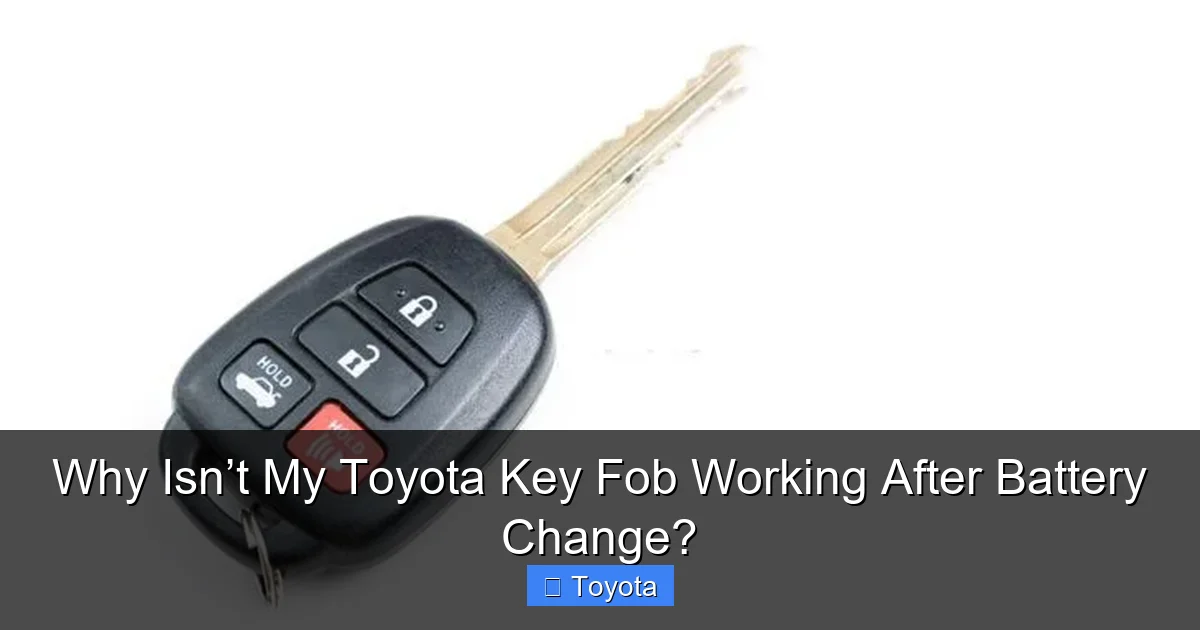
Why Isn’t My Toyota Key Fob Working After Battery Change?

Contents
- 1 Key Takeaways
- 2 📑 Table of Contents
- 3 So You Changed the Battery, and Now Nothing Works
- 4 The Most Common Reasons Your Toyota Key Fob Dies After a Battery Change
- 5 Your Step-by-Step Troubleshooting Guide
- 6 When Reprogramming Is Necessary: Signs and Solutions
- 7 Professional vs. DIY: When to Call for Help
- 8 Prevention Tips for the Next Battery Change
- 9 Conclusion: Patience and Precision Win
- 10 Frequently Asked Questions



Replacing the battery in your Toyota key fob should fix the problem, but sometimes it creates a new one. The most common culprits are an incorrectly installed battery, a needed reset, or a lost connection with your car’s computer. Often, a simple resync or reprogramming will restore function, but internal damage during the battery change is also possible. This guide walks you through every check and fix, from basic troubleshooting to knowing when to call a professional.
Key Takeaways
- The battery is often installed backward or poorly seated: Double-check the + and – terminals match the fob’s markings. A loose connection is a very common fix.
- Your key fob may simply need to be reset: Many Toyota models require a specific button sequence after battery replacement to resync with the car.
- The key fob can lose its programming: A complete power loss to the fob’s circuit can erase its code, requiring reprogramming with a dealer or locksmith.
- Physical damage during the battery change is possible: cracking the circuit board or dislodging a component will render the fob useless, even with a new battery.
- Always use the correct battery type: Using a different voltage or size can damage the fob’s internal electronics.
- Your car’s security system may need a reset: Sometimes the vehicle’s antenna or immobilizer system needs to be rebooted to recognize the fob again.
- Start with simple checks before assuming the worst: Verify the battery, try the resync procedure, and check for physical damage before seeking professional help.
[FEATURED_IMAGE_PLACEHOLDER]
📑 Table of Contents
- So You Changed the Battery, and Now Nothing Works
- The Most Common Reasons Your Toyota Key Fob Dies After a Battery Change
- Your Step-by-Step Troubleshooting Guide
- When Reprogramming Is Necessary: Signs and Solutions
- Professional vs. DIY: When to Call for Help
- Prevention Tips for the Next Battery Change
- Conclusion: Patience and Precision Win
So You Changed the Battery, and Now Nothing Works
You pop the new battery into your Toyota key fob, snap it back together, and press the unlock button. Nothing. You press it again, harder. Still nothing. That sinking feeling hits—you just tried to fix a weak signal, and now your key fob is completely dead. It’s incredibly frustrating, but it’s also a very common situation. Don’t panic. In most cases, the solution is simple and something you can handle yourself. The key is understanding why this happens. This guide will walk you through every possible reason, from the simple to the complex, so you can get your Toyota key fob working again.
The Most Common Reasons Your Toyota Key Fob Dies After a Battery Change
It feels counterintuitive. You changed the battery to make it work, and now it’s worse. But the act of opening the fob and replacing the coin cell battery introduces several points of failure. Let’s break down the usual suspects, starting with the most frequent and easiest to fix.
Visual guide about Why Isn’t My Toyota Key Fob Working After Battery Change?
Image source: i.ytimg.com
1. Battery Installed Incorrectly (The #1 Culprit)
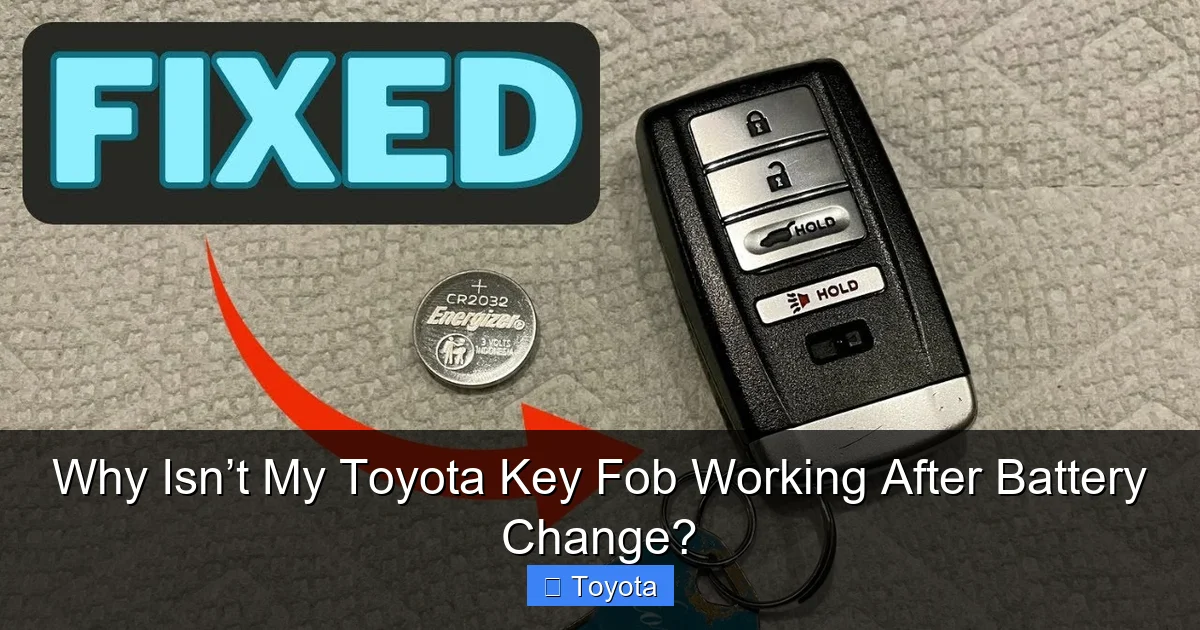
This is, by far, the most common reason. Coin cell batteries like the CR2032 have a specific polarity. The positive side (+) usually has writing on it and often has a slightly raised rim. The negative side (-) is flat. If you install it backward, the fob will not work. Period. It’s not just about the + and – symbols on the plastic holder; you must match the battery’s own terminals to the fob’s contacts.
How to check: Open the fob again. Look at the battery. The side with the writing and the “+” symbol should face UP, toward the circuit board, in almost all Toyota key fobs. If it’s facing down, flip it. Also, ensure the battery is seated firmly and isn’t crooked. A poor connection can mimic a dead battery.
2. The Key Fob Needs a “Reset” or Resync Procedure
Think of your key fob and your car as two walkie-talkies. When you change the battery, it’s like taking the batteries out of one walkie-talkie. Sometimes, when you put the batteries back in, the two devices need to “handshake” again to find each other on the same channel. Toyota has a built-in resync procedure for this exact scenario. You don’t need any special tools—just the key fob and the ignition.
Typical Toyota Resync Steps:
- Sit in the driver’s seat with all doors closed.
- Insert the key into the ignition (do not start the engine).
- Press and hold the LOCK button on the fob for one full second, then release.
- Turn the ignition to the ON position (the position right before starting, where the dashboard lights come on).
- Press and hold the UNLOCK button on the fob for one full second, then release.
- Turn the ignition OFF and remove the key.
- Test the fob. The doors should lock and unlock.
Note: This sequence can vary slightly by model year and fob type (smart key vs. standard fob). If this doesn’t work, consult your owner’s manual for the exact “Key Fob Reset” or “Registration” procedure. For older models, you might need to cycle the ignition on/off multiple times while pressing buttons. You can also find model-specific guides online, such as our article on how to program a Toyota Camry key fob, which covers similar resync concepts.
3. The Battery Was Dead on Arrival or Improperly Handled
It’s rare, but it happens. A new battery can be defective. It’s also possible the battery was exposed to extreme cold or had its seal broken, draining its charge before you even installed it. Always use a fresh, high-quality battery from a reputable store. Check the expiration date on the package.
Pro Tip: Before you even open the old fob, test the new battery with a multimeter. A good CR2032 should read 3.0 volts or very close to it. If it’s below 2.8V, it’s weak or dead.
4. Internal Damage During the Battery Change
This is the scenario we all dread. Toyota key fobs are held together with tiny plastic clips. If you use a flathead screwdriver that slips, you can crack the plastic housing. More importantly, you can crack the delicate circuit board inside or dislodge a tiny component like a resistor or the antenna coil. Even a microscopic crack in the board can break the circuit. If you see any cracks in the plastic or on the green circuit board when you reopen it, this is likely the problem. Unfortunately, this usually means the fob is permanently damaged and needs to be replaced or professionally repaired.
5. The Fob Lost Its Programming to the Car
This is a more serious issue. The chip inside your Toyota key fob (the transponder) is programmed with a unique code that your car’s immobilizer system recognizes. A hard reset—like completely disconnecting the car’s main battery—can sometimes clear the car’s memory. However, the act of changing the key fob battery *should not* erase this programming. But if the fob lost all power for a long time, or if there was a static shock while the case was open, the chip’s memory could be corrupted. If the resync procedure doesn’t work and the battery is definitely correct, lost programming is a strong possibility. This requires a professional with a diagnostic tool to reprogram the key fob to your vehicle’s computer.
Your Step-by-Step Troubleshooting Guide
Don’t guess. Work through this checklist logically. Start with the simplest fix and move to more complex ones.
Visual guide about Why Isn’t My Toyota Key Fob Working After Battery Change?
Image source: i.ytimg.com
Step 1: The Double-Check (Battery & Physical Damage)
Open the fob again. This time, look at everything with a light.
- Confirm Polarity: Is the battery’s positive side (+) facing the correct direction as marked inside the fob? It’s usually face-up.
- Check Seating: Is the battery sitting flat and flush? Gently press it down.
- Inspect for Damage: Look for any cracks in the plastic housing. Look at the circuit board. Are there any visible cracks, scorch marks, or loose parts? Pay special attention to the area where the battery contacts touch the board. If you see damage, stop here. The fob is likely broken.
- Clean Contacts: If the metal battery contacts in the fob look tarnished or dirty, gently clean them with a pencil eraser or a cotton swab dipped in a tiny bit of isopropyl alcohol. Let it dry completely.
Step 2: Perform the Official Reset/Resync Procedure
As described above, follow the specific sequence for your Toyota model. If you don’t have the owner’s manual, search online for “**[Your Year, Make, Model] key fob reset after battery change**”. For example, “2020 Toyota RAV4 key fob reset.” The procedure for a smart key push-button start system is different from a traditional key with a remote. Be patient and precise with the button presses and ignition turns.
Step 3: Try the “Relearn” or “Registration” Mode
Some Toyota models have a hidden “registration” mode you can activate without a scan tool. It often involves turning the ignition on and off a specific number of times while pressing and holding certain buttons. This forces the car’s antenna to listen for a key fob signal and pair with it. This is a more advanced version of the simple reset. Again, your owner’s manual or a reputable online source for your specific vehicle is key here. If your fob has a RED panic button, note that its function after a battery change can be a good diagnostic. If the red light blinks when pressed but the lock/unlock buttons do nothing, it points to a lost programming issue. You can learn more about what a blinking red light on a Toyota key fob signifies.
Step 4: The “Spare Key” Test
Do you have a second key fob for the same car? If yes, this is your best diagnostic tool.
- Does the spare fob work normally? If YES, the problem is definitely isolated to the fob you just worked on (battery, damage, lost programming).
- Does the spare fob also fail? If YES, the problem might be with the car’s antenna or immobilizer system, not the fob. This is less common after a single fob battery change but possible if the car’s system had a glitch.
Step 5: Check the Car’s Battery
A severely weak or dead car battery can sometimes cause the immobilizer system to act erratically and not recognize a key fob signal, even if the fob itself is fine. Make sure your car’s main battery is fully charged and the terminals are clean. This is a long shot but an easy check if you’re already troubleshooting.
When Reprogramming Is Necessary: Signs and Solutions
If you’ve meticulously checked the battery, tried every reset procedure you can find, and the fob still does nothing (or just blinks red), it’s time to consider reprogramming. Here are the tell-tale signs:
Visual guide about Why Isn’t My Toyota Key Fob Working After Battery Change?
Image source: i.ytimg.com
Signs Your Key Fob Needs to Be Reprogrammed
- The fob’s LED light does not illuminate at all when any button is pressed (with a known-good battery installed).
- The fob works intermittently or only from very close range, even with a new battery.
- The car’s dashboard displays a “Key Not Detected” or “No Key” warning, even when the fob is in the cup holder or your pocket.
- You can manually unlock the door with the physical key, but the car will not start (immobilizer is active).
- The resync/relearn procedure has no effect after multiple attempts.
How to Reprogram a Toyota Key Fob
Reprogramming a Toyota key fob requires specialized equipment. You cannot do it with just the key and the car, for security reasons. You have two main options:
- Toyota Dealer: The most reliable but usually most expensive option. They have the official diagnostic computers. Expect to pay a fee (often $80-$150) for the service.
- Certified Automotive Locksmith: A reputable locksmith with experience in Japanese vehicles can almost always do this for less money than a dealer. They have the necessary programmers. This is often the best value.
Important: If your key fob is an older, “non-smart” remote fob (with a separate physical key), some very old models might have a manual programming sequence you can do yourself by turning the ignition on/off in a pattern. However, for any model with a transponder chip (most cars from the late 1990s onward) or a smart key system, professional programming is mandatory. Do not trust random online “hacks” for these systems; they can permanently lock your car’s computer.
Professional vs. DIY: When to Call for Help
We’ve covered the DIY fixes. But when should you throw in the towel and call a pro?
- Call a Pro/Locksmith if: You’ve confirmed the battery is correct and well-seated, the reset procedure failed, and you suspect lost programming or internal damage. Also, if you simply don’t have a second key to test with, a professional can diagnose if the issue is the fob or the car.
- Go to the Dealer if: Your car is under warranty. The repair might be covered. Also, if you need a *new* key fob cut and programmed, the dealer is the source for an exact, guaranteed replacement.
- DIY is appropriate if: The issue is a backward battery, a loose connection, or you need to perform a simple resync procedure. These are free, fast fixes you can do at home.
A final note on cost: Replacing a broken Toyota key fob housing and programming a new chip from the dealer can easily cost $300-$600. A locksmith might charge $150-$300 for a new fob and programming. If your fob is physically damaged, getting a new, programmable fob shell (you can often find them online) and having a locksmith cut and program the key blade is a cheaper alternative to a full dealer replacement.
Prevention Tips for the Next Battery Change
Learn from this experience to avoid a repeat.
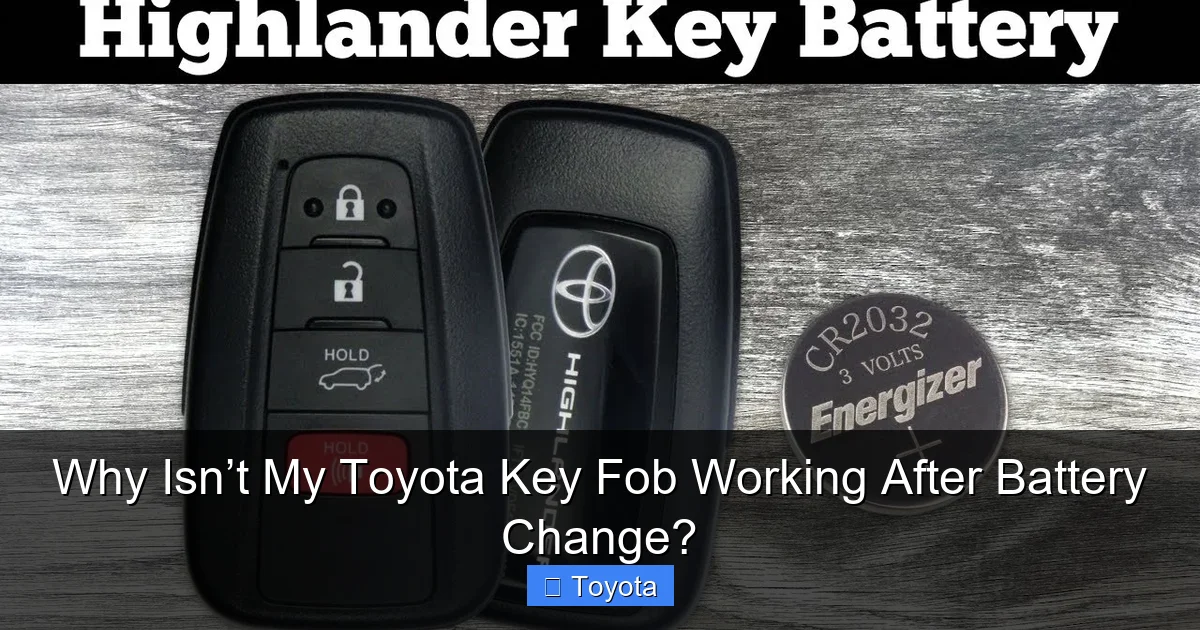
- Use the Exact Battery: Almost all Toyota key fobs use a CR2032 3V lithium coin battery. Do not substitute with a different type (like CR2025, which is thinner) unless the manual explicitly states it’s acceptable.
- Work on a Soft, Clean Surface: Open the fob over a towel. If small parts or springs fall out, you’ll find them.
- Use the Right Tool: Many Toyotas have a small slot for a flathead screwdriver. Gently twist it—don’t pry and lever. For fobs that require prying, use a plastic pry tool to avoid cracking the casing.
- Take a Photo Before You Start: A quick picture of the opened fob shows you exactly how the battery, circuit board, and any rubber gaskets are positioned.
- Handle the Circuit Board by the Edges: Oils from your fingers can corrode the board over time. Hold it by the sides.
- Do a Pre-Change Test: Before you open it, test the old fob’s range. If it was already completely dead, the new battery fix should be straightforward. If it was working weakly, a battery change is the right fix.
Following these steps will minimize the risk of causing a new problem while trying to solve the old one.
Conclusion: Patience and Precision Win
A Toyota key fob that won’t work after a battery change is almost always a fixable problem. The vast majority of the time, the solution is one of two things: you installed the battery backward or upside down, or the fob simply needs a quick electronic handshake with your car via a reset procedure. Start there. Be methodical. Open it up, check the battery orientation with a flashlight, and consult your manual for the resync steps. If those fail, the issue likely escalates to lost programming or physical damage, which requires professional tools or a replacement. By understanding the “why” behind the failure, you can approach the fix with confidence and avoid the costly dealer visit for a simple mistake. Remember, taking a moment to do it carefully the first time saves a lot of headaches later.
Frequently Asked Questions
Why does my Toyota key fob stop working immediately after I change the battery?
The most common reason is that the new battery was installed backward. The positive (+) and negative (-) terminals must match the markings inside the fob. A second common reason is that the key fob needs to be electronically resynced with the car using a specific button and ignition sequence.
How do I reset my Toyota key fob after changing the battery?
The standard reset involves sitting in the car, inserting the key, pressing the LOCK button, turning the ignition ON, pressing the UNLOCK button, and turning the ignition OFF. However, the exact steps vary by model and year. Always check your owner’s manual for the precise “Key Fob Reset” procedure for your vehicle.
Do I need to reprogram my Toyota key fob after replacing the battery?
Usually, no. A simple battery replacement should not erase the programming. However, if the fob lost all power for a long time, was damaged during the change, or experienced a static shock, it may lose its code. If a reset doesn’t work, professional reprogramming by a dealer or locksmith is likely necessary.
What kind of battery does a Toyota key fob use?
Nearly all modern Toyota key fobs use a standard CR2032 3-volt lithium coin battery. It’s crucial to use this exact type. Using a different voltage or a thinner battery like a CR2025 can damage the fob or not make proper contact.
Can changing the key fob battery damage the key fob?
Yes, it can. The most common damage is cracking the plastic housing or the internal circuit board by using too much force with a pry tool. A static electricity shock from your hand can also damage the sensitive electronics. Always use gentle, proper techniques and handle the circuit board by its edges.
When should I call a professional about my Toyota key fob?
You should call a locksmith or dealer if: you’ve confirmed the battery is installed correctly, the reset procedure failed, and the fob still doesn’t work. Also call if you see any visible cracks in the circuit board or plastic housing, as this indicates physical damage requiring a replacement fob or professional repair.