Why Is the Tpms Light Blinking on My 2013 Toyota Corolla?

Contents
- 1 Key Takeaways
- 2 📑 Table of Contents
- 3 Understanding Your 2013 Toyota Corolla’s TPMS
- 4 Top Reasons Your TPMS Light is Blinking
- 5 Step-by-Step: How to Diagnose & Fix a Blinking TPMS Light
- 6 When to Worry: Beyond the TPMS Light
- 7 Preventive Maintenance to Avoid Future Blinks
- 8 The Bottom Line: Safety Over Convenience
- 9 Frequently Asked Questions


A blinking TPMS light on your 2013 Toyota Corolla signals an immediate issue with your tire pressure monitoring system, such as critically low pressure, a faulty sensor, or a dead sensor battery. Unlike a steady light, a blinking warning often requires urgent attention to maintain safe driving conditions. Start by manually checking and adjusting your tire pressure; if the light persists, a system reset or sensor replacement may be necessary. Addressing the problem promptly ensures your safety and prevents potential damage to your tires or vehicle.
Key Takeaways
- Blinking vs. Steady: A blinking TPMS light indicates a rapid, urgent issue (like severe underinflation or sensor failure), while a steady light typically means a minor pressure drop.
- Low Pressure is the Prime Culprit: The most common cause is tire pressure 25% or more below the recommended PSI, often due to temperature changes, punctures, or normal leakage.
- Sensors Have Batteries: Each TPMS sensor has an internal battery that lasts 5-10 years; a dead battery will cause the light to blink and requires sensor replacement.
- Reset After Service: The light must be manually reset after correcting pressure, rotating tires, or replacing sensors; the system does not auto-reset on its own.
- Safety First: Driving with a blinking TPMS light is risky—it can lead to poor handling, increased tire wear, and blowouts, especially at high speeds.
- DIY vs. Professional: You can check pressure and attempt a reset yourself, but sensor diagnosis/replacement usually needs a pro with special tools and programming.
- Prevention is Key: Check tire pressure monthly with a gauge, avoid overinflation, and inspect sensors during tire changes to catch issues early.
📑 Table of Contents
Understanding Your 2013 Toyota Corolla’s TPMS
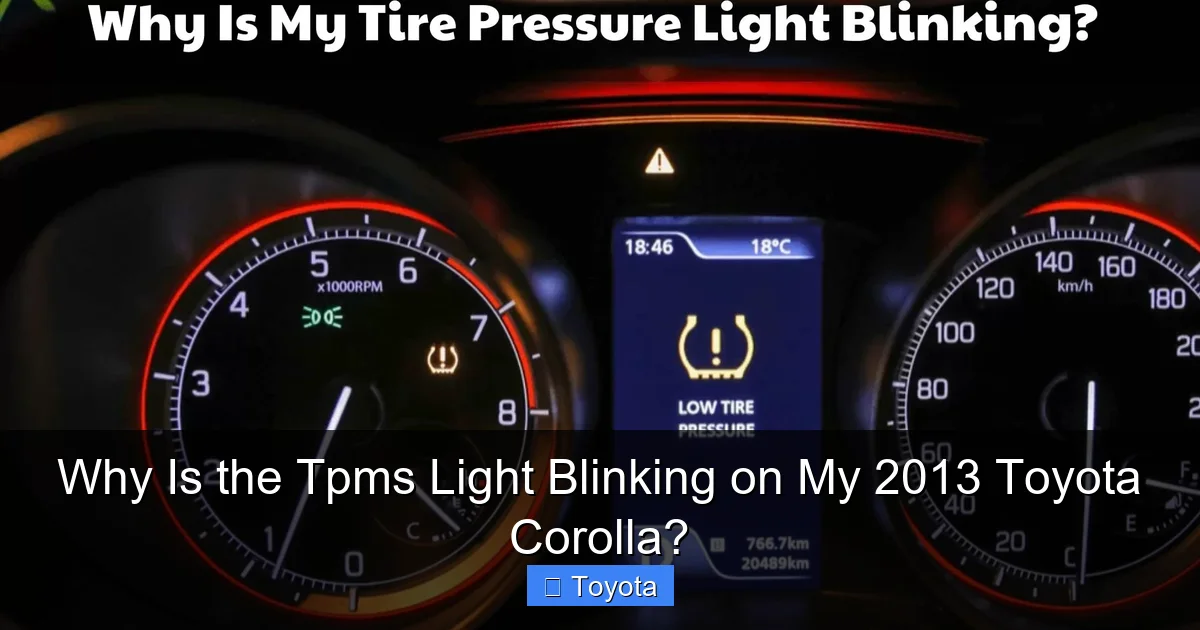
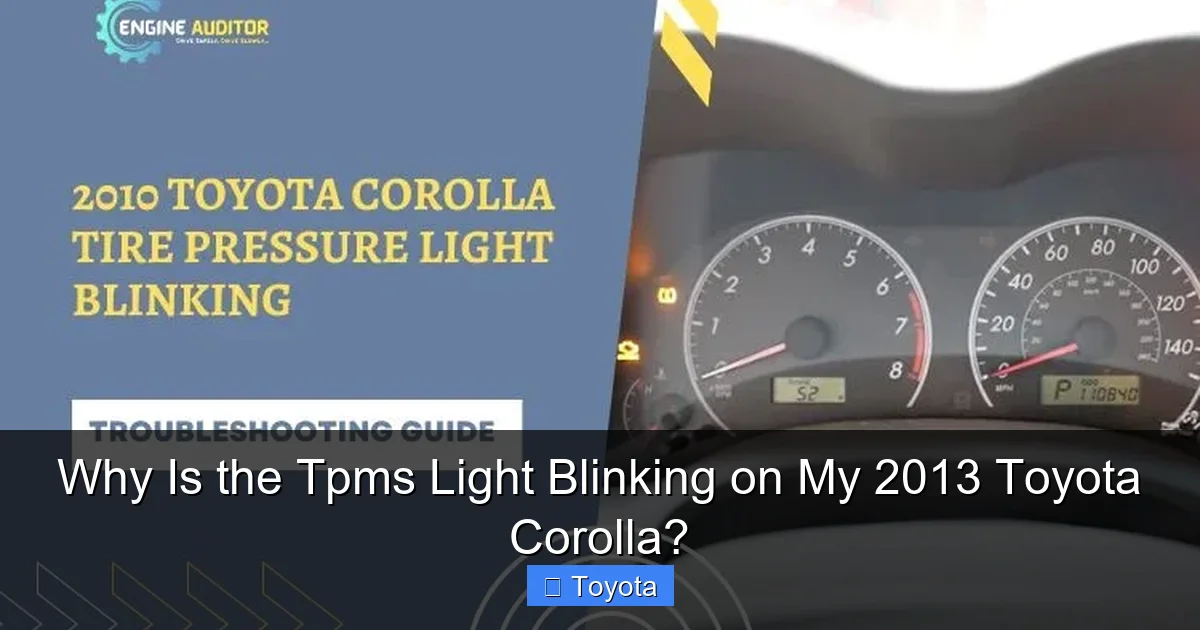
That little yellow symbol on your dashboard—the one with an exclamation point inside a tire cross-section—is your Tire Pressure Monitoring System (TPMS) light. It’s a critical safety feature mandated by law since 2007, and your 2013 Corolla has it. When it comes on steady, it’s a gentle nudge: “Hey, check your tire pressure.” But when it blinks, it’s waving a red flag. It means the system has detected a fault that needs immediate attention. Ignoring it isn’t just about a potential “check engine” scenario; it’s about the very thing keeping your car glued to the road. Let’s break down exactly why that light is flashing and what you should do about it.
How Direct TPMS Works in Your Corolla
Your 2013 Corolla uses a direct TPMS. That means each wheel has a tiny sensor mounted inside the valve stem. These sensors constantly monitor tire pressure and temperature, then transmit that data via radio frequency to your car’s computer. If any tire’s pressure drops 25% or more below the manufacturer’s recommended level (usually around 32 PSI for a Corolla, but always check your door jamb sticker), the system triggers the warning light. The sensors are powered by small, non-replaceable lithium-ion batteries that are sealed inside. They’re designed to last 5-10 years, but when they die, the sensor must be replaced entirely.
Blinking vs. Steady: What’s the Difference?
This is crucial. A steady TPMS light usually means one or more tires are underinflated. You can often fix this by adding air. A blinking light, however, points to a problem within the TPMS itself. It could be a sensor that’s failed, a dead sensor battery, or a communication breakdown between the sensor and the computer. Think of it like this: steady light = “tires need air.” Blinking light = “the system that checks your tires is broken.” Sometimes, the light will blink for a few seconds then stay steady—this often happens when you start the car and indicates a general system fault. If it just blinks continuously without going solid, it’s a more acute sensor issue.
Top Reasons Your TPMS Light is Blinking
Now, let’s get into the nitty-gritty. Why is your specific 2013 Toyota Corolla’s light flashing? Here are the most common culprits, from the simplest to the most complex.
Visual guide about Why Is the Tpms Light Blinking on My 2013 Toyota Corolla?
Image source: engineauditor.com
1. Critically Low Tire Pressure
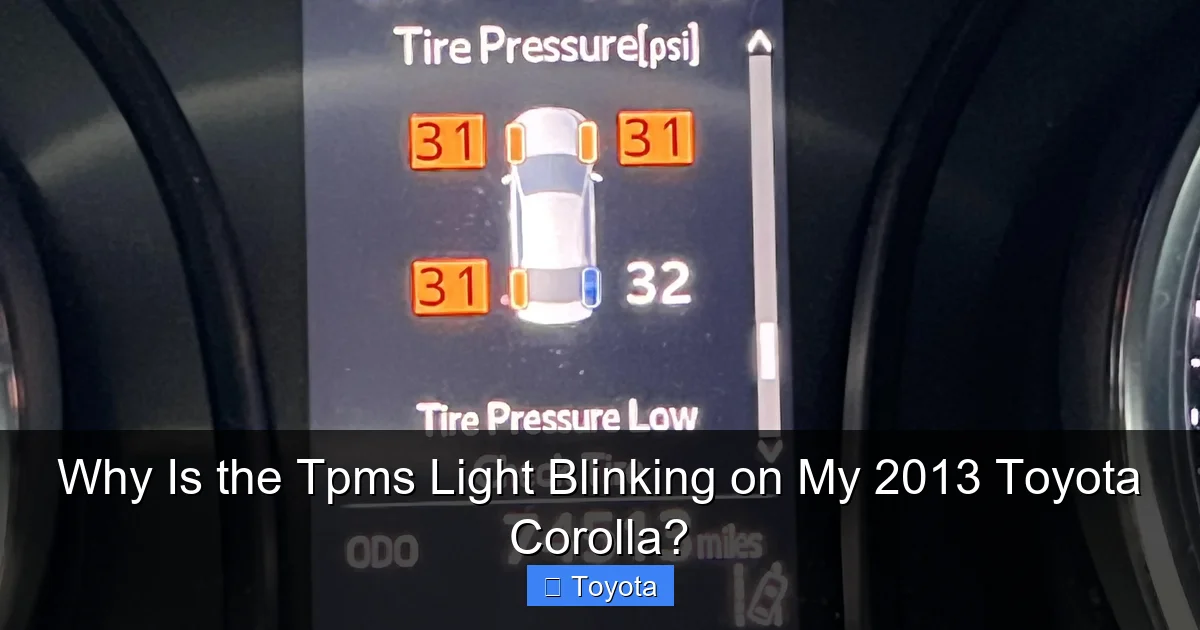
While a steady light is more common for low pressure, a severe or sudden drop (like a puncture or blowout) can cause the light to blink. This is especially true if pressure plummets in one tire rapidly. Always rule this out first. Use a reliable digital tire pressure gauge (not the one at the gas station, which can be inaccurate). Check all four tires and the spare (if equipped with a sensor). Compare the reading to the placard on your driver’s side door jamb. If any tire is 25% or more below spec, inflate it to the correct PSI. After driving for 20-30 minutes, the light should go off if low pressure was the only issue. If it keeps blinking, move to the next causes.
2. Faulty or Damaged TPMS Sensor
Sensors are sturdy but not indestructible. They can get damaged during tire changes, from curb impacts, or from corrosion on the valve stem (especially in areas that use road salt). A damaged sensor might send erratic signals or none at all, causing the computer to flag a fault and blink the light. Sometimes, the sensor itself just fails electronically. Diagnosing a bad sensor requires a TPMS scan tool that reads each sensor’s ID and signal strength. This is why a visit to a tire shop or dealership is often necessary for this step.
3. Dead Sensor Battery
Remember, each sensor has a sealed battery. They’re built to last about a decade, but they will die. When a battery dies, the sensor goes silent. Your Corolla’s computer notices the missing signal and interprets it as a system fault—hence the blinking light. There’s no way to replace the battery; you must replace the entire sensor. If your Corolla is a 2013 model, the original sensors could be reaching the end of their lifespan now, making this a very plausible reason.
4. Recent Tire Service Without Reset
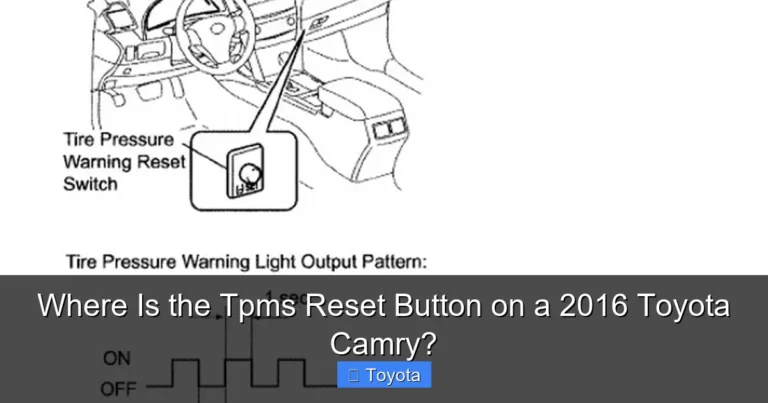
Did you just have your tires rotated, balanced, or replaced? The TPMS sensors were likely disturbed. After any tire work, the system must be manually reset to recognize the new sensor positions. If this reset isn’t done, the computer may get confused about which tire is which and trigger a fault (blinking light). The reset procedure for a 2013 Corolla typically involves turning the ignition on (not starting), pressing and holding the TPMS reset button (usually located under the steering wheel or in the glove box) until the light blinks three times, then driving for 20-30 minutes. Important: If you’re unsure about the reset process for your specific model, consult your owner’s manual or a professional. For reference, on many Toyota models like the Camry, the reset button location is similar—often found near the steering column. You can learn more about the exact location for a Camry here, but always verify for your Corolla.
5. Extreme Temperature Changes
This is a sneaky one. Tire pressure drops about 1-2 PSI for every 10°F decrease in temperature. A sudden cold snap can cause all four tires to fall below the threshold simultaneously. While this usually triggers a steady light, if the drop is drastic enough or if one tire loses pressure faster, it might cause a blink. Conversely, hot weather can increase pressure, but it’s less likely to cause a fault unless a tire is overinflated beyond its max rating. If the temperature fluctuated recently, check and adjust your pressure when the tires are cold (driven less than 2 miles).
6. Electrical or System Glitch
Rarely, the issue isn’t the sensors but the receiving module or a wiring problem. A blown fuse, corroded connector, or software glitch in the car’s computer can disrupt TPMS communication. If you’ve ruled out all sensor and pressure issues, this becomes a possibility. Diagnosing this requires advanced electronic scanning, which is best left to a technician.
Step-by-Step: How to Diagnose & Fix a Blinking TPMS Light
Don’t panic. You can tackle some of this yourself. Follow this logical sequence to identify and potentially solve the problem.
Visual guide about Why Is the Tpms Light Blinking on My 2013 Toyota Corolla?
Image source: i.redd.it
Step 1: Perform a Manual Tire Pressure Check
This is non-negotiable. Buy a good-quality digital tire pressure gauge (they cost $10-$20). Remove the valve cap, press the gauge on firmly, and note the reading. Do this for all four tires when they’re cold (car hasn’t been driven for hours or less than 2 miles). Compare to the recommended PSI on your door jamb sticker. Inflate any underfilled tire to the exact number. Do not overinflate. Overinflation can be just as problematic. Recheck the pressure after a few days; if it’s dropping again, you have a slow leak (puncture, bad valve stem, etc.) that needs repair.
Step 2: Visually Inspect Tires and Sensors
Look for obvious damage: nails, screws, cuts in the tread, or bulges on the sidewall. Check the valve stems for cracks or corrosion. If a sensor was recently hit by a curb, it might be physically damaged but not visibly leaking air. Sometimes a sensor’s “teardrop” shape on the valve stem is a clue it’s an aftermarket or damaged unit.
Step 3: Attempt a TPMS Reset
Once all tires are at the correct pressure and any obvious damage is addressed, you need to reset the system. The process for a 2013 Corolla is generally:
- Turn the ignition to the “ON” position (dashboard lights on, engine off).
- Locate the TPMS reset button. It’s often under the steering wheel, inside the fuse panel cover, or in the glove box. Consult your owner’s manual for the exact spot.
- Press and hold the button until the TPMS light blinks three times, then release.
- Start the engine and drive for 20-30 minutes at speeds above 40 mph. The light should go off as the system relearns the sensor signals.
Note: If the light continues to blink after a proper reset and confirmed correct pressure, the system has likely detected a sensor fault. At this point, professional diagnosis is needed.
Step 4: Seek Professional Help for Sensor Issues
A tire shop or dealership will use a TPMS scan tool to communicate with each sensor individually. They can identify:
- Which sensor (or sensors) are not responding.
- If a sensor’s battery is low.
- If there’s a communication error.
Replacing a TPMS sensor involves removing the tire, swapping the sensor, and sometimes reprogramming the new sensor’s ID to the car’s computer. This is not a typical DIY job without the proper tools. Expect to pay $50-$150 per sensor for parts and labor. It’s often done when you get new tires anyway.
When to Worry: Beyond the TPMS Light
A blinking TPMS light should never be ignored, but it’s not the only dashboard warning that matters. Your Corolla’s dash is a communication center. If the TPMS light is blinking alongside other lights—like the check engine light, ABS light, or airbag light—it could indicate a broader electrical issue or multiple system failures. For instance, a weak car battery or alternator problem can sometimes cause sensor communication errors. If you see multiple warnings, get your vehicle scanned for diagnostic trouble codes immediately. Understanding what each light means is key. For example, if your check engine light is also on, the causes are entirely different (often emissions-related). You can learn about common Toyota check engine light issues here.
Visual guide about Why Is the Tpms Light Blinking on My 2013 Toyota Corolla?
Image source: southwestjournal.com
Preventive Maintenance to Avoid Future Blinks
An ounce of prevention is worth a pound of cure. Here’s how to keep your TPMS happy:
- Check Pressure Monthly: Use your own gauge. Don’t rely solely on the TPMS, which only warns after a 25% drop.
- Inflate to Spec, Not Max: The number on the tire sidewall is the maximum pressure; the door jamb sticker is the correct operating pressure.
- Be Proactive at Tire Changes: Whenever you have tires rotated, replaced, or patched, ask the technician to check the TPMS sensors and perform a reset. Don’t assume they did it.
- Replace Sensors with Tires: If your sensors are 8-10 years old and you’re getting new tires, it’s cost-effective to replace them all at once to avoid future hassles.
- Winterize: In cold climates, check pressure more frequently in fall and winter. A 30°F drop can reduce pressure by 3-4 PSI.
The Bottom Line: Safety Over Convenience
Your TPMS is a guardian. A blinking light means that guardian is injured or blind. It can’t do its job. The risks of driving with underinflated tires are real: poor fuel economy, uneven wear, overheating, and catastrophic blowouts. The risks of a failed sensor are that you have no warning at all for future pressure issues. So, treat that blinking light as a “stop and check” signal, not a “maybe later” one. Start with the simple, free steps (check pressure, reset). If those don’t work, budget for a sensor diagnosis and possible replacement. It’s a small price to pay for the peace of mind that your tires—your only contact with the road—are in good shape.
Frequently Asked Questions
Why is my TPMS light blinking instead of staying steady?
A blinking TPMS light indicates a rapid or severe issue, such as a tire losing pressure very quickly, a failed sensor, or a dead sensor battery. A steady light typically means one or more tires are just slightly underinflated.
How often should I reset my TPMS?
You should reset the TPMS only after correcting tire pressure, rotating tires, or replacing a sensor. It’s not something you need to do regularly—only after a service event that affects the sensors or pressure settings.
Can I reset the TPMS myself without a tool?
Yes, for a 2013 Corolla, you can reset it using the built-in button under the dash or in the glove box, provided tire pressure is already correct. However, if the light continues to blink after a proper reset, it points to a faulty sensor that requires professional diagnosis and replacement.
How long do TPMS sensors last on a 2013 Toyota Corolla?
TPMS sensor batteries typically last 5-10 years. Since your Corolla is a 2013 model, the original sensors could be nearing or at the end of their lifespan, making battery failure a common cause of a blinking light.
Does cold weather cause the TPMS light to blink?
Cold weather causes tire pressure to drop, which usually triggers a steady light. However, a sudden, severe temperature drop can cause a rapid pressure loss that might make the light blink. Always check and adjust pressure in cold conditions.
Is it safe to drive with a blinking TPMS light?
It is not recommended. A blinking light means the system has a fault, and you may have no reliable warning if a tire becomes dangerously underinflated. Driving with significantly low pressure can cause tire damage, poor handling, and blowouts. Address the issue as soon as possible.