Why Does My Car Overheat When I Stop

Contents
- 1 Key Takeaways
- 2 📑 Table of Contents
- 3 Why Does My Car Overheat When I Stop? Understanding the Problem
- 4 How Your Car’s Cooling System Works
- 5 Top Causes of Overheating When Stopped
- 6 How to Diagnose Overheating at Idle
- 7 Preventing Overheating When Stopped
- 8 When to See a Mechanic
- 9 Conclusion
- 10 Frequently Asked Questions


Your car overheating at idle or when stopped is a warning sign you shouldn’t ignore. It often points to cooling system problems like low coolant, a failing water pump, or a clogged radiator. Addressing these issues early can prevent engine damage and costly repairs.
Key Takeaways
- Low coolant levels are a top cause: Without enough coolant, your engine can’t stay cool—especially when airflow from driving stops.
- A faulty radiator fan is a common culprit: At idle, the fan must kick on to cool the radiator; if it doesn’t, overheating happens fast.
- Thermostat failure can block coolant flow: A stuck-closed thermostat prevents coolant from circulating, leading to heat buildup when stopped.
- Water pump issues reduce circulation: A worn or leaking pump won’t move coolant properly, especially at low engine speeds.
- Clogged radiator restricts cooling: Debris, rust, or sludge can block airflow and coolant flow, making idle overheating worse.
- Head gasket problems may be serious: If coolant mixes with oil or you see white smoke, the head gasket could be blown—get it checked immediately.
- Regular maintenance prevents most issues: Flushing coolant, checking hoses, and inspecting belts can stop overheating before it starts.
📑 Table of Contents
Why Does My Car Overheat When I Stop? Understanding the Problem
You’re cruising down the highway, everything feels smooth—your engine is humming, the AC is blowing cool air, and you’re relaxed. But the moment you pull into a red light or park at the grocery store, your temperature gauge starts climbing. The needle creeps toward “H,” and a warning light flashes on your dashboard. You panic. Why does your car overheat when you stop?
This frustrating and potentially dangerous issue is more common than you might think. While modern cars are built to handle heat efficiently, several components must work together to keep your engine cool—especially when the vehicle isn’t moving. When you’re driving, airflow helps cool the radiator. But when you stop, that natural airflow disappears, and your car relies entirely on its cooling system to manage engine temperature.
Overheating at idle or when stopped is a red flag. It means your engine is generating more heat than your cooling system can handle under low-speed conditions. Ignoring it can lead to warped cylinder heads, blown head gaskets, or even a seized engine—repairs that can cost thousands. The good news? Most causes are fixable if caught early.
In this guide, we’ll walk you through the most common reasons your car overheats when you stop, how to diagnose them, and what you can do to fix or prevent the problem. Whether you’re a DIY enthusiast or just want to understand what your mechanic is talking about, this article will give you the knowledge you need to keep your engine cool and your drives worry-free.
How Your Car’s Cooling System Works
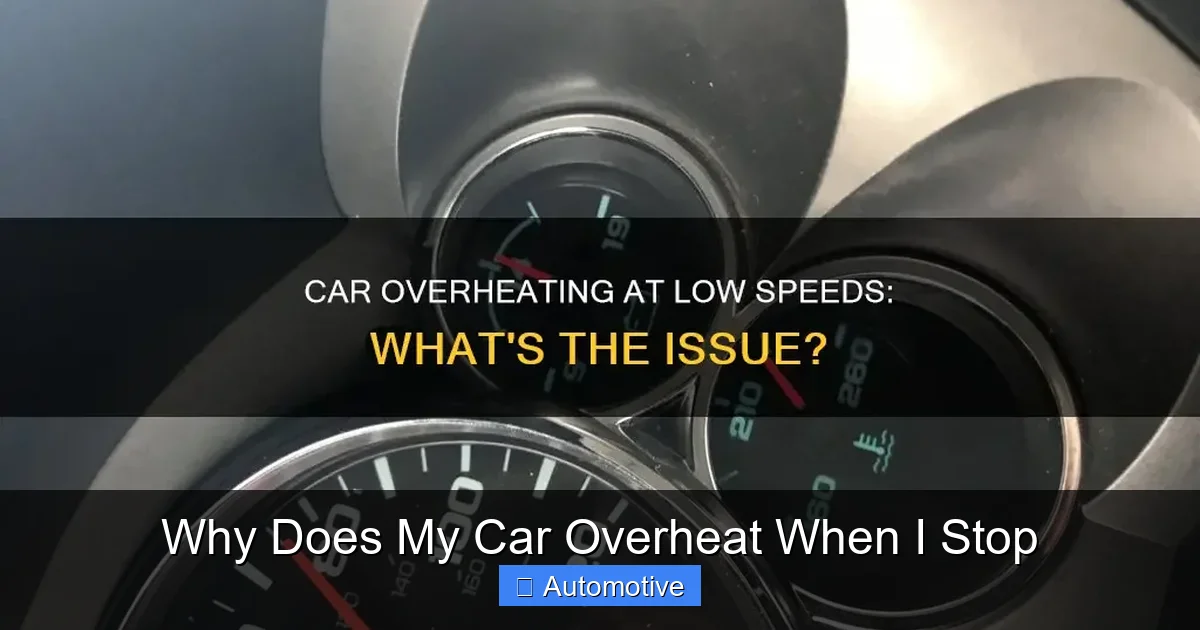
Visual guide about Why Does My Car Overheat When I Stop
Image source: shunauto.com
Before diving into the causes of overheating, it helps to understand how your car’s cooling system keeps your engine from turning into a furnace. Think of it like your body’s circulatory system—but instead of blood, it uses coolant to regulate temperature.
Your engine burns fuel to create power, and that process generates intense heat. Without proper cooling, metal parts would warp, seals would fail, and the engine could seize within minutes. That’s where the cooling system steps in.
At the heart of the system is the radiator, usually located at the front of your car. It’s filled with coolant—a mixture of antifreeze and water—that absorbs heat from the engine. As coolant flows through the engine block and cylinder head, it picks up heat. Then, it travels to the radiator, where it releases that heat into the air.
But here’s the catch: when you’re driving, air rushes through the radiator grille, helping to cool the hot coolant. When you stop, that airflow stops. That’s why your car relies on a radiator fan to pull air through the radiator even when the car isn’t moving.
The fan is usually electric and controlled by a temperature sensor. When the engine gets too hot, the sensor tells the fan to turn on. The fan pulls air through the radiator, cooling the coolant so it can return to the engine and repeat the cycle.
Other key parts include the water pump, which circulates the coolant; the thermostat, which regulates when coolant flows; and hoses that carry coolant between components. All of these must work in harmony.
If any part fails—especially when your car is idling—the system can’t keep up, and overheating occurs. Understanding this process helps explain why your car overheats when you stop: the cooling system is under more stress without the benefit of moving air.
The Role of the Radiator Fan
The radiator fan is one of the most critical components when it comes to preventing overheating at idle. Unlike the water pump, which is driven by the engine, the fan is electric and only runs when needed.
Most modern cars have one or two electric fans mounted behind the radiator. These fans are controlled by the engine control unit (ECU) or a separate temperature switch. When the coolant reaches a certain temperature—usually around 200–220°F—the sensor sends a signal to turn the fan on.
At highway speeds, the fan may not even need to run because airflow from driving is enough to cool the radiator. But when you stop at a light or park, the fan becomes essential. If it fails to turn on, the radiator can’t shed heat, and the engine temperature rises quickly.
Common fan problems include blown fuses, faulty relays, a bad temperature sensor, or a burned-out motor. Sometimes, the fan runs but spins in the wrong direction—pulling air away from the radiator instead of through it. This can happen if the fan is installed incorrectly or if it’s a replacement part that doesn’t match the original.
If your car overheats only when stopped, the radiator fan is one of the first things to check. You can test it by turning on the AC—this usually forces the fan to run. If it doesn’t, there’s likely an electrical issue.
Coolant Circulation and the Water Pump
Coolant doesn’t move on its own. It needs a pump to circulate it through the engine and radiator. That’s the job of the water pump, typically driven by a belt connected to the engine’s crankshaft.
As the engine runs, the water pump spins, pushing coolant through the system. At higher RPMs—like when you’re driving—the pump moves coolant quickly. But at idle, the pump spins slower, reducing coolant flow.
If the water pump is worn, leaking, or has a damaged impeller (the internal blade that moves the coolant), it won’t circulate enough fluid, especially at low speeds. This can cause hot spots in the engine and lead to overheating when stopped.
Signs of a failing water pump include coolant leaks near the front of the engine, a whining or grinding noise from the pump area, or visible corrosion. Some pumps have a weep hole that leaks coolant when the seal is failing—this is an early warning sign.
Replacing a water pump isn’t always a DIY job, especially on engines where the pump is driven by the timing belt. But catching it early can prevent more serious damage.
Top Causes of Overheating When Stopped
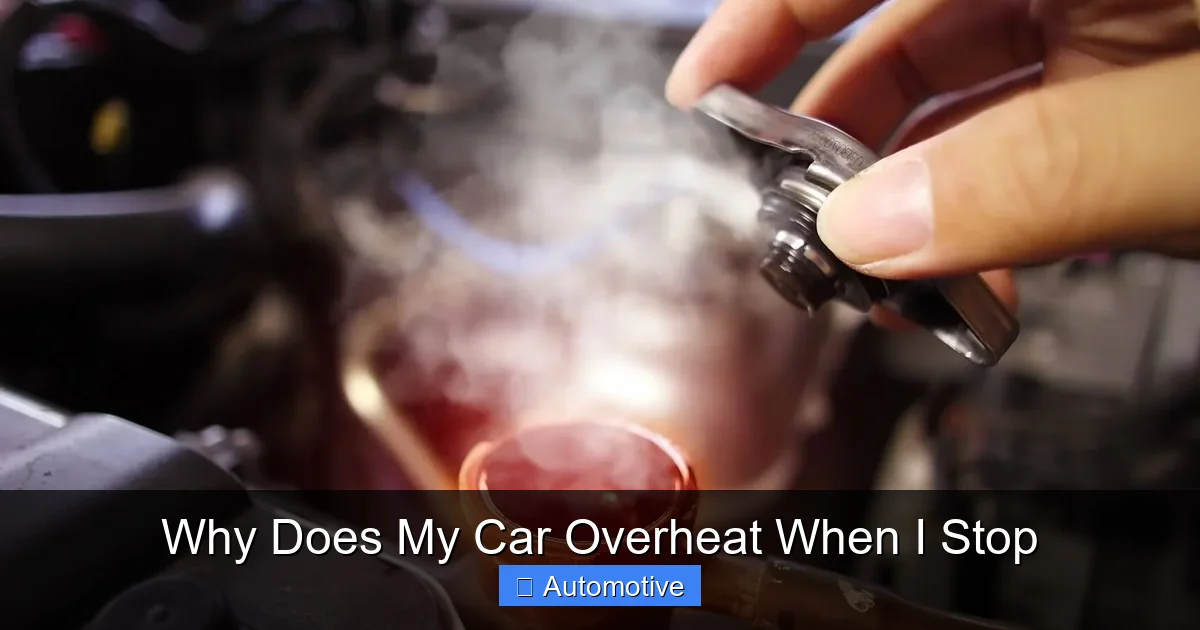
Visual guide about Why Does My Car Overheat When I Stop
Image source: feldmanwoodhaven.com
Now that you understand how the cooling system works, let’s look at the most common reasons your car overheats when you stop. These issues often become apparent at idle because the system is under more strain without the benefit of airflow.
1. Low Coolant Level
This is one of the simplest—and most common—causes. If your coolant level is low, there simply isn’t enough fluid to absorb and transfer heat from the engine.
Coolant can drop for several reasons: a leak in a hose, radiator, water pump, or heater core; evaporation over time; or improper maintenance. Even a small leak can cause the level to drop gradually, and you might not notice until the engine starts overheating.
When coolant is low, air pockets can form in the system. These pockets prevent proper circulation, especially at idle when flow is already reduced. The engine heats up faster, and the temperature gauge climbs.
Check your coolant reservoir regularly. Most cars have a translucent tank with “MIN” and “MAX” markings. If it’s below “MIN,” top it up with the correct type of coolant (check your owner’s manual). But don’t just add coolant—find and fix the leak.
2. Faulty Radiator Fan
As mentioned earlier, the radiator fan is crucial when your car is stopped. If it doesn’t turn on, the radiator can’t cool the coolant, and the engine overheats.
You can test the fan by turning on the AC. Most cars are designed to run the radiator fan when the AC is on to help cool the condenser. If the fan doesn’t spin, there’s likely an electrical issue.
Common causes include:
– A blown fuse
– A faulty relay
– A bad temperature sensor
– A burned-out fan motor
Use a multimeter to check for power at the fan connector. If there’s power but the fan doesn’t run, the motor is likely dead. If there’s no power, trace the circuit back to the fuse and relay.
Replacing a fan motor or relay is usually straightforward, but diagnosing the exact cause may require some electrical troubleshooting.
3. Stuck or Faulty Thermostat
The thermostat is a small but vital component that regulates coolant flow. It stays closed when the engine is cold, allowing it to warm up quickly. Once the engine reaches operating temperature, the thermostat opens, letting coolant flow through the radiator.
If the thermostat gets stuck closed, coolant can’t reach the radiator—even when the engine is hot. This causes rapid overheating, especially at idle when there’s no airflow to help cool the engine.
Symptoms of a stuck thermostat include:
– Overheating at idle but normal temperature while driving
– Heater not blowing hot air
– Coolant not flowing through the upper radiator hose when the engine is warm
You can test the thermostat by removing it and placing it in a pot of water on the stove. Heat the water and watch to see if the thermostat opens at the specified temperature (usually printed on the part). If it doesn’t open, replace it.
4. Clogged Radiator
Over time, the radiator can become clogged with debris, rust, or sludge. This restricts both airflow and coolant flow, reducing its ability to cool the engine.
External clogs happen when dirt, bugs, or leaves block the radiator fins. You can often clean these with a garden hose or compressed air. But internal clogs are more serious.
Internal clogs occur when rust or scale builds up inside the radiator tubes. This can happen if the coolant isn’t changed regularly or if the wrong type is used. Sludge can also form if coolant mixes with oil due to a head gasket failure.
A clogged radiator won’t cool effectively, especially at idle when airflow is minimal. You might notice the engine runs hotter than usual, or the heater doesn’t work well.
Flushing the radiator can help, but if it’s severely clogged, replacement may be necessary.
5. Failing Water Pump
The water pump keeps coolant moving. If it fails, circulation slows or stops, leading to overheating.
Signs of a failing water pump include:
– Coolant leaks near the pump
– A whining or grinding noise from the front of the engine
– Overheating, especially at idle
– Steam or coolant smell
The pump is usually located behind the timing belt or serpentine belt. On some engines, replacing it requires removing the timing belt—a job best left to professionals.
6. Head Gasket Failure
This is the most serious cause and requires immediate attention. The head gasket seals the engine block and cylinder head. If it fails, combustion gases can enter the cooling system, or coolant can leak into the cylinders.
Symptoms include:
– White smoke from the exhaust
– Coolant loss with no visible leak
– Milky oil (coolant mixing with oil)
– Overheating that doesn’t improve with repairs
A blown head gasket can cause rapid overheating, especially when the engine is under load or stopped. It often requires engine disassembly to repair.
How to Diagnose Overheating at Idle
If your car overheats when you stop, don’t panic. Start with simple checks before assuming the worst.
Step 1: Check the Coolant Level
Open the hood and locate the coolant reservoir. Check the level when the engine is cold. If it’s low, top it up and monitor it over the next few days. If it drops again, there’s a leak.
Step 2: Inspect for Leaks
Look under the car for puddles of green, orange, or pink fluid. Check hoses, the radiator, water pump, and heater core for signs of leakage.
Step 3: Test the Radiator Fan
Turn on the AC and see if the fan turns on. If not, check the fuse and relay. You can also jump the fan directly to test the motor.
Step 4: Feel the Radiator Hoses
With the engine warm, feel the upper and lower radiator hoses. The upper hose should be hot, and the lower should be cooler. If both are cold, the thermostat may be stuck closed.
Step 5: Check for Steam or Smells
If you see steam or smell coolant, pull over immediately. Continuing to drive can cause severe engine damage.
Step 6: Use an OBD2 Scanner
Modern cars store trouble codes that can point to sensor or fan issues. A $20 scanner can read these codes and help pinpoint the problem.
Preventing Overheating When Stopped
The best way to deal with overheating is to prevent it. Regular maintenance goes a long way.
Flush the Cooling System
Most manufacturers recommend flushing the coolant every 30,000 to 50,000 miles. This removes rust, scale, and contaminants that can clog the system.
Replace the Thermostat
Thermostats are inexpensive and should be replaced every 60,000 to 100,000 miles, or if you suspect a problem.
Inspect Belts and Hoses
Check the serpentine belt and coolant hoses for cracks, wear, or leaks. Replace them if they’re damaged.
Keep the Radiator Clean
Regularly clean the front of the radiator to remove bugs and debris. Use a soft brush or compressed air.
Monitor the Temperature Gauge
Pay attention to your dashboard. If the needle starts creeping up, pull over and investigate.
When to See a Mechanic
Some issues—like a blown head gasket or water pump replacement—require professional tools and expertise. If you’ve tried basic troubleshooting and the problem persists, it’s time to visit a trusted mechanic.
Also, if your car overheats repeatedly, don’t keep driving it. Continuing to operate an overheating engine can cause irreversible damage.
Conclusion
Why does your car overheat when you stop? The answer usually lies in the cooling system—specifically, components that struggle to keep up when airflow is reduced. Low coolant, a faulty fan, a stuck thermostat, or a clogged radiator are common culprits.
The good news is that most of these issues are preventable with regular maintenance. Check your coolant, inspect hoses, and listen for unusual noises. If you notice overheating, act quickly to avoid costly repairs.
Remember, your car’s cooling system is designed to protect your engine. When it fails, especially at idle, it’s a warning you shouldn’t ignore. By understanding how the system works and knowing what to look for, you can keep your engine cool, your drives smooth, and your wallet intact.
Stay cool—on the road and under the hood.
Frequently Asked Questions
Why does my car overheat only when I stop or idle?
This usually happens because the radiator fan isn’t working, coolant levels are low, or the thermostat is stuck closed. At idle, there’s no airflow from driving, so the cooling system must rely entirely on the fan and proper coolant circulation.
Can a bad thermostat cause overheating at idle?
Yes. A thermostat that’s stuck closed prevents coolant from flowing to the radiator. This causes the engine to overheat quickly, especially when stopped, because heat builds up with no way to escape.
How do I know if my radiator fan is working?
Turn on your AC—the radiator fan should turn on automatically. If it doesn’t, check the fuse, relay, and fan motor. You can also listen for the fan spinning when the engine gets hot.
Is it safe to drive if my car overheats when stopped?
No. Continuing to drive can cause severe engine damage, including warped heads or a blown head gasket. Pull over, turn off the engine, and let it cool before checking coolant levels or calling for help.
Can low coolant cause overheating only at idle?
Yes. Low coolant reduces the system’s ability to absorb and transfer heat. At idle, when coolant flow is already slower, this can lead to overheating even if the car runs fine at higher speeds.
How often should I check my coolant level?
Check it monthly when the engine is cold. Also inspect it before long trips. Top it up if it’s below the “MIN” line, but always investigate and fix any leaks.