Why Do Dodger Fans Hate Manny Machado?

Contents




Dodger fans’ dislike for Manny Machado stems from his aggressive playstyle, controversial moments during key games, and perceived lack of respect for the team and its legacy. His tenure with the Dodgers in 2018, though brief, left a lasting negative impression due to on-field incidents and off-field behavior that clashed with the team’s culture.
If you’ve ever sat in the stands at Dodger Stadium or watched a game with a group of die-hard fans, you’ve probably heard it: “I can’t stand Manny Machado.” It’s not just a casual dislike—it’s a full-blown, passionate hatred that runs deep among many Los Angeles Dodgers supporters. But why? After all, Machado is one of the most talented third basemen of his generation. He’s a multiple-time All-Star, a Gold Glove winner, and has consistently posted strong offensive numbers throughout his career. So what went so wrong between him and the Dodger faithful?
The answer isn’t simple. It’s a mix of on-field behavior, off-field decisions, media narratives, and the emotional weight of high-stakes baseball. While some fans might chalk it up to simple rivalry, the truth is more layered. Machado’s brief stint with the Dodgers in 2018—just 68 games—left a lasting scar on the team’s fanbase. From hard slides and questionable plays to his quick exit to a division rival, Machado’s time in blue was anything but smooth. And even years later, the bitterness lingers.
This article dives deep into the reasons behind the Dodger fanbase’s strong aversion to Manny Machado. We’ll explore the key moments that defined his relationship with the team, the cultural and emotional factors at play, and how one player’s actions can shape fan loyalty for years to come. Whether you’re a lifelong Dodger fan or just curious about baseball rivalries, this breakdown will give you a clear picture of why Manny Machado remains a polarizing figure in Los Angeles.
Key Takeaways
- On-field aggression: Machado’s hard-nosed, sometimes dirty plays against the Dodgers—especially during the 2018 NLCS—fueled fan resentment.
- Perceived disrespect: Fans felt Machado showed little respect for Dodger traditions, players, and the game itself during high-stakes matchups.
- Short-lived tenure: Despite joining the Dodgers mid-2018, Machado’s time was brief and underwhelming, leaving fans feeling betrayed after high expectations.
- Media portrayal: National and local media amplified Machado’s controversial actions, shaping public perception among Dodger faithful.
- Free agency fallout: Machado’s quick departure to the Padres after just half a season deepened feelings of being used and discarded.
- Cultural mismatch: Machado’s personality and playing style didn’t align with the Dodgers’ team-first, disciplined image.
- Rivalry with key players: Tensions with Clayton Kershaw and other Dodgers stars intensified fan animosity.
📑 Table of Contents
The 2018 NLCS: Where It All Began
The 2018 National League Championship Series (NLCS) between the Los Angeles Dodgers and the Milwaukee Brewers was supposed to be a battle of titans. Instead, it became the stage for one of the most infamous moments in recent Dodger history—and the moment many fans point to as the beginning of their hatred for Manny Machado.
At the time, Machado was still with the Baltimore Orioles, but he was traded to the Dodgers in July 2018 in a blockbuster deal. The move was celebrated by many as a sign that the Dodgers were “all-in” on winning a World Series. Fans were excited. Here was a proven star, a power-hitting infielder with Gold Glove defense, joining a team already loaded with talent. The hope was that Machado would be the final piece of the puzzle.
But things took a turn during the NLCS. In Game 4, with the series tied 2-2, Machado made a hard, borderline dirty slide into second base against Dodgers shortstop Corey Seager. The slide was late, aggressive, and arguably dangerous. It sparked immediate controversy. Umpires reviewed the play but ruled it legal, citing the “neighborhood play” rule. Still, many Dodger fans saw it as a cheap shot—a player using his reputation to intimidate and gain an edge.
Then, in Game 5, Machado did it again. This time, he slid hard into second base against Dodgers second baseman Enrique Hernández. The slide was even more controversial. Hernández was clearly out of the “neighborhood,” and Machado’s foot clipped his leg. The play drew boos from the Dodger Stadium crowd and criticism from analysts nationwide. Former players and commentators called it “dirty,” “unnecessary,” and “the kind of play that gives baseball a bad name.”
For Dodger fans, these moments weren’t just about one play. They were symbolic. Here was a player who had just joined their team, yet he was playing with a level of aggression that felt disrespectful. It wasn’t just about winning—it was about how he was winning. Fans felt Machado was more interested in sending a message than in playing clean, fundamental baseball.
The Neighborhood Play Debate
The “neighborhood play” has long been a gray area in baseball. It allows infielders to make a throw to second base from a slightly off-position, as long as they’re close to the base. Umpires often give the benefit of the doubt to the fielder. But when a runner slides late and hard into the base—especially when the fielder is out of position—it crosses the line.
Machado’s slides in the 2018 NLCS were textbook examples of this gray area. While technically legal under the rules, they were widely seen as unsportsmanlike. The MLB even changed the rule after the 2018 season to eliminate the neighborhood play, a direct response to the backlash from Machado’s actions.
For Dodger fans, this wasn’t just about rule changes. It was about respect. The Dodgers have a long history of playing the game “the right way”—clean, disciplined, and with integrity. Players like Clayton Kershaw, Justin Turner, and Mookie Betts are known for their professionalism and sportsmanship. Machado’s style clashed with that image. His slides weren’t just aggressive—they felt like a middle finger to the team’s values.
Fan Reaction and Media Amplification
The backlash was immediate. Social media exploded with clips of Machado’s slides, memes mocking his “dirty” play, and calls for him to be suspended. Local sports radio in Los Angeles was flooded with calls from angry fans. Even national outlets like ESPN and MLB Network debated whether Machado’s actions crossed the line.
One particularly viral moment came when former Dodger pitcher and current broadcaster Orel Hershiser called out Machado during a broadcast. “That’s not how we play the game,” he said. “That’s not how the Dodgers play.” The quote resonated with fans and became a rallying cry for those who felt betrayed.
The media didn’t help Machado’s image. Instead of focusing on his performance—he hit .250 with 2 home runs in the series—they focused on the controversy. Headlines like “Machado’s Dirty Slides Haunt Dodgers” and “Is Manny Machado a Cheater?” dominated sports coverage. The narrative shifted from “star player joins contender” to “controversial player brings drama.”
For many Dodger fans, this was the moment they turned on Machado. It wasn’t just about the plays—it was about the perception. He wasn’t one of them. He didn’t respect the team, the game, or the fans. And that stung.
The Short-Lived Tenure: High Hopes, Low Returns
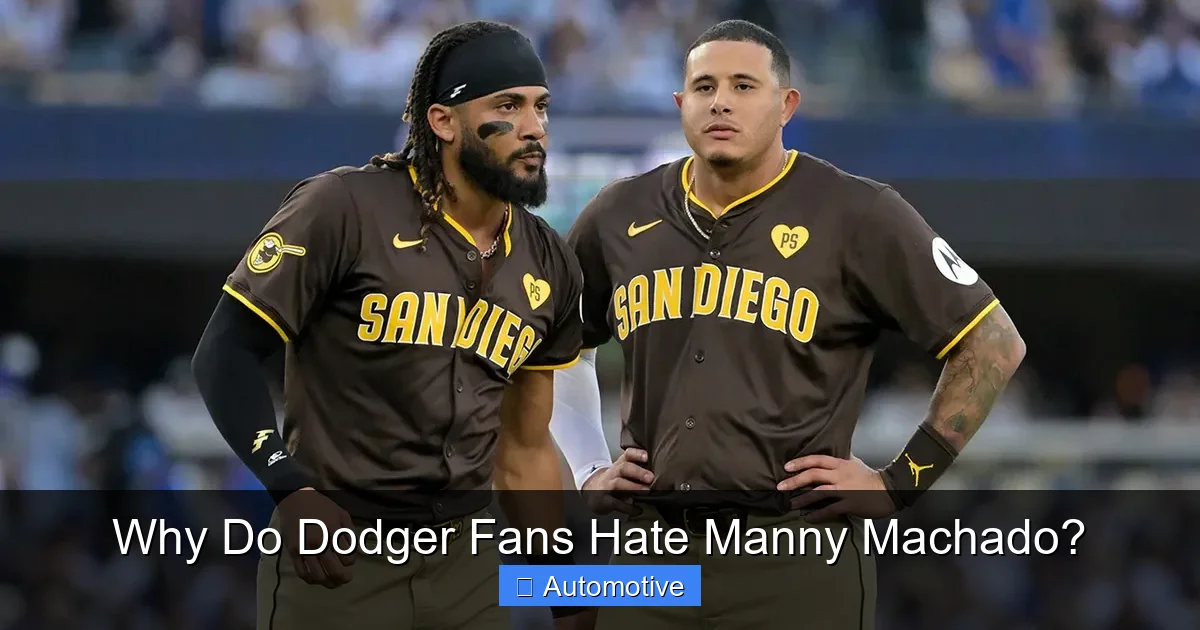
Visual guide about Why Do Dodger Fans Hate Manny Machado?
Image source: a57.foxnews.com
When the Dodgers acquired Manny Machado in July 2018, it was seen as a franchise-defining move. The team was already a powerhouse, but adding a player of Machado’s caliber was expected to push them over the top. Fans envisioned a deep playoff run, maybe even a World Series title. Instead, they got a brief, underwhelming stint that ended in disappointment.
Machado played just 68 games for the Dodgers in 2018. In that time, he hit .247 with 14 home runs and 47 RBIs. Solid numbers, but not the MVP-level performance many had hoped for. More importantly, he didn’t seem to mesh with the team culture. Reports from inside the clubhouse suggested Machado kept to himself, didn’t engage much with teammates, and didn’t embrace the Dodgers’ team-first mentality.
There were also concerns about his defense. While Machado is a Gold Glove winner, his performance at third base for the Dodgers was inconsistent. He committed 8 errors in 68 games—a high number for a player of his caliber. Some fans pointed to his lack of effort on routine plays, while others blamed the pressure of playing in a new environment.
But the real issue was the timing. The Dodgers were in the middle of a tight playoff race, and every game mattered. Fans expected Machado to be a difference-maker, a player who could carry the team when it mattered most. Instead, he blended in. He didn’t stand out—not in a good way, anyway.
The Playoff Letdown
The 2018 postseason was a rollercoaster for the Dodgers. They beat the Atlanta Braves in the NLDS, then faced the Brewers in the NLCS. Machado’s controversial slides dominated the narrative, but his on-field performance was underwhelming. He went 7-for-28 (.250) in the series with 2 home runs and 4 RBIs. Not bad, but not the star performance fans had hoped for.
Then came the World Series against the Boston Red Sox. Machado hit .200 with 1 home run in the series. The Dodgers lost in five games. For a player who was supposed to be the missing piece, Machado’s performance was a letdown.
Fans began to question the trade. Was he worth the prospects the Dodgers gave up? Was he worth the $10 million he earned in just half a season? The answers, for many, were no.
The Free Agency Fallout
The real betrayal came after the season. Machado hit free agency and signed a 10-year, $300 million deal with the San Diego Padres—a division rival. For Dodger fans, this was the ultimate slap in the face. They had welcomed him, cheered for him, and hoped he’d stay. Instead, he left for a team that had long been seen as the Dodgers’ little brother.
The move felt personal. It wasn’t just about money—it was about loyalty. Fans felt used. They had embraced Machado as one of their own, only to see him jump ship to a rival. The fact that he signed with the Padres, a team the Dodgers routinely dominated, made it worse.
Social media exploded with anger. Memes showed Machado in a Padres uniform with captions like “Traitor” and “We gave you a chance.” Some fans burned his Dodgers jersey. Others vowed never to forgive him.
For many, this was the final straw. Machado wasn’t just a controversial player—he was a traitor.
Cultural Mismatch: Personality vs. Team Identity
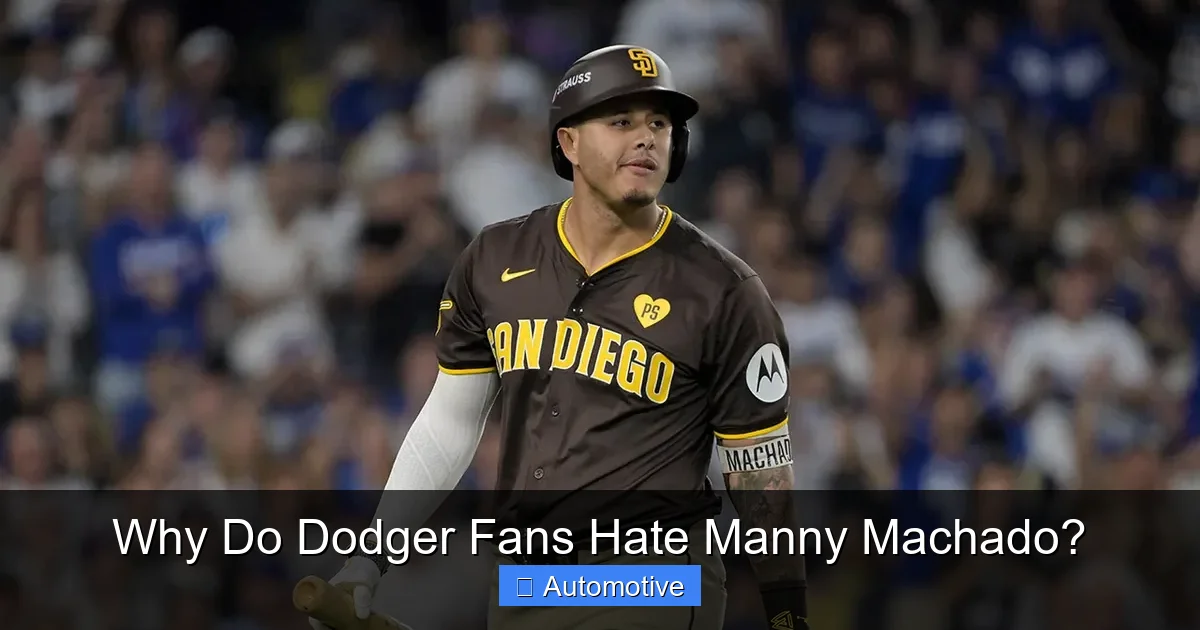
Visual guide about Why Do Dodger Fans Hate Manny Machado?
Image source: a57.foxnews.com
The Dodgers have long prided themselves on their team culture. They value professionalism, humility, and a team-first attitude. Players like Clayton Kershaw, Justin Turner, and Mookie Betts are known for their work ethic, leadership, and respect for the game. They don’t seek the spotlight—they let their play do the talking.
Manny Machado, on the other hand, has always been a different kind of player. He’s confident, sometimes to the point of arrogance. He plays with a swagger that can come across as cocky. He’s not afraid to show emotion, whether it’s a bat flip after a home run or a stare-down after a hard slide.
For some fans, that’s part of his appeal. But for Dodger fans, it felt out of place. The Dodgers don’t do flashy. They do fundamentals. They do teamwork. Machado’s individualistic style clashed with that identity.
There were also reports of tension in the clubhouse. While no major incidents were made public, sources close to the team said Machado didn’t connect with many of his teammates. He didn’t participate in team activities, didn’t engage in banter, and didn’t seem interested in building relationships.
This lack of camaraderie was a red flag. Baseball is a team sport, and chemistry matters. The 2018 Dodgers were a close-knit group. Adding a player who didn’t fit in disrupted that dynamic.
Media and Public Perception
The media played a big role in shaping how Dodger fans viewed Machado. National outlets often portrayed him as a “diva” or a “problem player.” Stories about his past controversies—like the 2014 brawl with the Yankees or his feud with Bryce Harper—were dredged up and used to paint him in a negative light.
Local media in Los Angeles was even harsher. Sports talk radio hosts called him “selfish,” “disrespectful,” and “not a Dodger.” Columnists wrote scathing pieces about his lack of loyalty and poor fit with the team.
This constant negative coverage reinforced fan sentiment. Even if some fans were willing to give Machado a chance, the media made it hard to see him in a positive light.
The Legacy of Manny Machado in Dodger History
Visual guide about Why Do Dodger Fans Hate Manny Machado?
Image source: static.foxnews.com
Today, Manny Machado is rarely mentioned in the same breath as other Dodgers greats. He’s not remembered for his talent or his potential. He’s remembered for the slides, the quick exit, and the betrayal.
For many fans, he’s a cautionary tale—a reminder that talent alone isn’t enough. Character, loyalty, and respect matter just as much. The Dodgers have since focused on building a team with strong values, and players like Mookie Betts and Freddie Freeman have been celebrated not just for their skills, but for their character.
Machado’s time in Los Angeles was brief, but its impact was lasting. He became a symbol of what not to be—a player who prioritizes himself over the team, who plays dirty, and who shows no loyalty.
And that’s why Dodger fans hate Manny Machado. It’s not just about one player. It’s about what he represents. It’s about respect, loyalty, and the soul of the game.
Conclusion
The hatred Dodger fans have for Manny Machado isn’t just about baseball. It’s about identity, values, and the emotional investment fans make in their team. Machado’s brief tenure in Los Angeles was marked by controversy, underperformance, and a lack of loyalty. His actions—on and off the field—clashed with everything the Dodgers stand for.
While he may go on to have a Hall of Fame career, his legacy in Los Angeles will always be tarnished. For Dodger fans, he’ll forever be the player who played dirty, left quickly, and chose a rival over the team that gave him a chance.
And in the world of sports, that’s a hard thing to forgive.
Frequently Asked Questions
Why do Dodger fans hate Manny Machado?
Dodger fans dislike Manny Machado due to his aggressive, controversial plays during the 2018 NLCS, his brief and underwhelming stint with the team, and his quick departure to division rival San Diego. His behavior clashed with the Dodgers’ team-first culture.
What did Manny Machado do to upset Dodger fans?
Machado made hard, late slides into second base during the 2018 NLCS that were seen as dirty and disrespectful. Fans felt he played with a lack of sportsmanship and didn’t respect the game or the team.
Did Manny Machado perform well for the Dodgers?
Machado hit .247 with 14 home runs in 68 games for the Dodgers in 2018. While solid, his performance didn’t meet the high expectations set by his trade, and he struggled in the postseason.
Why did Manny Machado leave the Dodgers so quickly?
Machado became a free agent after the 2018 season and signed a 10-year, $300 million deal with the San Diego Padres. His quick exit to a division rival felt like a betrayal to many Dodger fans.
Has Manny Machado apologized for his actions?
Machado has not issued a formal apology for his slides or his time with the Dodgers. His silence has only deepened fan resentment.
Will Dodger fans ever forgive Manny Machado?
It’s unlikely. For many fans, Machado’s actions represent a lack of loyalty and respect. His legacy in Los Angeles is permanently stained by controversy and disappointment.