Who Makes Toyota Wiper Blades?

Contents
- 1 Key Takeaways
- 2 📑 Table of Contents
- 3 Who Makes Toyota Wiper Blades? A Complete Guide
- 4 Toyota’s OEM Partnership Strategy
- 5 Major OEM Suppliers of Toyota Wiper Blades
- 6 OEM vs. Aftermarket: What’s the Difference?
- 7 How to Identify Genuine Toyota Wiper Blades
- 8 Tips for Maintaining Your Toyota Wiper Blades
- 9 Conclusion
- 10 Frequently Asked Questions


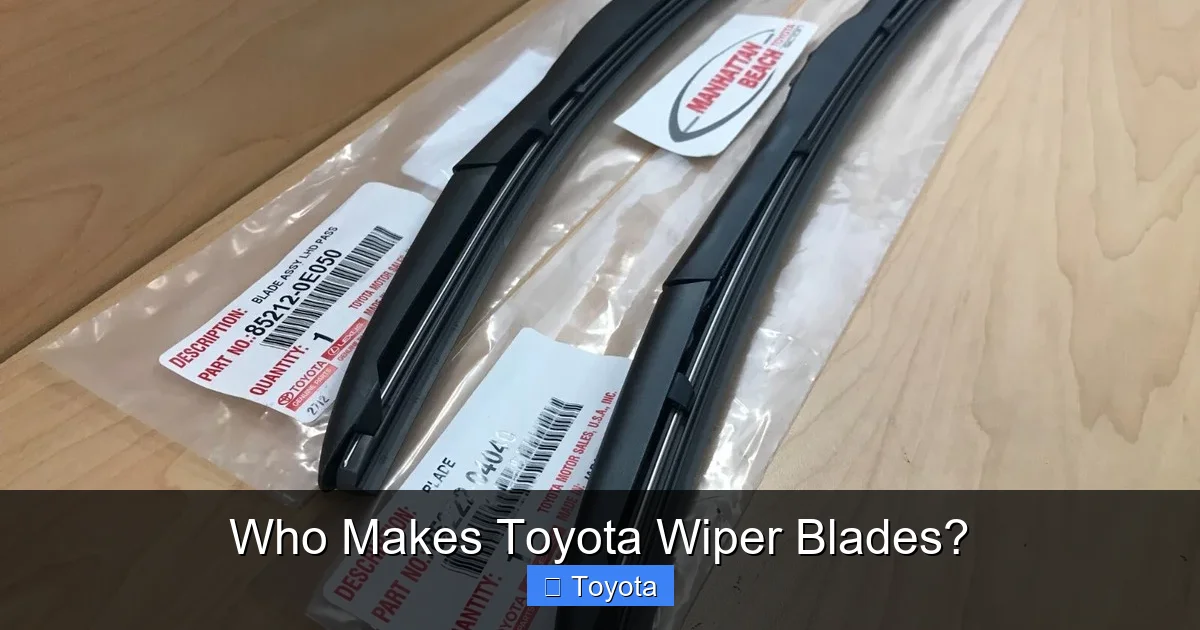
Toyota wiper blades are primarily manufactured by OEM suppliers like Denso, Trico, and Bosch under strict quality standards. While Toyota doesn’t produce wipers in-house, these trusted partners ensure performance, durability, and perfect fit for every model.
Key Takeaways
- Toyota doesn’t make wiper blades itself – Instead, it partners with top-tier automotive component manufacturers to supply OEM wiper blades.
- Denso is a major supplier – This Japanese company, closely tied to Toyota, produces many original equipment wiper blades for new Toyota vehicles.
- Trico and Bosch also supply OEM blades – These global brands are authorized manufacturers for Toyota in various regions, especially in North America and Europe.
- OEM wiper blades meet strict Toyota standards – They are tested for fit, durability, and performance in diverse weather conditions.
- Aftermarket options vary in quality – While some aftermarket brands offer good value, only genuine Toyota or certified OEM blades guarantee full compatibility.
- Proper maintenance extends wiper life – Cleaning blades regularly and replacing them every 6–12 months ensures optimal visibility and safety.
- You can identify genuine blades by packaging and part numbers – Look for Toyota branding, OEM logos, and matching part numbers in your owner’s manual.
📑 Table of Contents
Who Makes Toyota Wiper Blades? A Complete Guide
When it comes to keeping your Toyota safe and road-ready, few components are as essential—and often overlooked—as the humble wiper blade. Whether you’re driving through a sudden downpour on the highway or brushing off morning dew in your driveway, reliable wipers are critical for clear visibility. But have you ever stopped to wonder: who actually makes Toyota wiper blades?
The short answer? Toyota doesn’t manufacture wiper blades in-house. Instead, the automaker relies on a network of trusted Original Equipment Manufacturers (OEMs) to produce wiper blades that meet its rigorous standards. These suppliers design, test, and supply wiper blades that are installed on new Toyota vehicles straight from the factory. Understanding who these manufacturers are—and what sets their products apart—can help you make smarter decisions when it’s time to replace your wipers.
In this comprehensive guide, we’ll explore the key companies behind Toyota wiper blades, how OEM quality compares to aftermarket options, and practical tips for choosing and maintaining the best wipers for your vehicle. Whether you drive a rugged Tacoma, a fuel-efficient Prius, or a family-friendly Highlander, knowing where your wipers come from can make a real difference in performance and safety.
Toyota’s OEM Partnership Strategy
Visual guide about Who Makes Toyota Wiper Blades?
Image source: toyotadirect.com
Toyota is known for its commitment to quality, reliability, and long-term value. This philosophy extends beyond engines and transmissions to even the smallest components—like wiper blades. Rather than building every part from scratch, Toyota follows a well-established industry practice: partnering with specialized OEM suppliers who excel in specific areas of automotive engineering.
These partnerships are not random. Toyota carefully selects manufacturers based on technical expertise, production capacity, quality control, and alignment with its global standards. The result is a supply chain where each component—from brake pads to wiper blades—is engineered to work seamlessly with the vehicle it’s designed for.
For wiper blades, this means that the parts you find on a brand-new Toyota Camry or RAV4 aren’t generic replacements. They’re precision-engineered components developed in collaboration with the automaker. These blades undergo extensive testing for factors like blade flexibility, rubber durability, aerodynamic performance, and resistance to UV degradation and extreme temperatures.
This OEM approach ensures consistency across Toyota’s global lineup. Whether your vehicle is assembled in Japan, the United States, or Thailand, the wiper blades installed at the factory are held to the same high standards. And when you purchase genuine Toyota wiper blades from a dealership, you’re getting the exact same part that came with your car—just refreshed for another season of safe driving.
Why Toyota Relies on OEM Suppliers
So why doesn’t Toyota make its own wiper blades? The answer lies in efficiency and specialization. Wiper blade technology involves advanced materials science, aerodynamics, and precision manufacturing—areas where dedicated suppliers have deeper expertise and more advanced R&D capabilities.
By outsourcing wiper blade production, Toyota can focus its internal resources on core competencies like vehicle design, hybrid systems, and manufacturing innovation. Meanwhile, OEM partners invest heavily in improving wiper performance, developing new rubber compounds, and creating blade designs that reduce wind lift and noise at high speeds.
This collaborative model also allows Toyota to benefit from global supply chain flexibility. Different regions may use different suppliers based on local manufacturing capabilities, cost efficiency, and logistical considerations. For example, a Toyota built in Kentucky might come with wiper blades from a U.S.-based OEM, while a model produced in Japan could feature blades made by a Japanese supplier.
Ultimately, this strategy ensures that every Toyota driver receives high-quality wipers without the automaker needing to build a separate wiper blade division. It’s a smart, scalable approach that has helped Toyota maintain its reputation for reliability across millions of vehicles worldwide.
Major OEM Suppliers of Toyota Wiper Blades
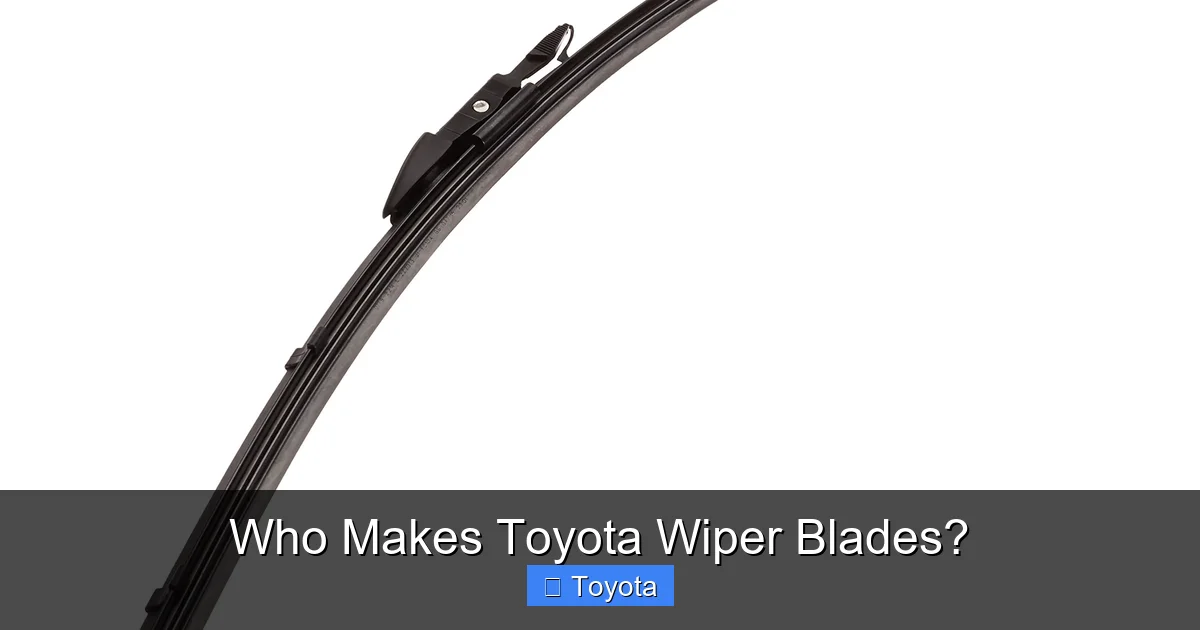
Visual guide about Who Makes Toyota Wiper Blades?
Image source: carobjective.com
Now that we understand Toyota’s OEM strategy, let’s take a closer look at the key manufacturers responsible for producing Toyota wiper blades. These companies are industry leaders in automotive wiper technology and play a vital role in ensuring your Toyota performs safely in all weather conditions.
Denso: The Japanese Powerhouse
When it comes to Toyota OEM parts, few names are as closely associated with the brand as Denso. Founded in 1949 as a subsidiary of Toyota, Denso has grown into one of the world’s largest automotive suppliers, producing everything from fuel injectors to climate control systems—and yes, wiper blades.
Denso is a major supplier of original equipment wiper blades for Toyota vehicles, particularly in Asia and other regions where Toyota has strong manufacturing presence. Their wiper blades are engineered to meet Toyota’s exact specifications, with a focus on quiet operation, even pressure distribution, and long-lasting rubber performance.
One of Denso’s standout features is its use of advanced rubber compounds that resist cracking and hardening in extreme temperatures. Whether you’re driving through a scorching summer in Arizona or a snowy winter in Minnesota, Denso blades are designed to maintain flexibility and effectiveness.
Additionally, Denso often incorporates aerodynamic spoilers into its blade design, which helps keep the wiper firmly pressed against the windshield at high speeds—reducing chatter and improving visibility during highway driving.
If you’ve ever purchased a set of genuine Toyota wiper blades in Japan or Southeast Asia, there’s a strong chance they were made by Denso. Even in other markets, Denso supplies components to other OEMs that may end up on Toyota vehicles, making its influence widespread.
Trico: A Legacy of Innovation in North America
In the United States and Canada, one of the most common OEM suppliers for Toyota wiper blades is Trico. With a history dating back to 1917, Trico is one of the oldest and most respected names in the wiper industry. The company invented the first mass-produced windshield wiper and has been a pioneer in blade technology ever since.
Trico supplies original equipment wiper blades for many Toyota models sold in North America, including the Camry, Corolla, and Sienna. These blades are designed specifically for Toyota’s windshield curvature and mounting systems, ensuring a perfect fit and optimal performance.
One of Trico’s key strengths is its focus on all-weather durability. Their OEM blades often feature premium rubber formulations that resist ozone, UV rays, and temperature extremes. Many also include a protective boot or cover to shield the metal frame from corrosion and debris.
Trico’s “beam-style” blades, which use a single, flexible spine to distribute pressure evenly across the windshield, are commonly found on newer Toyota models. This design reduces streaking and improves contact with curved glass, especially on modern vehicles with highly contoured windshields.
If you’ve ever visited a Toyota dealership in the U.S. and purchased replacement wipers, there’s a good chance they were Trico blades branded with the Toyota logo. While the packaging says “Toyota,” the engineering and manufacturing are handled by Trico under strict OEM guidelines.
Bosch: Precision Engineering from Europe
Another major player in the Toyota wiper blade supply chain is Bosch, the German engineering giant known for its high-quality automotive components. Bosch supplies OEM wiper blades for Toyota vehicles in Europe and other international markets, bringing its reputation for precision and innovation to the table.
Bosch wiper blades are known for their robust construction, advanced aerodynamics, and quiet operation. Many of their OEM blades feature a dual rubber compound—softer on the edges for better contact, harder in the center for durability. This design helps prevent streaking and extends blade life.
Bosch also emphasizes environmental resistance. Their blades are tested to withstand temperatures from -40°F to 140°F (-40°C to 60°C), making them ideal for diverse climates. Additionally, Bosch uses corrosion-resistant materials in the frame and linkage, ensuring long-term reliability even in salty or humid conditions.
In Europe, where Toyota vehicles like the Yaris, Corolla, and RAV4 are popular, Bosch is a frequent OEM supplier. Drivers who purchase genuine Toyota wiper blades in countries like the UK, Germany, or France may find Bosch branding or part numbers on the packaging.
It’s worth noting that Bosch also sells aftermarket wiper blades under its own name, which are often compatible with Toyota vehicles. However, only the OEM versions supplied directly to Toyota are guaranteed to meet the automaker’s exact specifications.
Other Regional Suppliers
While Denso, Trico, and Bosch are the most prominent, Toyota’s global supply chain includes other regional suppliers depending on the market. For example, in some parts of Asia and the Middle East, local manufacturers may produce wiper blades under license or through joint ventures with global brands.
These suppliers are still held to Toyota’s strict quality standards, and their blades undergo the same testing and validation processes as those from larger OEMs. The goal is always consistency—no matter where your Toyota is made or sold, the wiper blades should perform reliably and safely.
OEM vs. Aftermarket: What’s the Difference?

Visual guide about Who Makes Toyota Wiper Blades?
Image source: wiper-blades-refills.co.uk
Now that we know who makes Toyota wiper blades, it’s important to understand the difference between OEM (Original Equipment Manufacturer) parts and aftermarket alternatives. This distinction can significantly impact your driving experience, safety, and long-term vehicle maintenance.
What Are OEM Wiper Blades?
OEM wiper blades are the exact same parts that were installed on your Toyota when it rolled off the assembly line. They are manufactured by companies like Denso, Trico, or Bosch under contract with Toyota and are designed to meet the automaker’s precise specifications.
When you buy genuine Toyota wiper blades from a dealership, you’re getting OEM parts—even if they’re made by a third-party supplier. These blades are tested for fit, performance, and durability in real-world conditions, including rain, snow, ice, and high-speed driving.
OEM blades typically come with a Toyota part number, are packaged in official Toyota branding, and are often backed by a warranty. They are engineered to work seamlessly with your vehicle’s windshield shape, wiper arm tension, and motor speed.
What Are Aftermarket Wiper Blades?
Aftermarket wiper blades are replacement parts made by companies other than the original supplier. These can include well-known brands like Rain-X, Michelin, PIAA, or even generic store brands. While many aftermarket blades are high quality, they are not always designed specifically for your Toyota model.
The main advantage of aftermarket blades is price. They are often significantly cheaper than OEM parts, making them an attractive option for budget-conscious drivers. Some aftermarket brands also offer enhanced features, such as water-repellent coatings or ultra-quiet operation.
However, the trade-off can be fit and performance. Because aftermarket blades aren’t always tailored to your exact vehicle, they may not conform perfectly to the windshield curvature, leading to streaking, skipping, or uneven wear. In some cases, they may even cause damage to the wiper motor if the tension is too high.
Which Should You Choose?
For most Toyota owners, OEM wiper blades are the safest and most reliable choice. They ensure a perfect fit, optimal performance, and peace of mind knowing you’re using parts approved by the manufacturer.
That said, high-quality aftermarket blades can be a good option if you’re looking to save money and don’t mind doing a bit of research. Just be sure to choose a reputable brand and verify compatibility with your specific Toyota model and year.
A practical tip: check your owner’s manual or consult a Toyota parts specialist to confirm the correct blade size and type. Many aftermarket brands offer fitment guides online, but OEM parts eliminate the guesswork entirely.
How to Identify Genuine Toyota Wiper Blades
With so many options on the market, it’s important to know how to spot genuine Toyota wiper blades and avoid counterfeit or low-quality imitations. Here’s what to look for when shopping for replacements.
Check the Packaging
Genuine Toyota wiper blades come in official packaging with the Toyota logo, part number, and often a barcode. The packaging should feel sturdy and professional, with clear printing and no spelling errors. Be wary of generic boxes or labels that look faded or poorly designed.
Look for OEM Branding
Even though Toyota doesn’t make the blades, genuine parts often include the OEM manufacturer’s name—such as Denso, Trico, or Bosch—alongside the Toyota branding. This is a sign that the part was produced under contract and meets Toyota’s standards.
Verify the Part Number
Every Toyota wiper blade has a unique part number. You can find this in your owner’s manual, on the old blade, or by using Toyota’s online parts catalog. Matching the part number ensures you’re getting the correct size and style for your vehicle.
Buy from Authorized Sources
To avoid counterfeit parts, purchase wiper blades from Toyota dealerships, authorized parts retailers, or trusted online sellers with good reviews. Avoid suspiciously low prices or sellers with no return policy.
Inspect the Blade Quality
Genuine blades should have a smooth, even rubber edge with no cracks or deformities. The frame should be sturdy and well-finished, with no rough edges or loose components. When installed, the blade should sit flat against the windshield without gaps or twists.
Tips for Maintaining Your Toyota Wiper Blades
Even the best wiper blades won’t last forever. Proper maintenance can extend their life and keep your windshield clear in all conditions.
Clean the Blades Regularly
Dirt, grime, and road debris can build up on wiper blades, reducing their effectiveness. Wipe the rubber edge with a damp cloth or paper towel every few weeks to remove buildup. For tougher grime, use a mild soap solution.
Check for Damage
Inspect your blades monthly for signs of wear, such as cracking, splitting, or uneven edges. If the rubber is deteriorating, it’s time for a replacement—even if the blades still seem to work.
Replace Every 6–12 Months
Wiper blades degrade over time due to UV exposure, temperature changes, and regular use. Most experts recommend replacing them every 6 to 12 months, or sooner if you notice streaking, skipping, or noise.
Use Windshield Washer Fluid
Always use high-quality washer fluid instead of plain water. It helps clean the windshield and prevents mineral buildup that can damage the blades.
Lift Blades in Winter
In cold climates, lift your wiper blades off the windshield when parked to prevent them from freezing to the glass. This also reduces strain on the motor when you start the car.
Conclusion
So, who makes Toyota wiper blades? While Toyota doesn’t manufacture them directly, the automaker partners with world-class OEM suppliers like Denso, Trico, and Bosch to deliver high-quality, precision-engineered wiper blades for every vehicle. These components are designed to meet strict performance standards and ensure reliable visibility in all weather conditions.
Choosing genuine Toyota wiper blades—or high-quality aftermarket alternatives—can make a real difference in your driving safety and comfort. By understanding the supply chain, knowing how to identify authentic parts, and maintaining your blades properly, you can keep your Toyota performing at its best for years to come.
Remember: when it comes to something as important as clear vision on the road, it’s worth investing in the right parts. Whether you’re replacing blades on a compact Corolla or a rugged 4Runner, choosing the correct wipers is a small step that makes a big impact.
Frequently Asked Questions
Are Toyota wiper blades made by Toyota?
No, Toyota does not manufacture wiper blades in-house. Instead, it partners with OEM suppliers like Denso, Trico, and Bosch to produce wiper blades that meet its strict quality and performance standards.
Can I use aftermarket wiper blades on my Toyota?
Yes, you can use aftermarket wiper blades, but they may not offer the same fit, durability, or performance as genuine Toyota or OEM blades. Always verify compatibility and choose reputable brands.
How often should I replace my Toyota wiper blades?
It’s recommended to replace wiper blades every 6 to 12 months, or sooner if you notice streaking, skipping, or damage. Regular inspection helps ensure optimal performance.
Where can I buy genuine Toyota wiper blades?
Genuine Toyota wiper blades are available at Toyota dealerships, authorized parts retailers, and trusted online sellers. Always check for official packaging and part numbers.
Do all Toyota models use the same wiper blades?
No, wiper blade size and design vary by model and year. Always check your owner’s manual or use Toyota’s parts catalog to find the correct blades for your vehicle.
What’s the difference between beam and conventional wiper blades?
Beam-style blades use a single, flexible spine for even pressure distribution and better performance on curved windshields. Conventional blades have a metal frame with multiple pressure points. Many modern Toyotas use beam-style blades for improved visibility.