
Who Makes Toyota Oem Brake Pads?

Toyota OEM brake pads are manufactured by top-tier automotive suppliers like Advics, Akebono, and Denso—companies with deep ties to Toyota’s engineering standards. These brands produce original equipment parts that meet strict quality, safety, and performance criteria, ensuring your Toyota stops reliably every time.
Key Takeaways
- OEM brake pads are made by trusted suppliers: Companies like Advics, Akebono, and Denso manufacture Toyota OEM brake pads under strict guidelines.
- Quality and safety are top priorities: OEM pads undergo rigorous testing to meet Toyota’s exacting standards for durability and braking performance.
- Designed specifically for Toyota vehicles: These pads are engineered to fit and function perfectly with your Toyota’s braking system.
- Longer lifespan and consistent performance: OEM pads often last longer and provide smoother, quieter braking compared to many aftermarket options.
- Warranty and reliability benefits: Using OEM parts helps maintain your vehicle’s warranty and ensures long-term reliability.
- Available through Toyota dealerships and authorized retailers: Genuine Toyota brake pads can be purchased directly from dealers or certified online stores.
- Not all “Toyota” parts are made by Toyota: While branded as Toyota, OEM parts are produced by specialized suppliers under contract.
📑 Table of Contents
- Who Makes Toyota OEM Brake Pads? A Deep Dive into the Brands Behind the Brakes
- The Role of OEM Parts in Toyota’s Engineering Philosophy
- Advics: The Leading Force Behind Many Toyota Brake Pads
- Akebono: A Global Leader in Friction Technology
- Denso: More Than Just Electronics
- Other Suppliers and Regional Variations
- OEM vs. Aftermarket: Why Genuine Matters
- How to Purchase Genuine Toyota OEM Brake Pads
- Conclusion: Trust the Experts Behind Your Toyota’s Brakes
Who Makes Toyota OEM Brake Pads? A Deep Dive into the Brands Behind the Brakes
When it comes to your Toyota’s braking system, few components are as critical as the brake pads. They’re the first line of defense when you hit the pedal, converting kinetic energy into heat to slow or stop your vehicle. But have you ever wondered who actually makes the brake pads that come installed on your Toyota from the factory? The answer might surprise you—Toyota doesn’t manufacture every part in-house. Instead, it partners with some of the world’s most respected automotive component suppliers to produce its OEM (Original Equipment Manufacturer) brake pads.
These suppliers are not random third-party vendors. They are industry leaders with decades of experience, advanced engineering capabilities, and a proven track record of reliability. Companies like Advics, Akebono, and Denso are the hidden heroes behind many of the brake pads stamped with the Toyota logo. They work closely with Toyota’s engineering teams to design, test, and produce brake pads that meet or exceed the automaker’s strict performance and safety standards.
Understanding who makes Toyota OEM brake pads is more than just a trivia fact—it’s about knowing what you’re putting on your vehicle. Whether you’re replacing worn pads or simply curious about your car’s components, this knowledge helps you make informed decisions. In this article, we’ll explore the key manufacturers behind Toyota’s OEM brake pads, how they’re made, why they’re trusted, and what sets them apart from aftermarket alternatives.
The Role of OEM Parts in Toyota’s Engineering Philosophy
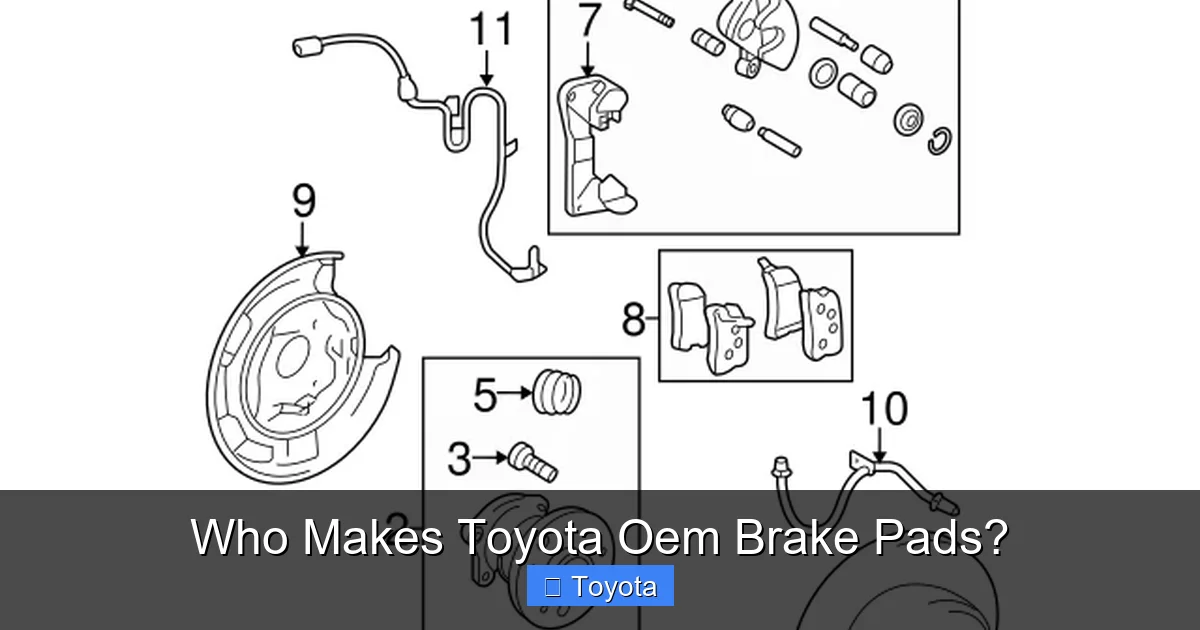
Visual guide about Who Makes Toyota Oem Brake Pads?
Image source: dz310nzuyimx0.cloudfront.net
Toyota has long been known for its commitment to quality, reliability, and innovation. This philosophy extends beyond the assembly line to the very parts that go into each vehicle. OEM parts—those installed during manufacturing—are designed to work seamlessly with the vehicle’s systems, ensuring optimal performance, safety, and longevity.
But here’s the thing: Toyota doesn’t make everything itself. Like most major automakers, it relies on a network of specialized suppliers to produce components that require deep technical expertise. Brake pads, for example, involve complex materials science, friction dynamics, and thermal management. Rather than building an entire brake pad factory, Toyota partners with companies that already excel in this field.
These partnerships are not casual. They’re built on long-term relationships, shared engineering goals, and rigorous quality control. The suppliers must meet Toyota’s Global Quality Standards, which include everything from material sourcing to final product testing. This ensures that every brake pad bearing the Toyota name delivers consistent performance, no matter where in the world it’s made.
Why OEM Matters for Brake Safety
Brake pads are not just another car part—they’re a critical safety component. When you press the brake pedal, you’re trusting that the pads will grip the rotors effectively, even under extreme conditions like high speeds, heavy loads, or wet roads. OEM brake pads are engineered to meet these demands with precision.
Unlike some aftermarket pads that may prioritize cost or performance in one area (like noise reduction or initial bite), OEM pads are balanced for overall performance. They’re designed to work in harmony with your Toyota’s brake calipers, rotors, and ABS system. This integrated approach reduces the risk of issues like brake fade, uneven wear, or premature failure.
Moreover, OEM pads undergo extensive testing in real-world and simulated conditions. They’re tested for stopping distance, heat resistance, noise levels, and durability over thousands of miles. This level of scrutiny ensures that when you buy a genuine Toyota brake pad, you’re getting a product that’s been proven to perform when it matters most.
Advics: The Leading Force Behind Many Toyota Brake Pads
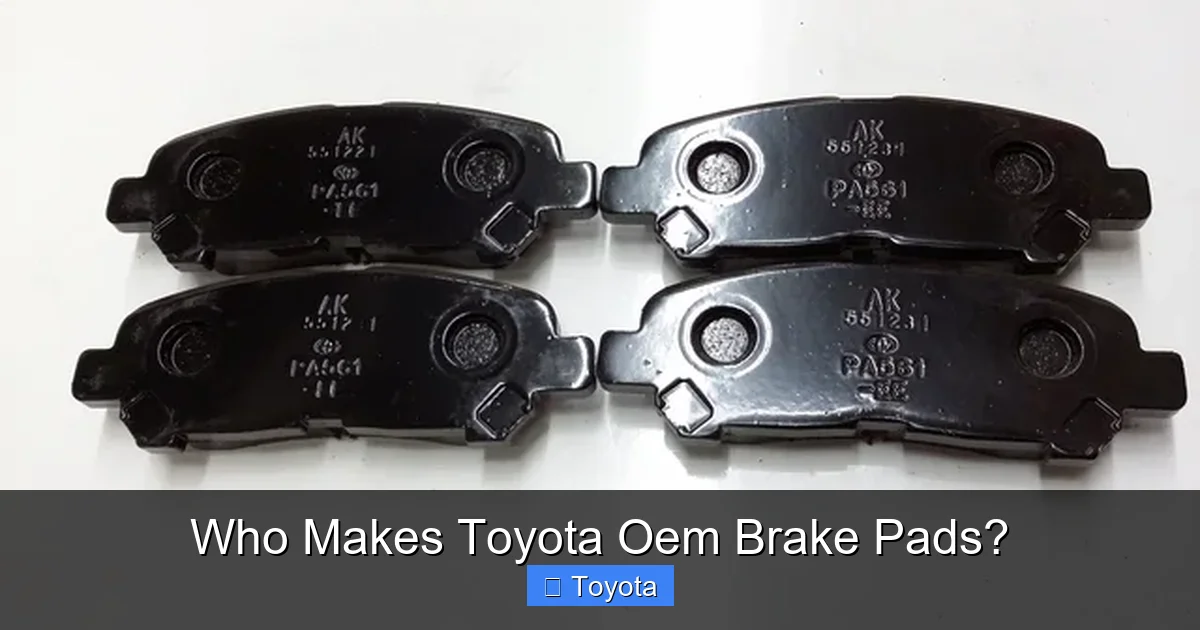
Visual guide about Who Makes Toyota Oem Brake Pads?
Image source: s3.amazonaws.com
One of the most prominent names behind Toyota OEM brake pads is Advics. This company might not be a household name, but it’s a powerhouse in the automotive braking industry. Advics is a joint venture between Aisin, Denso, Sumitomo Electric, and Toyota itself—making it uniquely positioned to understand and meet Toyota’s exacting standards.
Founded in 2001, Advics was created specifically to focus on brake system technology. Today, it’s one of the world’s leading suppliers of brake components, including pads, calipers, and electronic brake systems. A significant portion of its production is dedicated to Toyota vehicles, ranging from compact Corollas to full-size Tundras.
What Sets Advics Apart?
Advics doesn’t just make brake pads—it innovates them. The company invests heavily in research and development to improve braking performance, reduce noise, and extend pad life. For example, many Toyota models come equipped with Advics’ low-metallic or ceramic-based brake pads, which offer excellent heat dissipation and minimal dust.
One of Advics’ key strengths is its ability to tailor brake pad formulations to specific vehicle models. A brake pad for a lightweight Prius will have different friction characteristics than one for a heavy-duty Land Cruiser. This customization ensures that each Toyota vehicle gets the right balance of stopping power, pedal feel, and longevity.
Real-World Example: The Toyota Camry
Take the Toyota Camry, one of the best-selling cars in the world. Most Camrys come factory-equipped with Advics brake pads. These pads are designed to deliver smooth, quiet braking in everyday driving conditions, while still providing strong performance during emergency stops.
Owners often report that OEM Advics pads last significantly longer than cheaper aftermarket alternatives. This is due to the high-quality friction materials and precise manufacturing processes used. Additionally, because the pads are matched to the Camry’s brake system, they produce less rotor wear and generate less noise—common complaints with generic pads.
Akebono: A Global Leader in Friction Technology
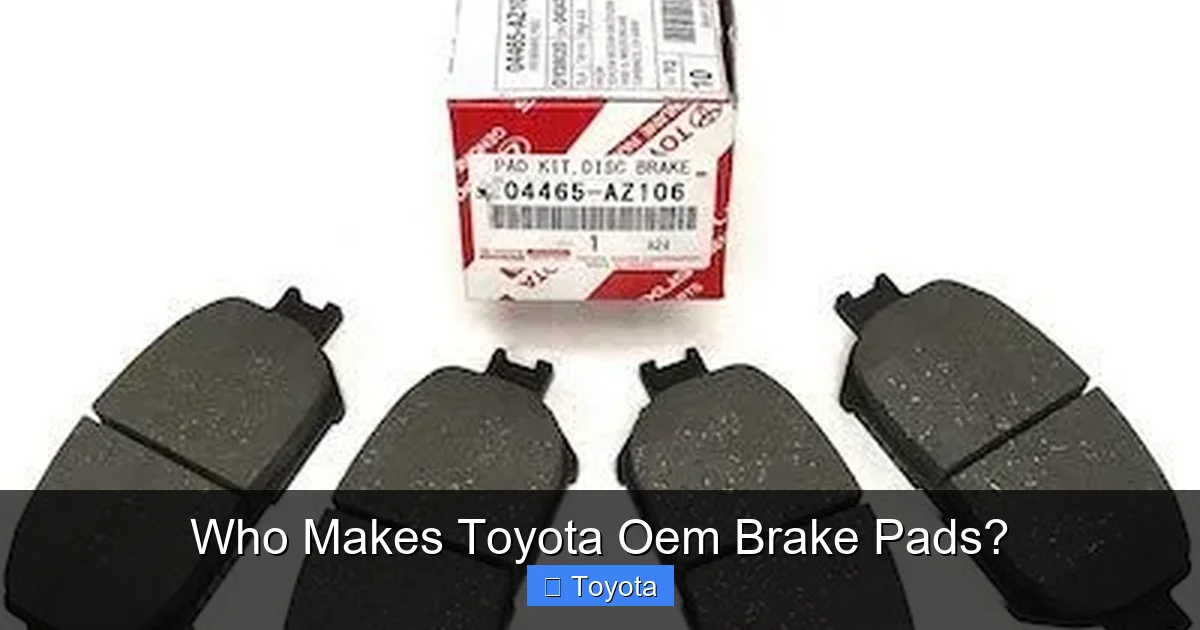
Visual guide about Who Makes Toyota Oem Brake Pads?
Image source: rparts-sites.s3.amazonaws.com
Another major player in the Toyota OEM brake pad market is Akebono. Headquartered in Japan, Akebono has been a pioneer in brake technology since 1929. The company is renowned for its advanced friction materials and commitment to innovation, making it a natural partner for Toyota.
Akebono supplies brake pads for a wide range of Toyota vehicles, including sedans, SUVs, and trucks. Its products are known for their consistent performance, low noise, and excellent wear characteristics. Many of Akebono’s pads are ceramic-based, which helps reduce brake dust and keeps wheels cleaner.
The Science Behind Akebono’s Brake Pads
Akebono’s expertise lies in its proprietary friction formulations. The company develops custom compounds that balance friction, heat resistance, and durability. These materials are rigorously tested in labs and on test tracks to ensure they meet Toyota’s performance criteria.
One of Akebono’s standout technologies is its “Noise-Free” design. Using advanced damping layers and precision-machined backing plates, Akebono pads minimize vibrations that cause squealing. This is especially important for Toyota, which emphasizes a quiet, comfortable driving experience.
Case Study: Toyota RAV4
The Toyota RAV4, a popular compact SUV, often comes equipped with Akebono brake pads. These pads are designed to handle the demands of both city driving and light off-road use. They provide strong initial bite for quick stops in traffic, while maintaining stability during long downhill drives.
RAV4 owners frequently praise the smooth, responsive braking provided by Akebono OEM pads. Unlike some aftermarket options that can feel grabby or inconsistent, Akebono pads offer a predictable pedal feel that builds confidence behind the wheel.
Denso: More Than Just Electronics
When most people think of Denso, they think of spark plugs, fuel injectors, or air conditioning systems. But Denso is also a major supplier of brake components, including brake pads for Toyota vehicles. As a long-standing partner of Toyota, Denso brings deep engineering expertise and a commitment to quality.
Denso’s brake pads are known for their reliability and consistent performance. They’re often used in Toyota’s hybrid and electric vehicles, where braking systems must work seamlessly with regenerative braking technology. This requires precise control over friction and heat management—areas where Denso excels.
Denso’s Role in Hybrid and Electric Vehicles
In hybrid vehicles like the Toyota Prius, the braking system is more complex than in traditional cars. The vehicle uses regenerative braking to capture energy during deceleration, which reduces the workload on the mechanical brakes. However, when the mechanical brakes do engage—such as during hard stops—they must respond instantly and smoothly.
Denso’s brake pads are engineered to work in harmony with this hybrid system. They provide reliable stopping power when needed, while minimizing wear during normal driving. This helps extend the life of the pads and reduces maintenance costs over time.
Example: Toyota Prius
The Toyota Prius is a prime example of Denso’s integration into Toyota’s braking systems. Many Prius models come equipped with Denso brake pads that are specifically tuned for hybrid operation. These pads are designed to handle frequent, low-speed braking—common in city driving—without overheating or degrading.
Owners of the Prius often report that their OEM Denso pads last well over 50,000 miles, even with heavy stop-and-go traffic. This longevity is a testament to the quality of materials and engineering that go into these components.
Other Suppliers and Regional Variations
While Advics, Akebono, and Denso are the primary suppliers of Toyota OEM brake pads, other companies may also be involved depending on the region and vehicle model. For example, in North America, some Toyota models may use brake pads from suppliers like Bosch or TRW, especially in vehicles assembled in the U.S.
However, even when different suppliers are used, the pads must still meet Toyota’s strict OEM standards. This means that whether your brake pad is made by Advics in Japan or a licensed manufacturer in the U.S., it will deliver the same level of performance and reliability.
Why Regional Differences Exist
Toyota operates on a global scale, with manufacturing plants in over 25 countries. To streamline production and reduce costs, the company often sources components locally. This means that a Toyota Corolla made in Thailand might have brake pads from a different supplier than one made in Indiana.
Despite these differences, all OEM brake pads are subject to the same quality control processes. Toyota’s global engineering teams oversee supplier performance and conduct regular audits to ensure consistency. So, while the manufacturer may vary, the quality does not.
How to Identify Your Brake Pad Supplier
If you’re curious about who made the brake pads on your Toyota, there are a few ways to find out. First, check the packaging if you’ve recently replaced them—genuine Toyota parts often include the supplier’s name. You can also inspect the pads themselves; many have the manufacturer’s logo stamped on the backing plate.
Another option is to consult your vehicle’s service manual or contact a Toyota dealership. They can look up your VIN and tell you exactly which parts were installed at the factory.
OEM vs. Aftermarket: Why Genuine Matters
With so many aftermarket brake pad options available, you might be tempted to save money by choosing a cheaper alternative. But when it comes to safety and performance, OEM brake pads offer significant advantages.
Superior Fit and Function
OEM brake pads are designed specifically for your Toyota model. This means they fit perfectly, with no modifications needed. Aftermarket pads, on the other hand, may require shims, clips, or adjustments to fit properly. Even small fitment issues can lead to noise, vibration, or reduced braking efficiency.
Consistent Quality and Testing
As discussed earlier, OEM pads undergo rigorous testing to meet Toyota’s standards. Aftermarket pads may not be held to the same level of scrutiny. Some budget brands use lower-quality materials that wear out quickly or perform poorly in extreme conditions.
Warranty and Resale Value
Using genuine Toyota parts helps maintain your vehicle’s warranty. If a brake-related issue arises, having OEM parts can simplify the claims process. Additionally, vehicles with OEM parts often have higher resale value, as buyers trust the quality and reliability of original equipment.
Real-World Cost Comparison
While OEM brake pads may cost more upfront, they often provide better long-term value. Their longer lifespan means fewer replacements, and their consistent performance reduces the risk of costly repairs down the line. In many cases, the total cost of ownership is lower with OEM parts.
How to Purchase Genuine Toyota OEM Brake Pads
If you’re ready to replace your brake pads with genuine Toyota OEM parts, you have several options. The most reliable source is a Toyota dealership. They carry only authentic parts and can ensure proper installation.
You can also purchase OEM brake pads from authorized online retailers like ToyotaPartsDeal.com, Parts.Toyota.com, or RockAuto (when labeled as OEM). Be cautious of third-party sellers on platforms like eBay or Amazon—while some are legitimate, others may sell counterfeit or mislabeled parts.
Tips for Buying OEM Brake Pads Online
– Always verify the seller’s reputation and return policy.
– Look for parts with the Toyota Genuine Parts logo.
– Match the part number to your vehicle’s VIN.
– Consider bundling with other brake components (like rotors or hardware kits) for a complete refresh.
Installation: DIY or Professional?
Replacing brake pads is a job many car owners can do themselves with basic tools and mechanical knowledge. However, because brakes are a safety-critical system, it’s often wise to have a professional handle the installation—especially if you’re not experienced.
Toyota dealerships and certified mechanics have the tools and expertise to install OEM pads correctly, including proper bedding-in procedures. This ensures optimal performance and longevity.
Conclusion: Trust the Experts Behind Your Toyota’s Brakes
So, who makes Toyota OEM brake pads? The answer is a select group of world-class suppliers—Advics, Akebono, Denso, and others—who work hand-in-hand with Toyota to deliver safe, reliable, and high-performing braking systems. These companies bring decades of expertise, cutting-edge technology, and a commitment to quality that matches Toyota’s own standards.
Choosing OEM brake pads isn’t just about brand loyalty—it’s about peace of mind. You’re getting parts that were designed specifically for your vehicle, tested under real-world conditions, and backed by a manufacturer’s warranty. Whether you drive a Corolla, Camry, RAV4, or Tundra, OEM brake pads ensure that your Toyota stops safely, smoothly, and reliably, mile after mile.
When it’s time for your next brake service, consider the value of genuine Toyota parts. They may cost a bit more upfront, but the investment in safety, performance, and long-term reliability is well worth it.
Frequently Asked Questions
Are Toyota OEM brake pads made by Toyota?
No, Toyota OEM brake pads are not made by Toyota itself. They are manufactured by specialized suppliers like Advics, Akebono, and Denso under contract with Toyota. These companies produce the parts to Toyota’s exact specifications and quality standards.
Can I use aftermarket brake pads on my Toyota?
Yes, you can use aftermarket brake pads, but they may not offer the same fit, performance, or longevity as OEM parts. OEM pads are designed specifically for your Toyota and undergo rigorous testing to ensure safety and reliability.
How long do Toyota OEM brake pads last?
The lifespan of Toyota OEM brake pads varies by driving habits, vehicle type, and conditions, but they typically last between 30,000 and 70,000 miles. Many owners report even longer life with gentle driving and regular maintenance.
Do OEM brake pads reduce noise and dust?
Yes, OEM brake pads are engineered to minimize noise and brake dust. Suppliers like Akebono and Advics use advanced materials and damping technologies to deliver quiet, clean braking performance.
Where can I buy genuine Toyota OEM brake pads?
You can purchase genuine Toyota OEM brake pads from Toyota dealerships, authorized online retailers, or certified parts stores. Always verify the seller’s authenticity to avoid counterfeit products.
Do I need to replace brake rotors when changing OEM pads?
Not always, but it’s recommended if the rotors are worn, warped, or below the minimum thickness specification. Replacing both pads and rotors ensures optimal braking performance and extends the life of your new pads.