
Which Is Better Audi Q3 or Volvo Xc40?

The Audi Q3 and Volvo XC40 are two of the most popular luxury compact SUVs on the market, each offering a unique blend of style, technology, and performance. While the Q3 excels in driving dynamics and interior refinement, the XC40 shines with top-tier safety features and Scandinavian design. Your choice depends on whether you prioritize sporty handling or peace of mind and practicality.
Key Takeaways
- Performance: The Audi Q3 offers a more engaging drive with sharper handling and quicker acceleration, especially in the higher trims with the turbocharged engine.
- Safety: The Volvo XC40 consistently earns top safety ratings and comes standard with advanced driver-assistance features, making it a leader in crash protection.
- Interior Design: The Q3 boasts a more premium, tech-forward cabin with a sleek digital dashboard, while the XC40 delivers minimalist Scandinavian elegance and superior build quality.
- Technology: Both vehicles offer modern infotainment systems, but the Q3’s MMI touch response is more intuitive, whereas the XC40 uses Google-based Android Automotive with seamless smartphone integration.
- Cargo Space: The XC40 provides slightly more rear cargo room and clever storage solutions, making it better for families or frequent travelers.
- Fuel Efficiency: The XC40’s mild-hybrid option offers better fuel economy in city driving, while the Q3 is more efficient on highways.
- Value for Money: The XC40 often includes more standard features at a lower starting price, giving it an edge in overall value.
📑 Table of Contents
Introduction: The Battle of the Luxury Compact SUVs
When it comes to luxury compact SUVs, few rivalries are as compelling as the one between the Audi Q3 and the Volvo XC40. Both vehicles have carved out strong reputations in a highly competitive segment, appealing to buyers who want premium features, modern design, and everyday usability—all wrapped in a stylish package. Whether you’re a young professional, a growing family, or someone who simply appreciates the finer things in life, choosing between these two can be a tough decision.
The Audi Q3 brings German engineering precision to the table, with a focus on performance, technology, and a driver-centric experience. It’s the kind of SUV that makes you smile when you press the accelerator and feel the responsive handling through a winding road. On the other hand, the Volvo XC40 represents Scandinavian practicality and safety-first design. It’s built with a calm, confident demeanor—perfect for city driving, long road trips, or navigating tight parking spots with ease.
In this comprehensive comparison, we’ll dive deep into every aspect that matters: performance, interior comfort, technology, safety, cargo space, fuel efficiency, and overall value. By the end, you’ll have a clear understanding of which SUV better suits your lifestyle—whether that’s the sporty, tech-savvy Audi Q3 or the safe, stylish, and practical Volvo XC40.
Performance and Driving Experience
When it comes to how a car feels on the road, the Audi Q3 and Volvo XC40 take different approaches. The Q3 leans into its sporty heritage, offering a more dynamic driving experience that enthusiasts will appreciate. The XC40, while not sluggish, prioritizes comfort and smoothness over outright performance.
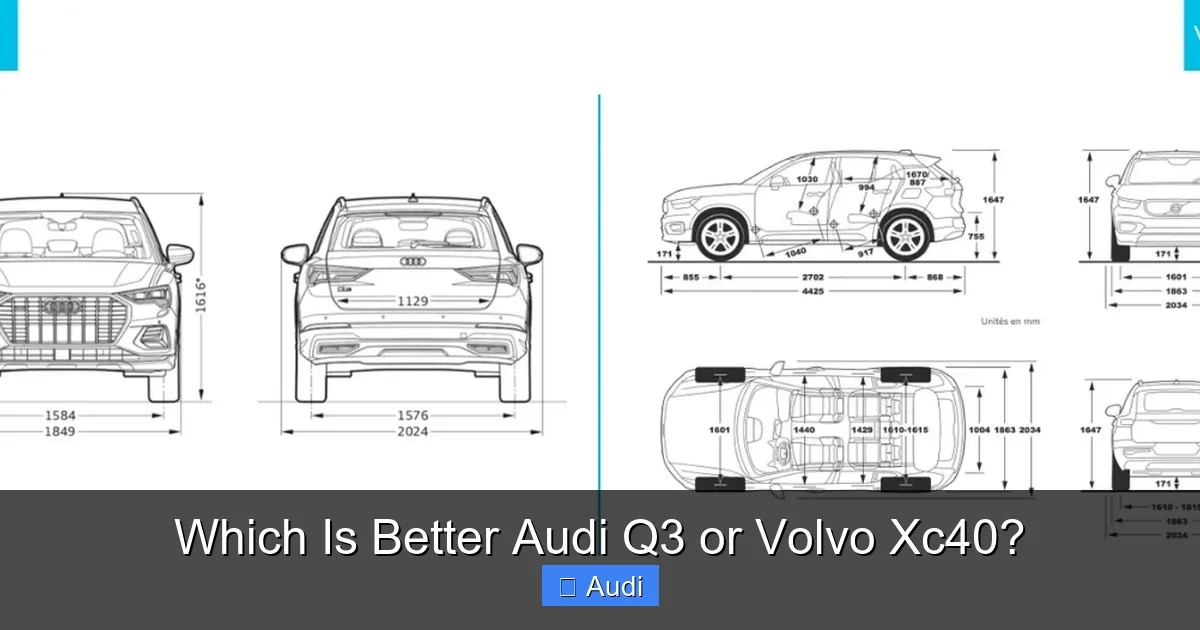
Visual guide about Which Is Better Audi Q3 or Volvo Xc40?
Image source: blog.vivacar.fr
Engine Options and Power Output
The base Audi Q3 comes equipped with a 2.0-liter turbocharged four-cylinder engine that delivers 228 horsepower and 258 lb-ft of torque. This engine is paired with an eight-speed automatic transmission and standard all-wheel drive (Quattro), giving the Q3 a confident edge in various driving conditions. The power delivery is immediate and linear, making city driving and highway merging feel effortless.
In contrast, the Volvo XC40 offers a 2.0-liter turbocharged four-cylinder engine with 247 horsepower and 258 lb-ft of torque. It also comes with an eight-speed automatic and all-wheel drive standard. While the XC40 has slightly more horsepower on paper, the real difference lies in how that power is delivered. The XC40 feels more relaxed and composed, with a focus on smoothness rather than sportiness.
Handling and Ride Quality
The Q3’s suspension is tuned for agility, offering sharper steering response and better cornering stability. If you enjoy driving on back roads or want a vehicle that feels connected to the pavement, the Q3 is the clear winner. Its lower center of gravity and sport-tuned chassis make it feel more planted during quick maneuvers.
The XC40, on the other hand, has a softer suspension setup that absorbs bumps and road imperfections with ease. This makes it more comfortable for daily commuting and long-distance travel, especially on rough city streets. However, it doesn’t offer the same level of driver engagement as the Q3. The steering is lighter and less communicative, which some may prefer for relaxed driving.
Fuel Efficiency
Fuel economy is an important factor for many buyers, and here the XC40 holds a slight advantage, particularly in city driving. The XC40’s mild-hybrid system (available on certain trims) helps reduce fuel consumption by using regenerative braking and electric assist during acceleration. It achieves an EPA-estimated 23 mpg city and 32 mpg highway.
The Audi Q3, while still efficient for a luxury SUV, comes in at 22 mpg city and 28 mpg highway. The difference isn’t dramatic, but over time, the XC40 could save you a few extra dollars at the pump, especially if you do a lot of stop-and-go driving.
Interior Design and Comfort
Step inside both vehicles, and you’ll immediately notice the different design philosophies at play. The Audi Q3 embraces a high-tech, driver-focused cabin, while the Volvo XC40 delivers a serene, minimalist space inspired by Scandinavian aesthetics.
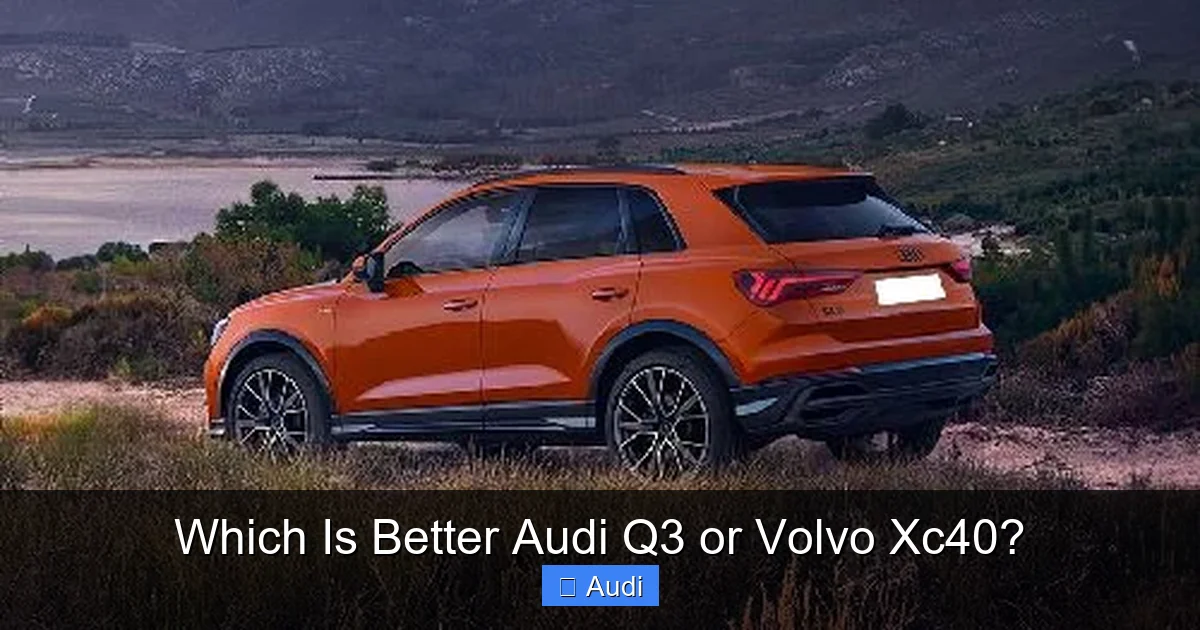
Visual guide about Which Is Better Audi Q3 or Volvo Xc40?
Image source: ik.imagekit.io
Materials and Build Quality
The Q3’s interior feels premium from the moment you sit down. Soft-touch materials, brushed aluminum trim, and available leather upholstery give it a luxurious feel. The dashboard is clean and modern, with a focus on horizontal lines that make the cabin feel wider and more open. Attention to detail is evident in the stitching, button feel, and overall fit and finish.
The XC40 matches the Q3 in terms of material quality, but takes a different approach. Volvo uses sustainable materials like recycled plastics and wool blends in some trims, appealing to eco-conscious buyers. The design is simple yet elegant, with a focus on functionality and comfort. The seats are among the best in the class—ergonomically designed and supportive, even on long drives.
Seating and Space
Both SUVs offer seating for five, but the XC40 provides a bit more rear legroom and headroom, especially for taller passengers. The Q3’s rear seats are comfortable but feel slightly more cramped, particularly if the front seats are pushed back. That said, the Q3’s front seats are highly adjustable and offer excellent support, making them ideal for drivers who spend a lot of time behind the wheel.
For families or frequent carpoolers, the XC40’s slightly larger rear cabin could be a deciding factor. It also features rear air vents and USB ports, enhancing comfort for backseat passengers.
Noise Levels and Ride Comfort
The Q3 does a good job of isolating road and wind noise, but it’s not as quiet as the XC40. Volvo has long been known for its focus on cabin serenity, and the XC40 continues that tradition. Thick insulation, acoustic glass, and a well-tuned suspension contribute to a whisper-quiet ride, even at highway speeds.
If you value a peaceful driving environment—especially for phone calls, music, or simply enjoying the silence—the XC40 is the better choice. The Q3, while still refined, lets in more ambient noise, particularly on rough pavement.
Technology and Infotainment
Modern luxury SUVs are as much about tech as they are about performance and comfort. Both the Audi Q3 and Volvo XC40 come loaded with advanced features, but they take different approaches to user experience.
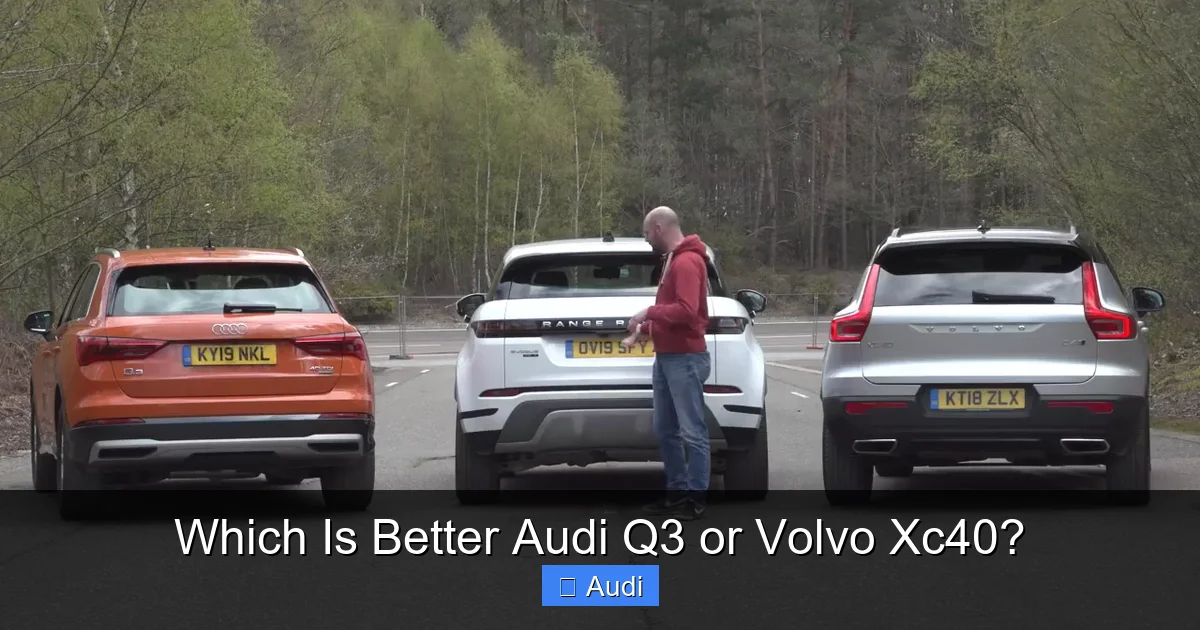
Visual guide about Which Is Better Audi Q3 or Volvo Xc40?
Image source: s1.cdn.autoevolution.com
Infotainment Systems
The Audi Q3 features the MMI Touch Response system, centered around an 8.8-inch or optional 10.1-inch touchscreen. The interface is intuitive, with crisp graphics and responsive touch controls. It supports Apple CarPlay and Android Auto, and higher trims include navigation, a premium Bang & Olufsen sound system, and wireless charging.
One standout feature is the Virtual Cockpit, a fully digital 12.3-inch instrument cluster that can display navigation maps, media info, and driving data. It’s highly customizable and adds a futuristic touch to the driving experience.
The Volvo XC40 uses Google-based Android Automotive, which means the infotainment system runs on the same platform as your Android phone. This allows for seamless integration of Google Maps, Google Assistant, and the Google Play Store. You can download apps directly to the car, and over-the-air updates keep the system current.
While Android Automotive is innovative and powerful, it may take some getting used to for iPhone users or those unfamiliar with Google’s ecosystem. Apple CarPlay is supported, but it doesn’t integrate as deeply as it does in the Q3.
Driver Assistance and Connectivity
Both vehicles offer a comprehensive suite of driver-assistance features. The Q3 includes adaptive cruise control, lane departure warning, blind-spot monitoring, and rear cross-traffic alert. Higher trims add features like traffic sign recognition and a head-up display.
The XC40 comes standard with Volvo’s Pilot Assist system, which combines adaptive cruise control with lane-keeping assist for semi-autonomous driving. It also includes features like oncoming lane mitigation and driver drowsiness detection. Volvo’s safety reputation is well-earned, and the XC40 reflects that with a robust suite of standard and optional safety tech.
Connectivity and Charging
The Q3 offers multiple USB-C ports, wireless charging, and an available Wi-Fi hotspot. The XC40 matches this with USB-A and USB-C ports, wireless charging, and built-in 4G LTE connectivity. Both support over-the-air updates, ensuring your vehicle stays current with the latest software.
One practical advantage of the XC40 is its integration with the Volvo On Call app, which allows remote start, climate control, and vehicle location tracking. Audi’s MMI Connect app offers similar features, but some users find Volvo’s interface more user-friendly.
Safety Ratings and Features
Safety is a top priority for many SUV buyers, and both the Audi Q3 and Volvo XC40 perform well in this area. However, Volvo has built its brand around safety, and the XC40 reflects that commitment with top-tier ratings and advanced protection systems.
Crash Test Ratings
The Volvo XC40 has earned a Top Safety Pick+ award from the Insurance Institute for Highway Safety (IIHS), the organization’s highest honor. It received “Good” ratings in all crash tests, including the challenging small overlap front test. The National Highway Traffic Safety Administration (NHTSA) also gives it a five-star overall safety rating.
The Audi Q3 also performs well, earning a Top Safety Pick from IIHS and a five-star NHTSA rating. However, it falls short of the “Plus” designation due to slightly lower scores in headlight performance and child seat anchor ease of use.
Standard Safety Features
The XC40 comes standard with Volvo’s IntelliSafe suite, which includes automatic emergency braking, pedestrian and cyclist detection, lane-keeping assist, and run-off road protection. These features work together to prevent accidents and protect occupants in the event of a crash.
The Q3 includes similar features, such as pre-sense basic (which tightens seatbelts and closes windows in anticipation of a collision) and side assist. However, some advanced features like adaptive cruise control are only available on higher trims.
Child Safety and Family-Friendly Features
For families, the XC40 offers several advantages. It includes built-in booster seats in the rear (optional), ISOFIX child seat anchors, and rear door child locks. The Q3 also has ISOFIX anchors and child locks, but lacks the integrated booster seats.
Both vehicles have excellent rear visibility, but the XC40’s larger rear window and standard rearview camera make parking and reversing easier, especially in tight spaces.
Cargo Space and Practicality
While both SUVs are compact, they offer surprising versatility when it comes to cargo and storage. The XC40 has a slight edge in practicality, thanks to clever design and more usable space.
Cargo Capacity
The Volvo XC40 offers 20.4 cubic feet of cargo space behind the rear seats, expanding to 57.5 cubic feet with the seats folded. The Audi Q3 provides 18.7 cubic feet behind the rear seats and 53.3 cubic feet with the seats down. While the difference isn’t huge, the XC40’s extra space can make a real difference when packing for a weekend trip or hauling groceries.
Storage Solutions
The XC40 excels in interior storage. It features a large center console, door pockets with bottle holders, and a hidden compartment under the front passenger seat. There’s even a small trash bin in the center console—a thoughtful touch for families.
The Q3 also offers good storage, with a deep glove box, cupholders, and door pockets. However, it lacks some of the clever touches found in the XC40, such as the under-seat storage.
Towing and Off-Road Capability
Neither SUV is designed for serious off-roading, but both can handle light trails and snowy conditions. The Q3 has a slightly higher ground clearance and more responsive all-wheel drive system, making it better suited for mild off-road adventures.
For towing, the Q3 can handle up to 4,400 pounds when properly equipped, while the XC40 is rated for 3,500 pounds. If you plan to tow a small trailer or boat, the Q3 has the advantage.
Value and Ownership Costs
When it comes to long-term value, the Volvo XC40 often comes out ahead. It typically includes more standard features at a lower starting price, and Volvo’s reputation for durability can mean lower maintenance costs over time.
Pricing and Trim Levels
The Audi Q3 starts around $38,000 for the base Premium trim, while the XC40 begins at approximately $37,000 for the Core model. However, the XC40 includes more standard features, such as adaptive cruise control, a premium sound system, and advanced safety tech.
The Q3’s higher trims (Premium Plus and Prestige) add luxury features like leather seats, a panoramic sunroof, and the Virtual Cockpit, but they come at a significant price increase. The XC40’s higher trims (Plus and Ultimate) offer similar upgrades but often at a lower cost.
Depreciation and Resale Value
Audi vehicles tend to depreciate faster than Volvo models, especially in the first few years. The XC40 holds its value better, which can be a major advantage if you plan to sell or trade in the vehicle down the road.
Warranty and Maintenance
Volvo offers a competitive warranty package: four years/50,000 miles of basic coverage and six years/70,000 miles for powertrain. Audi provides four years/50,000 miles across the board. Both brands include complimentary scheduled maintenance for the first three years or 36,000 miles.
Maintenance costs are similar, but Volvo’s reputation for reliability and lower repair frequency can lead to savings over time.
Conclusion: Which One Should You Choose?
Choosing between the Audi Q3 and Volvo XC40 ultimately comes down to your priorities. If you value driving excitement, cutting-edge technology, and a sporty character, the Audi Q3 is the better choice. It’s perfect for enthusiasts who want a luxury SUV that feels alive on the road.
On the other hand, if safety, comfort, and practicality are your top concerns, the Volvo XC40 is hard to beat. It offers a serene driving experience, top safety ratings, and clever design features that make everyday life easier.
Both vehicles are excellent in their own right, and either would be a smart choice for a luxury compact SUV. But by understanding your needs—whether that’s performance, peace of mind, or a balance of both—you can make the right decision with confidence.
Frequently Asked Questions
Which SUV has better fuel economy, the Audi Q3 or Volvo XC40?
The Volvo XC40 offers slightly better fuel economy, especially in city driving, thanks to its mild-hybrid system. It achieves 23 mpg city and 32 mpg highway, compared to the Q3’s 22 mpg city and 28 mpg highway.
Is the Audi Q3 more fun to drive than the Volvo XC40?
Yes, the Audi Q3 provides a more engaging driving experience with sharper handling, quicker acceleration, and a sport-tuned suspension. It’s ideal for drivers who enjoy a dynamic ride.
Which SUV has more cargo space?
The Volvo XC40 offers slightly more cargo space, with 20.4 cubic feet behind the rear seats compared to the Q3’s 18.7 cubic feet. It also includes more clever storage solutions.
Does the Volvo XC40 come with advanced safety features standard?
Yes, the XC40 includes Volvo’s IntelliSafe suite as standard, with features like automatic emergency braking, lane-keeping assist, and pedestrian detection. The Q3 offers similar features but often on higher trims.
Which SUV has a better infotainment system?
The Audi Q3’s MMI Touch Response system is more intuitive and integrates better with Apple CarPlay. The XC40 uses Google-based Android Automotive, which is powerful but may require a learning curve for some users.
Is the Volvo XC40 a good family SUV?
Absolutely. The XC40 offers excellent safety ratings, spacious rear seating, built-in booster seats (optional), and a quiet, comfortable cabin—making it a top choice for families.
