Where to Sell My Car for Parts
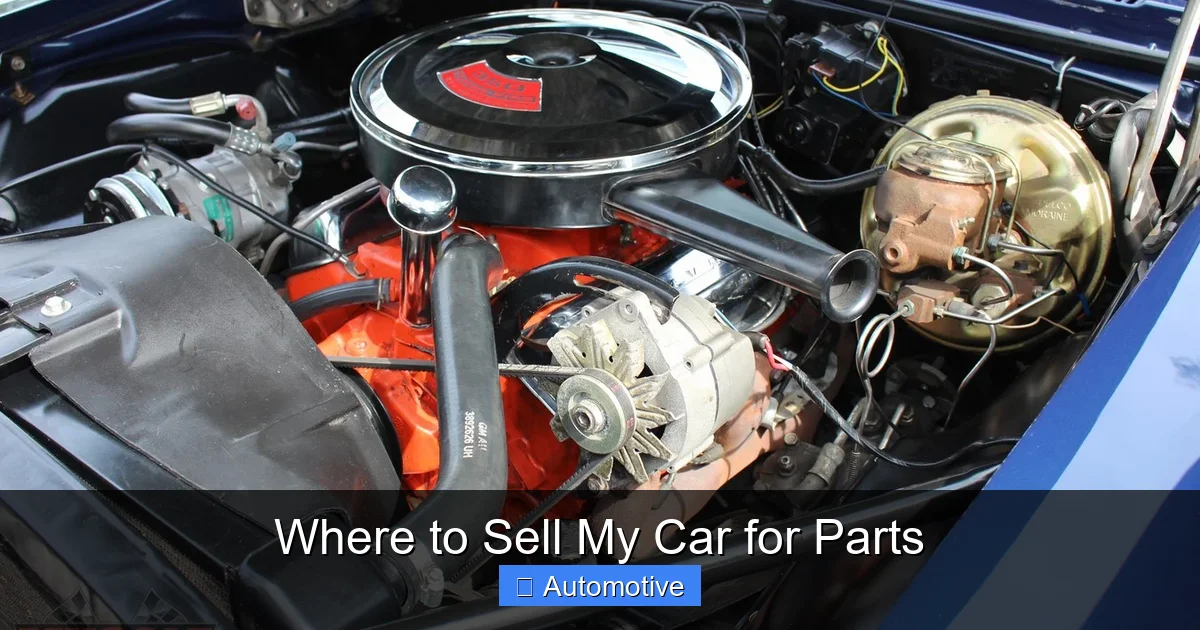
Selling your car for parts can be a smart way to maximize its value, especially if it’s damaged or no longer running. You can sell to junkyards, online part marketplaces like eBay Motors, or local salvage yards—each offering different payouts and convenience levels. Research buyers thoroughly to ensure fair pricing and hassle-free transactions.
In This Article
- 1 Key Takeaways
- 2 📑 Table of Contents
- 3 Where to Sell My Car for Parts
- 4 Why Sell Your Car for Parts Instead of as a Whole?
- 5 Top Places to Sell Your Car for Parts
- 6 How to Prepare Your Car for Sale
- 7 Maximizing Your Profit: Tips and Strategies
- 8 Common Mistakes to Avoid
- 9 Real-Life Example: Turning a Clunker into Cash
- 10 Final Thoughts: Make the Most of Your Old Car
- 11 Frequently Asked Questions
Key Takeaways
- Sell to junkyards: Get quick cash by selling your car to local or online junkyards.
- Use online marketplaces: List parts on eBay or Craigslist for higher profits.
- Contact salvage yards: They buy entire cars and dismantle them for usable parts.
- Check with auto recyclers: Many offer free towing and instant quotes.
- Remove valuable parts first: Sell high-demand components like engines or transmissions separately.
- Research part value: Know your car’s worth to negotiate better deals.
📑 Table of Contents
- Where to Sell My Car for Parts
- Why Sell Your Car for Parts Instead of as a Whole?
- Top Places to Sell Your Car for Parts
- How to Prepare Your Car for Sale
- Maximizing Your Profit: Tips and Strategies
- Common Mistakes to Avoid
- Real-Life Example: Turning a Clunker into Cash
- Final Thoughts: Make the Most of Your Old Car
Where to Sell My Car for Parts
So, your car’s seen better days. Maybe it’s been sitting in the driveway for months, collecting dust and bird droppings. Or perhaps it was in an accident and the repair costs are more than the car is worth. You’ve thought about selling it whole, but let’s be honest—nobody’s lining up to buy a clunker with a blown engine and a cracked windshield. But here’s the good news: even if your car isn’t roadworthy, it’s far from worthless. In fact, it might be a goldmine—just not in the way you’re used to thinking.
Selling your car for parts is a smart, practical, and often profitable option when traditional selling methods just don’t make sense. Every vehicle, no matter how old or damaged, contains valuable components—engines, transmissions, electronics, body panels, and even interior parts—that other drivers, mechanics, or restoration enthusiasts are willing to pay good money for. Whether you’re looking to clear up space, make some extra cash, or simply give your old ride a second life, knowing where to sell your car for parts can make all the difference. And the best part? You don’t need to be a mechanic or a sales expert to do it. With the right approach, you can turn that “junk” into real value—quickly and easily.
Why Sell Your Car for Parts Instead of as a Whole?
Let’s face it: selling a car in poor condition as a running vehicle is tough. Most buyers want something they can drive off the lot, not a project that requires thousands in repairs. Even if you list it for a low price, you’ll likely get lowball offers or no interest at all. But when you sell your car for parts, you’re tapping into a completely different market—one that values individual components over the whole package.
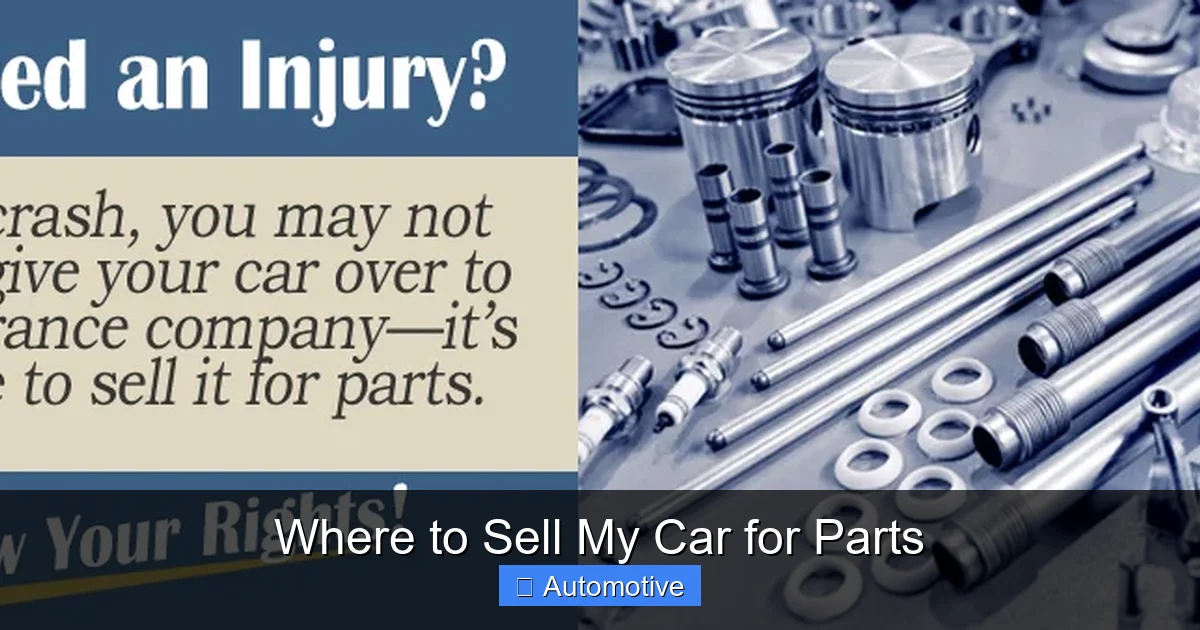
Visual guide about Where to Sell My Car for Parts
Image source: personalinjury-law.com
Here’s why selling for parts often makes more sense:
- Higher return on investment: A single transmission or engine can fetch hundreds—or even thousands—of dollars. When you sell the whole car, you’re limited by its overall condition. But when you sell parts, each component gets its own value.
- Faster sale process: Instead of waiting weeks or months for the right buyer, you can sell parts individually or to a recycler within days.
- Less hassle: You don’t need to clean it up, fix minor issues, or deal with test drives. Buyers of parts expect wear and tear—they’re looking for function, not form.
- Environmental benefits: Recycling car parts reduces waste and conserves resources. It’s a win for your wallet and the planet.
Take, for example, a 2008 Honda Civic with a bad engine but a working transmission, airbags, and intact interior. As a whole, it might sell for $500. But if you sell the transmission ($600), airbags ($200), and seats ($150), you could easily walk away with $950—nearly double the value. That’s the power of selling for parts.
When Is It the Right Choice?
Selling your car for parts isn’t always the best move—but it’s ideal in certain situations. Ask yourself these questions:
- Is the car damaged beyond economical repair?
- Are major components (engine, transmission, electronics) still functional?
- Is the car more than 10–15 years old?
- Are you short on time or don’t want to deal with private buyers?
If you answered “yes” to most of these, selling for parts is likely your best bet. Even if the car runs, if it’s nearing the end of its life, parting it out can still yield more than a trade-in or private sale.
Top Places to Sell Your Car for Parts
Now that you’re convinced selling for parts is the way to go, the next step is figuring out where to do it. There are several reliable options, each with its own pros and cons. The key is choosing the one that fits your timeline, effort level, and financial goals.
1. Local Auto Salvage Yards (Junkyards)
Salvage yards—also known as junkyards or scrap yards—are one of the most common places to sell a car for parts. These businesses specialize in buying damaged or non-running vehicles and either resell usable parts or recycle the rest. They’re convenient, fast, and often offer free towing.
How it works: You contact a local yard, describe your car (make, model, year, condition), and they give you a quote. If you accept, they’ll schedule a pickup. Payment is usually made on the spot via cash or check.
Pros:
- Quick and easy—no need to list or negotiate.
- Free towing in most cases.
- No cleaning or repairs required.
Cons:
- Offers may be lower than selling parts individually.
- Prices vary widely between yards—shop around.
- Some yards only pay based on weight, not part value.
Tip: Call at least 3–5 yards to compare quotes. Mention any valuable parts (like a working engine or low-mileage transmission) to get a better offer. For example, a 2012 Toyota Camry with a good engine might get $800 at one yard and $1,200 at another.
2. Online Car Buyers and Part Recyclers
If you’d rather not deal with local yards, online services offer a modern alternative. Companies like CarMax, Carvana, and specialized part buyers (such as Pull-A-Part or U-Pull-It) allow you to get quotes online and schedule pickups nationwide.
How it works: You enter your car’s details on their website, upload photos, and receive an instant or same-day quote. If you accept, they handle the rest—towing, paperwork, and payment.
Pros:
- Convenient—no need to leave home.
- Transparent pricing and fast payouts.
- Often higher offers than local junkyards.
Cons:
- May not be available in rural areas.
- Some services charge for towing if the car isn’t in drivable condition.
- Quotes can change after inspection.
Example: A friend of mine sold her 2006 Ford Mustang with a seized engine to an online recycler. She got $1,100—more than double what the local junkyard offered. The company picked it up the next day and paid via direct deposit.
3. Private Buyers on Online Marketplaces
For maximum profit, consider selling your car directly to private buyers who want specific parts. Platforms like eBay Motors, Facebook Marketplace, Craigslist, and OfferUp let you list individual components or the entire vehicle “for parts only.”
How it works: You create a listing with photos, descriptions, and prices. Buyers contact you directly, and you negotiate terms. You can sell the whole car or remove and sell parts yourself.
Pros:
- Highest potential return—you set the price.
- Access to niche buyers (e.g., restorers, racers, DIYers).
- Flexibility to sell parts over time.
Cons:
- Time-consuming—requires effort to list, communicate, and meet buyers.
- Risk of scams or no-shows.
- You may need to remove parts yourself (or hire help).
Tip: Be honest about the car’s condition. Use clear photos and detailed descriptions. For example: “2009 Subaru Outback – engine seized, but transmission, alternator, and rear bumper in excellent condition. Must tow.” This builds trust and attracts serious buyers.
4. Auto Repair Shops and Mechanics
Some mechanics and repair shops buy cars for parts to use in their own work or resell to customers. They’re especially interested in late-model vehicles with common parts or hard-to-find components.
How it works: Call local shops and ask if they buy cars for parts. Some may offer cash, while others might give you credit toward future repairs.
Pros:
- Local and personal—build a relationship with a trusted mechanic.
- May offer fair prices for usable parts.
- No towing needed if you can drive it in.
Cons:
- Not all shops buy cars—many prefer new parts.
- Offers may be lower than online buyers.
- Limited to your local area.
Example: A mechanic in my town regularly buys older Hondas and Toyotas for parts. He paid $700 for a 2007 Accord with a good transmission and intact interior—parts he uses to fix customer cars.
How to Prepare Your Car for Sale
Even though you’re selling for parts, a little preparation can go a long way in getting a better price and faster sale. You don’t need to detail it like it’s going on a showroom floor, but a few simple steps can make a big difference.
Remove Personal Items and Valuables
Before anything else, thoroughly clean out the car. Check the glove box, center console, under seats, and trunk. Remove registration, insurance papers, and any personal belongings. Don’t forget the spare tire, jack, and owner’s manual—some buyers will pay extra for these.
Pro tip: Take photos of the interior and exterior before cleaning. This helps document the car’s condition in case of disputes later.
Document the Car’s Condition
Create a simple report listing the car’s key features and issues. Include:
- Make, model, year, and VIN
- Mileage
- Engine and transmission status (working, seized, unknown)
- Body damage (dents, rust, cracked glass)
- Interior condition (seats, dashboard, electronics)
- Any known mechanical problems
This information helps buyers assess value and reduces back-and-forth questions. For example: “2010 Nissan Altima – 145,000 miles. Engine runs but has oil leak. Transmission shifts smoothly. Rear bumper damaged in minor collision. Interior clean, no smoke smell.”
Decide: Sell Whole or Part It Out?
You have two main options: sell the entire car as-is, or remove valuable parts and sell them separately. Each has its trade-offs.
Sell the whole car: Fastest and easiest. Ideal if you’re short on time or don’t want to handle parts removal. Best for salvage yards or online buyers.
Part it out yourself: More profitable but requires time, tools, and space. You’ll need to remove parts like the engine, transmission, alternator, starter, and wheels. This option works best if you’re handy or can hire a mechanic.
Example: A 2005 Chevy Silverado with a good engine and transmission might sell for $1,000 as a whole. But if you remove and sell the engine ($800), transmission ($600), and wheels ($300), you could make $1,700—70% more.
Tip: Use online part value guides (like Kelley Blue Book’s “Parts & Accessories” section) to estimate what your components are worth. Focus on high-demand parts first.
Maximizing Your Profit: Tips and Strategies
Want to get the most money out of your old car? Here are some proven strategies to boost your return when selling for parts.
Research Part Values Before Selling
Not all parts are created equal. Some components are in high demand and fetch premium prices. Do a quick search on eBay or Google to see what similar parts are selling for. Focus on:
- Engines and transmissions
- Alternators and starters
- Wheels and tires (especially alloy wheels)
- Airbags and sensors
- Headlights, taillights, and mirrors
- Interior parts (seats, radios, dashboards)
For instance, a used OEM alternator for a 2015 Ford F-150 might sell for $120–$180, while a generic one goes for $50. Knowing this helps you price competitively.
Time Your Sale Right
Demand for car parts fluctuates. Winter is a great time to sell parts like heaters, batteries, and tires. Spring and summer see higher demand for AC components and convertible tops. Sell when demand is high to get better prices.
Also, consider the car’s model year. Parts from popular, reliable models (like Toyota Camry, Honda Accord, Ford F-150) sell faster and for more money than rare or luxury vehicles.
Bundle Parts for Faster Sales
If you’re selling multiple parts, consider bundling them. For example, sell a “starter kit” with an alternator, starter, and battery for a discounted price. This attracts buyers looking for deals and reduces your listing workload.
You can also offer “buy it now” discounts for quick sales. A 10% discount might seem like a loss, but it beats waiting weeks for a full-price offer.
Use High-Quality Photos and Descriptions
On online marketplaces, your listing is your salesperson. Use clear, well-lit photos from multiple angles. Show close-ups of labels, serial numbers, and any damage. Write detailed descriptions that highlight functionality and condition.
Example: “Used 2011 Honda Civic alternator – tested and working. 98,000 miles. No cracks or leaks. Includes mounting bolts. Cash only, local pickup.”
Be Safe and Legally Compliant
When meeting buyers, choose public places like police stations or busy parking lots. Bring a friend if possible. For online sales, use secure payment methods (cash, PayPal, Venmo) and avoid wire transfers or checks.
Also, make sure to transfer the title properly. In most states, you’ll need to sign over the title and submit a release of liability to the DMV. This protects you from future tickets or accidents involving the car.
Common Mistakes to Avoid
Even with the best intentions, it’s easy to make mistakes when selling a car for parts. Here are some common pitfalls and how to avoid them.
Accepting the First Offer
Don’t jump at the first quote you get. Prices can vary significantly between buyers. Always get at least 3–5 estimates before deciding. A $200 difference might not seem like much, but it adds up—especially if you’re selling multiple parts.
Overestimating Part Value
It’s tempting to price parts based on new retail prices, but used parts are worth much less. Be realistic. Check completed listings on eBay to see what people are actually paying—not what they’re asking.
Ignoring Local Regulations
Some states have rules about selling cars for parts. For example, you may need to remove the license plates, cancel insurance, or notify the DMV. Check your state’s requirements to avoid fines or legal issues.
Forgetting to Remove Fluids
Most buyers won’t want a car full of oil, coolant, or gasoline. Drain fluids before sale to avoid mess and potential hazards. Many salvage yards will do this for you, but it’s better to handle it upfront.
Not Keeping Records
Keep copies of all paperwork—title, bill of sale, release of liability. This protects you if the buyer misuses the car or parts later. A simple photo of the signed documents is better than nothing.
Real-Life Example: Turning a Clunker into Cash
Let’s walk through a real example to see how this all comes together. Meet Sarah, a teacher from Ohio with a 2004 Dodge Durango that wouldn’t start. The engine was shot, but the transmission, alternator, and interior were in good shape.
Instead of selling it whole for $400, she decided to sell for parts. Here’s what she did:
- Researched part values online and found the transmission was worth $600.
- Listed the car on Facebook Marketplace as “2004 Dodge Durango for parts – engine seized, but transmission, alternator, and seats in excellent condition.”
- Received interest from a local mechanic who needed the transmission.
- Sold the transmission for $550 and the alternator for $80.
- Took the remaining car to a salvage yard and got $300 for the shell.
Total earnings: $930—more than double what she would have gotten selling it whole. And she did it all in under two weeks.
Final Thoughts: Make the Most of Your Old Car
Selling your car for parts isn’t just about getting rid of a problem—it’s about recognizing the hidden value in what others see as junk. Whether you choose a local junkyard, an online buyer, or go the private sale route, there are plenty of ways to turn that old vehicle into real cash.
Remember, the key is preparation, research, and patience. Take the time to document your car’s condition, compare offers, and choose the method that fits your goals. And don’t forget the environmental benefit—recycling parts keeps materials out of landfills and supports a more sustainable automotive industry.
So the next time you’re staring at that old car in the driveway, don’t see a burden. See an opportunity. With the right approach, you can sell your car for parts, clear up space, and walk away with money in your pocket. It’s a win-win for you, for buyers, and for the planet.
Frequently Asked Questions
What is where to sell my car for parts?
where to sell my car for parts is an important topic with many practical applications and benefits.
How can where to sell my car for parts help me?
Understanding where to sell my car for parts can improve your knowledge and provide practical solutions.