Where to Sell Broken Car

Contents
- 1 Key Takeaways
- 2 📑 Table of Contents
- 3 Where to Sell Broken Car: Your Complete Guide
- 4 1. Sell to National Junk Car Buyers
- 5 2. Use Online Marketplaces
- 6 3. Visit Local Scrap Yards
- 7 4. Trade It In at a Dealership
- 8 5. Donate Your Broken Car
- 9 6. Sell to a Private Buyer for Parts
- 10 How to Prepare Your Broken Car for Sale
- 11 Common Mistakes to Avoid
- 12 Final Thoughts: Where to Sell Broken Car
- 13 Frequently Asked Questions

Car Interior LED Light

Car Ambient Light Kit

Chain Lubricant Spray

Octane Booster
Selling a broken car doesn’t have to be stressful or expensive. Whether your vehicle won’t start, has major engine damage, or is just too old to drive, there are reliable, legitimate options to turn it into cash quickly—often with free towing and same-day payment.
Key Takeaways
- Sell to junk car buyers: Companies like Cash Auto Salvage, Peddle, and CarBrain specialize in buying non-running vehicles and offer free towing.
- Use online marketplaces: Platforms like Facebook Marketplace, Craigslist, and OfferUp let you list your broken car directly to local buyers or mechanics.
- Visit local scrap yards: Most scrap yards pay cash for cars based on weight and metal value—great for severely damaged or totaled vehicles.
- Check with dealerships: Some dealers accept broken trade-ins, especially if you’re buying a new or used car from them.
- Consider donation: If selling isn’t worthwhile, donating your car to charity can provide a tax deduction and support a good cause.
- Get multiple quotes: Always compare offers from at least three buyers to ensure you’re getting fair market value.
- Prepare your paperwork: Have your title, registration, and ID ready—most buyers won’t proceed without proper documentation.
📑 Table of Contents
- Where to Sell Broken Car: Your Complete Guide
- 1. Sell to National Junk Car Buyers
- 2. Use Online Marketplaces
- 3. Visit Local Scrap Yards
- 4. Trade It In at a Dealership
- 5. Donate Your Broken Car
- 6. Sell to a Private Buyer for Parts
- How to Prepare Your Broken Car for Sale
- Common Mistakes to Avoid
- Final Thoughts: Where to Sell Broken Car
Where to Sell Broken Car: Your Complete Guide
So your car won’t start. Maybe it’s been sitting in the driveway for months, or it got rear-ended and the repair estimate is more than the car’s worth. You’re not alone—millions of Americans deal with broken, non-running, or totaled vehicles every year. The good news? You don’t have to let it rust away or pay to have it towed to a landfill. There are plenty of legitimate, convenient ways to sell a broken car and walk away with cash in hand.
Selling a broken car might seem tricky at first. After all, who wants a vehicle that doesn’t run? But the truth is, there’s still value in that car—even if it’s just the metal, parts, or potential for restoration. Whether your car has a blown engine, transmission failure, severe body damage, or just won’t turn over, there’s a buyer out there. The key is knowing where to look and how to get the best deal without falling for scams or hidden fees.
In this guide, we’ll walk you through the top places to sell a broken car, from national junk car buyers to local scrap yards and online marketplaces. You’ll learn how to prepare your vehicle, what paperwork you need, and how to avoid common pitfalls. By the end, you’ll know exactly where to sell your broken car—and how to do it fast, safely, and profitably.
1. Sell to National Junk Car Buyers
Visual guide about Where to Sell Broken Car
Image source: dollarbreak.com
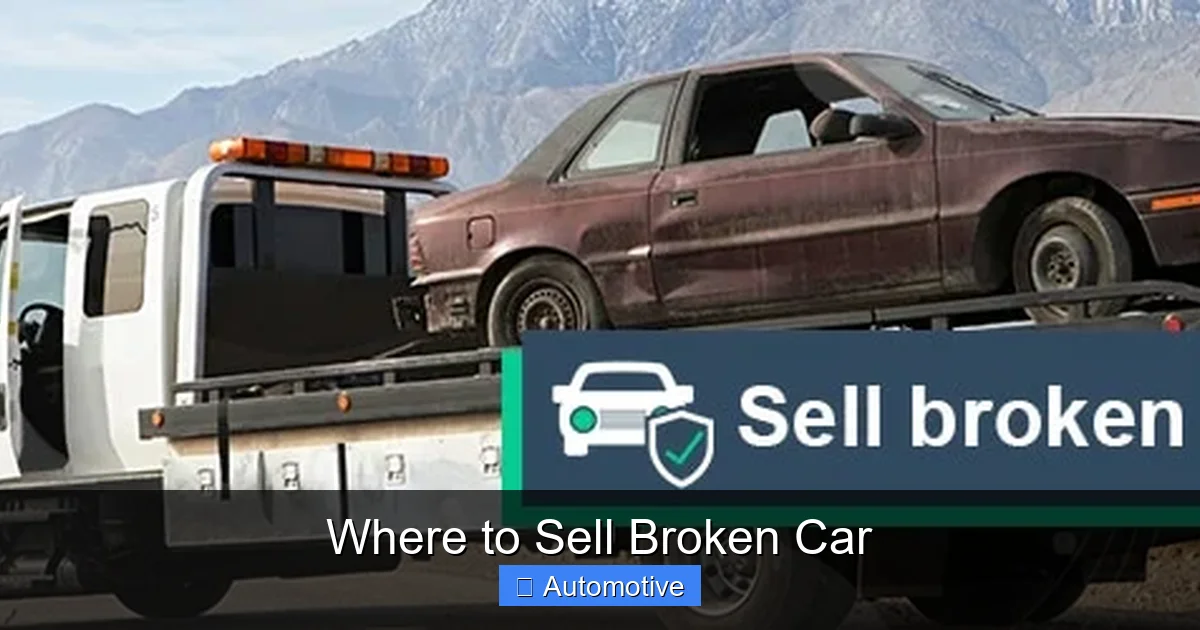
One of the easiest and most reliable ways to sell a broken car is through a national junk car buying service. These companies specialize in purchasing non-running, damaged, or end-of-life vehicles and have streamlined the process to be quick, transparent, and hassle-free.
How It Works
Most national junk car buyers operate online. You visit their website, enter your car’s details—make, model, year, mileage, and condition—and receive an instant quote. If you accept, they schedule a free tow truck to pick up your car, usually within 24 to 48 hours. Payment is made on the spot, often in cash or via check, and you’re done.
Companies like Cash Auto Salvage, Peddle, and CarBrain are well-known in this space. They buy cars in any condition—flood-damaged, fire-damaged, missing parts, or completely dismantled. Some even accept vehicles without titles, though requirements vary by state.
Why Choose This Option?
The biggest advantage is convenience. You don’t have to advertise, meet strangers, or negotiate. The towing is free, and the process is fast. Many companies offer same-day pickup and payment, which is ideal if you need cash quickly.
For example, let’s say you have a 2008 Honda Civic that won’t start due to a seized engine. You visit Peddle’s website, enter the details, and get a quote of $450. You accept, and two days later, a tow truck arrives, loads your car, and hands you $450 in cash. No stress, no hassle.
Tips for Getting the Best Offer
- Be honest about the condition: Overstating your car’s condition can lead to a lower final offer or cancellation.
- Remove personal items: Clean out the car before pickup—buyers won’t do it for you.
- Ask about fees: Reputable companies won’t charge you for towing or processing.
- Compare quotes: Get offers from at least two or three companies to ensure you’re getting a fair price.
2. Use Online Marketplaces
Visual guide about Where to Sell Broken Car
Image source: sellbroke.com
If you’re willing to put in a little more effort, selling your broken car through an online marketplace can yield a higher payout—especially if the car has salvageable parts or can be repaired.
Popular Platforms
- Facebook Marketplace: Free to list, highly visible, and allows you to target local buyers. You can post photos, describe the issue, and respond to messages directly.
- Craigslist: Still widely used, especially in smaller towns. List under “cars/trucks” and be clear about the car’s condition.
- OfferUp: Mobile-friendly app with built-in messaging and local meetup options.
- eBay Motors: Best for rare or project cars. You can set a reserve price or auction it off.
How to List Your Broken Car
When listing, honesty is key. Clearly state that the car doesn’t run and describe the issue (e.g., “engine knock,” “transmission failure,” “flood damage”). Include plenty of photos—especially of the damage, interior, and VIN sticker.
For example:
“2005 Ford F-150, 4×4, 220k miles. Engine seized, won’t start. Clean title. Great for parts or restoration. Asking $800 OBO. Serious buyers only.”
This attracts the right kind of buyer—someone who knows what they’re getting into and is willing to pay for potential value.
Who Buys Broken Cars Online?
- Mechanics: They may fix it themselves or use it for parts.
- DIY enthusiasts: People who enjoy restoring old cars as a hobby.
- Scrap or salvage dealers: They’ll tow it away and pay you on the spot.
- Collectors: Rare models or classic cars may have value even when broken.
Safety and Scam Tips
- Meet in public: Always meet potential buyers in a safe, well-lit area like a police station parking lot.
- Don’t accept checks: Only accept cash or a cashier’s check from a local bank.
- Watch for red flags: If someone offers to pay more than asking or wants to wire money, it’s likely a scam.
- Transfer the title immediately: Once paid, sign over the title and remove the license plates.
3. Visit Local Scrap Yards

Visual guide about Where to Sell Broken Car
Image source: icytales.com
If your car is beyond repair and has little to no resale value, a local scrap yard (also called a salvage yard or auto recycler) might be your best bet. These businesses buy cars based on the weight of the metal—primarily steel, aluminum, and copper.
How Scrap Yards Pay
Scrap yards use a per-ton rate, which fluctuates based on the market price of scrap metal. As of 2024, the average rate is around $150 to $250 per ton. A typical car weighs between 2,500 and 3,500 pounds (1.25 to 1.75 tons), so you could expect $200 to $400—though prices vary by location and condition.
For example, a 2003 Toyota Camry that’s rusted and missing its engine might only be worth $180 at a scrap yard. But if it’s relatively intact and made of lightweight aluminum, it could fetch more.
What to Expect
When you arrive, the yard will inspect the car, weigh it (or estimate weight), and offer a price. If you accept, they’ll drain fluids (oil, coolant, gasoline), remove the battery and catalytic converter (which have separate value), and crush the car for recycling.
Most scrap yards offer free towing if your car doesn’t run, though some may charge a small fee if it’s far away.
Tips for Scrap Yard Success
- Call ahead: Confirm they accept non-running cars and ask about their current rates.
- Remove valuable parts: If you can, take the wheels, stereo, or battery—you can sell them separately.
- Bring your title: Most yards require a signed title to prove ownership.
- Ask about catalytic converters: These contain precious metals and can be worth $50 to $300 on their own.
4. Trade It In at a Dealership
You might be surprised to learn that some car dealerships accept broken or non-running vehicles as trade-ins—especially if you’re buying a new or used car from them.
How It Works
When you negotiate the price of your new car, the dealer may offer to take your broken car as a trade-in. They’ll assess its value (usually low) and apply it as a credit toward your purchase. This can reduce your out-of-pocket cost or loan amount.
For example, if you’re buying a $20,000 used SUV and the dealer offers $300 for your broken 2006 sedan, your net cost drops to $19,700.
Pros and Cons
Pros:
- Convenient—one-stop shopping.
- No need to sell separately.
- May include free towing.
Cons:
- Trade-in value is usually lower than selling privately.
- Dealers may refuse severely damaged cars.
- You’re tied to buying from that dealer.
Best for Mildly Damaged Cars
This option works best if your car has minor issues—like a bad alternator or transmission—that can be fixed relatively cheaply. Dealers are more likely to accept these because they can repair and resell the car.
If your car is totaled, flooded, or missing major components, most dealers will pass. In that case, junk car buyers or scrap yards are better options.
5. Donate Your Broken Car
If selling your broken car isn’t worth the effort—or if you’d prefer to support a good cause—donating it to charity is a great alternative.
How Car Donation Works
Many charities accept non-running vehicles through programs like Kars4Kids, Goodwill, or Charity Motors. They arrange free towing, handle the paperwork, and sell the car to fund their programs.
In return, you receive a tax deduction based on the sale price of the car. If the charity sells it for $500, you can deduct $500 from your taxable income (subject to IRS rules).
What Charities Look For
Most charities accept cars in any condition, but they prefer vehicles that can be repaired and resold. If your car is completely destroyed, they may still take it for scrap value.
Tax Deduction Tips
- Get a receipt: The charity must provide a written acknowledgment of the donation.
- Itemize deductions: You can only claim the deduction if you itemize on your tax return.
- Check the charity’s status: Make sure it’s a registered 501(c)(3) nonprofit.
- Use IRS Form 8283: Required for donations over $500.
Example
You donate your 2004 Dodge Neon that won’t start. The charity tows it away for free and sells it to a junkyard for $220. You receive a receipt and deduct $220 from your taxes—saving you about $50 in taxes if you’re in the 22% bracket.
6. Sell to a Private Buyer for Parts
If your car has valuable components—like a working transmission, alternator, or infotainment system—you might be able to sell it to a private buyer who wants it for parts.
Who Buys Cars for Parts?
- DIY mechanics: They may need a specific part and are willing to tow the whole car.
- Auto repair shops: Some shops buy damaged cars to harvest parts for repairs.
- Restoration projects: Enthusiasts restoring classic cars often need donor vehicles.
How to Market It
List your car on platforms like Facebook Marketplace or Craigslist with a clear description:
“2007 Subaru Outback, engine blown, but transmission, AWD system, and interior in great shape. Perfect for parts. $600 firm. Must tow.”
Be upfront about what’s working and what’s not. Include photos of the good parts.
Pricing Tips
Research the value of individual parts on sites like eBay or RockAuto. For example, a used transmission might sell for $800, so offering the whole car for $600 could be a bargain.
How to Prepare Your Broken Car for Sale
No matter where you sell, proper preparation increases your chances of a smooth, profitable transaction.
Gather Your Paperwork
- Vehicle title: Must be signed and notarized (if required by your state).
- Registration: Helps prove ownership.
- ID: Most buyers will ask for a driver’s license.
- Release of liability form: File this with your DMV after the sale to avoid liability for future tickets or accidents.
Clean Out the Car
Remove all personal items—phones, chargers, sunglasses, documents. Check the glove box, trunk, and under the seats. You don’t want to lose something important—or leave behind sensitive information.
Take Photos
Even if the car is broken, good photos help. Show the exterior, interior, engine bay, and any damage. Clear images build trust and reduce back-and-forth questions.
Know Your Car’s Value
Use tools like Kelley Blue Book (KBB) or NADA Guides to check the salvage or scrap value. Even if the car doesn’t run, knowing the baseline helps you negotiate.
Common Mistakes to Avoid
Selling a broken car can go wrong if you’re not careful. Here are some pitfalls to avoid:
- Accepting the first offer: Always get multiple quotes. One company might offer $300, while another offers $500.
- Selling without a title: Most buyers won’t proceed. If you’ve lost it, contact your DMV to get a duplicate.
- Paying for towing: Legitimate buyers offer free towing. If a company asks you to pay, walk away.
- Ignoring scams: Be wary of buyers who ask for personal info, wire transfers, or “processing fees.”
- Forgetting to cancel insurance: Once the car is sold, call your insurer to cancel coverage and avoid unnecessary charges.
Final Thoughts: Where to Sell Broken Car
Selling a broken car doesn’t have to be a headache. Whether you choose a national junk car buyer, list it online, visit a scrap yard, trade it in, or donate it, there’s a solution that fits your needs, timeline, and financial goals.
The key is to act quickly—cars that sit too long lose value due to weather damage, theft, or vandalism. By comparing offers, preparing your paperwork, and choosing a reputable buyer, you can turn that non-running vehicle into cash—or a tax break—with minimal effort.
Remember: even a car that won’t start has value. Don’t let it sit and rust. Take action today, and you’ll be surprised how easy it is to sell your broken car and move on.
Frequently Asked Questions
Can I sell a car that doesn’t run?
Yes, absolutely. Many buyers specialize in non-running vehicles. Junk car companies, scrap yards, and private buyers often purchase cars that won’t start, as long as you have the title.
Do I need a title to sell a broken car?
In most states, yes. The title proves ownership and is required by law for transfer. If you’ve lost it, contact your local DMV to get a duplicate before selling.
How much can I get for a broken car?
Prices vary widely based on make, model, year, weight, and condition. On average, expect $200 to $800, though rare or repairable cars may sell for more.
Is it better to sell privately or to a junk car buyer?
Selling privately may yield more money, but it takes time and effort. Junk car buyers offer convenience and speed—ideal if you need cash fast.
Can I sell a car with a lien on it?
It’s complicated. You typically need to pay off the loan first or get permission from the lender. Some buyers may work with you, but it’s risky—consult your lender before proceeding.
What happens to my car after I sell it?
It depends on the buyer. Junk cars are often crushed and recycled for metal. Repairable cars may be fixed and resold. Donated cars are sold to fund charity programs.