Where Is the Toyota 4runner Built?

Contents
- 1 Key Takeaways
- 2 📑 Table of Contents
- 3 Where Is the Toyota 4Runner Built? A Complete Guide to Its Manufacturing Origins
- 4 A Legacy of Rugged Reliability: The 4Runner’s Manufacturing Roots
- 5 How Toyota Ensures Quality Across Two Continents
- 6 Why Manufacturing Location Matters to Consumers
- 7 The Future of 4Runner Manufacturing
- 8 Conclusion: Built to Last, Wherever It’s Made
- 9 Frequently Asked Questions




The Toyota 4Runner is proudly built in Japan at Toyota’s Tahara plant in Aichi Prefecture and in Texas at the TMMTX facility in San Antonio. These state-of-the-art factories ensure high-quality construction, combining Japanese precision with American manufacturing expertise.
Key Takeaways
- Primary manufacturing in Japan: The majority of Toyota 4Runners are assembled at the Tahara plant in Aichi, Japan, known for its precision and quality control.
- U.S. production in Texas: Since 2021, select 4Runner models have been built at Toyota Motor Manufacturing Texas (TMMTX) in San Antonio, supporting local jobs and faster delivery.
- Global supply chain integration: Parts are sourced globally, but final assembly occurs in Japan and the U.S., ensuring consistency and reliability.
- Commitment to quality: Both plants follow Toyota’s rigorous production standards, including the Toyota Production System (TPS), to maintain durability and performance.
- Model-specific assembly: Not all 4Runner trims are built in both locations—some high-end or specialized versions remain exclusive to Japan.
- Future expansion plans: Toyota continues to invest in U.S. manufacturing, potentially increasing 4Runner production in Texas in the coming years.
- Environmental and labor standards: Both facilities adhere to strict environmental regulations and ethical labor practices, reflecting Toyota’s global sustainability goals.
📑 Table of Contents
- Where Is the Toyota 4Runner Built? A Complete Guide to Its Manufacturing Origins
- A Legacy of Rugged Reliability: The 4Runner’s Manufacturing Roots
- How Toyota Ensures Quality Across Two Continents
- Why Manufacturing Location Matters to Consumers
- The Future of 4Runner Manufacturing
- Conclusion: Built to Last, Wherever It’s Made
Where Is the Toyota 4Runner Built? A Complete Guide to Its Manufacturing Origins
If you’re considering buying a Toyota 4Runner—or you already own one—you might be curious about where this legendary SUV is made. After all, knowing where your vehicle comes from can give you insight into its quality, reliability, and even its environmental footprint. The Toyota 4Runner has earned a reputation as one of the most durable and off-road-capable SUVs on the market, and a big part of that reputation comes from where and how it’s built.
The 4Runner isn’t just assembled in one place. Instead, it’s produced in two key locations: Japan and the United States. This dual manufacturing strategy allows Toyota to meet global demand while maintaining high standards of quality and efficiency. Whether you’re driving through city streets or tackling rocky mountain trails, the 4Runner’s origins play a crucial role in its performance and longevity.
In this article, we’ll take a deep dive into the manufacturing journey of the Toyota 4Runner. We’ll explore the history of its production, the facilities responsible for building it, and what it means for consumers. You’ll learn about the advanced technologies used in assembly, the global supply chain that supports production, and how Toyota ensures consistency across different plants. By the end, you’ll have a clear understanding of where your 4Runner comes from—and why that matters.
A Legacy of Rugged Reliability: The 4Runner’s Manufacturing Roots

Visual guide about Where Is the Toyota 4runner Built?
Image source: trail4runner.com
The Toyota 4Runner first hit the market in 1984 as a compact SUV based on the Toyota Hilux pickup truck. From the beginning, it was designed for adventure—capable of handling tough terrain while offering comfort for everyday driving. Over the decades, it has evolved into a midsize SUV known for its body-on-frame construction, powerful V6 engine, and legendary off-road prowess.
But where has this iconic vehicle been built throughout its history? For most of its existence, the 4Runner was manufactured exclusively in Japan. The primary facility responsible for its production has been the Tahara plant in Aichi Prefecture, one of Toyota’s most advanced and respected manufacturing sites. Tahara has been producing vehicles since the 1970s and is known for its precision engineering and high-quality output.
In recent years, however, Toyota expanded 4Runner production to the United States. Starting in 2021, the company began assembling select 4Runner models at its Toyota Motor Manufacturing Texas (TMMTX) facility in San Antonio. This move was part of a broader strategy to increase North American production, reduce shipping costs, and respond more quickly to market demand.
Today, the 4Runner is built in both Japan and the U.S., depending on the model year, trim level, and market. This dual approach allows Toyota to balance global efficiency with local responsiveness. Whether your 4Runner rolls off the line in Tahara or San Antonio, it benefits from Toyota’s commitment to quality, innovation, and durability.
The Tahara Plant: Japan’s Crown Jewel of Automotive Manufacturing
The Tahara plant, located in Aichi Prefecture on the island of Honshu, is one of Toyota’s most advanced manufacturing facilities. Opened in 1979, it was designed to produce high-end vehicles with precision and consistency. Over the years, it has become synonymous with quality, producing models like the Lexus LS, Toyota Land Cruiser, and, of course, the 4Runner.
What makes Tahara special? For starters, it’s one of the most automated plants in the world. Robots handle many of the welding and assembly tasks, ensuring accuracy and reducing human error. But automation isn’t the only factor—Toyota’s famous “kaizen” philosophy, which emphasizes continuous improvement, is deeply embedded in the plant’s culture. Workers are encouraged to suggest improvements, and every process is regularly evaluated for efficiency and quality.
The Tahara plant also uses a just-in-time (JIT) production system, a core component of the Toyota Production System (TPS). This means parts are delivered exactly when they’re needed, reducing waste and inventory costs. It also ensures that each vehicle is built with the freshest components, minimizing the risk of defects.
When it comes to the 4Runner, the Tahara plant handles the assembly of many of the higher-end trims, including the TRD Pro and Limited models. These versions often include specialized off-road features, premium interiors, and advanced technology—components that require meticulous attention to detail. Building these models in Japan allows Toyota to leverage decades of engineering expertise and maintain strict quality control.
Toyota Motor Manufacturing Texas: Bringing the 4Runner to America
In 2021, Toyota made a significant shift by starting 4Runner production at its San Antonio facility. The TMMTX plant, which opened in 2006, was originally built to manufacture the Tundra full-size pickup and the Sequoia SUV. With the growing popularity of the 4Runner in the U.S. market, Toyota decided to expand its capabilities to include this rugged SUV.
The San Antonio plant spans over 2,000 acres and employs thousands of workers. It features advanced robotics, state-of-the-art paint shops, and a highly efficient assembly line. Like Tahara, it follows the Toyota Production System, emphasizing quality, safety, and sustainability.
One of the key advantages of building the 4Runner in Texas is proximity to the North American market. Vehicles produced in San Antonio can be delivered to dealerships across the U.S. and Canada much faster than those shipped from Japan. This reduces lead times and allows Toyota to respond more quickly to consumer demand.
Additionally, U.S. production supports local economies. The TMMTX plant has created thousands of jobs in the San Antonio area and contributes significantly to the regional economy. It also aligns with Toyota’s broader goal of increasing North American manufacturing capacity.
While not all 4Runner models are built in Texas, the facility currently produces certain trims, particularly those popular in the U.S. market. This includes the SR5, TRD Off-Road, and some Limited models. Over time, Toyota may expand production further, depending on sales trends and manufacturing efficiency.
How Toyota Ensures Quality Across Two Continents

Visual guide about Where Is the Toyota 4runner Built?
Image source: carscoops.com
You might be wondering: if the 4Runner is built in two different countries, does that affect its quality? The short answer is no—Toyota maintains consistent standards across all its plants, regardless of location. This is thanks to the company’s rigorous quality control processes and global manufacturing philosophy.
At the heart of Toyota’s quality assurance is the Toyota Production System (TPS), a set of principles and practices designed to eliminate waste, improve efficiency, and ensure excellence. TPS is implemented in every Toyota plant worldwide, from Japan to the U.S. to Europe and beyond.
One of the core elements of TPS is “jidoka,” which means “automation with a human touch.” This concept allows machines to detect defects and stop production automatically, preventing faulty parts from moving down the line. Workers are then alerted to investigate and fix the issue. This ensures that problems are caught early and resolved before they affect the final product.
Another key practice is “poka-yoke,” or mistake-proofing. This involves designing processes and tools in a way that makes errors nearly impossible. For example, a part might only fit one way, or a sensor might prevent a step from being skipped. These small but effective measures help maintain consistency and reduce defects.
Toyota also conducts extensive testing at every stage of production. Vehicles are inspected for fit and finish, mechanical performance, and safety compliance. In addition, finished 4Runners undergo rigorous road testing to ensure they meet Toyota’s high standards for durability and reliability.
Finally, Toyota invests heavily in training its workforce. Employees at both Tahara and TMMTX receive comprehensive instruction in assembly techniques, quality control, and safety procedures. This ensures that every worker—whether in Japan or Texas—understands their role in delivering a high-quality vehicle.
Global Supply Chain: Parts from Around the World
While the 4Runner is assembled in Japan and the U.S., many of its components come from a global network of suppliers. Toyota sources parts from countries like China, Thailand, Mexico, and Germany, depending on cost, quality, and logistics.
For example, the 4Runner’s 4.0-liter V6 engine is built in Japan, but some of its components—like sensors, electronics, and wiring harnesses—may come from other countries. Similarly, interior materials such as leather, plastics, and fabrics are often sourced from global suppliers to meet cost and sustainability goals.
This global supply chain allows Toyota to optimize costs and ensure a steady flow of parts. However, it also requires careful coordination and quality oversight. Toyota works closely with its suppliers to maintain strict standards, conducting regular audits and inspections to ensure compliance.
Despite the international sourcing, final assembly in Japan and the U.S. ensures that each 4Runner meets Toyota’s exacting requirements. The plants have the final say in quality control, and any vehicle that doesn’t meet standards is reworked or rejected.
Why Manufacturing Location Matters to Consumers
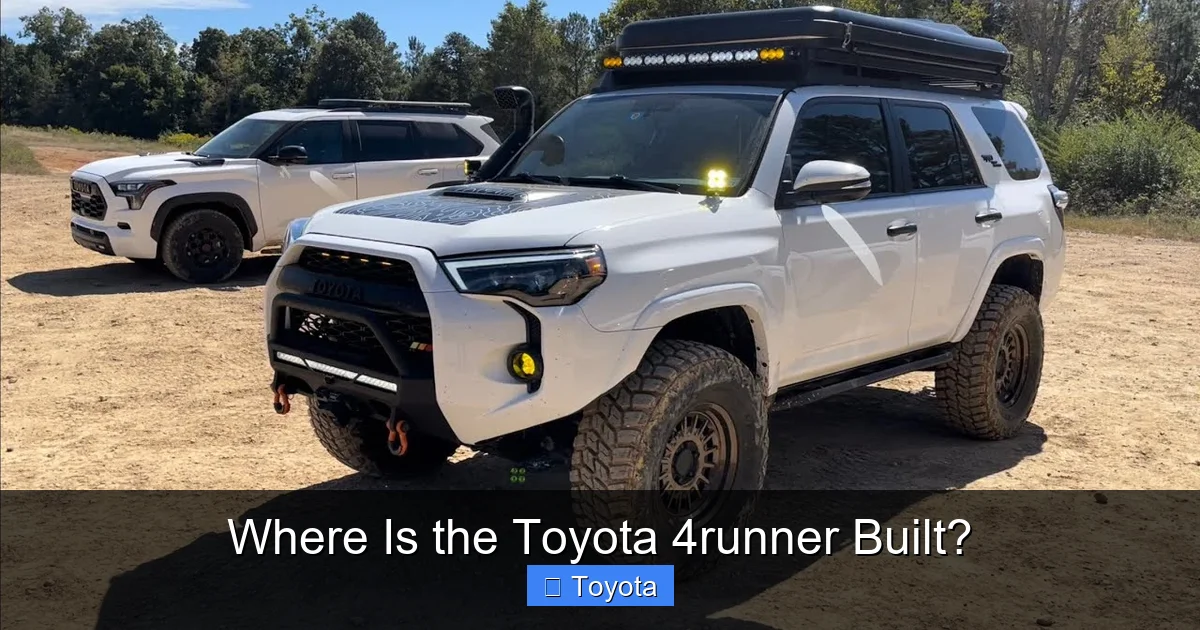
Visual guide about Where Is the Toyota 4runner Built?
Image source: i.ytimg.com
So, why should you care where your 4Runner is built? For many buyers, the answer comes down to quality, value, and ethics.
First, manufacturing location can influence perceived quality. Japanese-built vehicles, especially those from the Tahara plant, are often associated with precision and reliability. Many consumers believe that Japanese engineering leads to longer-lasting, more durable vehicles. While U.S.-built models are also high quality, some buyers may prefer the “Made in Japan” label for its reputation.
Second, production location affects delivery times and availability. If you’re buying a 4Runner in the U.S., a vehicle built in Texas may arrive at your dealership faster than one shipped from Japan. This can be especially important if you need a vehicle quickly or want to avoid long wait times.
Third, supporting local manufacturing can be a factor for some buyers. Purchasing a U.S.-built 4Runner means supporting American jobs and contributing to the local economy. For environmentally conscious consumers, shorter shipping distances also mean a smaller carbon footprint.
Finally, manufacturing location can impact resale value. While both Japanese- and U.S.-built 4Runners hold their value well, some trims or model years may be more desirable based on their origin. For example, TRD Pro models built in Japan are often sought after by off-road enthusiasts.
Environmental and Ethical Considerations
Toyota is committed to sustainability and ethical manufacturing. Both the Tahara and TMMTX plants follow strict environmental regulations and have implemented measures to reduce waste, conserve energy, and minimize emissions.
At Tahara, Toyota has invested in solar power, water recycling, and waste reduction programs. The plant also uses eco-friendly paints and coatings to reduce volatile organic compound (VOC) emissions.
In San Antonio, TMMTX has achieved zero landfill status, meaning all waste is recycled or converted to energy. The plant also uses renewable energy sources and has implemented energy-efficient lighting and HVAC systems.
In terms of labor practices, Toyota adheres to high ethical standards. Workers are paid fair wages, provided with benefits, and given opportunities for advancement. The company also promotes diversity and inclusion in its workforce.
The Future of 4Runner Manufacturing
As the automotive industry evolves, so does Toyota’s approach to manufacturing. The company is investing in new technologies like electric vehicles, autonomous driving, and smart factories. While the 4Runner remains a gas-powered, body-on-frame SUV, its production methods are becoming more advanced.
One trend to watch is the increasing use of automation and artificial intelligence in assembly plants. Robots are becoming more sophisticated, capable of handling complex tasks with greater precision. This could lead to even higher quality and faster production times.
Another possibility is expanded U.S. production. As demand for the 4Runner grows, Toyota may shift more assembly to Texas to reduce reliance on overseas shipping. This would also allow the company to respond more quickly to market changes.
Finally, Toyota is exploring ways to make its manufacturing process more sustainable. This includes using recycled materials, reducing energy consumption, and developing more efficient logistics networks.
What This Means for 4Runner Buyers
For current and future 4Runner owners, these developments are positive. They mean continued access to a high-quality, durable SUV built with care and precision. Whether your 4Runner comes from Japan or Texas, you can trust that it was made to last.
When shopping for a 4Runner, consider asking your dealer where the specific model was built. While both locations produce excellent vehicles, knowing the origin can help you make a more informed decision.
Also, keep an eye on Toyota’s future plans. As the company continues to innovate, the 4Runner may benefit from new technologies, improved efficiency, and even greater sustainability.
Conclusion: Built to Last, Wherever It’s Made
The Toyota 4Runner is more than just a vehicle—it’s a symbol of adventure, reliability, and rugged capability. And its manufacturing origins play a big role in that reputation. Built in world-class facilities in Japan and the United States, the 4Runner benefits from decades of engineering expertise, advanced technology, and a commitment to quality.
Whether it rolls off the line in Tahara or San Antonio, every 4Runner is designed to handle the toughest challenges while providing comfort and confidence on every journey. So the next time you’re behind the wheel, remember: your 4Runner wasn’t just built to go anywhere—it was built with care, precision, and pride, no matter where it came from.
Frequently Asked Questions
Where is the Toyota 4Runner primarily built?
The Toyota 4Runner is primarily built at the Tahara plant in Aichi, Japan, and at the Toyota Motor Manufacturing Texas (TMMTX) facility in San Antonio, USA. Most models are assembled in Japan, while select trims are produced in the U.S.
Why does Toyota build the 4Runner in two different countries?
Toyota builds the 4Runner in both Japan and the U.S. to meet global demand, reduce shipping costs, and support local economies. Japanese production ensures high precision, while U.S. assembly allows for faster delivery to North American markets.
Are U.S.-built 4Runners as reliable as those made in Japan?
Yes, U.S.-built 4Runners are just as reliable. Both plants follow the Toyota Production System and rigorous quality control standards, ensuring consistent performance and durability across all models.
Which 4Runner trims are built in the U.S.?
As of 2021, trims like the SR5, TRD Off-Road, and some Limited models are built at the TMMTX plant in Texas. Higher-end trims such as the TRD Pro are typically assembled in Japan.
How can I tell where my 4Runner was built?
You can check the Vehicle Identification Number (VIN). The first character indicates the country of origin: “J” for Japan and “5” for the United States. Your dealer can also provide this information.
Will Toyota increase 4Runner production in the U.S. in the future?
Toyota may expand U.S. production based on demand and market trends. The company is investing in North American manufacturing, so increased 4Runner assembly in Texas is possible in the coming years.